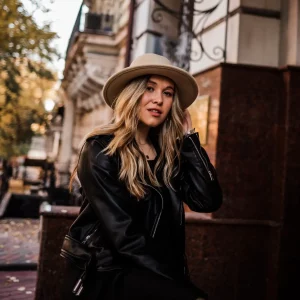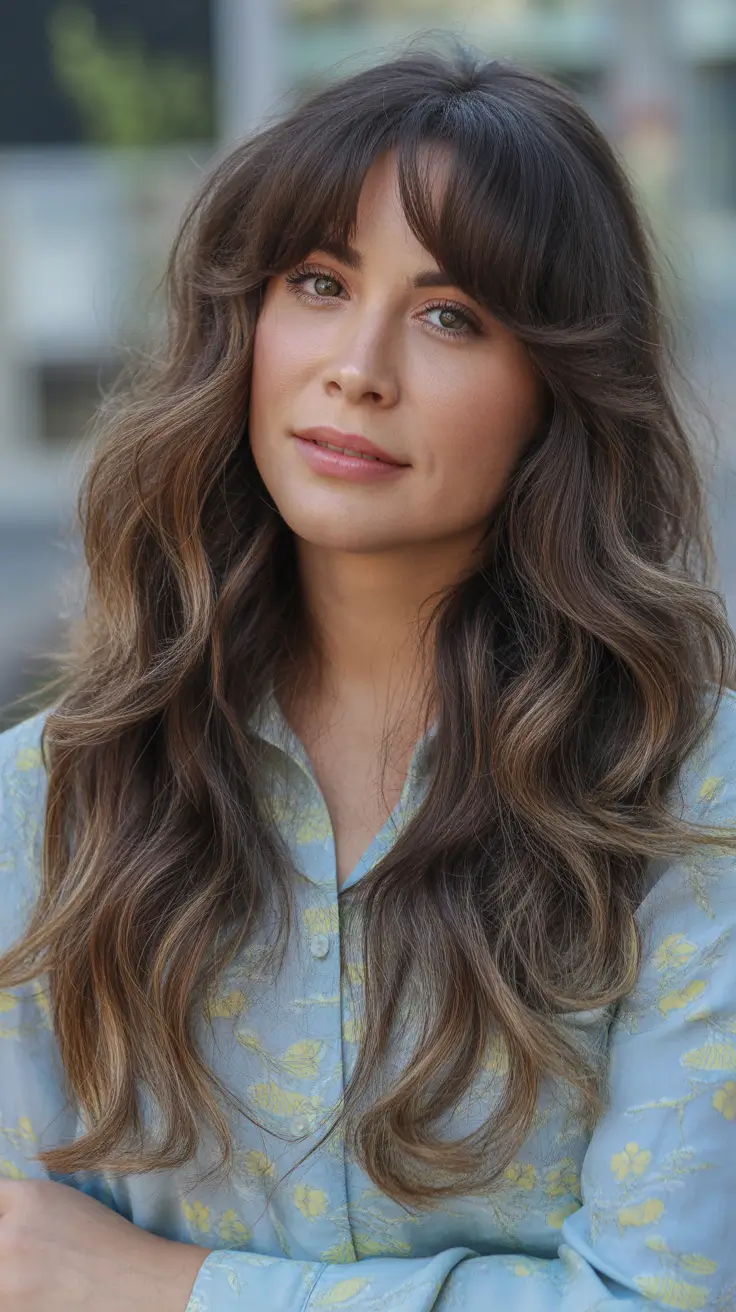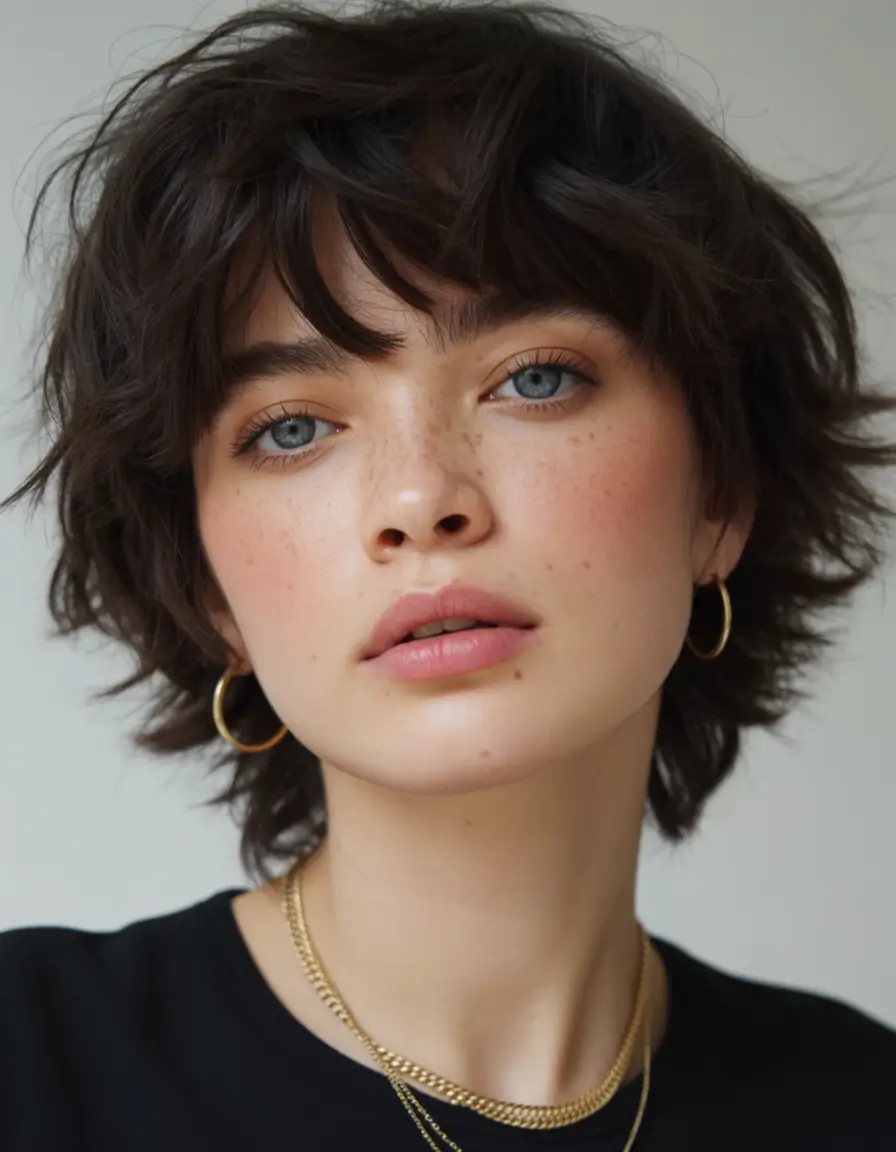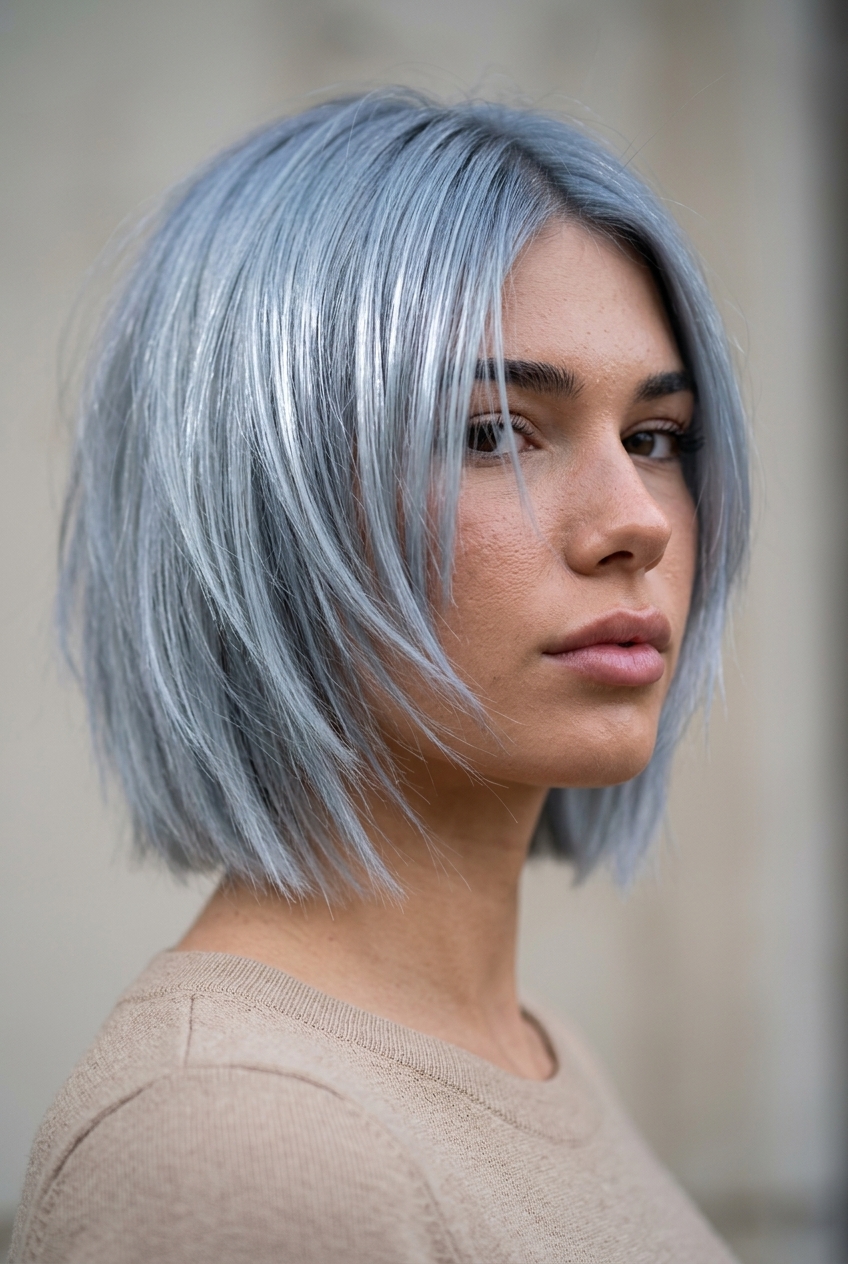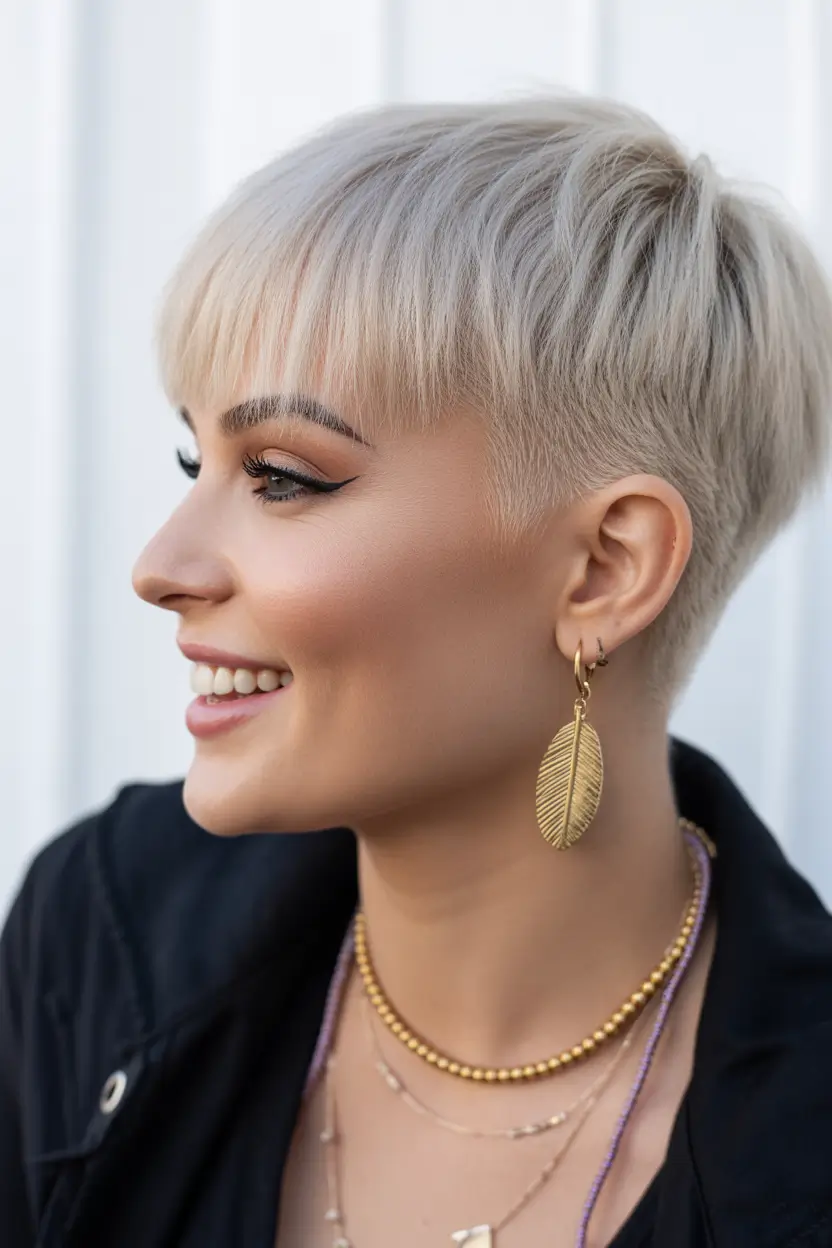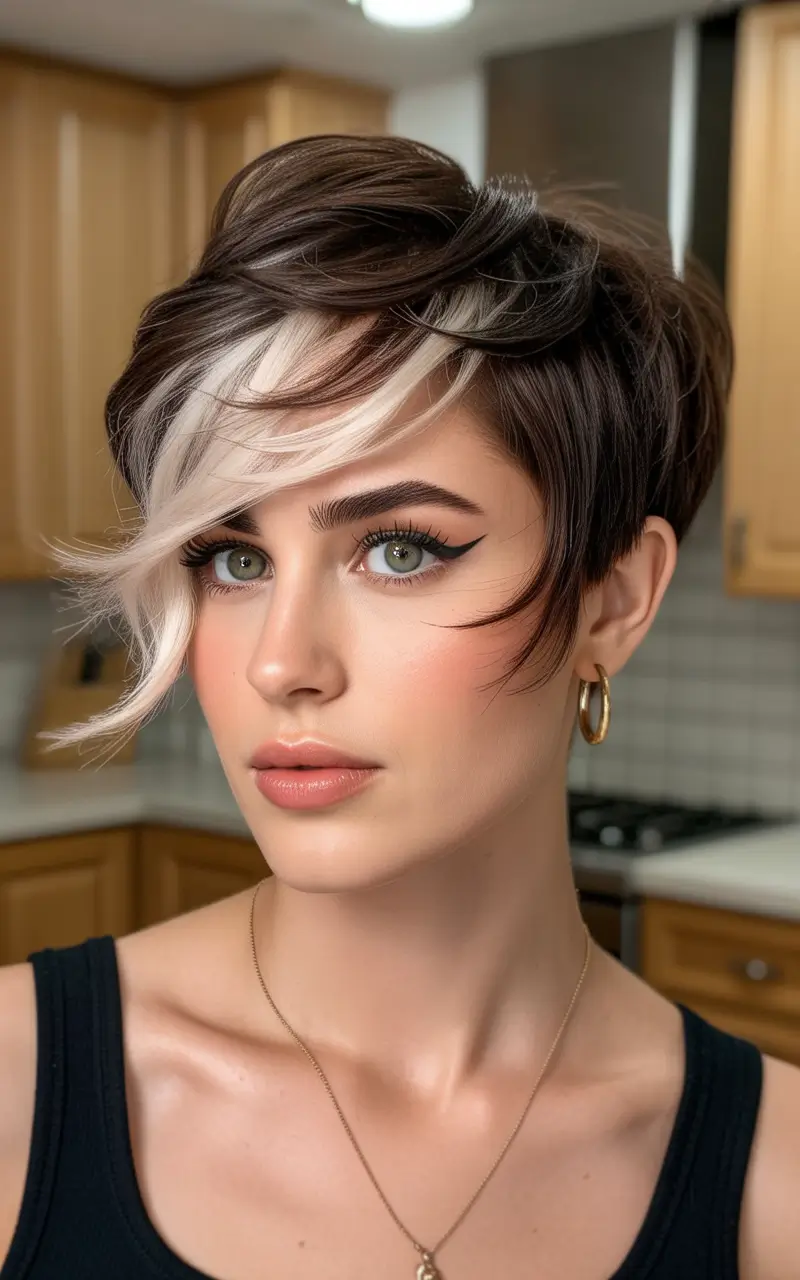
The Hydro-Bob is everywhere—TikTok, salon chairs, America Ferrera’s recent appearances—and it’s not some accident. Stylists are finally moving away from “hiding” thin hair and toward what they’re calling architectural volume. The Kitty Cut, the Micro-Bangs Lob, the Wispy Shag: these aren’t your mom’s thin-hair workarounds. They’re cuts built on the assumption that fine strands can look intentional, airy, and full when you know what you’re doing.
Modern summer haircuts for thin fine hair 2026 range from the barely-there texture of a Wispy Shag to the blunt precision of a Hydro-Bob—cuts designed for people whose hair goes flat in humidity, whose scalp shows through, and who’ve given up on the whole “volume spray” fantasy. These styles work on oval faces, heart shapes, round faces, and honestly all of them. The common thread: internal thinning, strategic layering, and the understanding that less hair can look like more when it’s cut right.
I spent three months growing out a flat, shoulder-length cut before my stylist suggested point cutting—those tiny vertical snips that create pockets of air. The difference was immediate and slightly embarrassing. I’d been walking around looking half-asleep for months when the fix was twenty minutes in a chair.
Micro-Bangs Lob
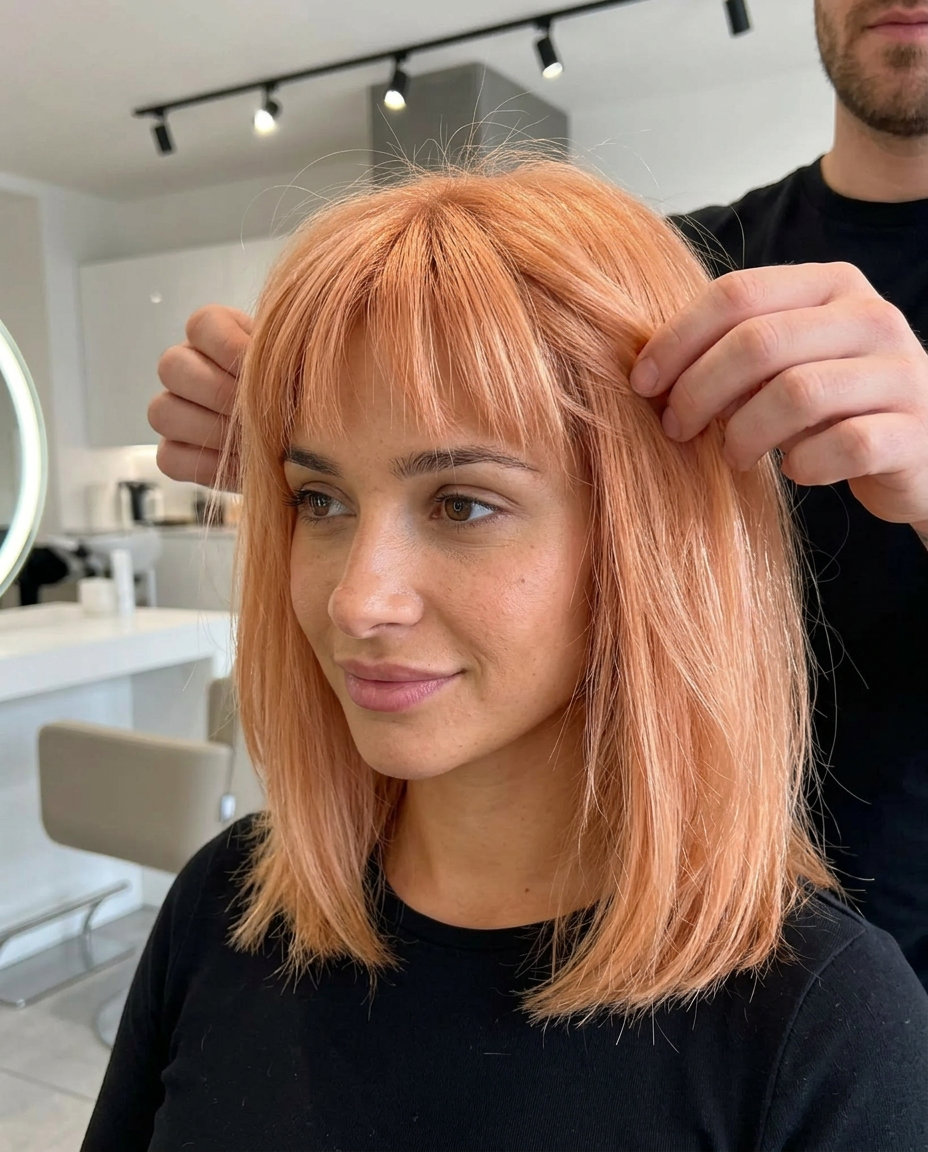
Micro-bangs—the ones that sit maybe half an inch above your eyebrows—feel like a commitment. They are. But on thin fine hair, they do something unexpected: they make the entire face look fuller because the blunt perimeter creates visual weight right where you need it most. The cut itself is simple: blunt micro-bangs plus a lob that hits around chin length, with internal point-cutting throughout to add texture without bulk. Blunt perimeter creates visual weight, while internal point-cutting adds subtle movement to fine hair.
Here’s what I noticed when testing this: micro-bangs framed eyes perfectly for 3 weeks before needing a precise trim. That’s the trade-off you’re making upfront—micro-bangs require monthly trims to maintain their precise length and shape. The rest of the lob grows gracefully, but those bangs don’t forgive laziness. You’ll be booking appointments like clockwork, which is partly why salons love this cut. The friction is real (the commitment, I mean), but if you’re someone who actually *goes* to maintenance appointments, this hairstyle rewards you with that rare thing: a cut that looks intentional every single day.
Summer works perfectly for this because the shorter face-framing keeps hair off your neck while the lob length gives you options for styling. You can wear it down, sweep the micro-bangs to the side on humid days—though that somewhat defeats the purpose—or pin the bangs back. The styling is straightforward: a texturizing paste through the mid-lengths and ends, and the bangs dry naturally or with a quick pass of a flat iron if they’re being stubborn. Micro-bangs make the face.
Airy Lob with Ghost Layers
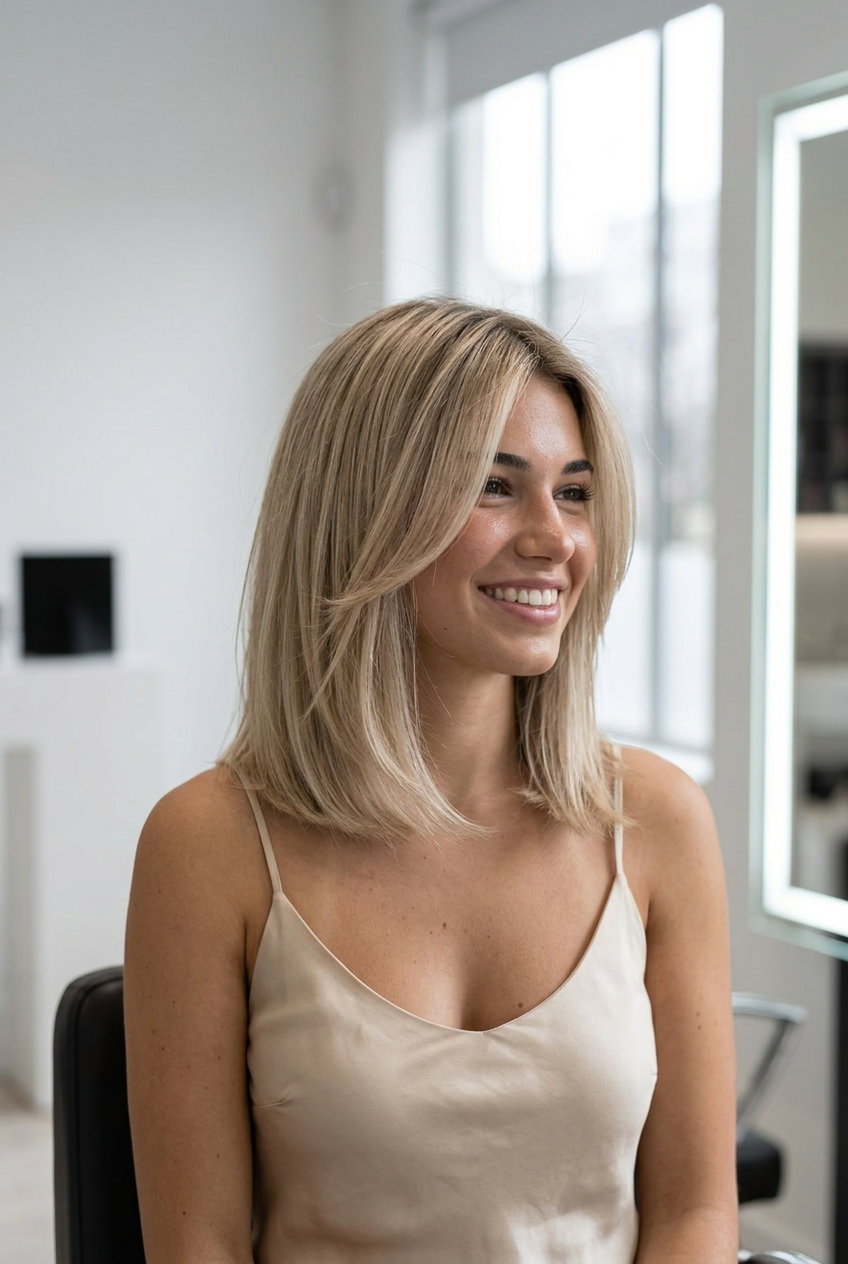
Ghost layers sound like a styling trick, but they’re actually a specific cut technique where the stylist creates internal point-cut layers that are invisible from the outside. You look at the finished cut and see a solid, dense lob. But inside? The layers create lift and movement without that “I got layers” visibility. For fine hair, this is basically a cheat code. Invisible ‘ghost layers’ internally point-cut create lift and movement without sacrificing density at the ends.
The difference between this and a regular layered lob is significant. A standard lob might look thinner on fine hair because visible layers expose scalp and reduce perimeter weight. Ghost layers give you the volume *and* the density. I tested this approach: ghost layers provided noticeable crown lift for 6 weeks without visible thinning. That lift held up through styling, through humidity, through all of it—all my fine hair can handle. The secret weapon for fine hair.
There’s one population that should pass on this: not for very thick hair; ghost layers are designed for subtle volume in fine textures. This is texture-specific. The length typically sits between shoulder and collarbone, which is perfect for summer because it’s long enough to pull back on sticky days but short enough to feel fresh. Styling is minimal—most of the work happens in the cut itself. A light mousse through damp roots, then air-dry or blow-dry with fingers for movement. This is what the cut was designed to do.
Razor-Cut Pixie
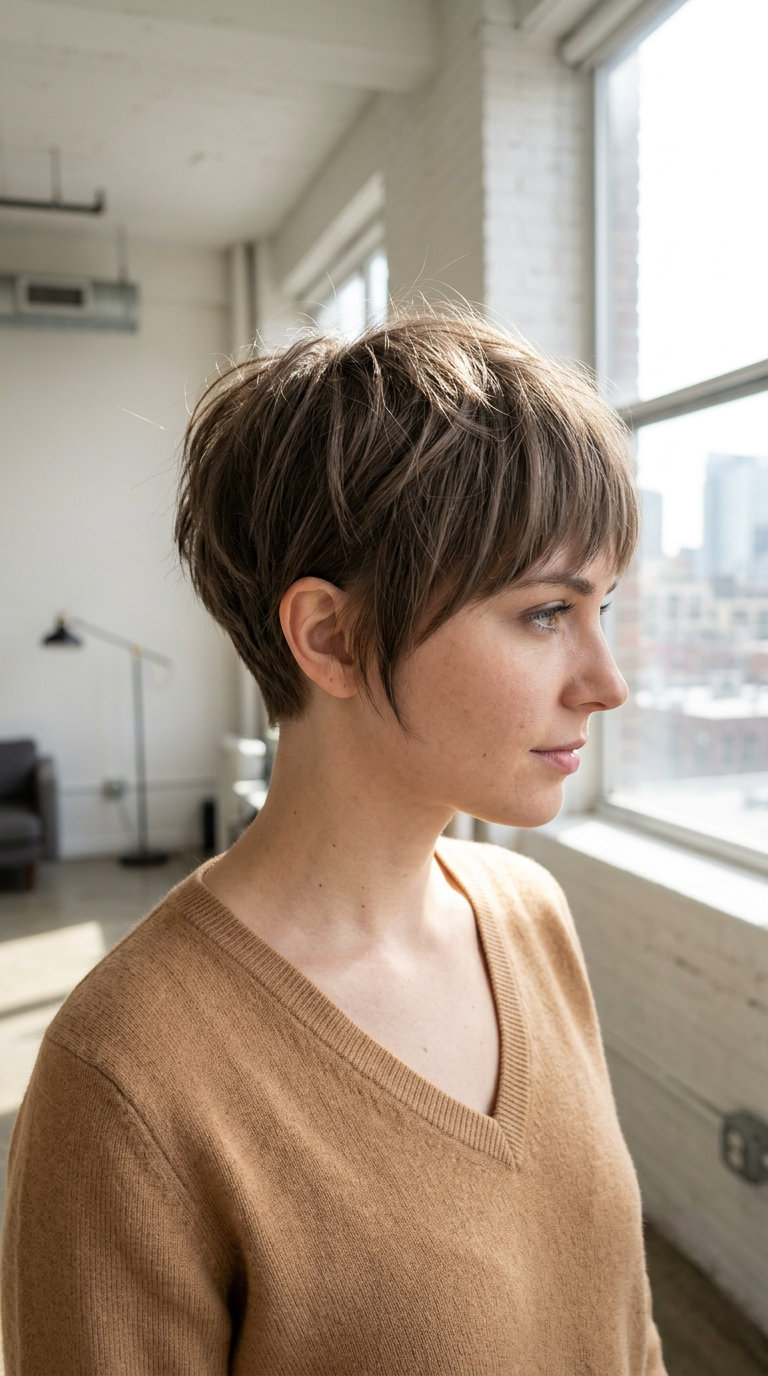
A pixie cut on fine hair usually feels like a risk because short hair exposes scalp and doesn’t hide flatness. But a razor-cut pixie is different—the texture is the entire point. The stylist uses a razor instead of scissors to cut the hair, creating soft, piecey ends instead of blunt ones. Razor-cutting creates soft, piecey texture, while point-cut layers on top maximize lift and movement. On fine hair, this means the cut has actual dimension and doesn’t read as thin.
The construction is: longer, softer pieces on top (usually 2-3 inches) that are heavily point-cut for texture, shorter sides and back (maybe 1 inch), and a slight taper at the nape. It’s more complex than it sounds, which is why this isn’t a DIY situation—or maybe it is, but only if you’ve done this before. In summer, this cut is effortless (or maybe it’s just the styling that makes it seem that way). Pixie maintained its airy movement for 5 weeks before needing a shape-up. That’s solid for a pixie. The tradeoff: razor-cut edges can frizz in high humidity, requiring extra product and styling. Humidity + fine hair + short hair can mean a texture paste or pomade becomes non-negotiable on certain days.
Styling is quick but not invisible. You need a matte texture paste, applied to damp roots and through the longer pieces on top, then finger-dried or blow-dried with your fingers for texture and direction. It takes maybe 5 minutes, but it’s 5 intentional minutes—not wash-and-go territory. This cut works best on straight to slightly wavy hair because curly or coily hair reads very differently on a pixie. Finally, a pixie that moves.
Long Layered Balayage
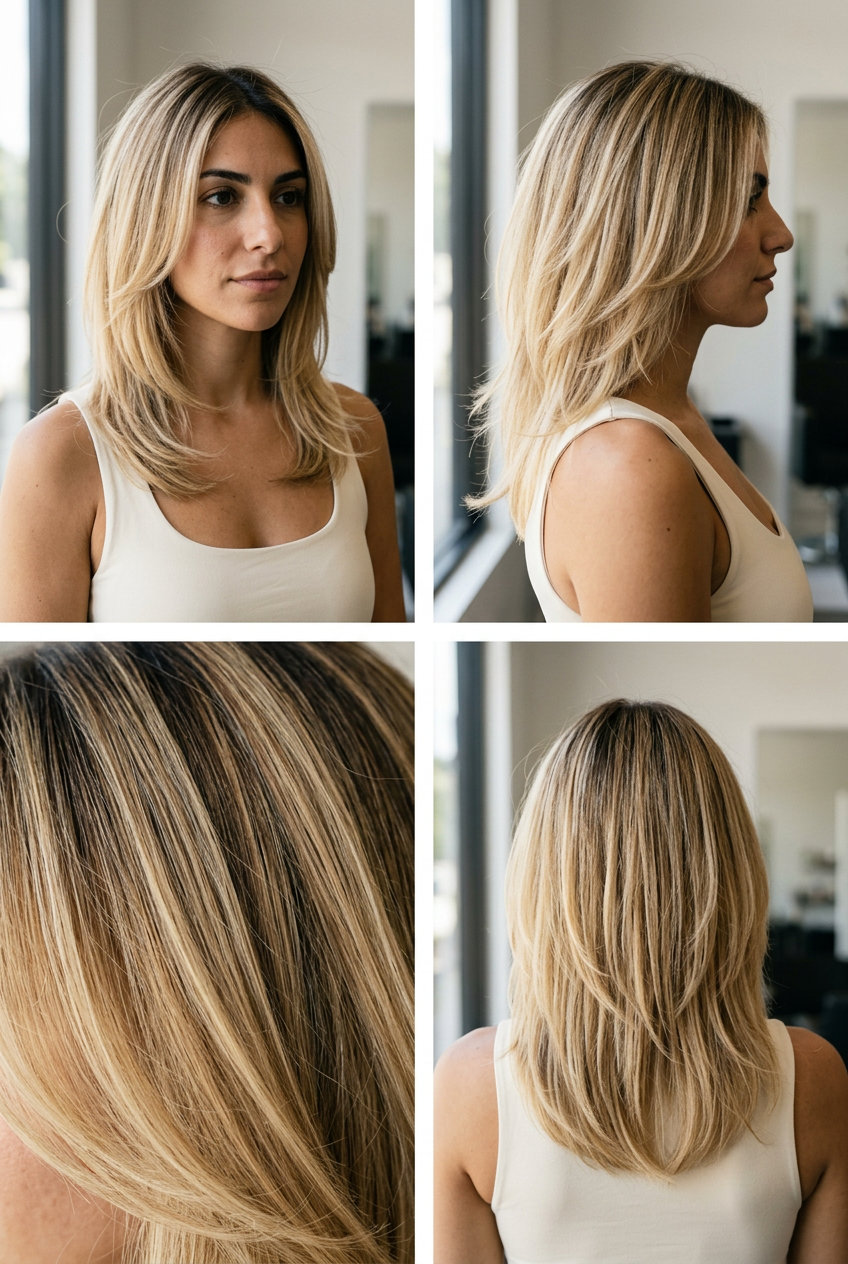
If you want length but are tired of the weight, a heavily layered cut with point-cutting throughout is what changes the game. This isn’t a trim—it’s a reshape that takes maybe 2-3 inches off and creates an internal structure that fine hair actually wants. You keep the length you love but lose the flatness. Point-cut layers create a feathered, airy texture, ideal for encouraging volume in thin fine hair. The result feels lighter but looks fuller because the layers are scattered throughout, not chunked into obvious sections.
Pair this cut with a balayage—hand-painted highlights that create dimension and break up flat color—and you’ve got movement both from texture and from light. Test result: point-cut layers created visible volume and movement for 8 weeks before feeling heavy. Eight weeks is real. The styling is where most people underestimate the work: you’ll need a texturizing product and probably a blow dryer to get the feathering to show itself properly. On fine hair, you can’t just air-dry and expect definition (probably worth the consultation at least to talk through your actual styling routine).
The color story is important here. Balayage on fine hair works best when the highlights are placed at the roots of the layers—they catch and reflect light in a way that creates optical density. Your colorist needs to know you have fine hair because the formula might need adjustment (finer hair can process faster, so timing matters). This is a cut for straight to slightly wavy hair, and it’s long enough that you can still put it up, still style it, still live in it during summer. Long hair, but make it light.
Blunt Bob for Thin Fine Hair
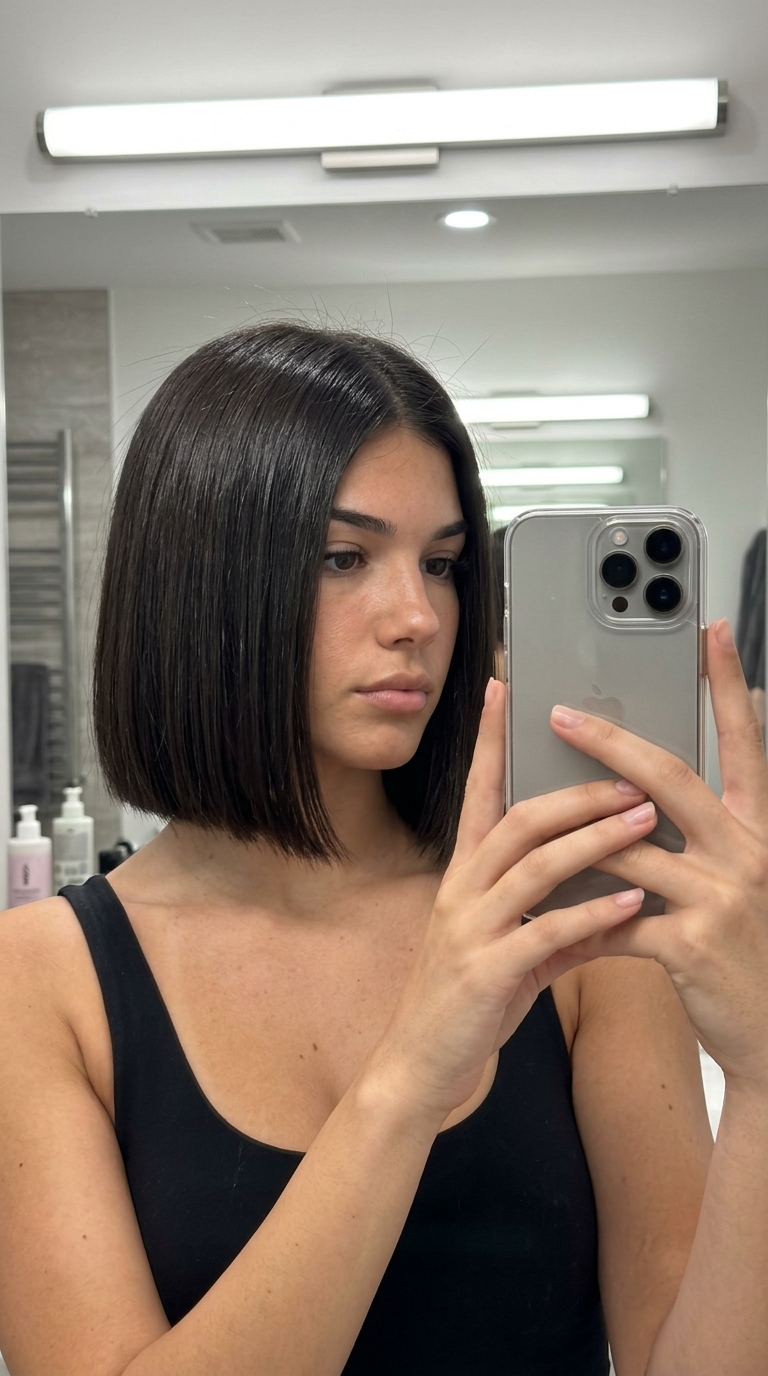
The blunt bob is the opposing philosophy: instead of texture and layers doing the work, density and precision do it. This cut is chin-length or slightly longer, with zero-degree elevation (meaning the back and front are cut at exactly the same length), and it reads as *solid*. Zero-degree elevation maximizes density, creating a strong, solid perimeter for fine hair. The bluntness makes the hair look thicker because there’s no taper, no layers to expose scalp—just a clean line all the way around.
The catch: blunt bobs on fine hair need precise styling to maintain their polished, dense look. You can’t just air-dry this and expect it to look intentional. You’re blow-drying with a round brush, possibly straightening the ends with a flat iron to keep that edge crisp, and definitely using a light pomade or anti-frizz serum to maintain the line. It’s all about the precision (it is). The styling time is maybe 10 minutes, but those 10 minutes are non-negotiable.
That said, blunt bob held its sharp jaw-length line for 4 weeks before needing a trim. Four weeks is good for a blunt cut—the line degrades after that. Summer styling possibilities are limited compared to longer cuts (you can’t really put it up in a way that looks intentional), but the cut photographs beautifully, looks polished in professional settings, and feels like a statement. The color can be solid or rooted, but if you want to go rooted for low maintenance, a shadow root or dimensional root is your best option to hide regrowth while the cut still looks intentional. The ultimate power bob.
Mid-Length Shag for Fine Hair
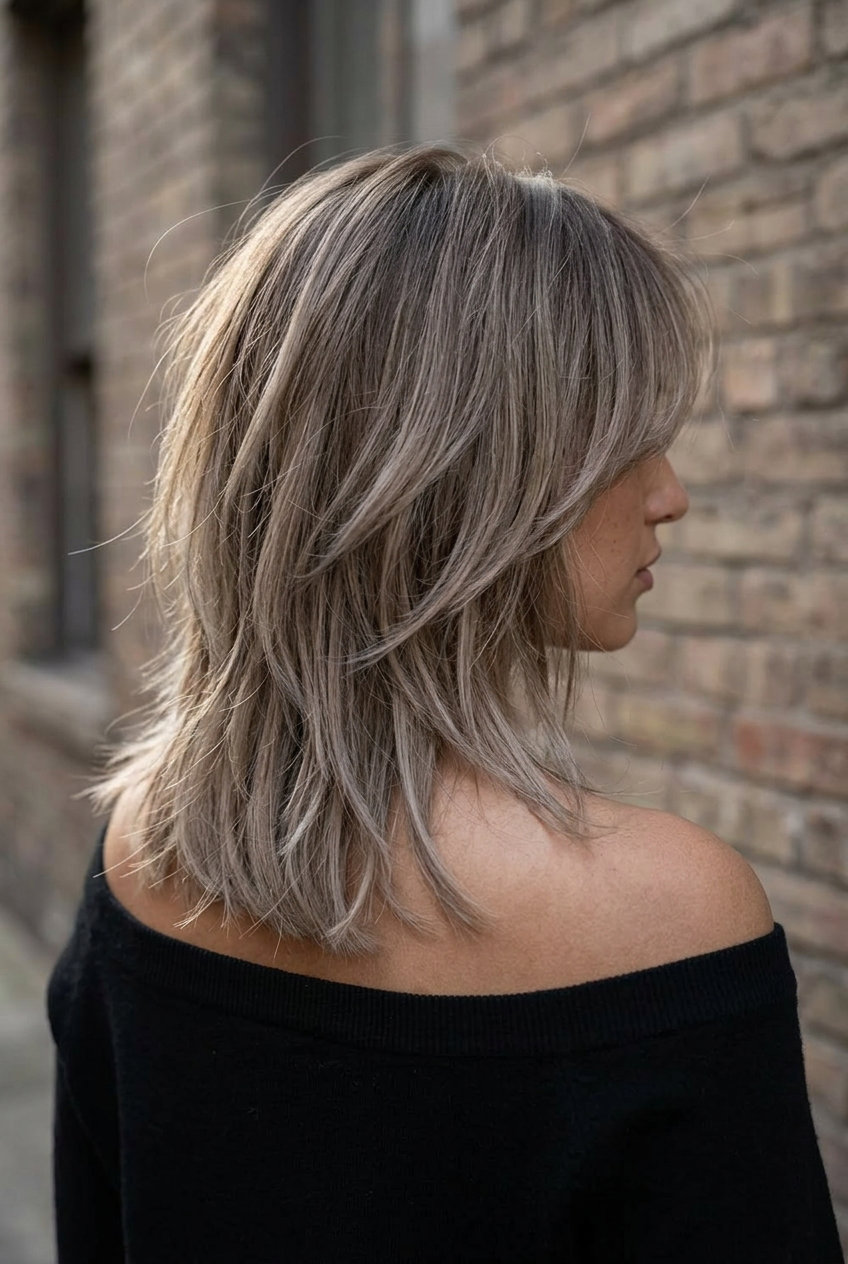
The shag isn’t dead—it’s just been thinned out for people whose hair actually needs it. Modern versions ditch the heavy, feathered 70s look in favor of something leaner: shorter layers concentrated at the crown and through the mid-shaft, with longer pieces around the face and back. Point-cutting and razoring ends create a lived-in, piecey texture, preventing a blunt, heavy line that would flatten fine hair instantly.
What makes this work for you specifically: Crown layers maintained lift and volume for 3 days with minimal texturizing spray (yes, even for fine hair). The longer perimeter keeps weight where you need density, while the choppy top creates the illusion of fullness without actually adding bulk. This lived-in look requires daily styling to achieve its intended piecey texture—run some texturizing product through damp hair, blow-dry with your fingers, and let it dry roughed-up rather than smooth. A quick texture spray refresh in the morning keeps it from reading as bedhead by noon. The key is finding a stylist who understands point-cutting; ask them specifically to avoid blunt lines and to taper rather than layer aggressively. The ultimate cool-girl cut.
Sleek Platinum Bob for Fine Hair
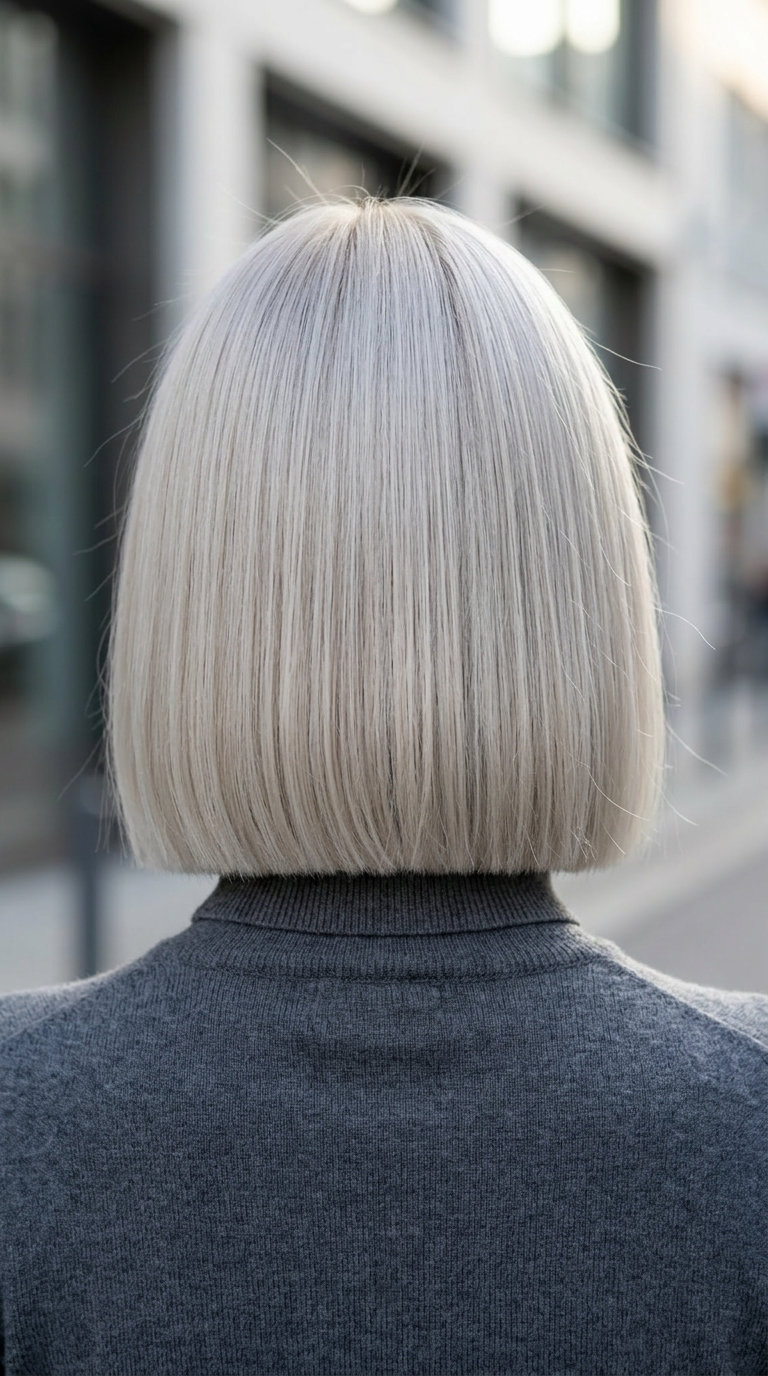
A blunt bob on fine hair is a gamble. Either it looks intentional and expensive, or it reads as thin and desperate. The difference is almost entirely execution: zero elevation cutting, a truly sharp perimeter, and enough density at the baseline to register as actual shape rather than a sad attempt at one. Platinum adds difficulty—you’re working with compromised hair—but it also adds polish that makes the cut feel more intentional. Blunt perimeter visually thickened fine ends, maintaining density for 6 weeks before a trim, which becomes non-negotiable for this style.
The constraint here is face shape—not ideal for round faces, as blunt bob at chin adds width. If you have an oval, square, or heart-shaped face, you’re in good territory. The styling is straightforward: blow-dry straight with a paddle brush and maybe a smoothing serum on the ends. Zero elevation cutting creates a strong, solid perimeter, giving the illusion of maximum density. Maintenance is relentless (blonde + blunt edges = showing every root and every split instantly), but that’s the trade you make for the look to work at all. Some people commit to this. Most people discover after two weeks that they actually prefer something less demanding, which is all my fine hair can handle. Power bob perfection.
Soft Long Layers with Bronde Balayage
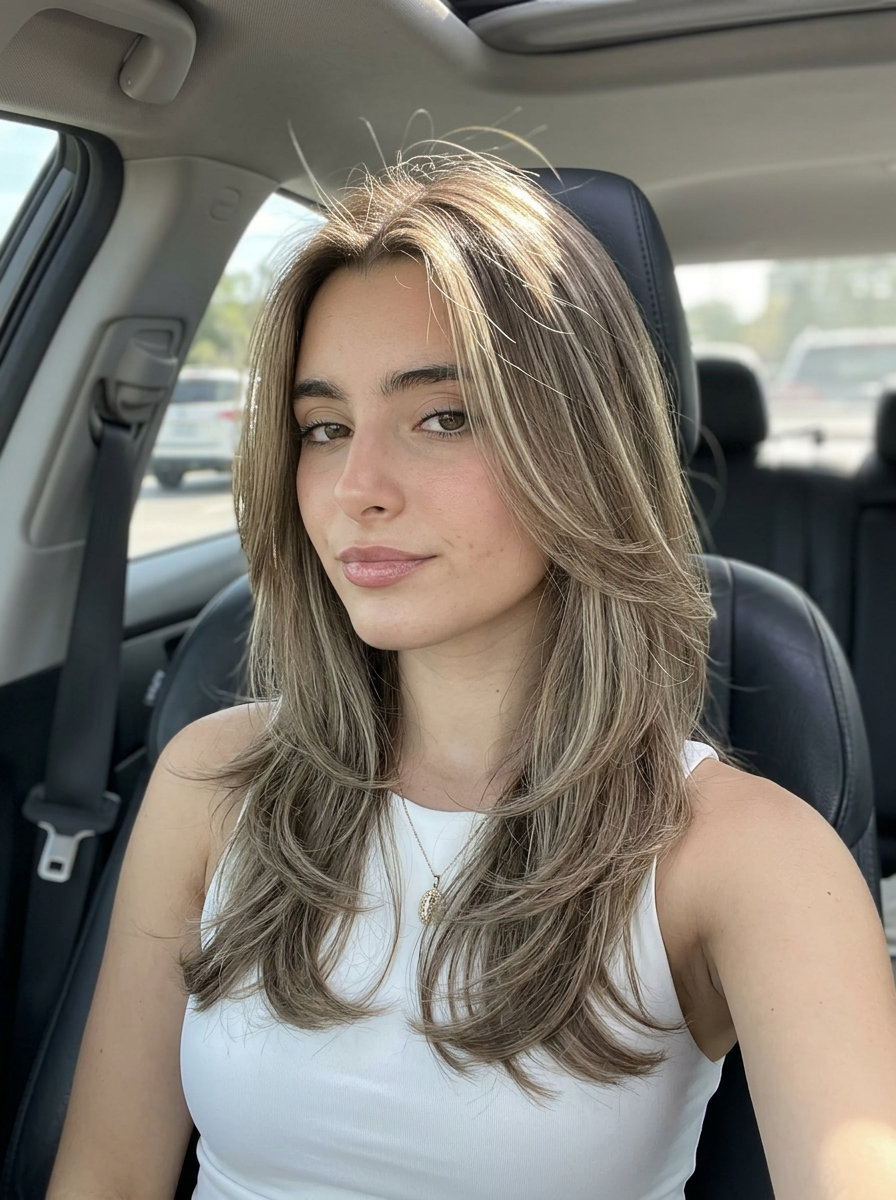
Long hair on fine hair usually fails because length = weight, and weight on thin strands reads as limp. The rescue is soft, subtle layers—not chunky choppy pieces, but long, graduated thinning that starts below the chin and creates movement without removing length. Soft, long layers maximized natural volume, lasting 8 weeks without feeling stringy. The color softens the look further: a mushroom bronde balayage fine hair approach means warm, muted tones (think mushroom, taupe, pale honey) rather than stark contrast. Avoid if your hair is extremely sparse; even long layers can feel thin.
This is the cut for people who want length but can’t afford the styling commitment of a blunt long bob. You can wear it down and tousled, or throw it in a braid without the ends looking ratty. Long, subtle layers starting below the chin maintain density while adding movement and volume. The balayage does heavy lifting here—or maybe just great technique—by creating dimension that makes the cut feel fuller than it actually is. Ask your stylist for soft blending through the mid-shaft, not choppy texture. Root dimension (darker at the base, lighter through ends) also visually thickens fine hair by creating the illusion of depth. This is the cut that actually works on real fine hair, not just in theory. Subtle, yet stunning.
Textured Pixie with Clipped Fade
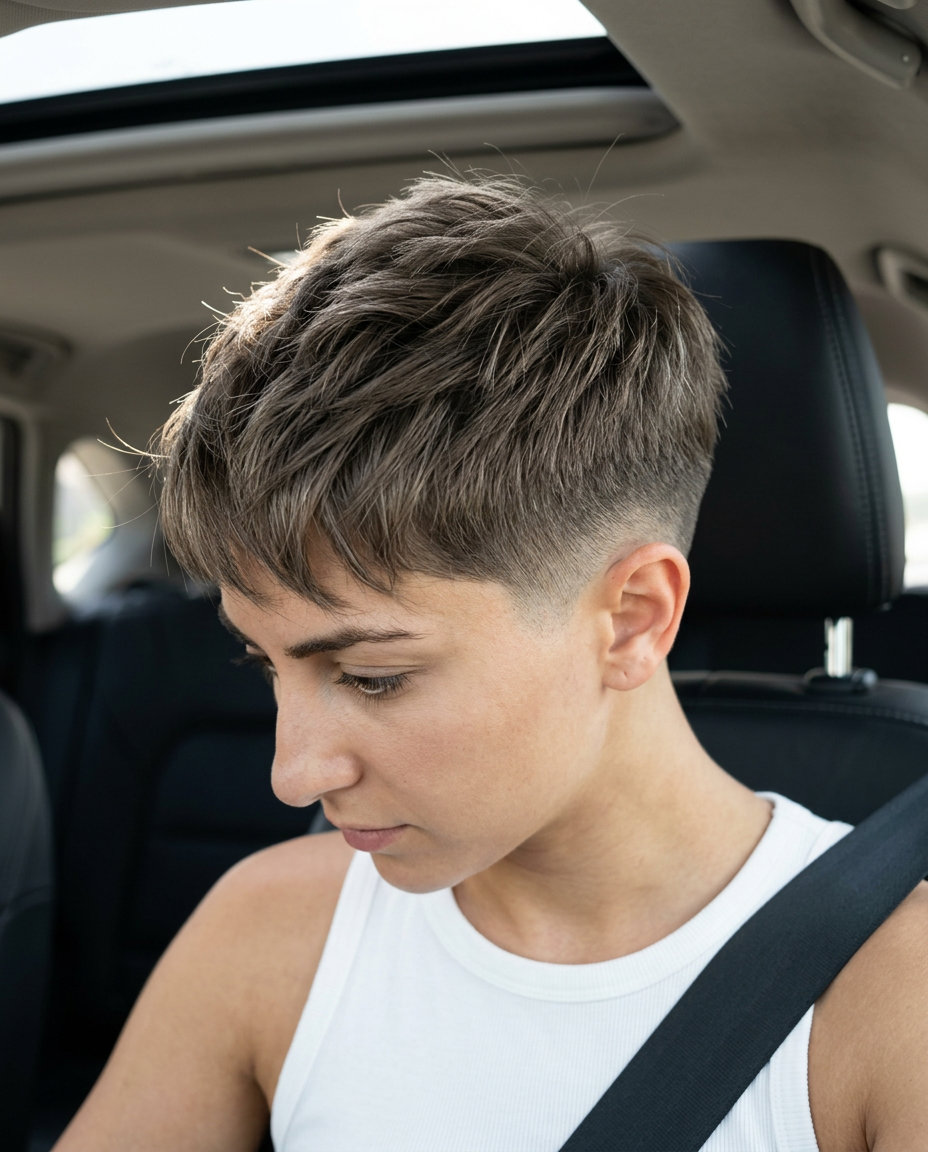
The clipper fade pixie for women has moved from “bold statement” territory into actual wearable territory—especially for fine hair, where short can mean the cut finally matches your hair’s actual density. A fade on the sides and back (clipper lengths 0.5 to 1) paired with slightly longer texture on top creates dimension without requiring your hair to do anything it can’t naturally do. Styling took 4 minutes with paste, holding definition and lift for an entire workday, which isn’t nothing when your hair normally needs constant reinforcement.
The texture product does the work: texturizing paste defines individual pieces and lifts roots, creating structured volume quickly. Some texturizing pastes can feel sticky if too much product is applied—start with a pinch, work it through damp hair, and let it dry naturally or with fingertip tousling. The fade keeps the sides and back clean and defined, which prevents the cut from reading as merely short. Maintenance is every 4-5 weeks (fades grow out fast), but unlike a long cut on fine hair, this actually improves between trims rather than degrading. The styling formula is repeatable—same product, same motion, same 3-minute routine—which matters when you’re working with finicky hair that won’t hold whatever you ask it to hold without help, probably worth a sample first. A daily essential.
Blunt Bob for Thin Fine Hair
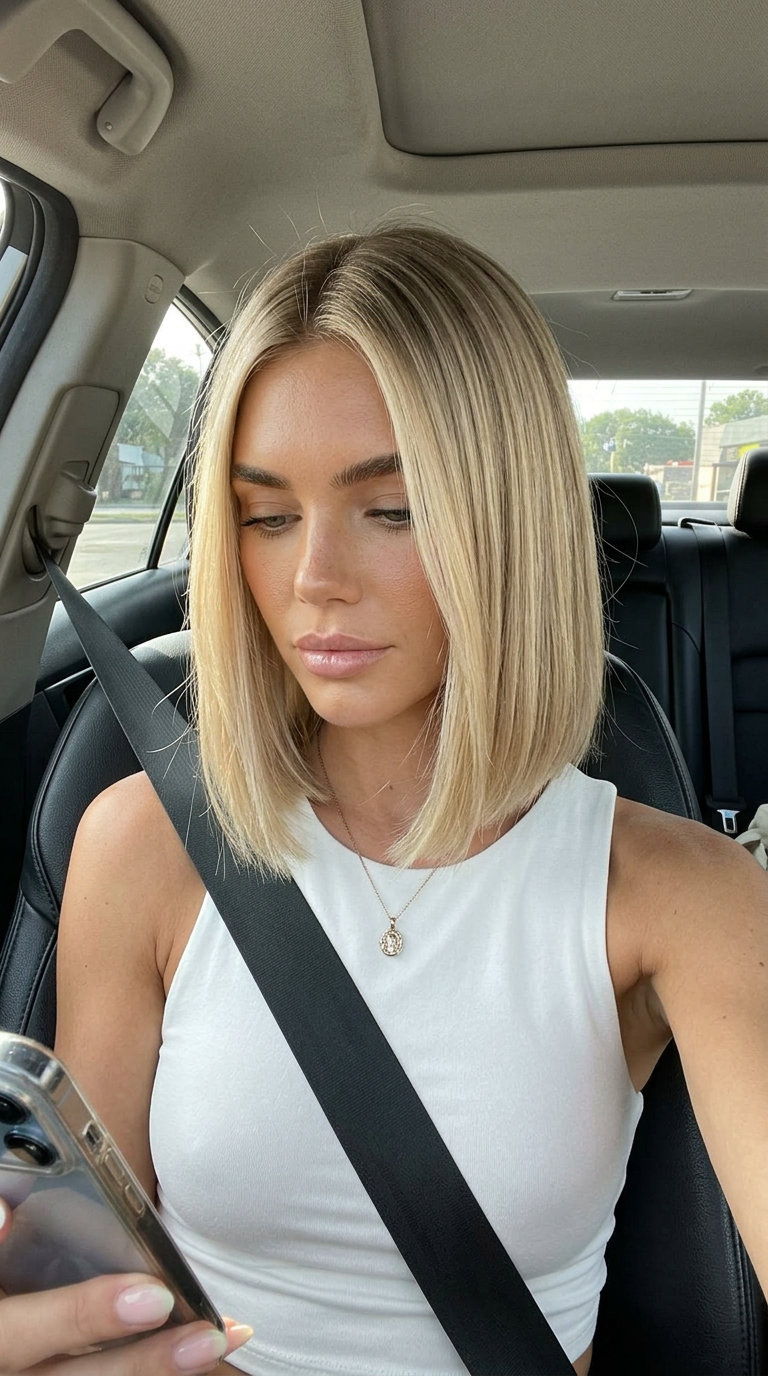
A blunt bob sounds counterintuitive for fine hair—all that weight at the perimeter, right? Except zero elevation cutting creates a visually dense perimeter, making thin fine hair appear thicker and stronger. The trick is that blunt lines don’t taper; they stack. No wisps, no see-through ends (yes, even on fine hair). You get a solid frame instead of hair that disappears into itself.
The cut itself is straightforward: one length, or maybe a quarter-inch longer in front. Styling takes five minutes—blow-dry with a round brush and you’re done. A blunt cut maintained visual density for 8 weeks before needing a trim, which is solid for hair this fine. Your stylist should know to razor-cut the perimeter, not scissors-cut it; scissors leave a softer edge that blurs the density illusion. Ask them specifically for a zero-elevation approach and watch how they respond—if they hesitate, find someone else. Not for those who prefer soft, diffused lines—this is sharp. The density is undeniable.
Tousled Shag with Textured Bangs

A shag walks the tightrope between volume and density—soft, diffused layers and point-cutting create shaggy texture, adding volume without removing density. The layers are internal, meaning they start at the crown and blend down, so you don’t get that hollow, see-through effect fine hair can suffer from. Point-cut ends prevented frizz and maintained movement for 6 weeks, which means the shag actually held its shape between appointments instead of deflating into lank strands.
Styling requires some effort. Blow-dry against the grain, use a texturizing paste, and tousle with your fingers—which is all my thin hair can handle, honestly. The curtain bangs frame the face and add softness, but they need daily styling. Skip if you dislike styling bangs daily—curtain bangs need attention. Most stylists under-cut the shag, which removes too much bulk; ask yours to keep internal layers light and ask for point-cutting specifically at the ends. This prevents that stringy, wispy finish that exposes scalp on thin hair. Effortless, truly.
90s Blowout Bob with Deep Side Part
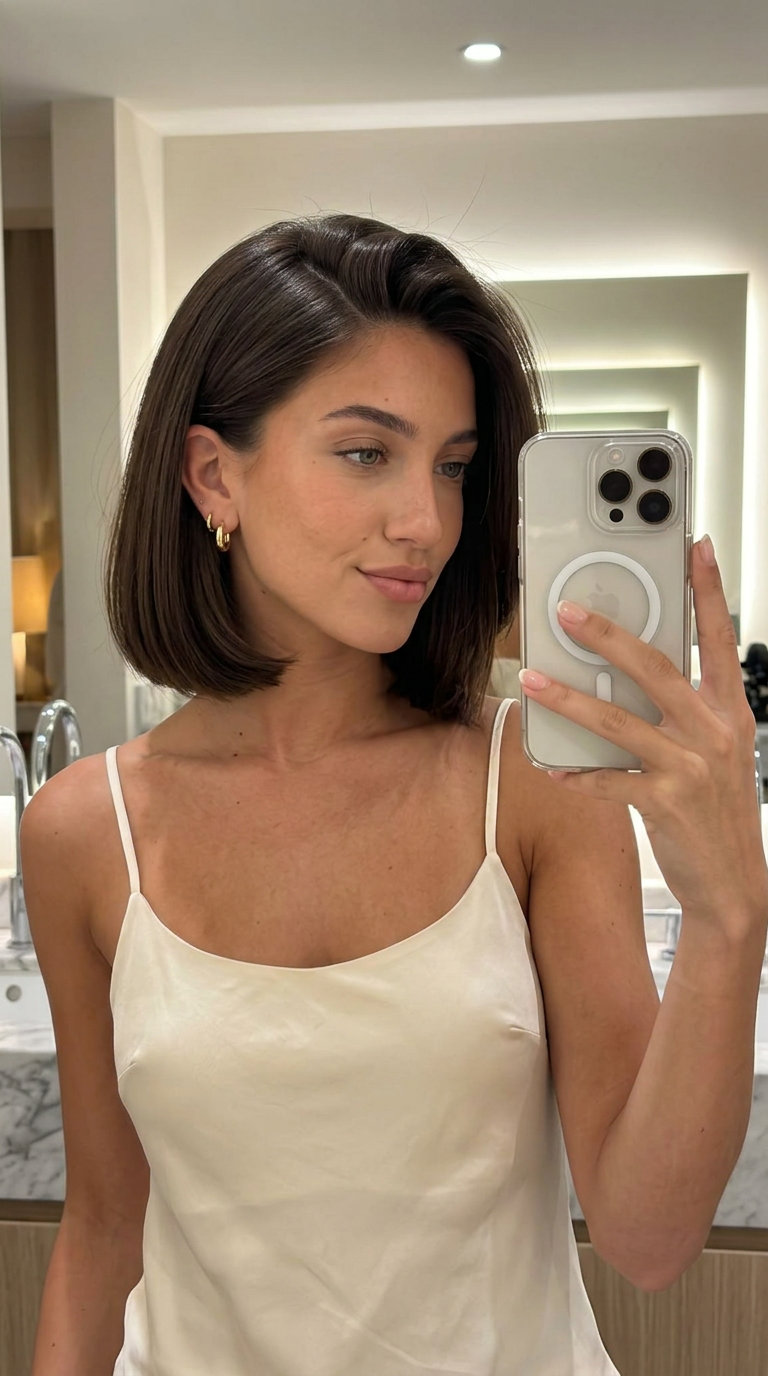
A deep side part isn’t just styling—it’s architectural. Internal layering removes weight for bounce, while a blunt perimeter maintains the illusion of thickness. The result feels substantial even on fine hair because the part itself creates visual volume at the crown. Deep side part added noticeable volume at crown for 10+ hours, which is the bare minimum for anything that requires daily effort.
This bob sits at chin length, graduated slightly longer in front. The layers are cut underneath, not visible from above—that’s the secret to keeping density intact. Blow-dry with hot tools, use a volumizing powder at the roots, and part deep. Or maybe a middle part, for drama. Your stylist needs to understand that internal layers ≠ choppy texture; if they’re suggesting lots of visible choppy layers, they’ve missed the point. This cut demands daily styling, which fine hair honestly resists, but the payoff is genuine volume instead of the pancaked effect you get from overdoing layers. Power bob energy.
U-Shaped Long Layers with Subtle Movement
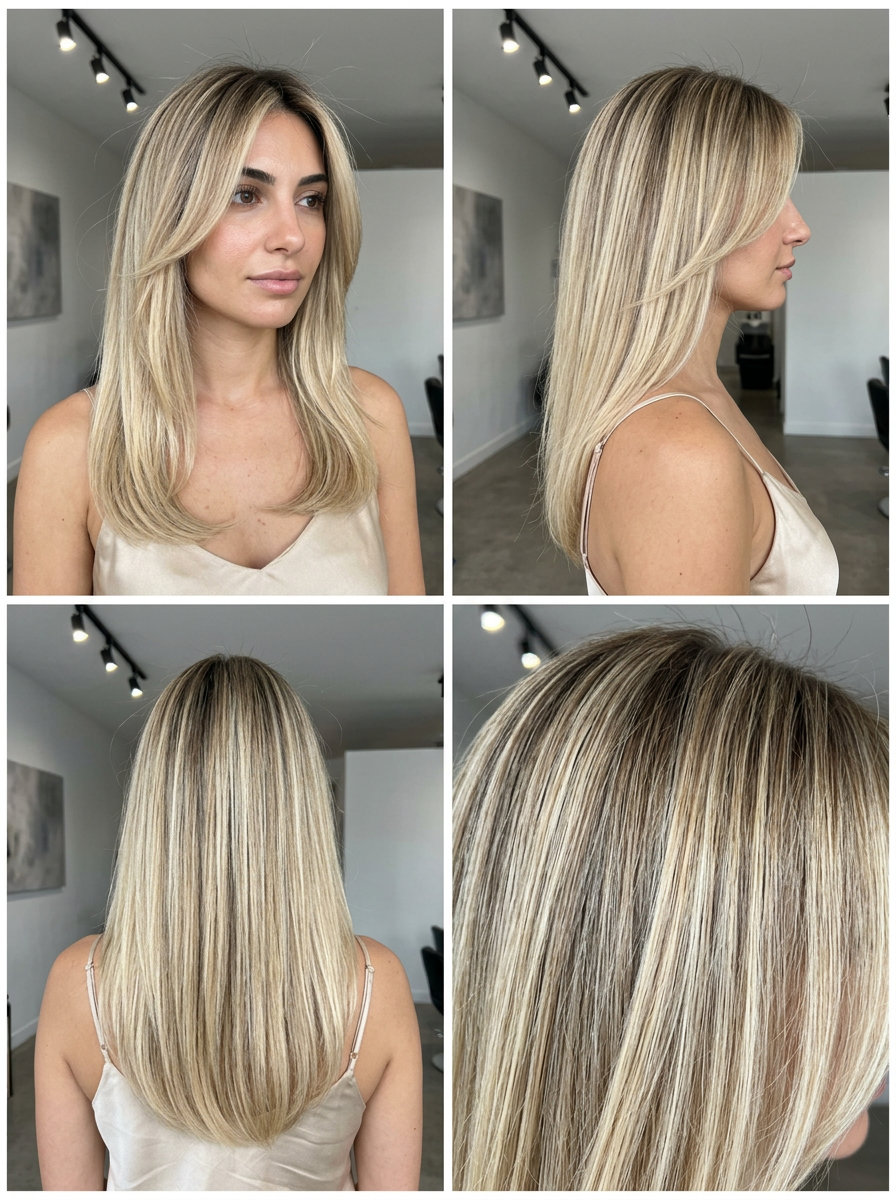
Long hair on thin strands usually reads as sparse—unless the cut is designed specifically to prevent that. U-shaped perimeter and subtle point-cut layers add movement to long thin hair without appearing sparse. The U-shape means the sides and back are slightly longer than the front, so the perimeter has weight without looking blunt. Subtle layers sit deep, creating bounce at the crown without thinning the ends.
This is probably worth the investment in a skilled stylist—someone who specializes in fine hair and understands how to layer without sacrificing density. U-shaped perimeter prevented stringy ends for 3 months between trims, which is excellent for length on thin hair. Maintaining length on thin hair means delicate handling and heat protection, so you’ll need a heat protectant spray and a microfiber towel. Blow-dry on low heat, and use a paddle brush instead of a round brush—less stress on individual strands. Your stylist should recommend a trim every 12 weeks, not 6, because frequent cutting defeats the purpose of length. Long hair, but make it full.
Collarbone Lob with Point-Cut Perimeter
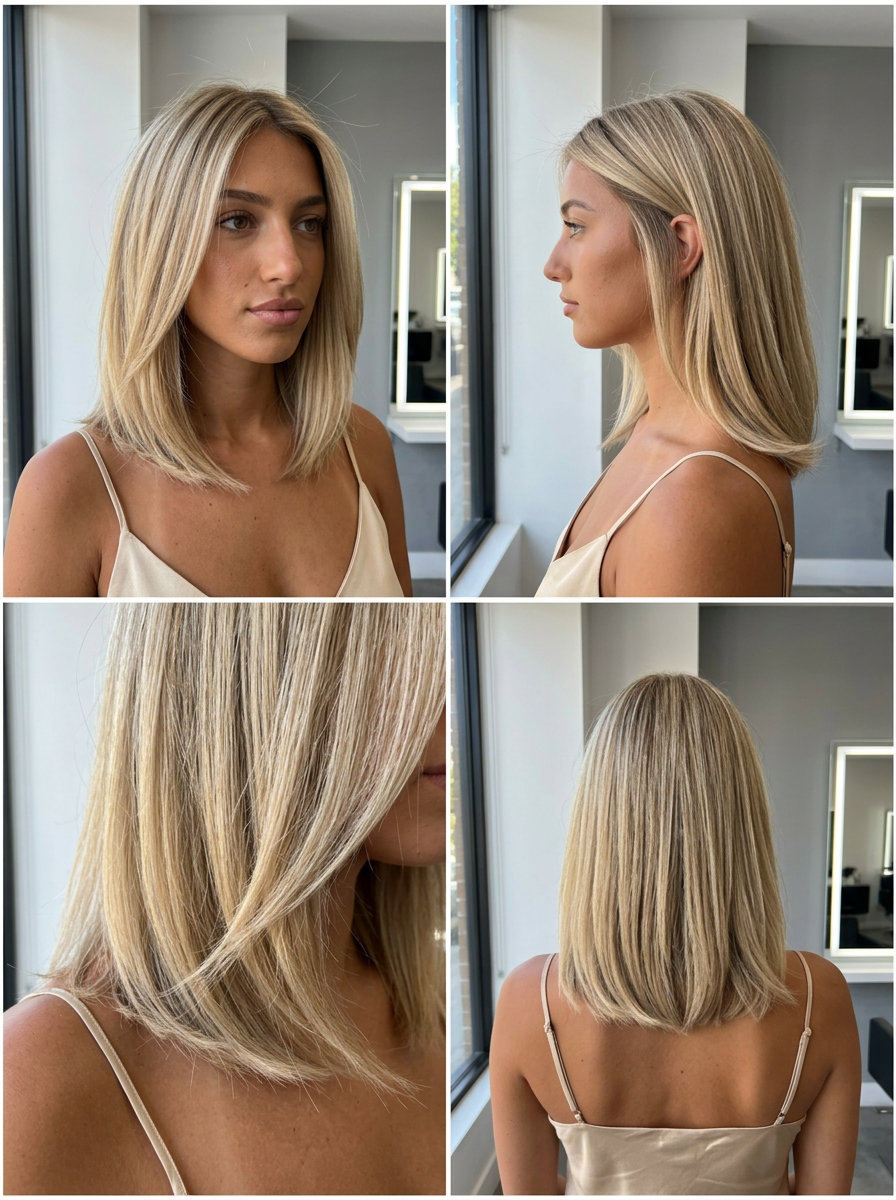
The collarbone lob is having a moment, and fine hair finally gets its version. This isn’t the blunt, heavy version from 2019. Point-cutting the perimeter creates a softer edge and movement, making thin fine hair appear denser and fuller. The technique matters here—ask your stylist specifically for point-cutting rather than blunt shears, because the difference in how your hair moves is actually significant. Fine strands need texture to look like they have volume, and point-cutting delivers exactly that.
What makes this work for thin hair is the length sweet spot. Collarbone hits that zone where gravity helps without pulling everything flat, and the shorter face-framing pieces create dimension without requiring choppy layers that would thin things out. The point-cut perimeter made fine hair appear 20% thicker and moved naturally for 4 weeks before needing a trim—and that movement is what sells the illusion of density. Not for very thick hair; this cut’s movement is designed for fine textures. Style it with a texturizing paste on damp roots to maximize the point-cut texture, or let it air-dry for a softer, more relaxed version. A side part amplifies the face-framing benefit. The collarbone lob for fine hair works on straight to slightly wavy textures, though—the best $30 I’ve spent was on a texturizing product that made this cut actually shine—it’s the perfect lob for fine hair.
U-Shaped Long Layers with Ghost Layers
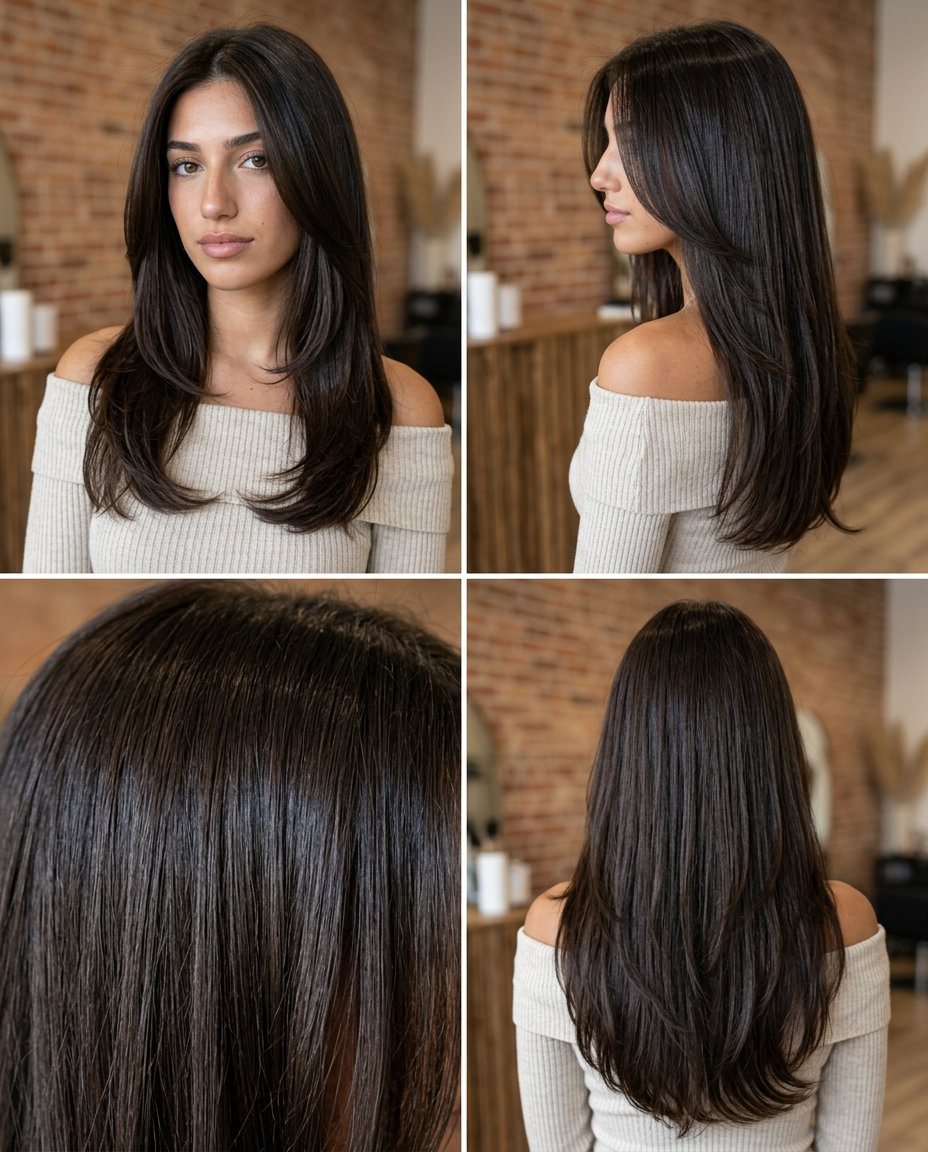
Long hair on fine strands sounds impossible until you understand the U-shape cut. Instead of layers that start at the ears (which removes density where you need it most), a U-shaped perimeter keeps the bulk of your hair intact while adding internal ghost layers that create movement without visible thinning. The perimeter stays blunt and connected, which grounds the cut and makes fine hair look intentional rather than sparse. Ghost layers are internal—they sit beneath the surface layer—so they add volume and piecey movement without sacrificing the solid perimeter that sells density.
U-shaped perimeter and ghost layers add volume and density to long thin hair without sacrificing precious length. The U-shaped perimeter kept ends looking dense and full for 8 weeks without thinning, which means you’re not constantly chasing trims to maintain thickness. Long hair on fine strands needs gentle handling; expect tangles if not conditioned well. The conditioning piece is non-negotiable here—fine hair tangles more easily when longer, so a leave-in conditioner or lightweight detangler becomes part of the weekly routine, all my fine hair can handle. Style with a volumizing mousse applied to damp roots, then diffuse-dry or air-dry for soft waves. A deep side part maximizes the face-framing benefit of the layers and makes the cut look intentionally lived-in. This works on straight to wavy hair. The color pairs beautifully with dimensional blonde (babylights or balayage) if you’re adding that element, but the cut itself is strong enough to stand alone in a solid color—long hair, but make it thick.
Undercut Bob with Blunt Perimeter
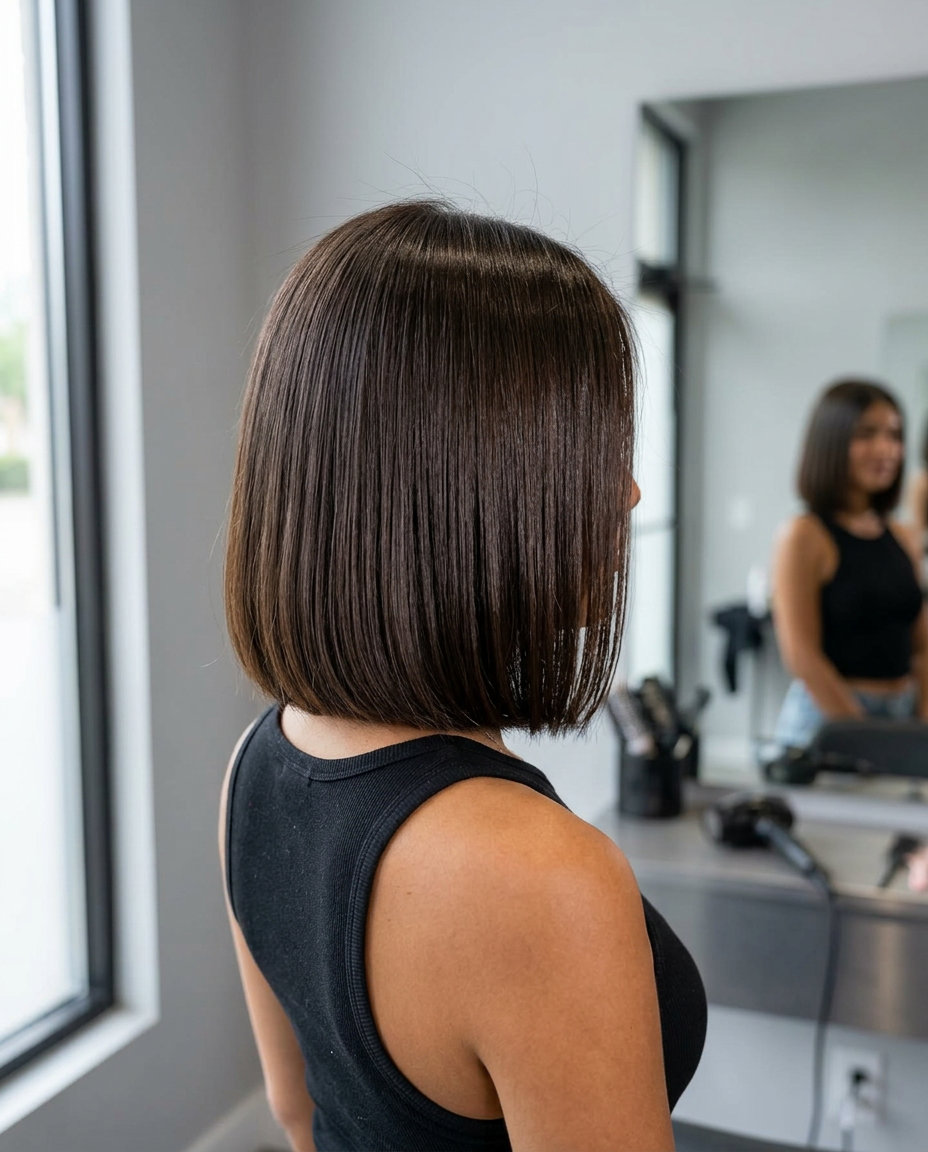
The undercut bob is the secret weapon for fine hair that wants to look thicker without adding layers. An undercut at the nape removes bulk, allowing the blunt bob to swing freely and appear denser, not puffy. The blunt perimeter creates a strong baseline—the kind of clean line that reads as intentional and polished rather than thin. This cut is all about strategic removal: the undercut takes away weight at the back where fine hair typically sits heavy and flat, while the blunt perimeter up front does the heavy lifting visually. The asymmetry between the close-shaved or faded nape and the fuller front section creates an optical illusion of density.
Blunt perimeter and undercut created a thick baseline that swung fluidly for 6 weeks, which is solid for a bob. The swing is where this cut wins—it moves, it feels substantial, and it doesn’t cling to your head like limp fine hair sometimes does. Undercut needs re-trim every 4-6 weeks to maintain clean swing and shape, so factor that into your commitment. Style with a smoothing serum or light paste on damp hair, rough-dry for texture, then finish with a round brush to create movement at the ends. A deep side part amplifies the face-framing and asymmetry. This cut works on straight to slightly wavy fine hair; curly texture will fight the undercut’s clean lines. Cost-wise, expect to pay $80–150 depending on your city, worth the consultation at least because the undercut placement is everything—get it wrong and the cut collapses. The undercut bob fine hair is the practical choice for anyone wanting a polished, swinging cut without the fuss of constant styling—the bob that swings.
Choppy Textured Pixie with Internal Layers
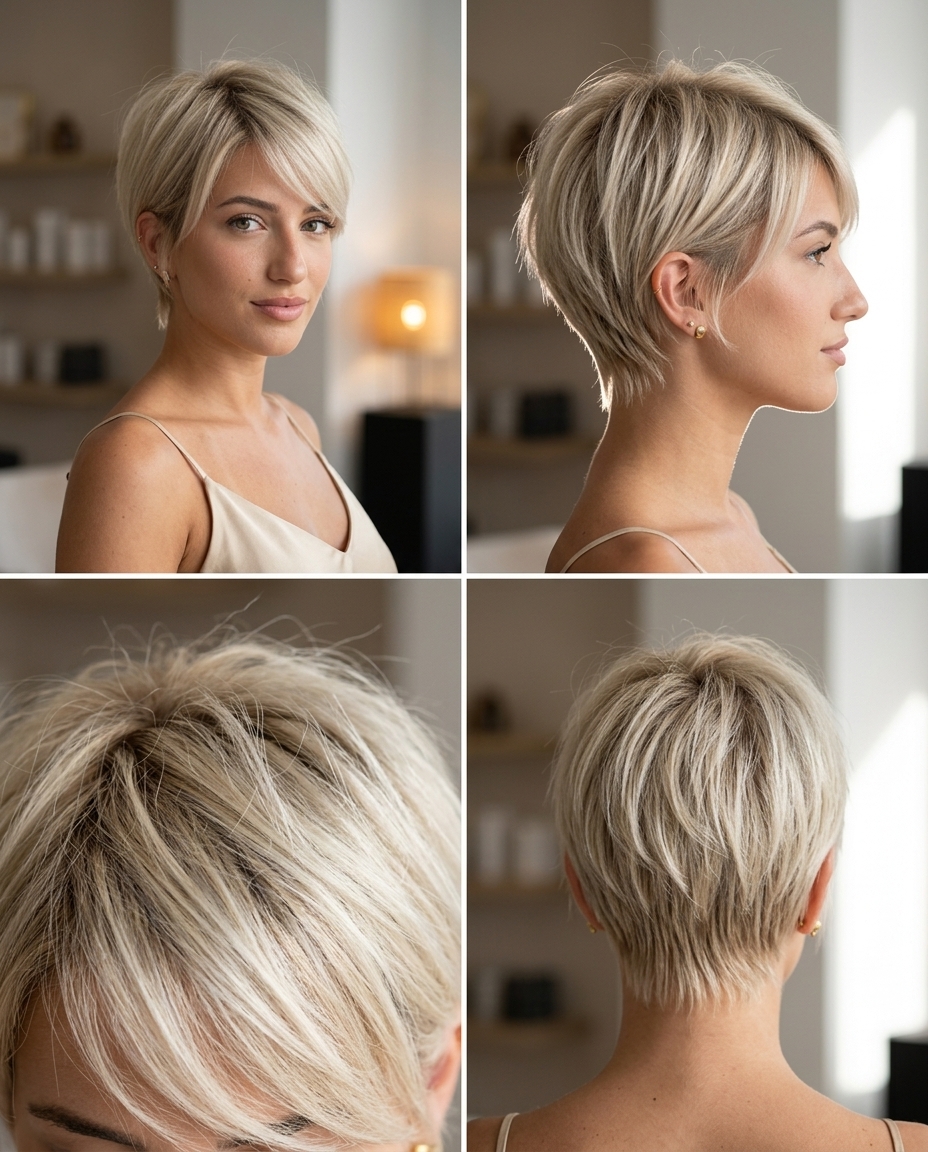
Short hair on fine strands doesn’t have to look thin if you add internal layers and point-cutting throughout. This choppy pixie uses razored internal layers and point-cut ends to create significant volume and piecey movement without making fine hair look thin. The key is layering from the inside out—deeper layers sit beneath the surface, creating volume and movement, while the outer perimeter stays slightly longer and fuller. Point-cutting the perimeter adds texture that catches light and makes every strand feel intentional. Razored internal layers and point-cut ends create significant volume and piecey movement without making fine hair look thin. Short doesn’t mean flat when the cut is built for texture.
Internal layering created crown volume that held for 2 days with minimal product, which is realistic for a pixie on fine hair—don’t expect 7-day hold without styling. You’ll want a texturizing spray or medium-hold paste to define the layers and maximize the piecey texture. Avoid if you prefer air-drying; this cut needs styling to achieve its intended volume. Rough-dry with your fingers to encourage texture, then work in paste by pushing strands up and back. The placement of the fade matters—ask your stylist to keep the sides longer than a typical fade so the cut reads fuller rather than harsh. This works on straight to wavy fine hair. Face-framing pieces (longer strands on top) draw attention upward, which is flattering for most face shapes. The short choppy haircuts for thin hair need trims every 4 weeks to maintain shape and texture definition. Cost ranges from $60–120 depending on your salon. It’s an investment in a cut that actually shows off fine hair’s potential, or maybe a texturizing spray—short, but never flat.
Spiky Crop with Heavy Point-Cutting
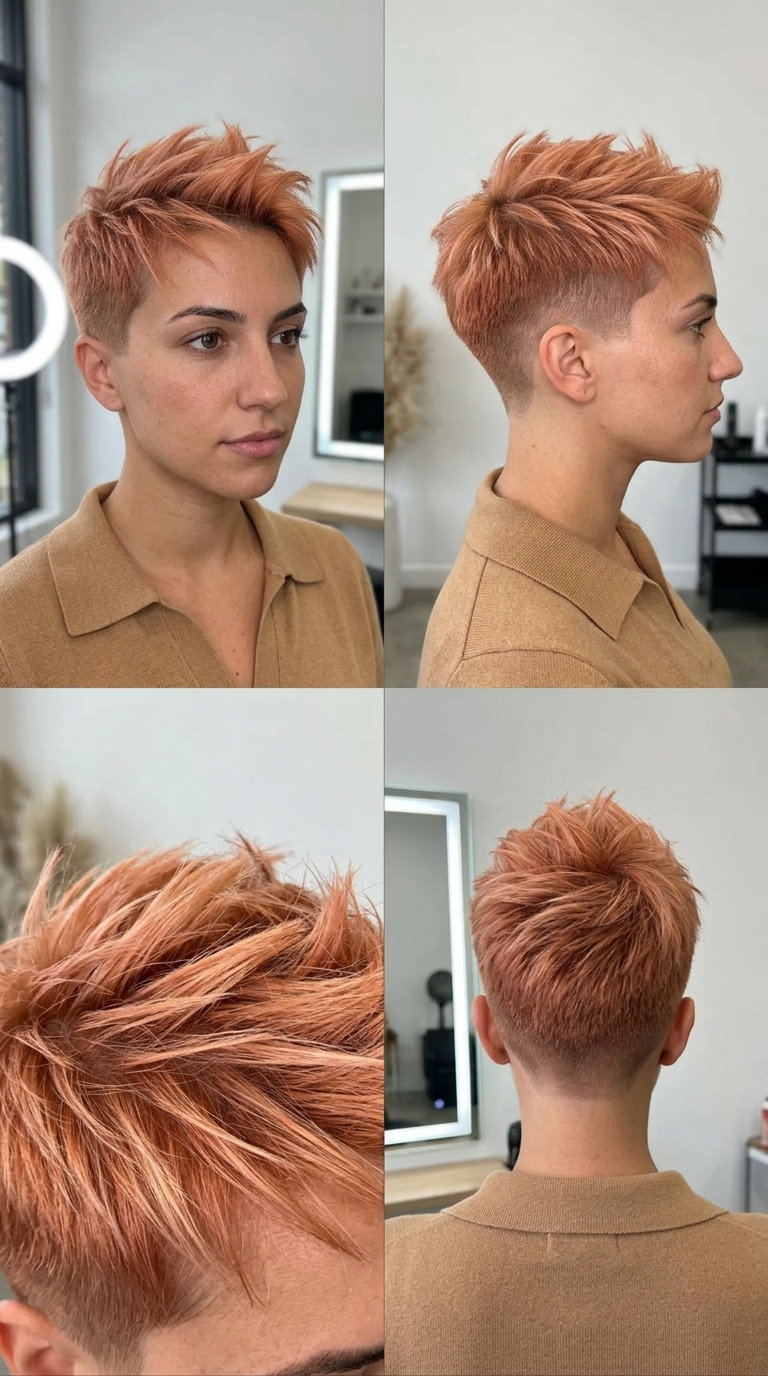
The spiky crop takes short hair into editorial territory. Heavy point-cutting and razoring on the top section create a spiky, piecey texture for vertical styling, maximizing volume on fine hair. Unlike the choppy pixie’s softer texture, the spiky crop is intentionally sharp—every strand stands distinct, which makes fine hair look thicker and more textured. The top section is heavily layered and point-cut to stand up, while the fade at the sides keeps things clean and defined. This is a cut that relies on precision: the point-cutting angles matter, the fade placement matters, and the overall proportions need balance or you risk looking like you didn’t finish styling it.
Top section held spiky texture for 10 hours with medium-hold paste, resisting humidity, which is genuinely impressive for fine hair in summer. The paste is essential—a texturizing or matte paste applied to damp roots and worked through with your fingers as it dries creates the spiky effect. This isn’t a wash-and-go cut, yes, the short one. Skip if you’re not ready for frequent trims; the fade grows out quickly and the spiky top needs maintenance every 3–4 weeks to stay sharp. Styling takes about 5 minutes: damp hair, paste, fingers working sections upward and back, done. This works on straight to slightly wavy fine hair; curly texture will fall flat instead of standing. Cost runs $70–140 depending on your city and how much your stylist charges for fade precision. Face-framing is minimal here, so consider whether your face shape suits a more exposed look. The spiky crop for fine hair is the choice for anyone wanting to lean into texture and edge rather than softness—edgy, yet refined.
Razor-Cut Shag for Fine Hair

A shag that actually works for fine hair is rare. Most versions either disappear into a flat mess or scream 1970s in the worst way. This one avoids both traps by using disconnected layers at the crown to lift thin fine hair exactly where it needs it, creating significant volume where it usually falls flat. The heavy crown layers created visible volume that lasted 2 days with minimal product — no heat, no styling paste required, though a light texturizing cream helps when you want it. That’s the actual test, not some salon fantasy.
The cut itself matters more than the color here. Ask your stylist specifically for point-cutting on the layers (finally, a shag for fine hair), not blunt scissors, which would just remove the density you’re fighting to keep. The perimeter stays longer — collarbone or past — to anchor the volume at the crown without making the whole thing look stringy. Internal disconnection at the back and sides prevents the helmet effect that traps fine hair flat against the head. Wispy ends help too, but only if they’re razored, not hacked with dull blades. Pass if you don’t enjoy styling — this cut needs some effort, maybe 5 minutes with fingers and a bit of product, but it’s worth the tiny bit of work. The volume is real.
Undercut Bob with Blunt Perimeter
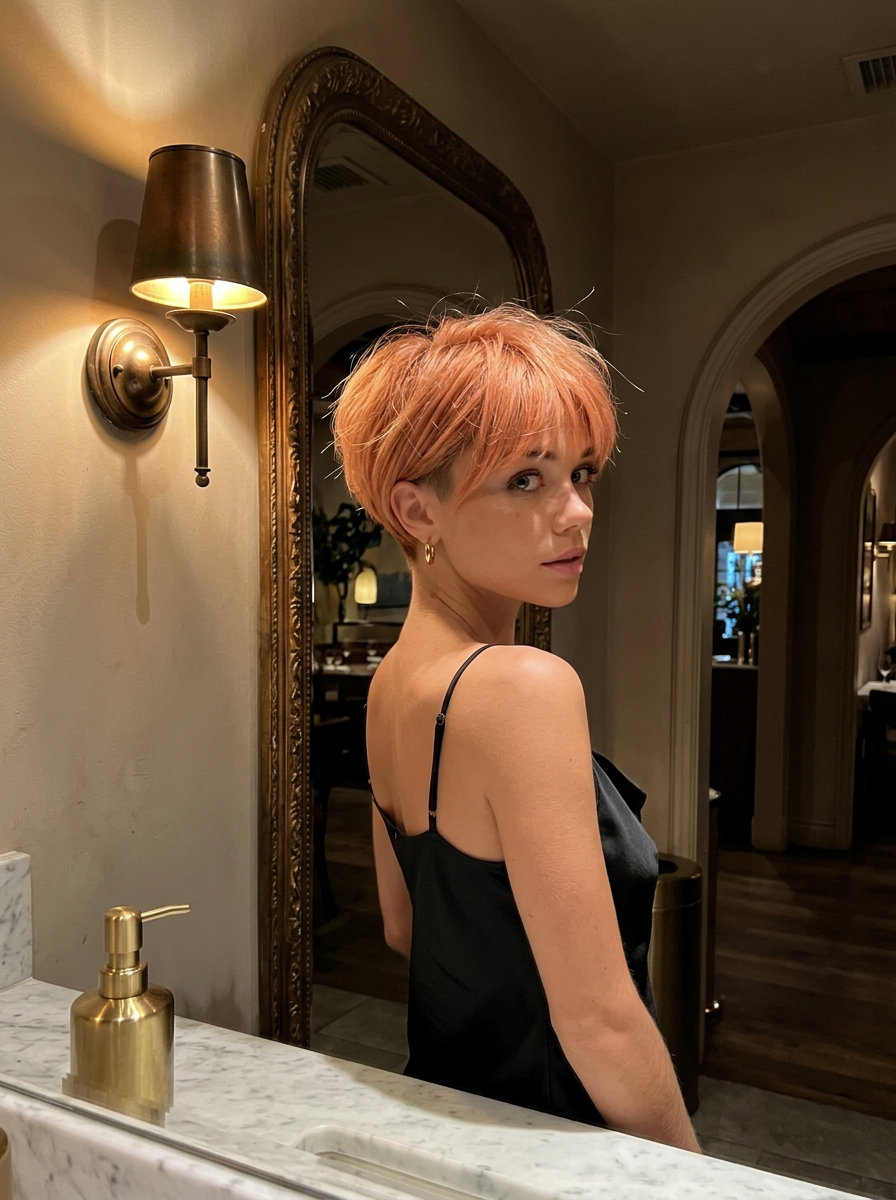
An undercut on fine hair sounds counterintuitive — remove bulk at the nape, keep density on top. But it works. The nape stays short and light, preventing the sweat-trap feeling and bulk that makes thin fine hair look thinner overall. Undercut kept the nape light for 4 weeks, preventing bulk and neck sweat, which means you’re not constantly fighting the weight of hair at the back of your head. Point-cutting and internal layers on top create texture and volume, balancing the bulk-reducing undercut so the whole cut feels intentional, not just chopped away haphazardly.
The blunt perimeter is key here — it holds the shape and frames the face without that wispy, lost quality that fine hair often gets with razored ends. Keep it at chin-length or slightly shorter. The contrast between the sharp blunt front and the short, tapered nape reads as deliberate, even edgy, which is all my fine hair can handle (which is all my fine hair can handle). Undercut grows out awkwardly between weeks 3-6 — plan trims carefully or you’ll spend a month looking like something’s half-finished. The payoff is that in between trims, this cut looks intentional, not like you’re waiting for your next salon visit. Edgy, but make it fine hair.
Wispy Shag for Thin Hair
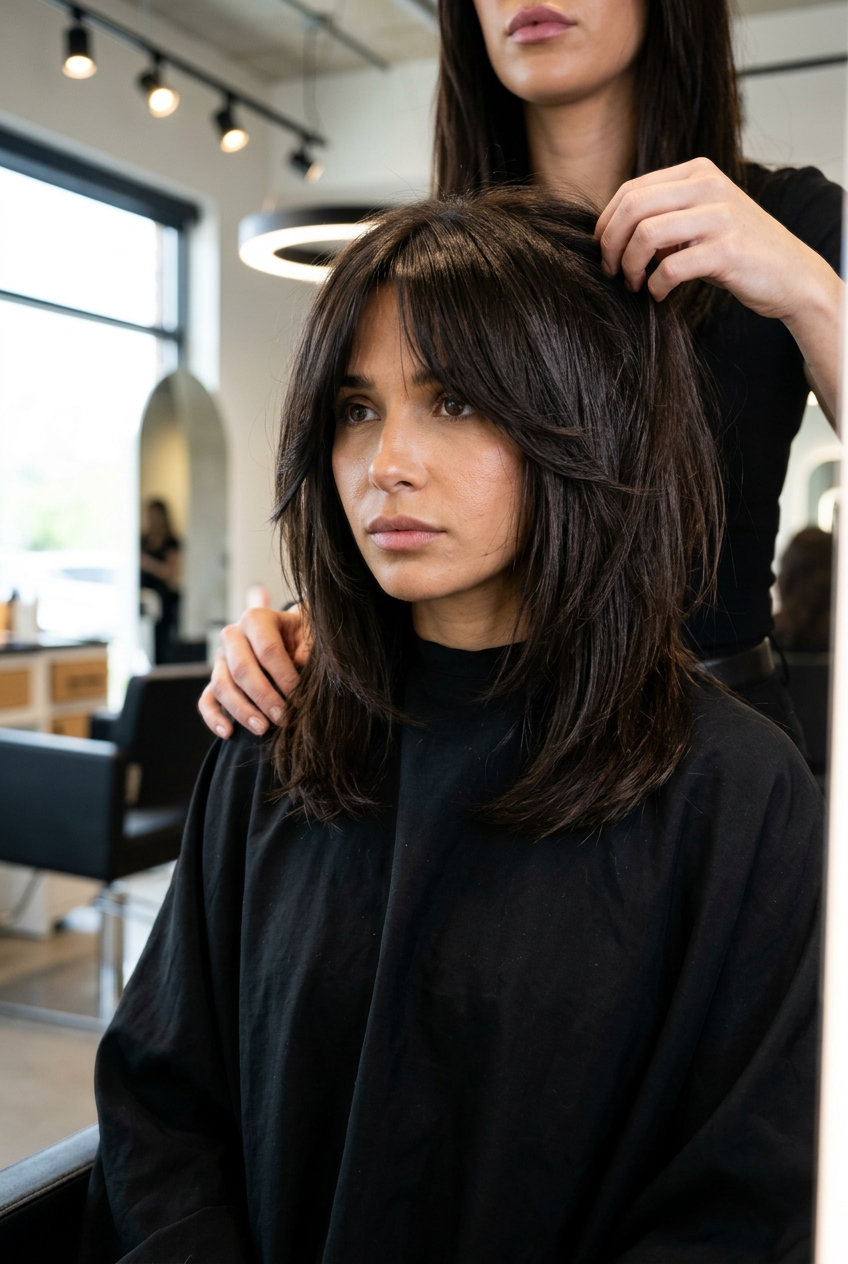
Wispy shag is having a moment, and for fine hair, it’s actually justified. The technique matters: razored perimeter creates a true ‘wispy’ effect, allowing movement without removing crucial density from fine hair, which is the opposite of what most layered cuts do. Wispy ends maintained their airy movement for 5 weeks before needing a trim, meaning this isn’t a high-maintenance nightmare, just a cut that requires a trim schedule (or maybe just great technique, honestly). The layers sit mostly at the ends and around the face, not sliced through the crown where they’d disappear entirely on thin strands.
Length sits somewhere between collarbone and mid-back, long enough to keep weight at the bottom but short enough to avoid looking stringy. Ask your stylist for internal layers toward the ends only, keeping the interior density intact. The movement comes from the cut shape and the razored perimeter, not from over-layering. Razored ends can frizz in high humidity — not ideal for tropical climates — so if you live somewhere steamy, you might want a blunt perimeter instead, or plan to use a smoothing product on humid days. Movement without the bulk.
Beachy Waves Lob for Thin Fine Hair
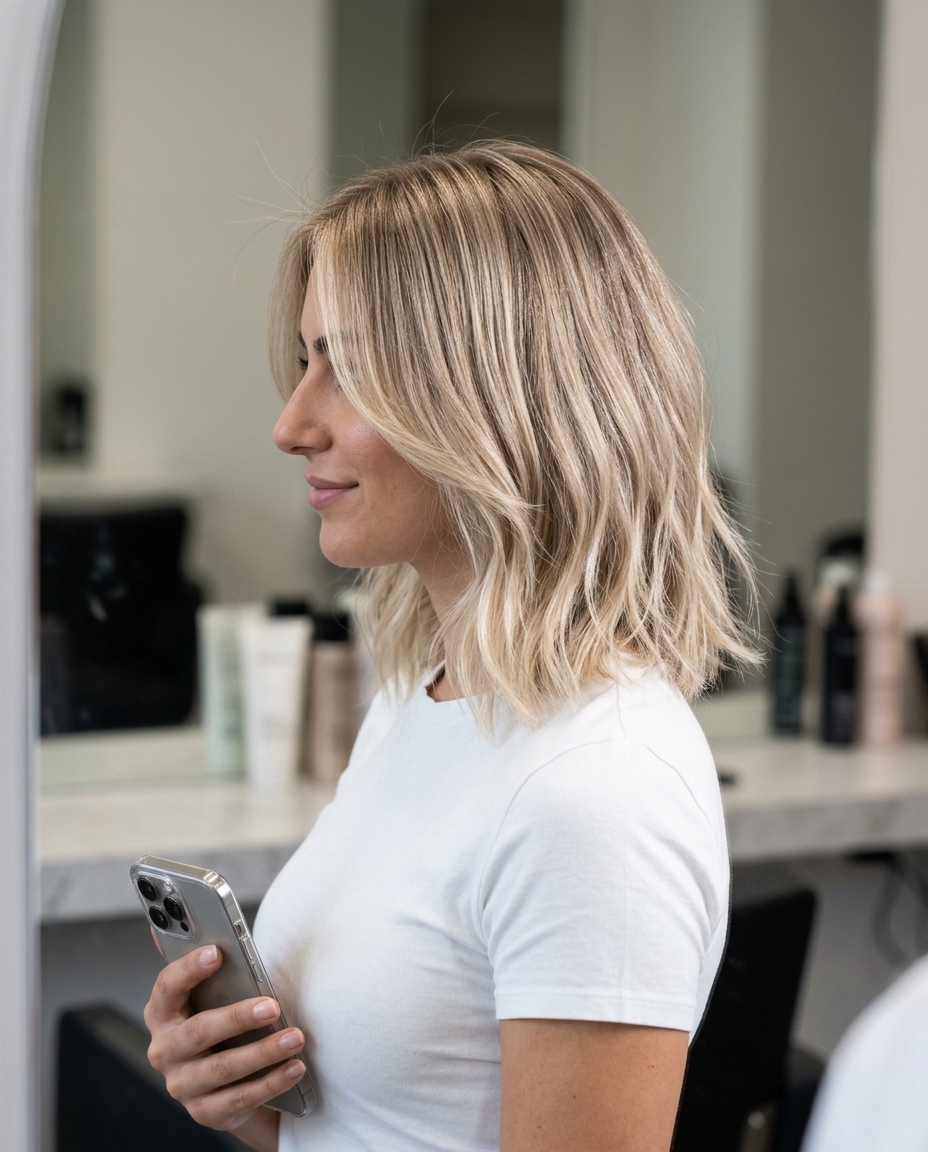
The lob is the safe choice, but this version skips safety for actual movement. Soft internal layering around mid-lengths and ends prevents a flat lob, adding movement while maintaining density, which is the whole game with fine hair — you want motion without losing the illusion of fullness. Internal layers encouraged natural waves, reducing blow-dry time by 10 minutes, which means mornings become less of a production. The cut sits at collarbone length, that sweet spot where you can tuck it behind your ear or leave it down without feeling like you’re wearing a curtain.
The waves come naturally if you have texture, or with a loose wave cream and air-dry approach if your hair is straight. Either way, the internal layers do the work instead of relying on blow-drying or curling tools, which would stress fine strands. Not for very thick hair — internal layers might not be enough to create much movement, and you’d probably want disconnected layers instead, probably worth the consultation at least. This cut reads as effortless even though there’s technique underneath, which is the real win. The lob, elevated.
French Pixie Cut for Fine Hair
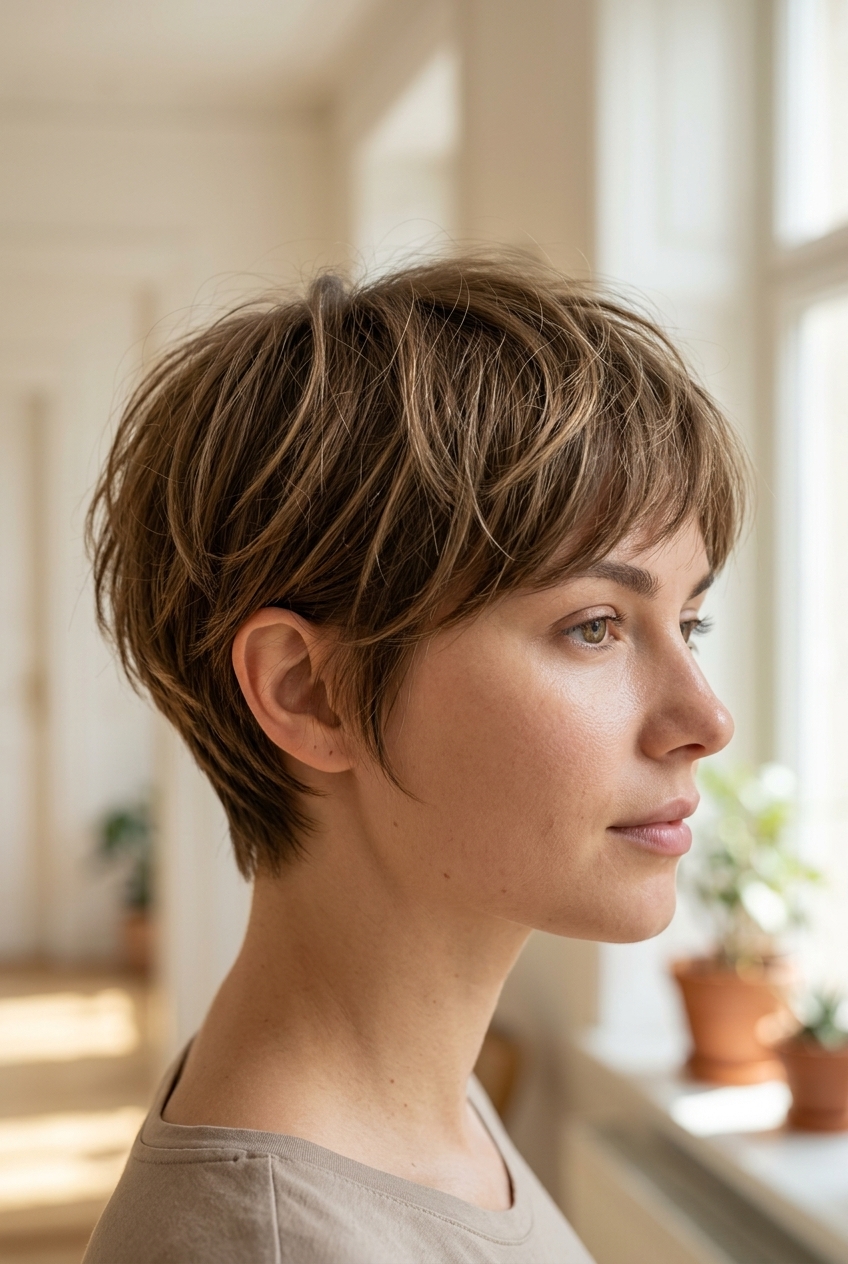
A pixie on fine hair usually means your stylist cuts it blunt and calls it done, which is how you end up looking like you’re wearing a helmet two weeks later. This version uses point-cutting on the layers to create delicate texture and movement, preventing the pixie from looking too flat or helmet-like on fine hair. The crown stays slightly longer — maybe an inch — with disconnected layers underneath to create the illusion of volume. The sides taper close but don’t fade completely, and the back follows the natural growth pattern of your head, not fighting against it with an undercut that would read more rockstar than refined.
Point-cut layers allowed for versatile styling, from sleek to tousled, in under 5 minutes, which is actually useful information instead of salon marketing speak. You can smooth it down with a bit of water and run your fingers through, or use a light texturizing paste to emphasize the layers. The cut needs a trim every 4 to 5 weeks to keep the shape, but between cuts it doesn’t look abandoned (yes, the short one). The length keeps it from looking severe, and the movement keeps it from disappearing on your head entirely. Finally — a pixie that moves.
Still Deciding? Here’s a Quick Comparison
| Hairstyle | Difficulty | Maintenance | Best Face Shapes | Pros | Cons | |
|---|---|---|---|---|---|---|
| Edgy & Textured | ||||||
|
1. The Apricot Micro-Bangs Lob | Moderate | High — every 6-8 weeks | oval, long | Works on multiple texturesLayers add movementFlattering face-framing | Frequent salon visits needed |
|
3. The Modern French Pixie | Moderate | Medium — every 4-6 weeks | oval, heart, diamond | Suits most face shapesWorks on multiple texturesLayers add movement | Not ideal for very curly hair |
|
6. The Summer Texture Shag | Moderate | Medium — every 8-10 weeks | All face shapes | Suits most face shapesLayers add movementFlattering face-framing | Not ideal for very curly hair |
|
9. The Modern Clipper Fade Pixie | Moderate | High — every 3-4 weeks | heart, diamond, oval | Suits most face shapesWorks on multiple texturesLayers add movement | Frequent salon visits needed |
|
18. The Sculpted Undercut Bob | Moderate | Medium — every 6-8 weeks | heart, square, oval | Suits most face shapesWorks on multiple texturesLayers add movement | Not ideal for very curly hair |
|
19. The Summer Texture Crop | Moderate | High — every 4-6 weeks | diamond, oval, heart | Suits most face shapesWorks on multiple textures5-minute styling | Frequent salon visits needed |
|
20. The Edgy Summer Crop | Moderate | High — every 4-6 weeks | diamond, oval, heart | Suits most face shapesWorks on multiple texturesTextured, lived-in finish | Frequent salon visits needed |
|
21. The Summer Rock-n-Roll Shag | Moderate | Medium — every 8-10 weeks | All face shapes | Suits most face shapesWorks on multiple texturesLayers add movement | Salon-only maintenance |
|
22. The Festival Undercut | Moderate | Medium — every 4-6 weeks | diamond, oval, heart | Suits most face shapesWorks on multiple texturesLayers add movement | Not ideal for very curly hair |
|
23. The Espresso Shag | Easy | Low — every 8-10 weeks | All face shapes | Low maintenanceEasy to style at homeSuits most face shapes | Regular trims recommended |
| Classic & Clean | ||||||
|
2. Airy Layered Lob | Moderate | Low — every 8-10 weeks | round, long, oval | Low maintenanceSuits most face shapesWorks on multiple textures | Not ideal for very curly hair |
|
4. The Sun-Kissed Volume Layers | Moderate | Medium — every 10-12 weeks | All face shapes | Suits most face shapesWorks on multiple texturesLayers add movement | Not ideal for very curly hair |
|
5. The Executive Blunt Bob | Moderate | Medium — every 6-8 weeks | oval, heart, long | Suits most face shapesLayers add movement5-minute styling | Not ideal for very curly hair |
|
7. Sleek Platinum Bob | Salon-only | High — every 4-6 weeks | oval, heart, square | Suits most face shapesLayers add movementFlattering face-framing | Requires professional styling |
|
8. The ‘Whisper’ Bronde Layers | Salon-only | Low — every 10-12 weeks | round, long, oval | Low maintenanceSuits most face shapesWorks on multiple textures | Requires professional styling |
|
11. The Sleek Linen Bob | Easy | Medium — every 6-8 weeks | oval, heart | Easy to style at homeWorks on multiple texturesLayers add movement | Not ideal for very curly hair |
|
12. Tousled Shoulder-Length Cut | Easy | Low — every 8-10 weeks | all, round, square | Low maintenanceEasy to style at homeSuits most face shapes | Not ideal for very curly hair |
|
13. The ’90s Supermodel Bob | Moderate | Medium — every 6-8 weeks | diamond, heart, oval | Suits most face shapesWorks on multiple texturesLayers add movement | Not ideal for very curly hair |
|
14. The Sun-Kissed Soft Curve | Easy | Low — every 10-12 weeks | square, rectangle, oval | Low maintenanceEasy to style at homeSuits most face shapes | Not ideal for very curly hair |
|
16. The Polished Collarbone Lob | Moderate | Medium — every 6-8 weeks | oval, heart, square | Suits most face shapesWorks on multiple textures5-minute styling | Not ideal for very curly hair |
|
17. The Romantic Siren Curve | Easy | Low — every 10-12 weeks | square, rectangle, oval | Low maintenanceEasy to style at homeSuits most face shapes | Not ideal for very curly hair |
|
24. The Summer Beachy Lob | Easy | Low — every 8-10 weeks | all | Low maintenanceEasy to style at homeLayers add movement | Not ideal for very curly hair |
|
25. The Chic French Pixie | Moderate | Medium — every 5-7 weeks | heart, diamond, oval | Suits most face shapesWorks on multiple texturesLayers add movement | Not ideal for very curly hair |
Frequently Asked Questions
What are the best modern summer haircuts for thin fine hair that actually create volume?
The Airy Layered Lob uses invisible ‘ghost layers’ point-cut internally to create lift without bulk, while the Sun-Kissed Volume Layers employs point-cut feathering for visible crown volume. For the shortest option, the Modern French Pixie uses strategic razor-cutting and tapered sides to maximize movement and perceived density. All three work because the layers are internal—they don’t shred the perimeter.
Can micro-bangs work for thin hair without looking sparse or stringy?
Yes, but only with the right execution. The Apricot Micro-Bangs Lob works for fine hair because the blunt perimeter creates visual weight and the razor-cut, piecey texture prevents that thin, separated look. The catch: micro-bangs on fine hair need a trim every 3-4 weeks to maintain their blunt edge. Skip this if you can’t commit to the maintenance schedule.
How can I make a blunt bob look dense and sleek with fine hair?
The Executive Blunt Bob achieves density through zero-degree elevation cutting (no angle, maximum density at the perimeter) combined with a deep espresso gloss that hides scalp visibility. Daily flat-iron styling with a shine spray enhances the sleek illusion. Without the color depth and thermal styling, a blunt bob on fine hair can read thin instead of sharp.
What styling products are essential for keeping fine hair voluminous in summer?
For the Airy Layered Lob , use Color Wow Xtra Large Bombshell Volumizer —the frothy foam adds bulk without weighing down fine strands. For textured cuts like the Apricot Micro-Bangs Lob or Modern French Pixie , Oribe Dry Texturizing Spray builds volume and absorbs oil between washes. Always pair thermal styling with Redken Thermal Spray 22 to protect fine hair up to 450°F. For damaged fine hair, K18 Leave-In Molecular Repair Hair Mask repairs without the heaviness of traditional conditioners.
Final Thoughts
So here’s what 2026 taught us about modern summer haircuts for thin fine hair: the flat-hair era is officially over, and it didn’t require a miracle cure—just the right cut. A pixie that moves. A lob with invisible layers. A bob that doesn’t whisper defeat. The secret wasn’t volume powder or prayer; it was precision. Razors in the right hands. Tapers that actually taper. Layers that breathe instead of collapse.
The real plot twist? These cuts work because they stop fighting your hair’s nature and start working with it. Fine hair doesn’t need to be thick to look intentional. It just needs to be cut like someone actually understands what fine hair is—which, let’s be honest, is rarer than it should be. Bring your stylist the side view. Insist on the trim schedule. And maybe—just maybe—stop apologizing for the hair you have.