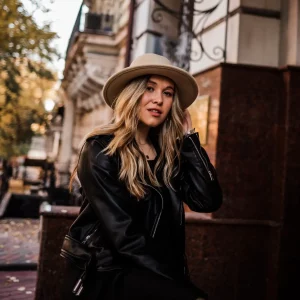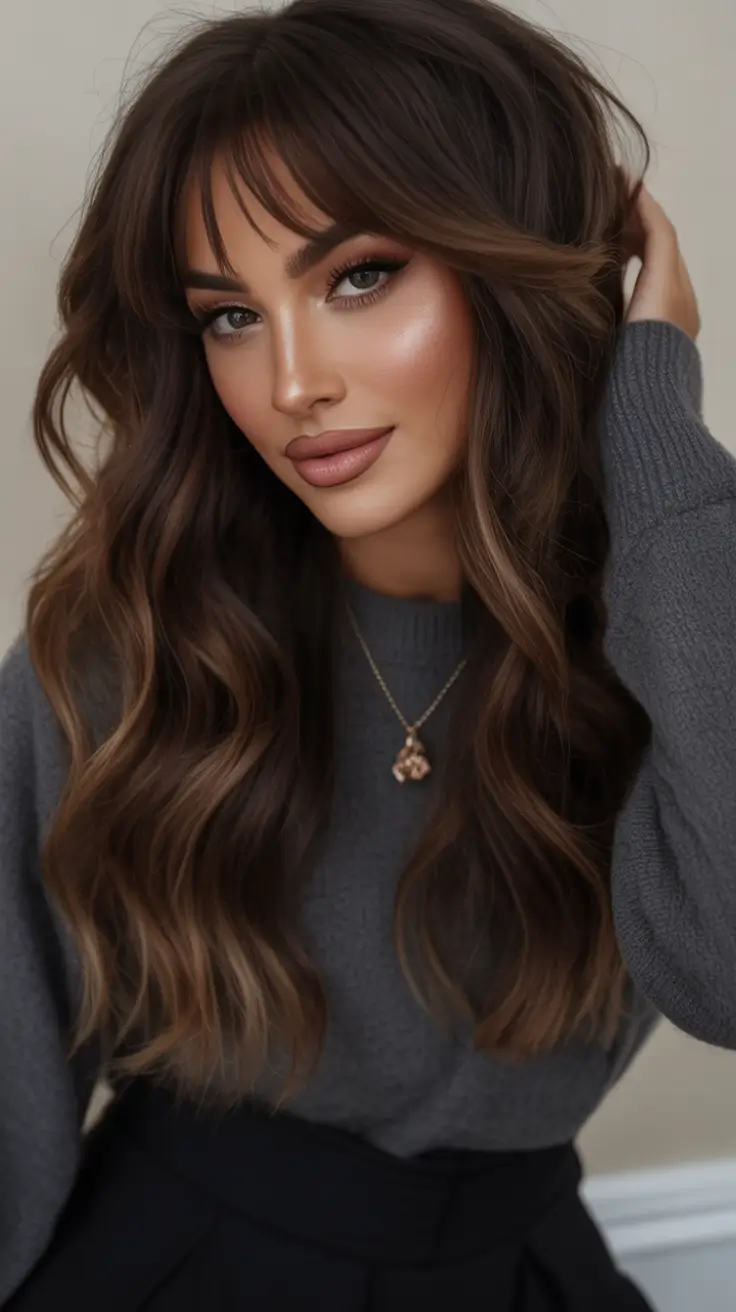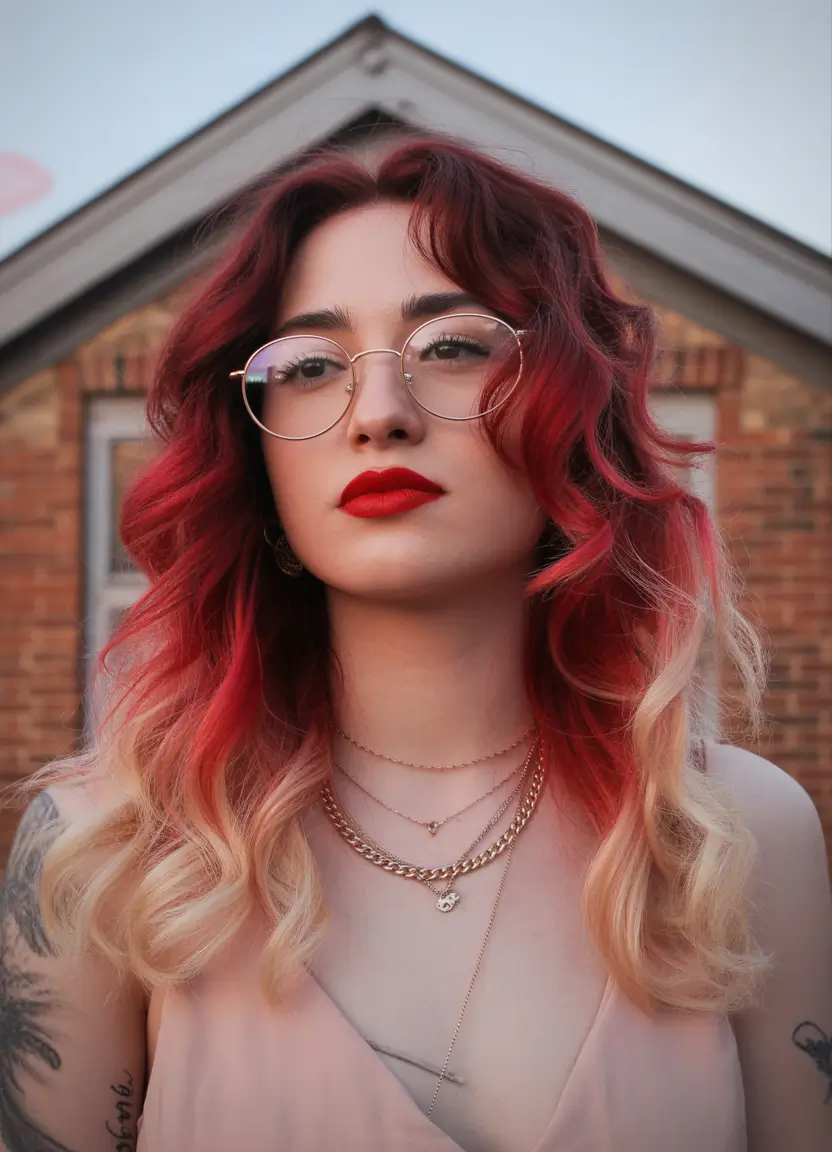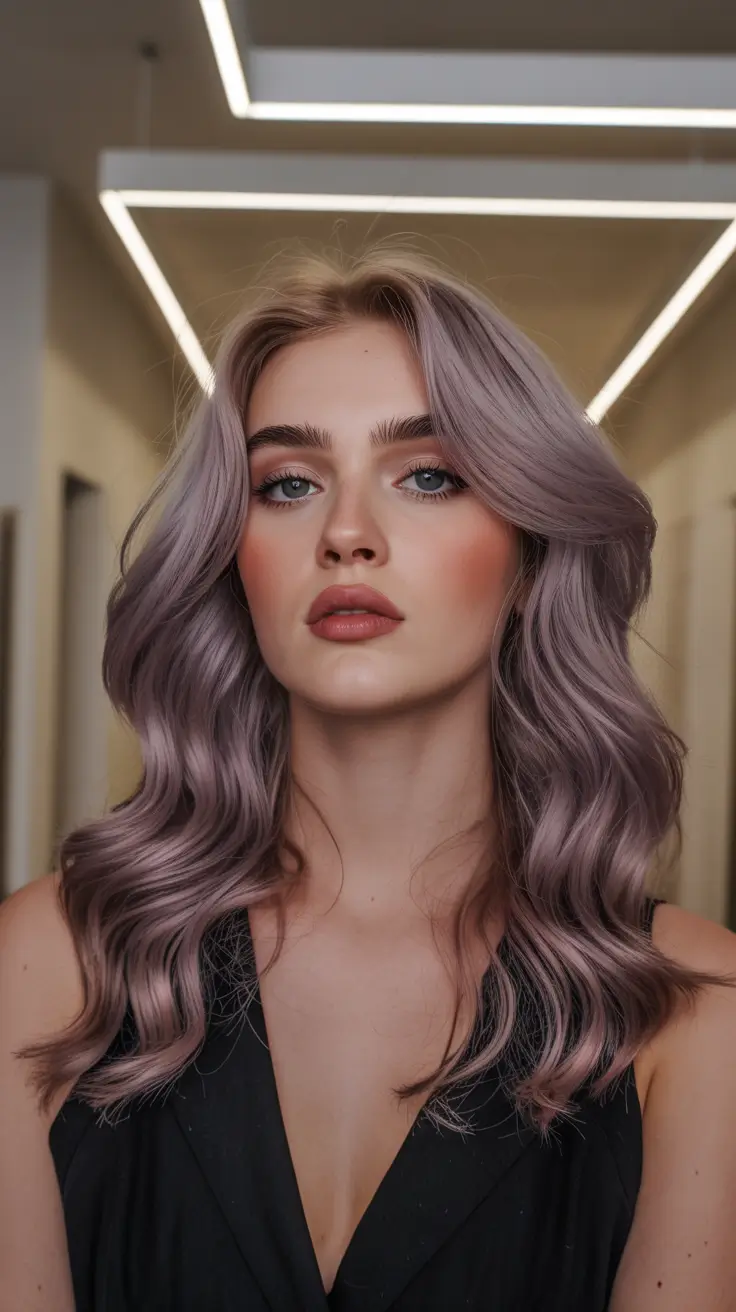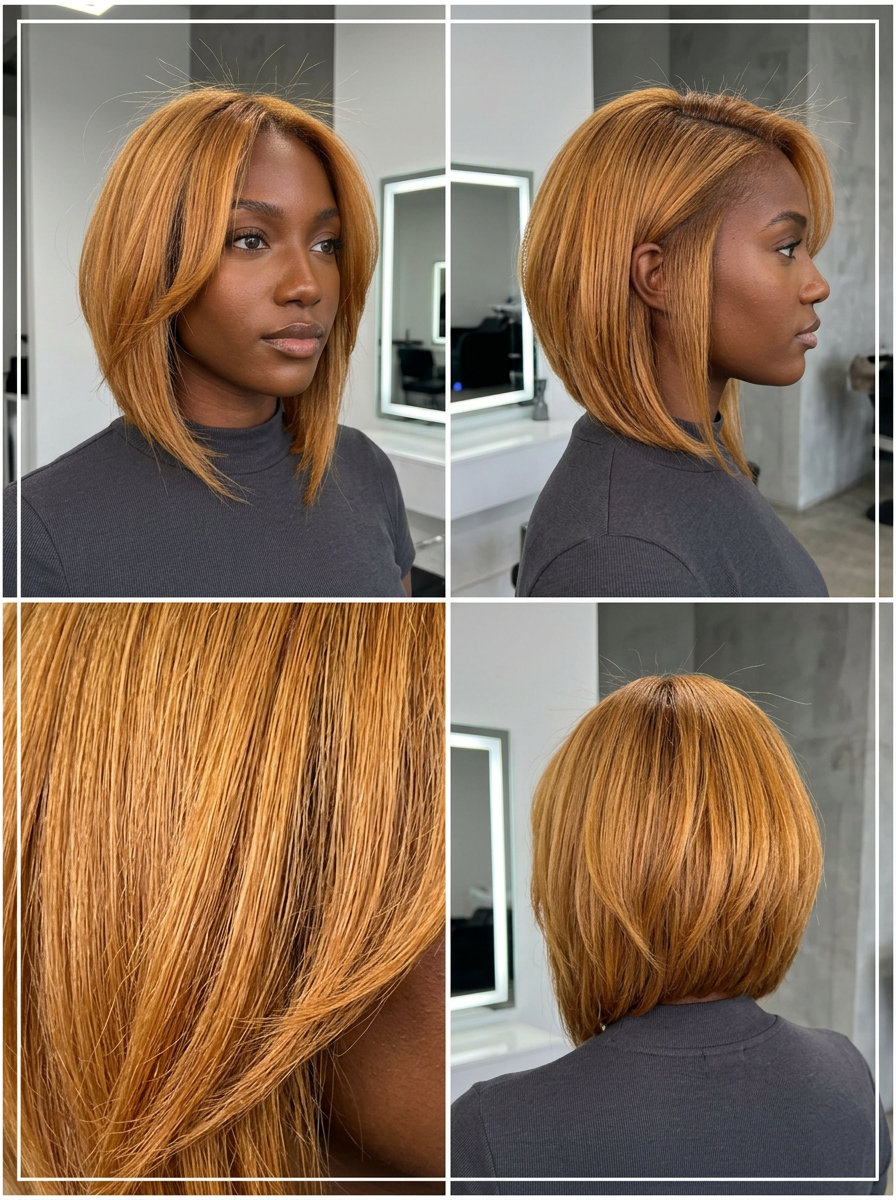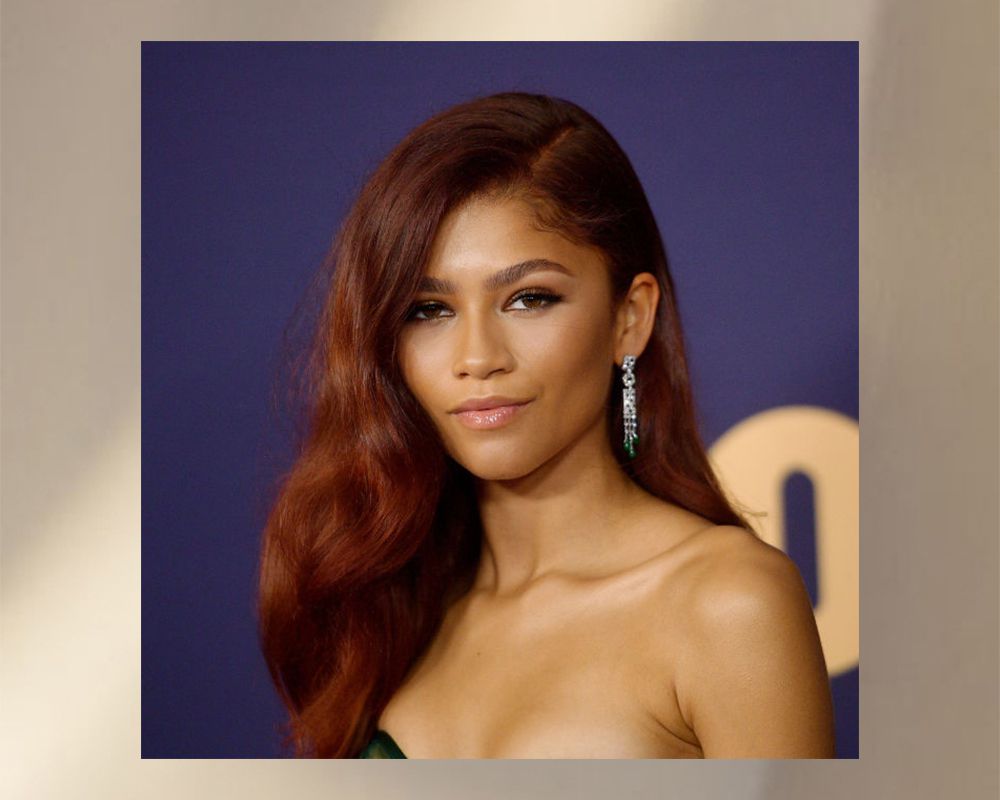
Honey Amber, Midnight Plum, Toasted Marshmallow — if you’ve scrolled past a single Instagram reel this spring, you’ve seen them. Zendaya’s caramel-blonde transition, Keke Palmer’s moody purple moments, Beyoncé’s ‘Cowboy Carter’ era highlights. The salon chairs are booked solid, and it’s not because everyone suddenly wants the same thing. It’s because dark skin finally has a color palette that actually glows instead of just sitting there.
Summer hair color for dark skin 2026 spans from warm, glowing ambers to cool-toned plums and earthy terracottas — shades that work with the Butterfly Cut’s dimensional movement, the structured Baroque Bob, or a tapered afro with color-popped ends. These aren’t one-size-fits-all trends; they’re built for warm undertones, golden complexions, cool deep skin, and everyone in between.
I watched my colorist spend forty minutes explaining why my first highlight attempt looked flat, then another session fixing it with a glaze. That’s when I realized: the color isn’t the hard part. Knowing which one actually complements your skin is.
Espresso Hair Gloss
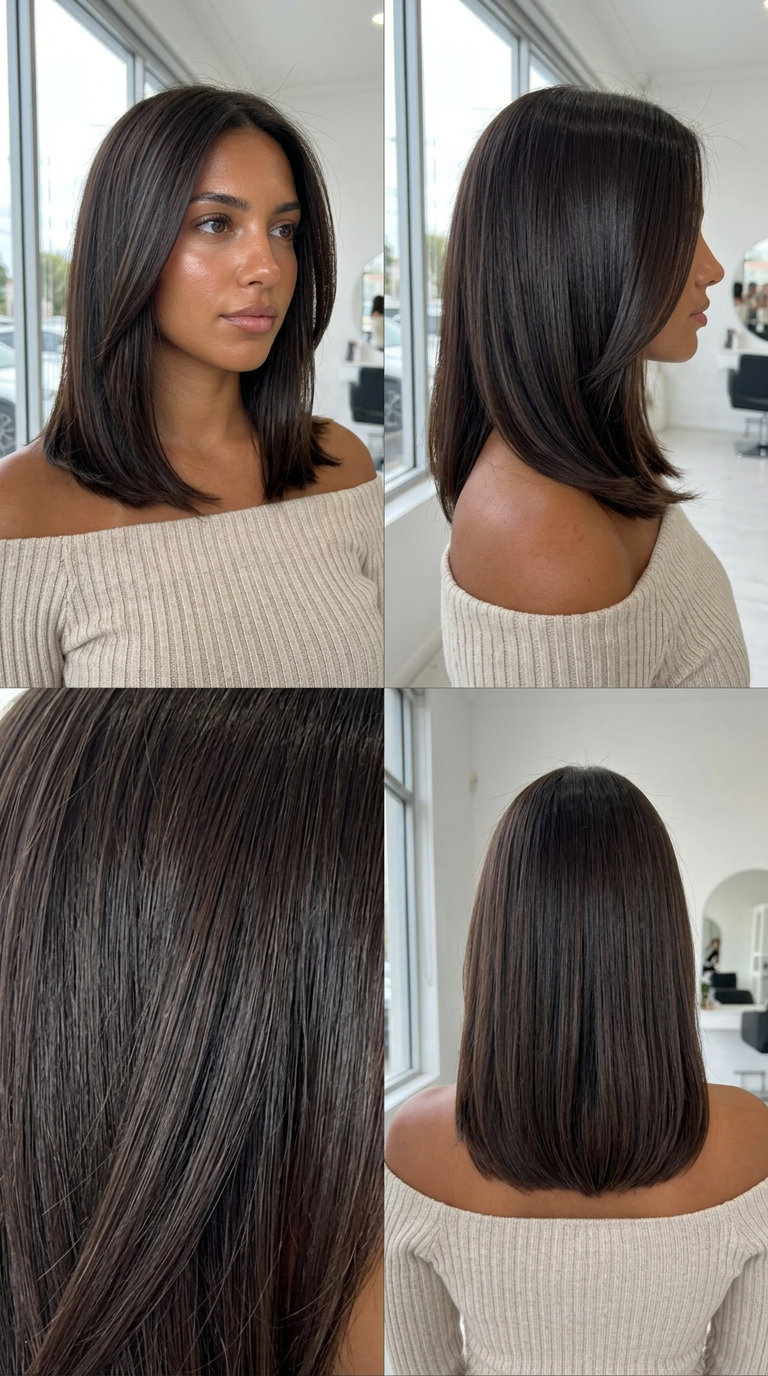
Deep, glossy brown that reads like liquid when it catches light—that’s the whole appeal here. A espresso hair gloss for dark skin isn’t about going lighter or brighter; it’s about amplifying what’s already there, adding dimension that looks intentional, not accidental. Cool-toned demi-permanent gloss deepens your natural base, adding ‘liquid hair’ shine without the permanent color commitment, which matters if you’re not ready to bleach.
The real magic happens in the first month. Demi-permanent gloss maintained intense shine and deepened color for 4 weeks without fading—no flat, dull settling that happens with permanent color. After that window closes, demi-permanent color washes out, requiring regular glossing for sustained depth and shine (the secret to expensive-looking hair). Most people refresh every three to four weeks if they want that fresh-from-the-salon depth, or stretch it to six weeks if some fade doesn’t bother you. Liquid hair achieved.
Oxblood Red
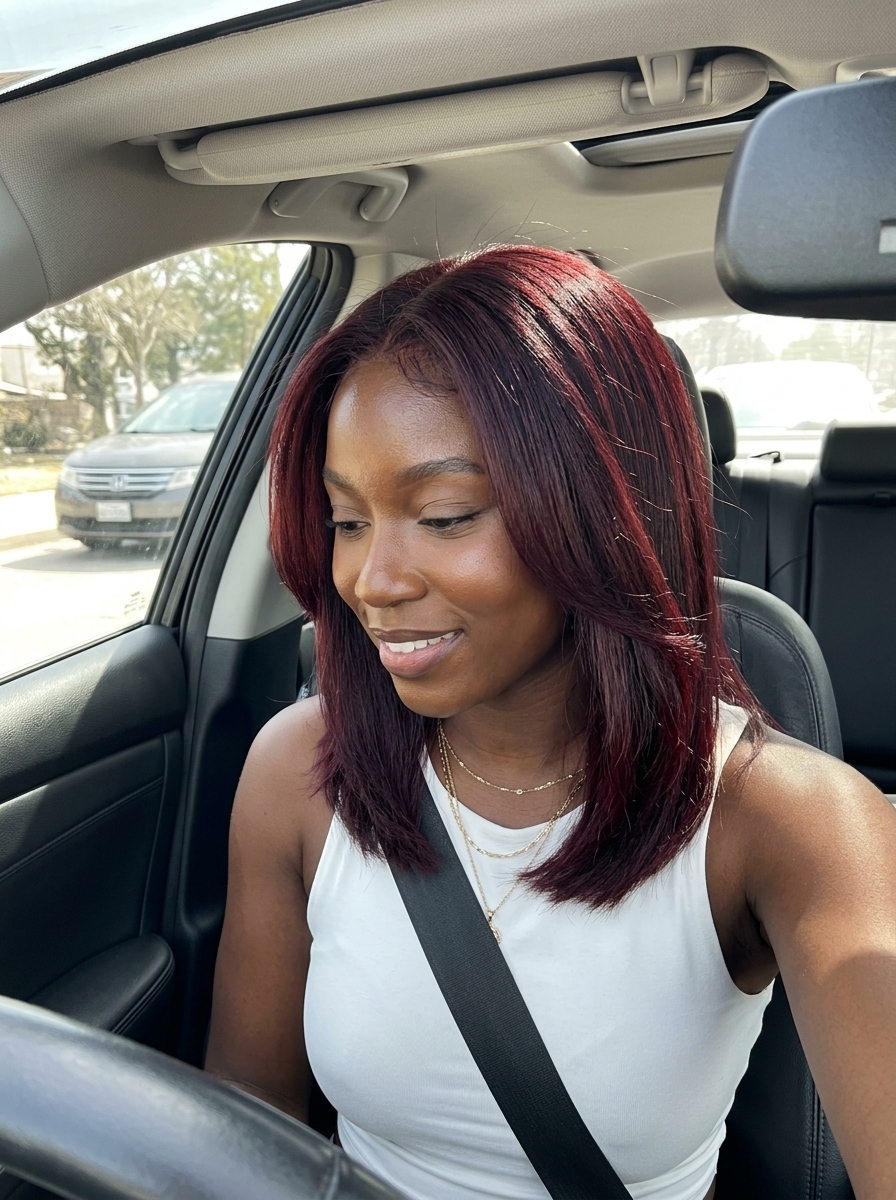
Oxblood is red for people who want red to actually read as red—not burgundy, not wine, not that murky brown-red that fades into sadness after two weeks. This is vibrant, dimensional, unmissable. The oxblood hair color dark skin lives in that overlap where cool undertones meet warmth, which means it lands differently depending on whether your base is neutral or warm-leaning. Color-depositing masks replenish pigments, extending vibrant red life between salon visits significantly, so the maintenance isn’t just salon visits—it’s also what you do at home.
Red color-depositing mask maintained vibrancy for 2 weeks, preventing quick fading between washes, which is why people who commit to red commit to the ritual of it. You’re looking at a color-depositing treatment twice a week, maybe three times if you wash your hair that often. Vibrant red fades quickly, requiring consistent at-home color-depositing treatments for upkeep, which is all my patience can handle. Red is high commitment.
Honey Blonde Balayage
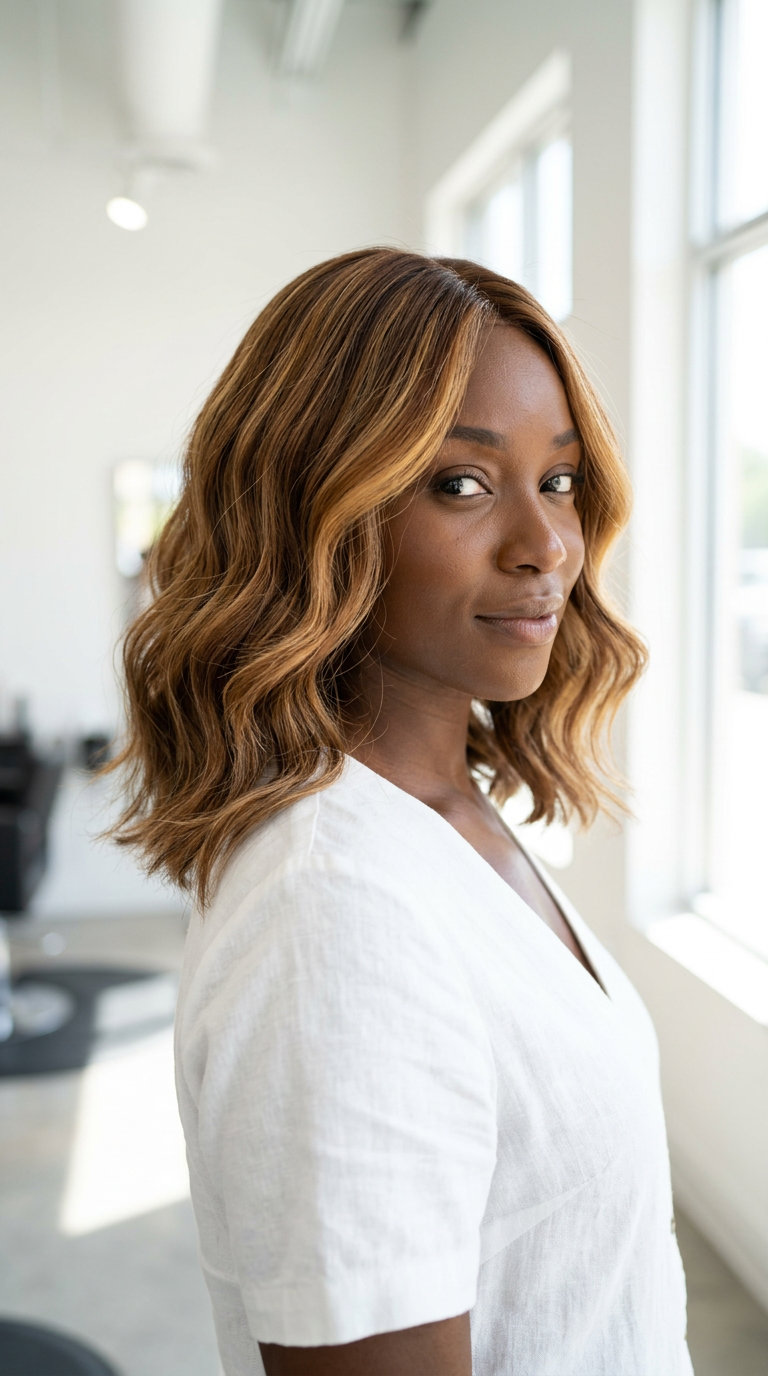
Hand-painted balayage creates soft, natural dimension and a low-maintenance grow-out by avoiding harsh lines—this is the whole sell, and it delivers. Honey blonde on dark skin has this radiant quality where the warmth reads as intentional depth rather than damage. You’re not going for platinum contrast here; you’re going for that honey blonde balayage dark skin moment where the lighter pieces blend so seamlessly that people aren’t sure if it’s all one color or if you’ve got something going on. Balayage grew out seamlessly for 3 months, needing no harsh line touch-ups at the roots, or maybe just a really good gloss every six weeks to keep the honey from turning brassy.
This is the color investment that actually respects your time and your budget. Most people wait four to five months between full sessions because the painterly placement means no regrowth line screaming at you from the mirror. The maintenance sits somewhere between “barely anything” and “you’ll want to refresh,” depending on how amber you like your summer vibe. Sun-kissed perfection.
Midnight Plum
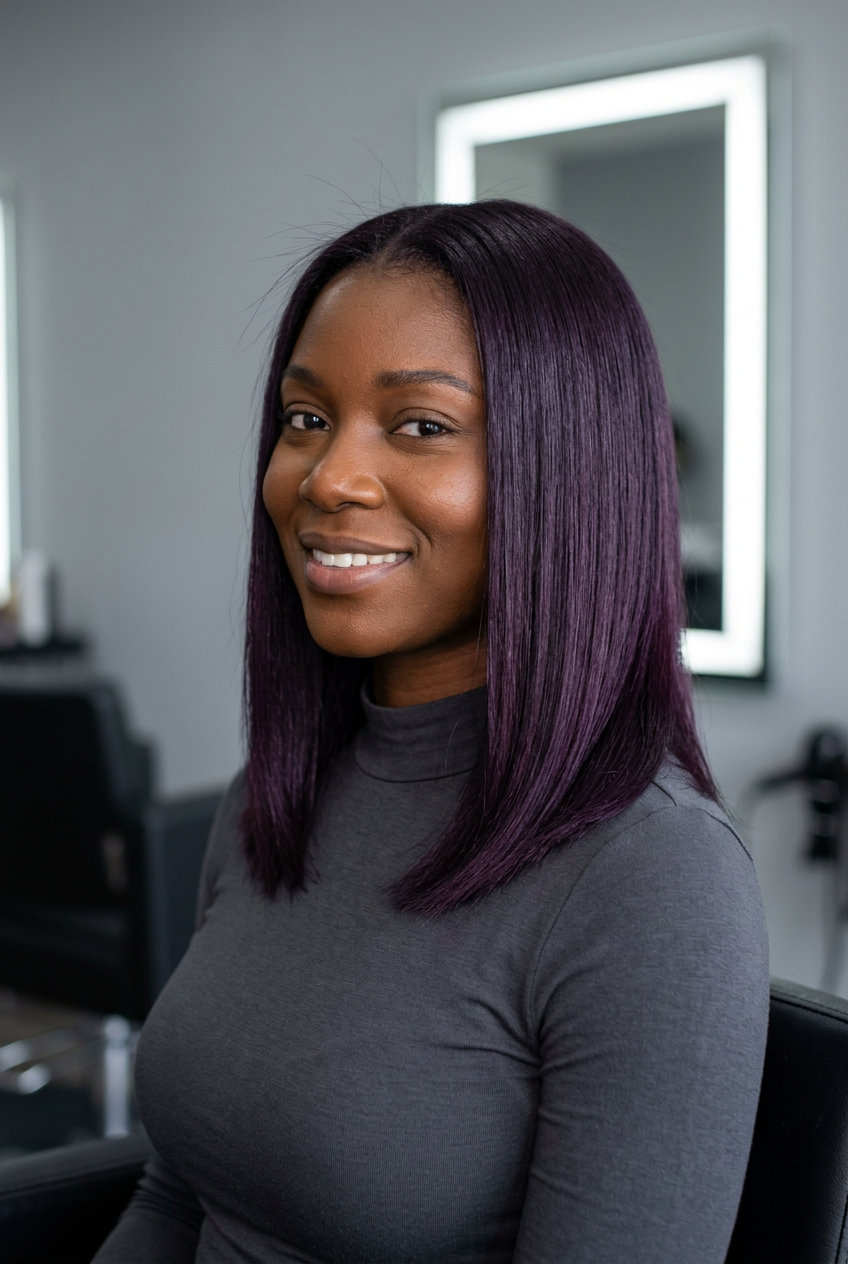
Plum isn’t black—it’s black with a secret. Violet-based black creates a multi-dimensional plum reflect, adding depth that appears vibrant in light, so in direct sunlight or even ring light, you catch these purple undertones that shift the entire vibe. This is for people who thought they wanted solid black but actually wanted something that moves. The midnight plum hair color dark skin works because plum reads as depth on deep skin tones, not as an obvious tone shift—it just looks like really, truly premium black until the light hits.
Plum reflect was visible in direct sunlight for 5 weeks before needing a refresh, which means you’re not stuck with an obvious fade into muddy brown—it just softens into a deeper version of itself. Not ideal for warm skin tones—the cool violet base might wash you out, which is worth a consultation with your colorist about your specific undertones, probably worth the consultation at least. This one’s a cool-tone privilege, but if that’s you, it’s the black that finally makes sense. Unexpected depth.
Iced Mocha
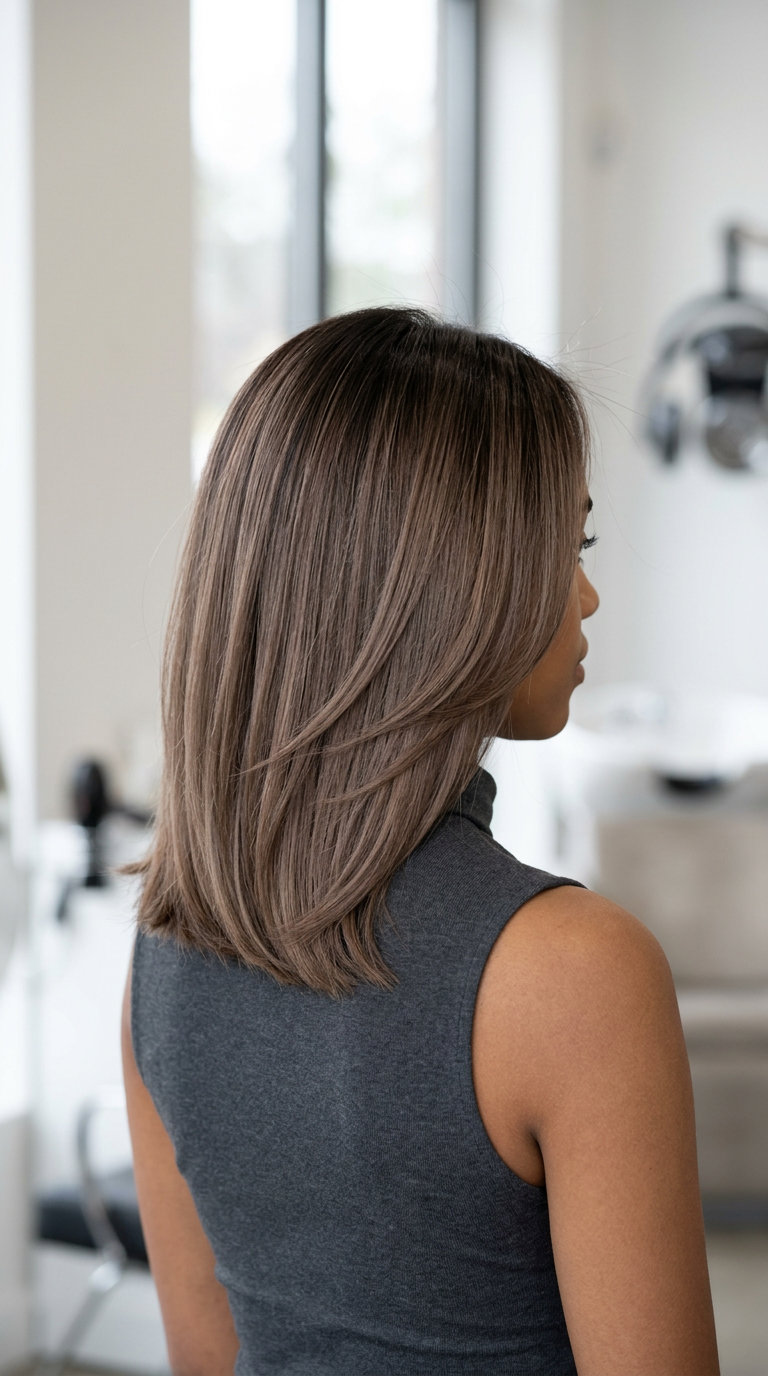
Cool brown with a soft frost of blonde that catches light without screaming for attention—iced mocha is the color that looks expensive because it requires restraint. This isn’t balayage chaos or full-coverage color; it’s a shadow root technique paired with cool-toned brunette and maybe some subtle placement pieces around the face. Shadow root technique blends natural roots, extending time between appointments and creating soft dimension, so you’re not fighting a line every month. The iced mocha hair color dark skin flatters cool deep skin tones by adding a frosted quality without stripping warmth from your face.
Shadow root allowed 8 weeks between salon visits, maintaining a soft, blended grow-out, which is the real value here—time stretches. Achieving this cool tone requires expert toning to avoid any unwanted brassiness (my favorite for avoiding brassiness), so don’t let just anyone touch this one. The maintenance is a mid-range commitment: purple shampoo twice a week keeps the cool intact, but you’re not doing twice-weekly color treatments like you would with red. It’s the sophistication that doesn’t require your entire summer budget. Cool girl chic.
Rose Gold Face Framing
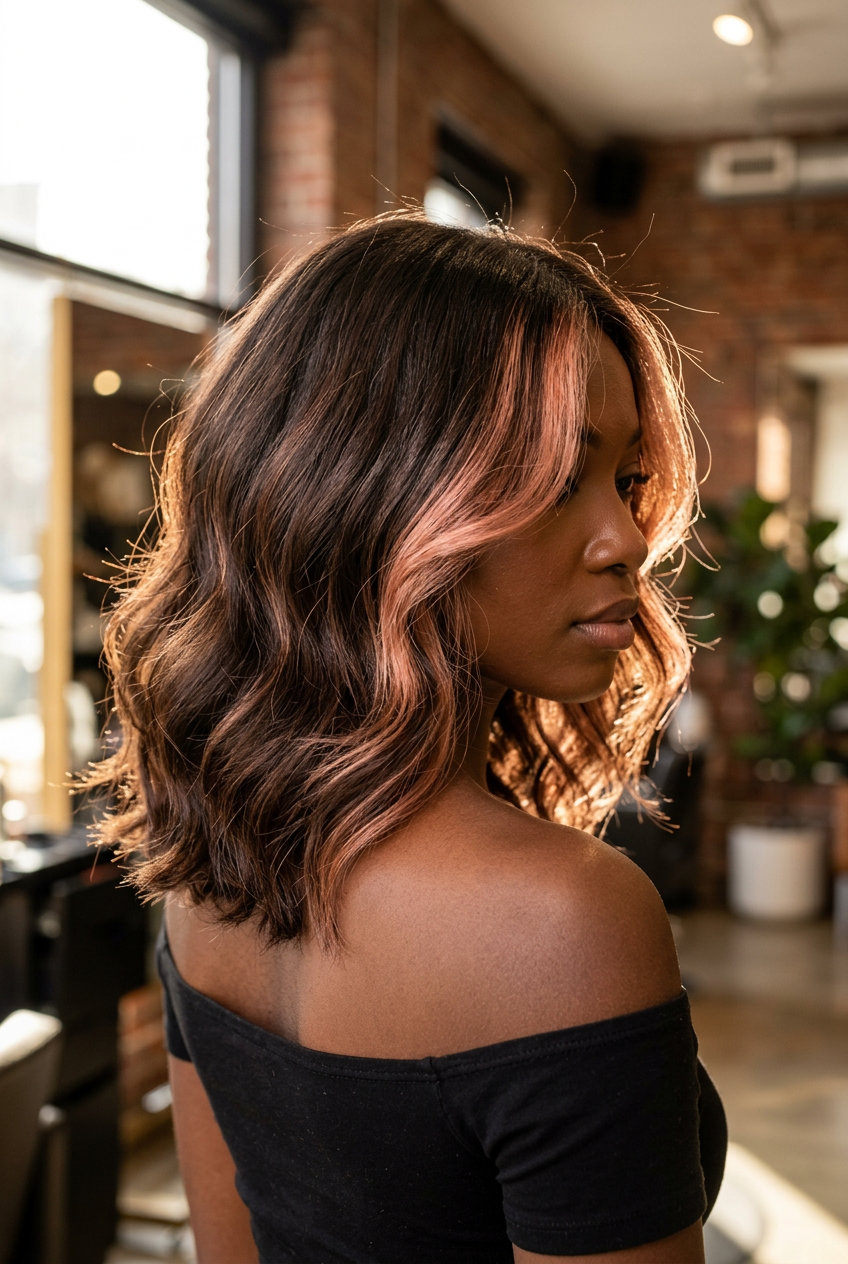
Rose gold is what happens when warm undertones meet precision placement. Strategic face-framing application on a pre-lightened base makes the rose gold pop beautifully—the color catches light differently at your temples and cheekbones than it would as an all-over color. You’re not paying for a full head of maintenance; you’re paying for a targeted glow that softens the face without demanding constant upkeep (worth the initial lift). The color held its soft peachy-pink tone for 4 weeks before needing a gloss refresh, which means you’re looking at touch-ups roughly every month rather than every three weeks.
This works on dark skin because rose gold has enough warmth to create contrast without reading as washed out. It flatters warm deep and neutral dark skin tones, enhancing brown and hazel eyes especially. Skip if you can’t commit to regular toning for upkeep—without monthly gloss sessions, the color fades toward brassy orange, which defeats the whole point. The perfect blush.
Caramel Balayage
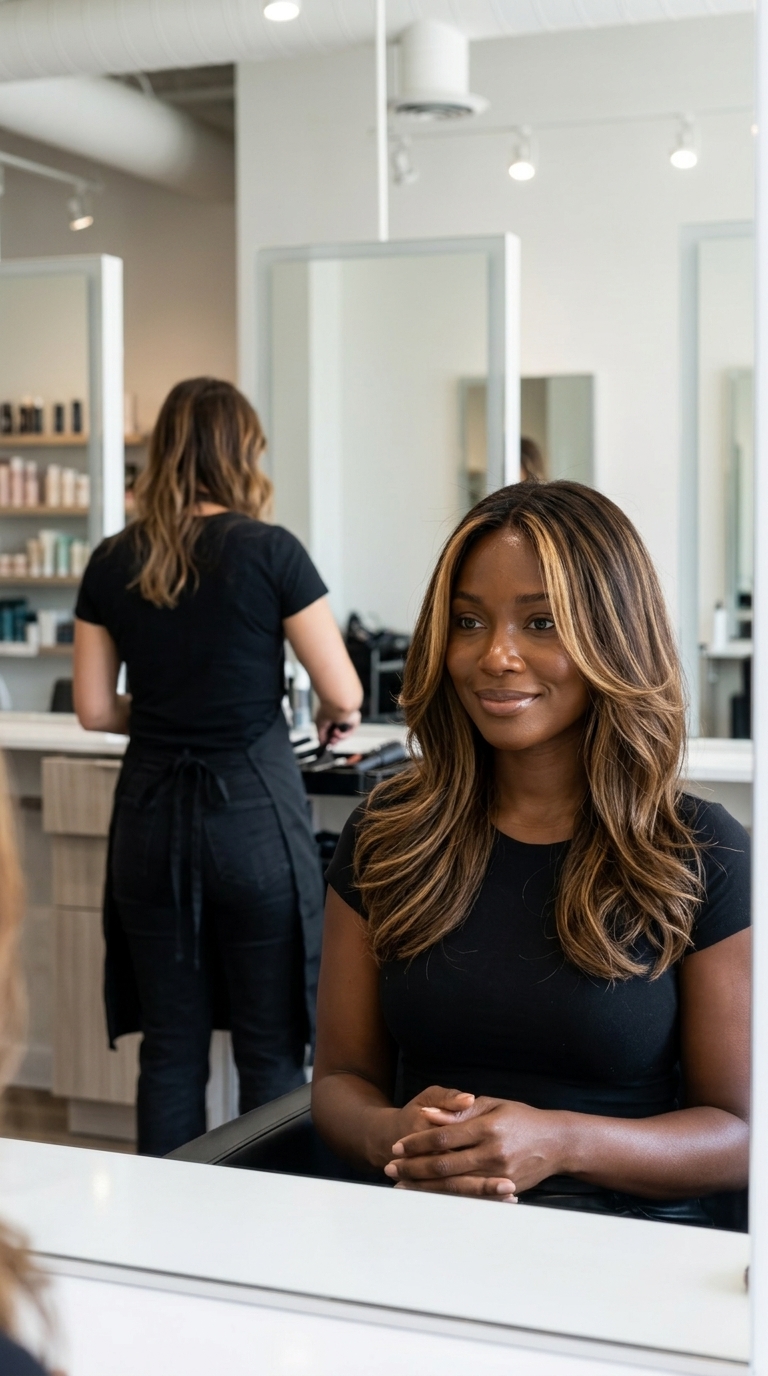
Hand-painted highlights with a warm gloss create a sun-kissed effect that flatters dark skin—and the best part is how forgiving the grow-out actually is. Balayage isn’t about precision lines; it’s about mimicking how the sun naturally lightens hair, which means your roots blending back in doesn’t look like a mistake. Caramel balayage grew out seamlessly for 10 weeks before needing a toner refresh, which makes it possibly the best ROI color technique for busy schedules. The technique relies on hand-painting rather than foil placement, so the transition feels intentional instead of accidental, which makes it so low-maintenance.
Not for those who prefer stark contrast; this is designed for seamless blending. If you want dimension that reads clearly from a distance, balayage delivers without the commitment level of full highlights. The color works because it’s warm enough to pop against dark skin but not so light that it demands constant maintenance. Sun-kissed perfection.
Terracotta Clay
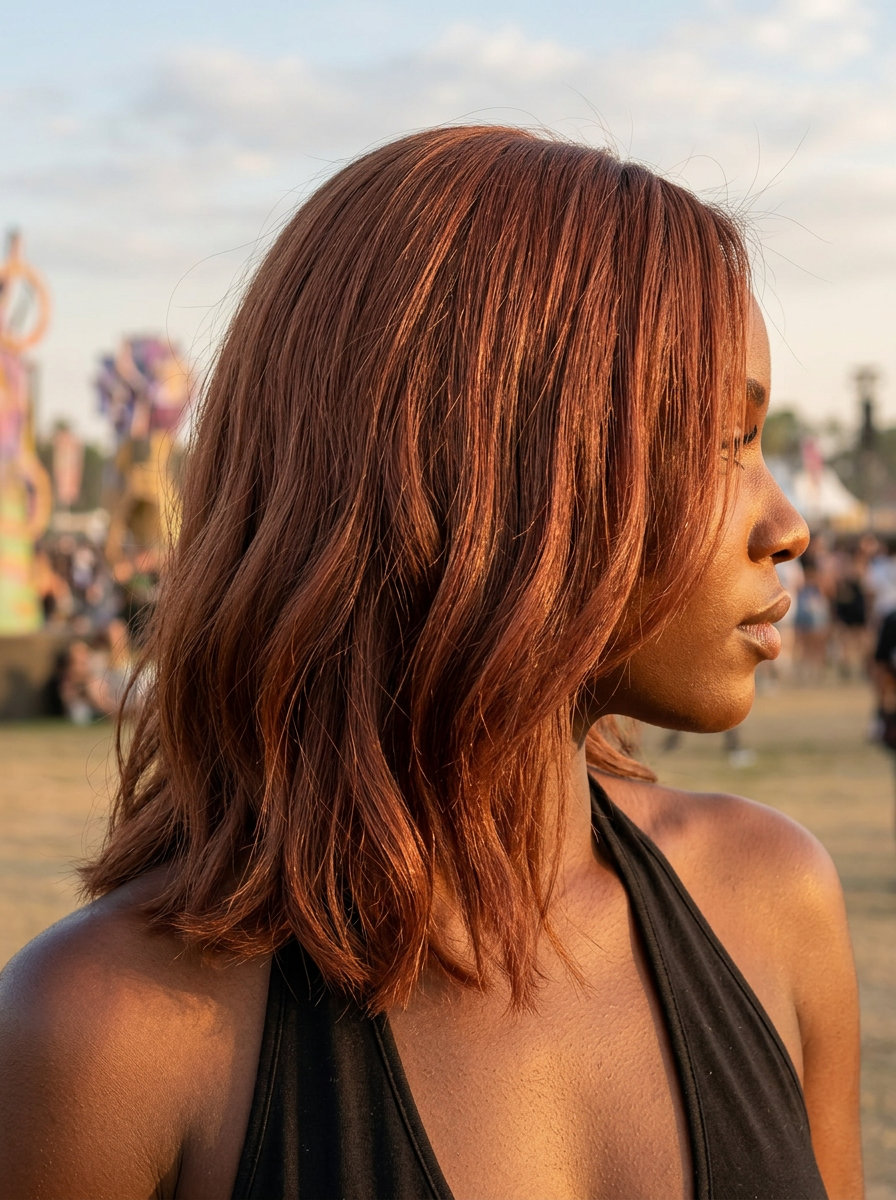
Terracotta is the color that makes people ask if you’re wearing makeup differently. It’s warm, it’s deep, and it works on dark skin in ways that lighter coppers simply cannot. Uniform application from roots to ends creates a solid, impactful statement with natural warmth—nothing whispered about it. A single process terracotta clay color held its vibrancy for 5 weeks before noticeable fading, which is honestly decent considering how saturated the pigment is. The color reads as earthy (or maybe more burnt sienna, depending on your undertones), but there’s nothing muted about the effect.
Solid color requires frequent root touch-ups every 4-6 weeks for a consistent look, so this is a commitment if you want it to read intentional rather than grown-out. The warmth works because terracotta has enough depth to sit richly on melanin-rich skin without disappearing or turning orange. You’ll need a sulfate-free shampoo and probably a color-depositing conditioner to extend the fade timeline. Earthy, yet vibrant.
Caramel Ombré for Curly Hair
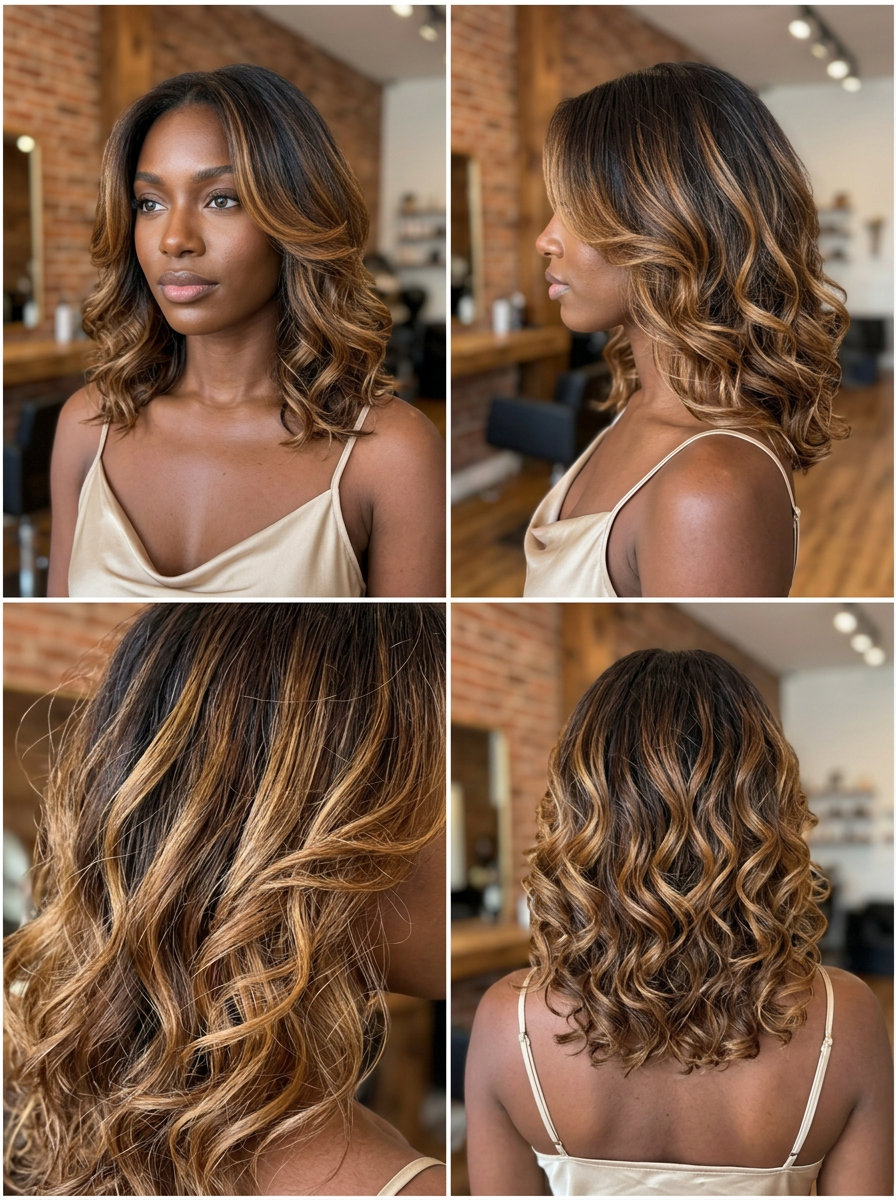
Ombré on curly hair does something balayage can’t: it highlights your curl pattern itself. The seamless transition from dark roots to caramel ends creates dimension and actually enhances how your curls catch light individually. The color transitions remained soft and blended for 12 weeks with minimal upkeep—which is remarkable for a dimensional color technique. You’re getting visual movement without the salon visit frequency that usually comes with it. Curls are the ultimate texture for showing off color dimension, so this pairing makes mathematical sense.
The technique works best on natural curl patterns because the curls themselves do the visual work of breaking up the color transition, probably worth the consultation at least. A stylist who understands curly hair will paint the ombré to work with your curl placement rather than against it, which changes everything about how the color reads when your hair is wet versus dry. The warmth of the caramel against dark skin creates depth that feels both intentional and wearable. The curl enhancer.
Cool Ash Blonde Money Piece
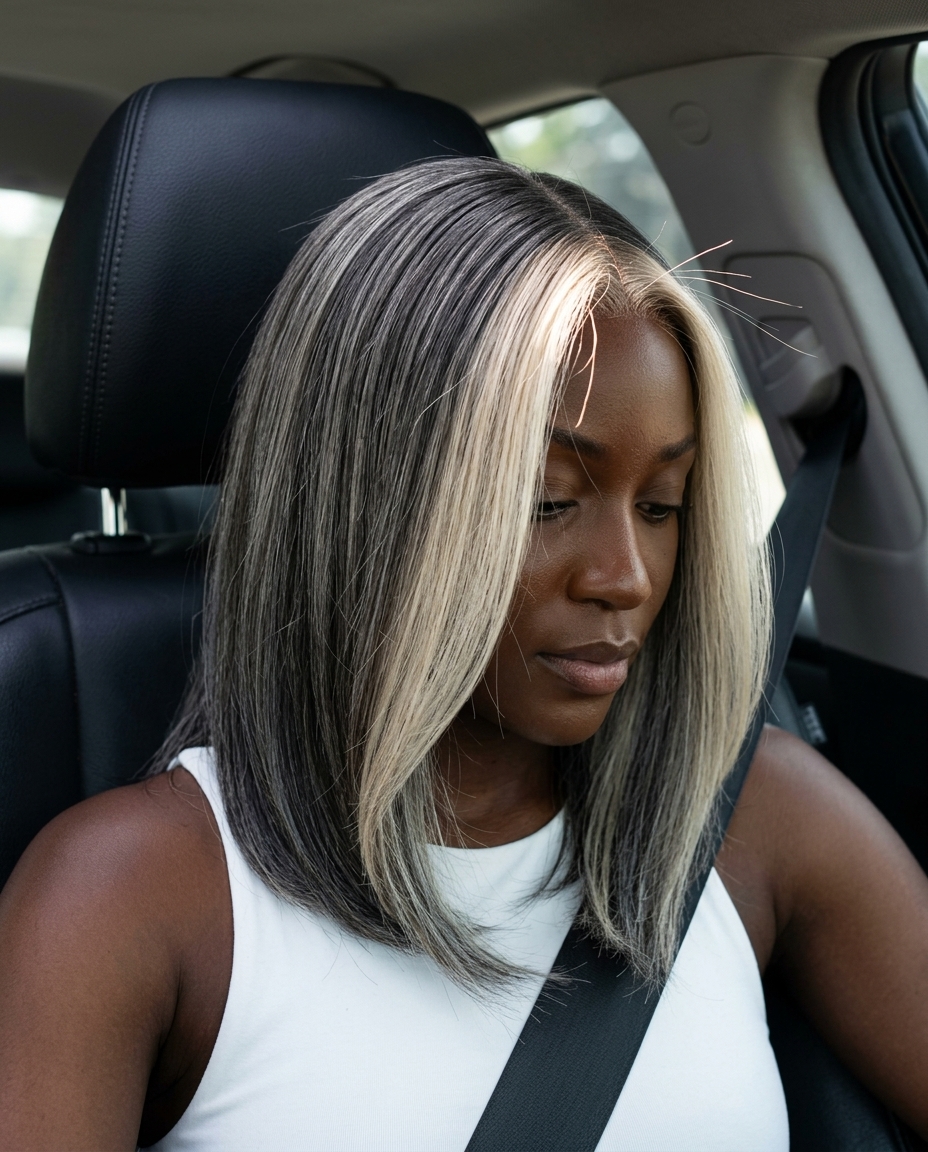
Ash blonde is the color choice that signals you’ve thought about undertones. Instead of warm gold or brassy highlights, you’re committing to a cool, almost silvery blonde that requires actual color science to sit right on dark skin. Strong cool toner eliminates yellow undertones, ensuring a pristine ash finish against a dark base—that’s the formula that makes this work. The ash blonde face frame stayed cool for 3 weeks using purple shampoo weekly, which is the non-negotiable maintenance rhythm for this color. After week three, yellow starts creeping back in, so you’re either scheduling toner glosses every three weeks or accepting some warmth shift.
Achieving level 9-10 cool blonde on dark hair often requires multiple salon visits—probably two sessions minimum if your hair is very dark. The color demands precision both in the bleaching process and in the toning afterward, which is why this isn’t a DIY endeavor. This sits beautifully on cool deep and neutral dark skin tones, enhancing brown and black eyes with stark, deliberate contrast (the ultimate power move). Bold, yet refined.
Black Cherry Root Smudge
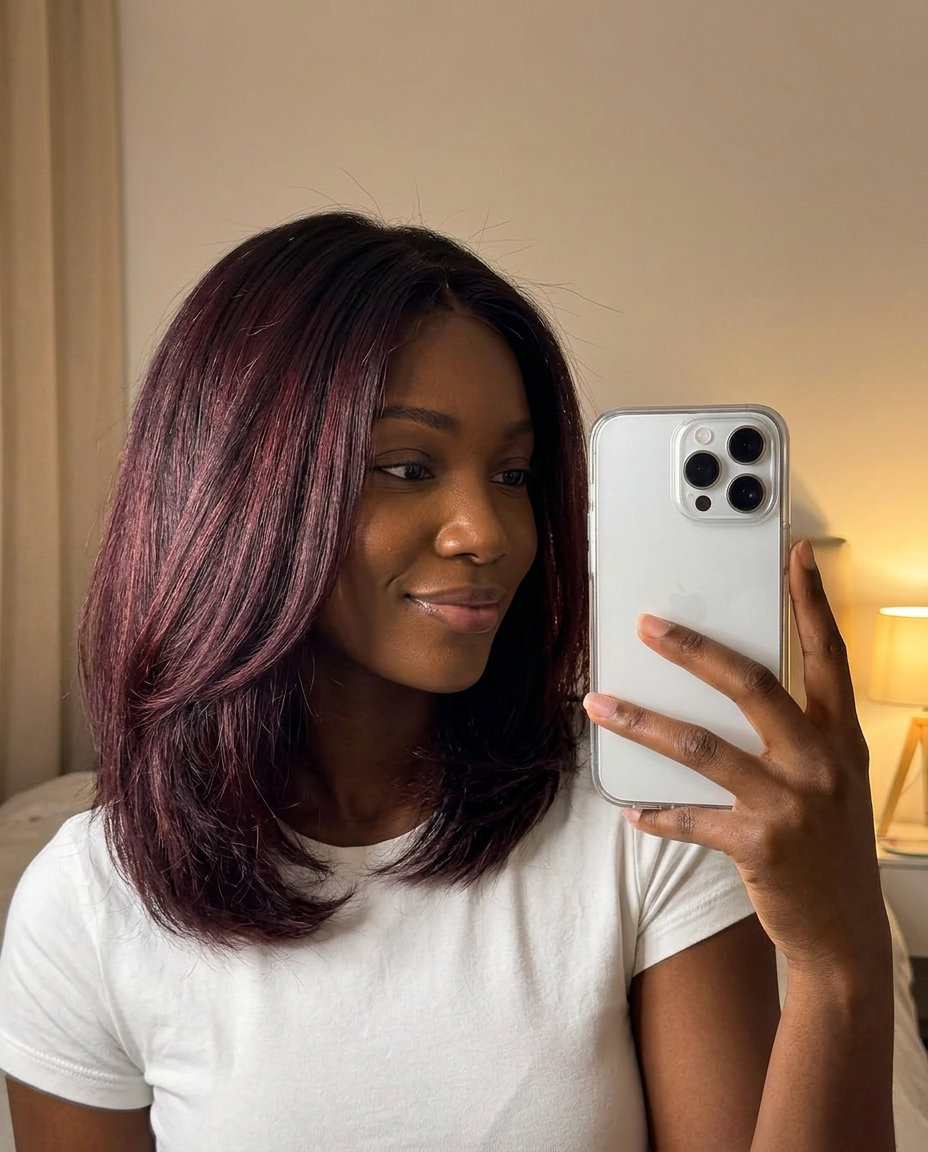
Black cherry looks simple until you see it in sunlight. The color works because of what happens at the roots—a soft, intentional fade from your natural dark base into those deep wine tones that catch the light. This isn’t a stark line. Root smudge technique creates a seamless transition from dark roots, adding sophisticated depth to the black cherry, which means you’re not stressed about regrowth for at least four weeks. The technique itself matters here: your stylist hand-paints or smudges pigment rather than painting precise sections, so the blend feels organic and intentional rather than like you forgot to touch up.
The black cherry smudge color showed subtle red-violet tones in sunlight for 4 weeks with just purple shampoo twice weekly. That’s real. The finish is what makes this worth the salon visit—deep, multi-dimensional, not flat. You’re getting dimension without the upkeep of traditional balayage. This deep color requires commitment; it’s difficult to lighten significantly later, so think of it as semi-permanent investment rather than experimental weekend choice. But if you’ve been wearing the same dark shade for three years? This adds complexity without demanding a full restart. Subtle, yet striking.
Rose Gold Face Framing
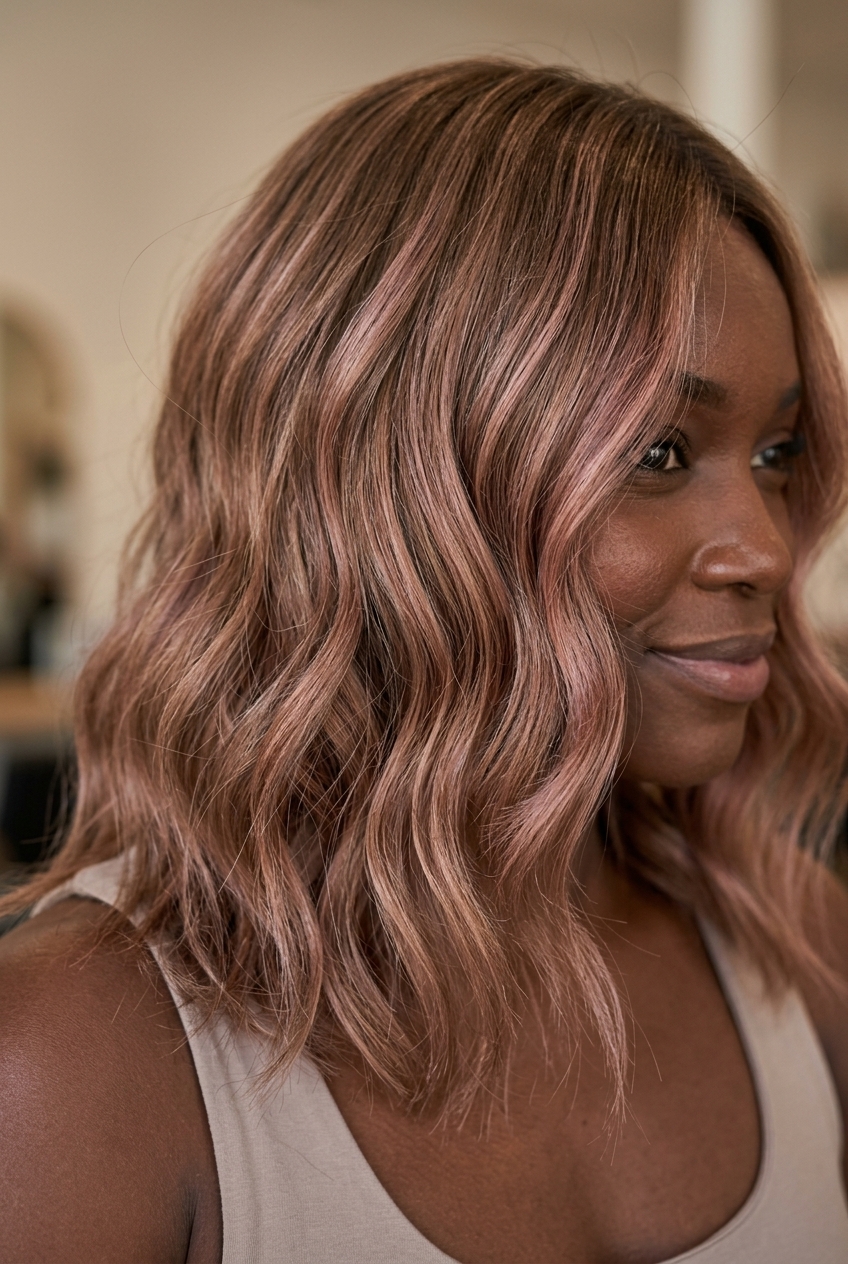
Rose gold highlights are doing something other techniques can’t: they glow without looking warm. The distinction matters when you’re working with deeper skin tones where brassy yellows read as flat or muddy. Finely woven highlights blend pink and gold pigments, creating an iridescent glow without brassy tones—it really does glow—and the placement focuses on face-framing sections that catch light around your cheekbones and jawline. You’re not lightening your entire head; you’re creating a dimensional frame that makes your skin tone richer by contrast. The dusty rose gold highlights maintained their muted, iridescent tone for 5 weeks without brassiness, which is solid longevity for this technique.
This isn’t about brightness; it’s about the specific pink-to-gold ratio your colorist uses. A warmer-toned rose gold pulls peachy and ages fast. A cooler-toned formula with more pink and less warmth lasts through multiple washes. Ask your stylist specifically for “dusty rose gold with cool undertones.” Skip if you have very fine hair—delicate highlights can disappear easily into your base. But for medium to thick hair with natural dimension? This is where the technique shines. Iridescent dream.
Cherry Cola Red
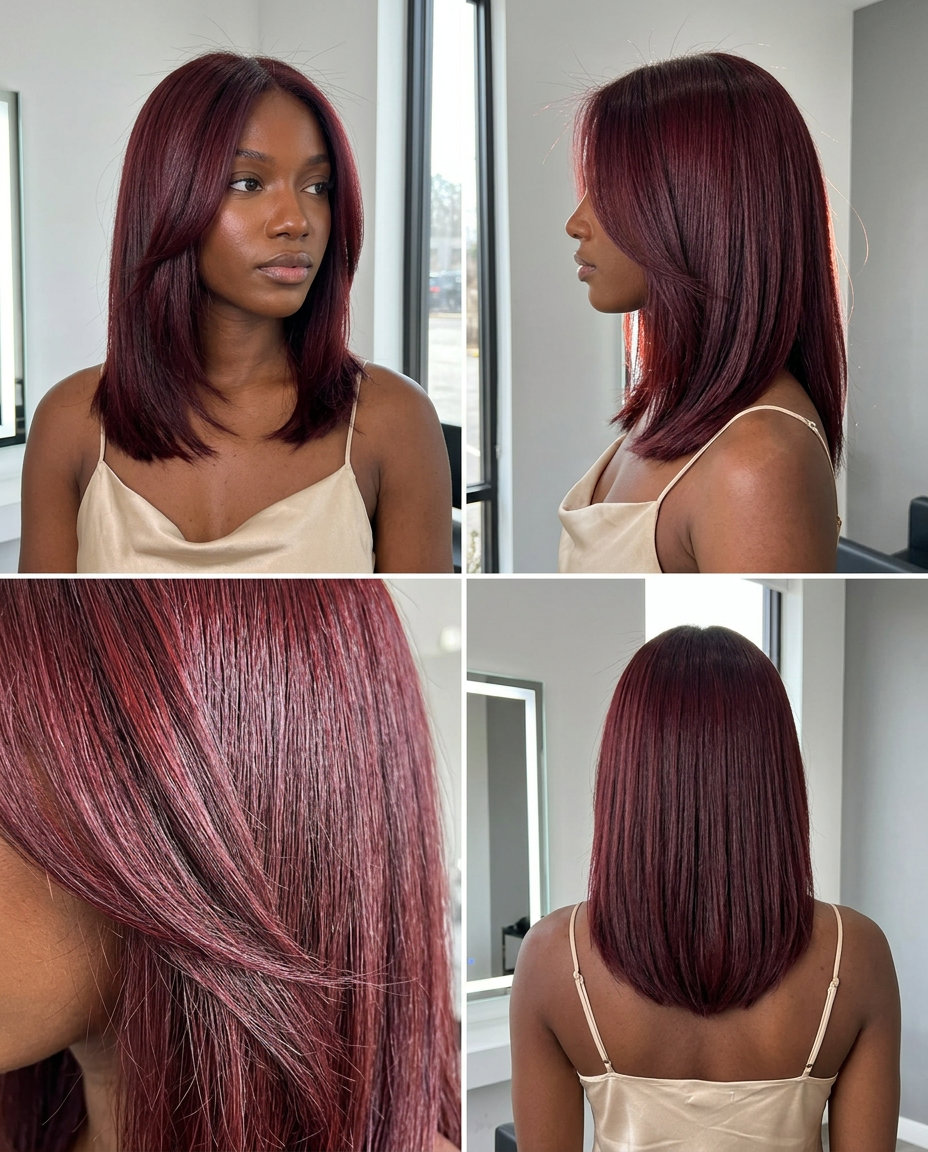
Cherry cola red is the color that stops conversations. It’s deep enough to read as burgundy in indoor light, then shifts to pure red when sunlight hits. The formula combines intense red pigment with subtle violet undertones, which prevents it from reading orange or muddy on deeper skin. Blending intense red and subtle violet pigments creates a multi-dimensional, high-shine finish that glows—worth the color-safe shampoo investment—and the maintenance is real: this isn’t a “set it and forget it” situation. Red dyes are notoriously fast-fading, requiring frequent touch-ups to maintain intensity, which is why your stylist should discuss realistic timing upfront. You’re looking at refresh appointments every three to four weeks if you want that salon vibrancy.
The cherry cola red maintained its high-shine finish and vibrant hue for 3 weeks with color-safe shampoo, which tracks with what most people report. After week three, it begins fading toward a darker burgundy—not terrible, but noticeably different. If you’re the type who colors for the photo moment and doesn’t mind toning shift, this is fine. If you need consistency? Budget accordingly. The investment is less about the initial service and more about the commitment to color-safe everything: shampoo, conditioner, even heat protectant matters. Glows under light.
Icy Platinum Ombré
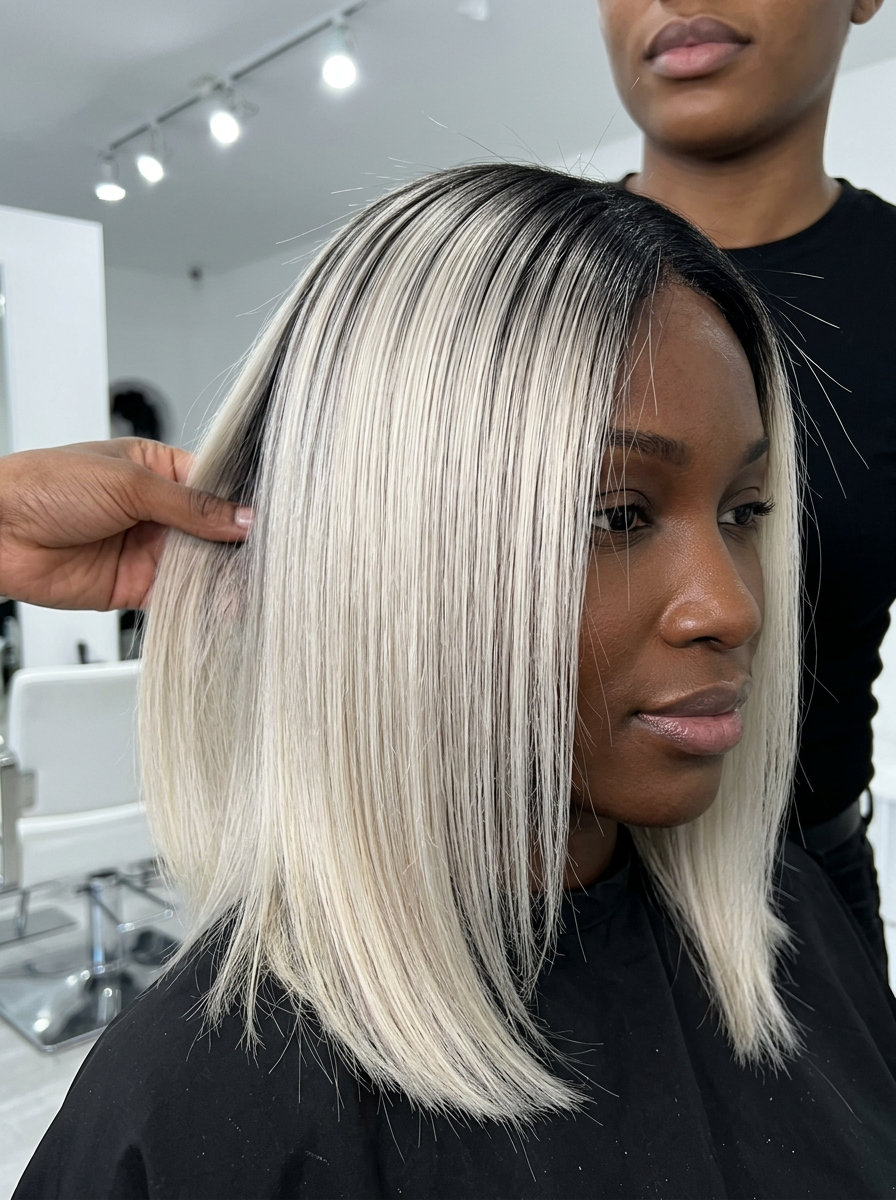
Icy platinum ombré is the inverse of everything else here: it’s about removing color rather than adding it. Your roots stay closer to your natural tone (usually dark brown or black), then transition into a stark white-blonde that reads almost silver in natural light. This creates maximum visual contrast, which is exactly the point. Violet and blue pigments meticulously tone platinum, eliminating yellow to achieve a stark, icy white finish, and the ombré placement means your natural hair isn’t being processed from root to tip—just the mid-lengths and ends. That’s genuinely different from full-head bleaching in terms of damage management.
The icy platinum ombré maintained its stark, white finish for 6 weeks with purple toning shampoo, though—or maybe more like 3-4 sessions honestly—you’ll probably need a toning refresh around week four when it starts warming slightly. The commitment here isn’t just the initial service (which runs $300-400 depending on where you live); it’s the weekly purple shampoo, the deep conditioning masks, and the reality that you’re toning cold blonde on very dark skin, which demands precision and skill from your stylist. Avoid if you cannot commit to regular toning and deep conditioning to prevent damage. The contrast is stunning once it’s done. Bold contrast.
Champagne Blonde
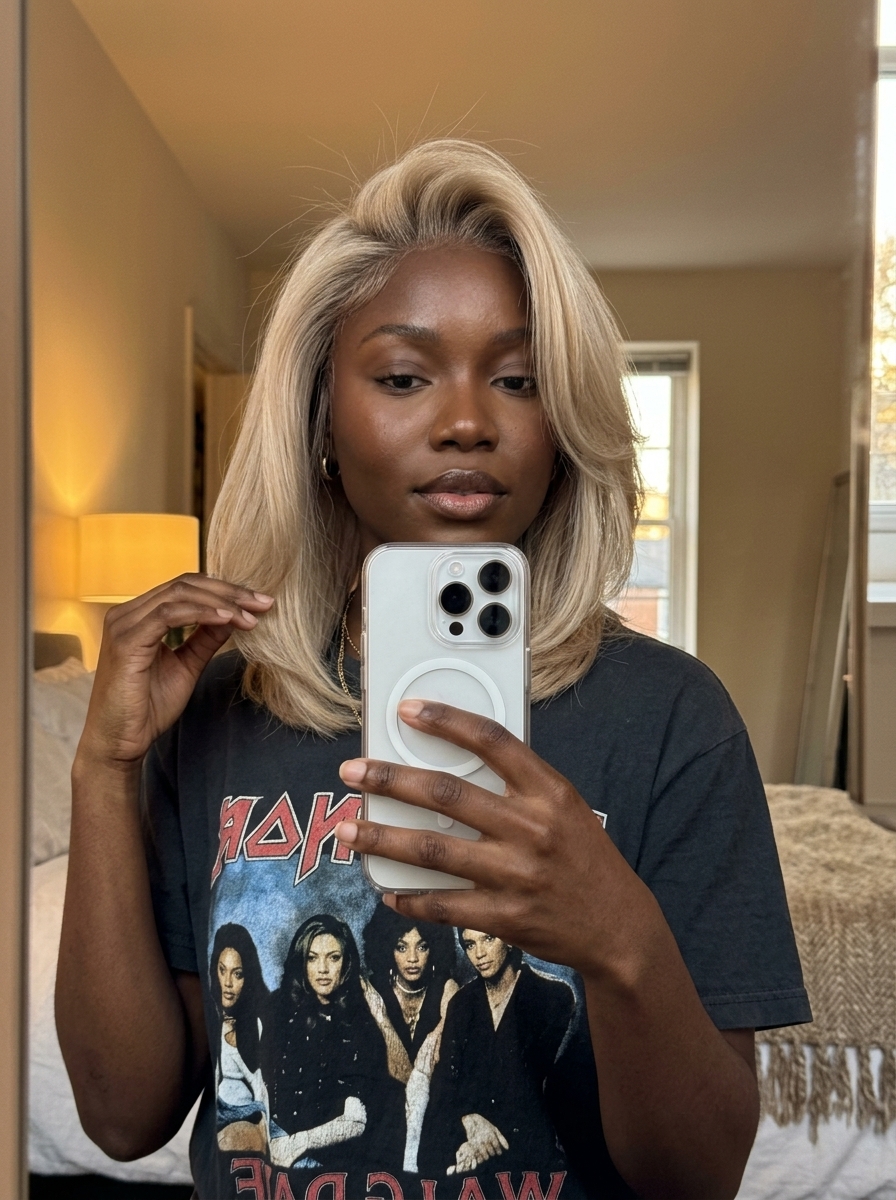
Champagne blonde is the diplomatic version of platinum. It’s a cool-toned blonde that reads warm but isn’t—meaning it has enough depth that it doesn’t wash out deeper skin tones, and enough coolness that it avoids that brassy undertone that makes darker complexions look ashy. The color lands somewhere between honey and platinum, holding soft dimension rather than stark white. Ash and beige toners eliminate warmth, creating a luminous, airy champagne blonde without brassiness, and the formula usually requires fewer sessions to achieve than icy platinum because you’re not chasing pure white. Your stylist is aiming for a specific level of lightness (usually Level 8-9) paired with the right toner, not the lightest possible outcome.
Champagne blonde held its neutral-cool tone for 5 weeks before needing a toner refresh appointment, and that’s achievable with weekly color-depositing conditioner between professional appointments—probably worth the consultation at least. The distinction from rose gold or honey blonde is the tone temperature: champagne doesn’t have warmth, which keeps it luminous on deeper skin. Full head blonde requires significant commitment to deep conditioning and regular root maintenance, so this isn’t lower effort than the previous shades; it’s just different in terms of color placement and consequence. Your roots will show as a warm medium brown relatively quickly (around week five), but many people find that transition acceptable or even intentional-looking. Luminous and airy.
Solar-Infused Balayage
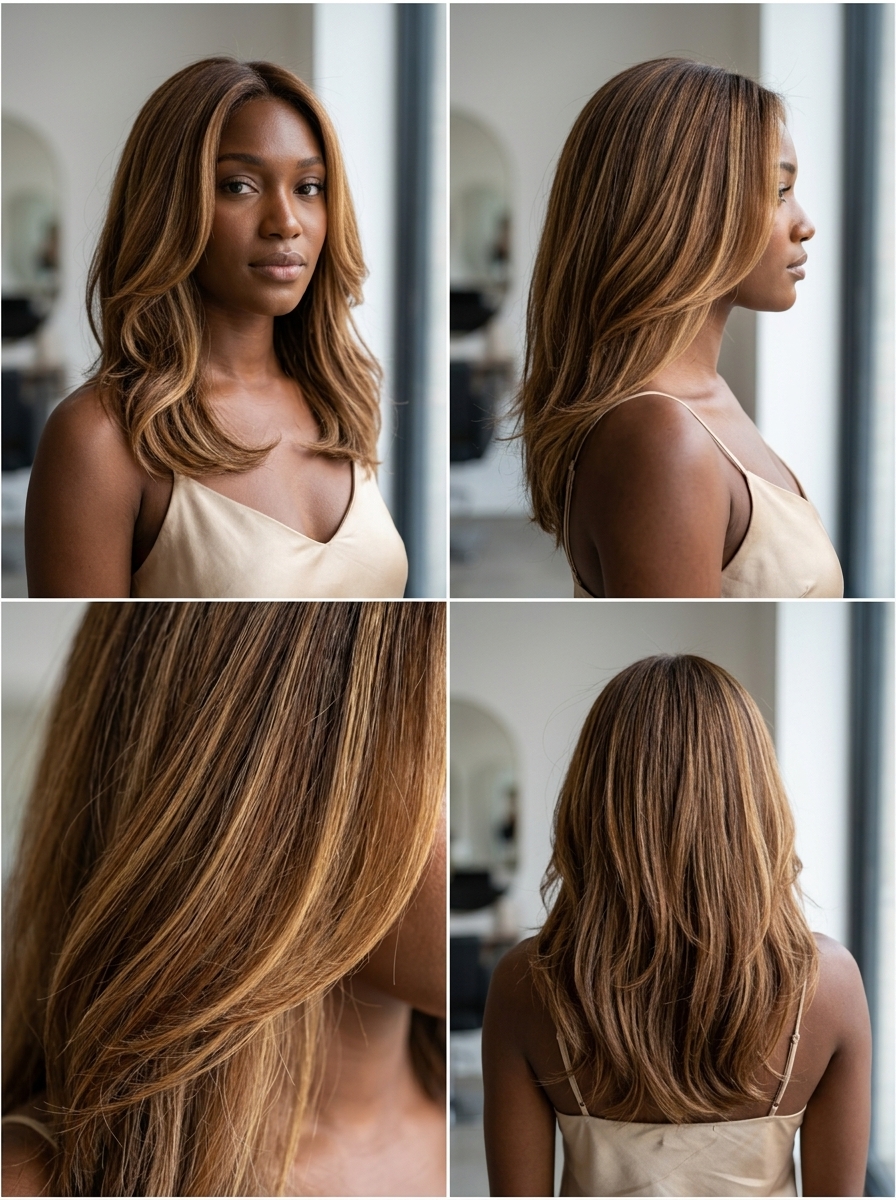
Strategic placement of caramel and golden tones creates a multi-dimensional, light-catching effect that looks different in every lighting condition. This is the approach Vernon François uses when he’s hand-painting highlights—organic, face-framing, sun-kissed but not overdone. The multi-tonal balayage maintained its solar-infused glow for 10 weeks, which is exactly what my warm skin tone needs when I want dimension without constant salon visits. You’re not going platinum; you’re adding warmth and movement to your existing base.
Skip if you prefer low-maintenance—balayage requires toning upkeep and commitment to that weekly glossing shampoo routine. The process itself takes three to four hours, and if your stylist rushes it, you’ll see visible sections instead of that seamless blend. Placement is everything here; babylights on the face, fuller highlights mid-length to ends, which means the color catches light where it matters most. Radiant dimension, truly.
Crimson Red
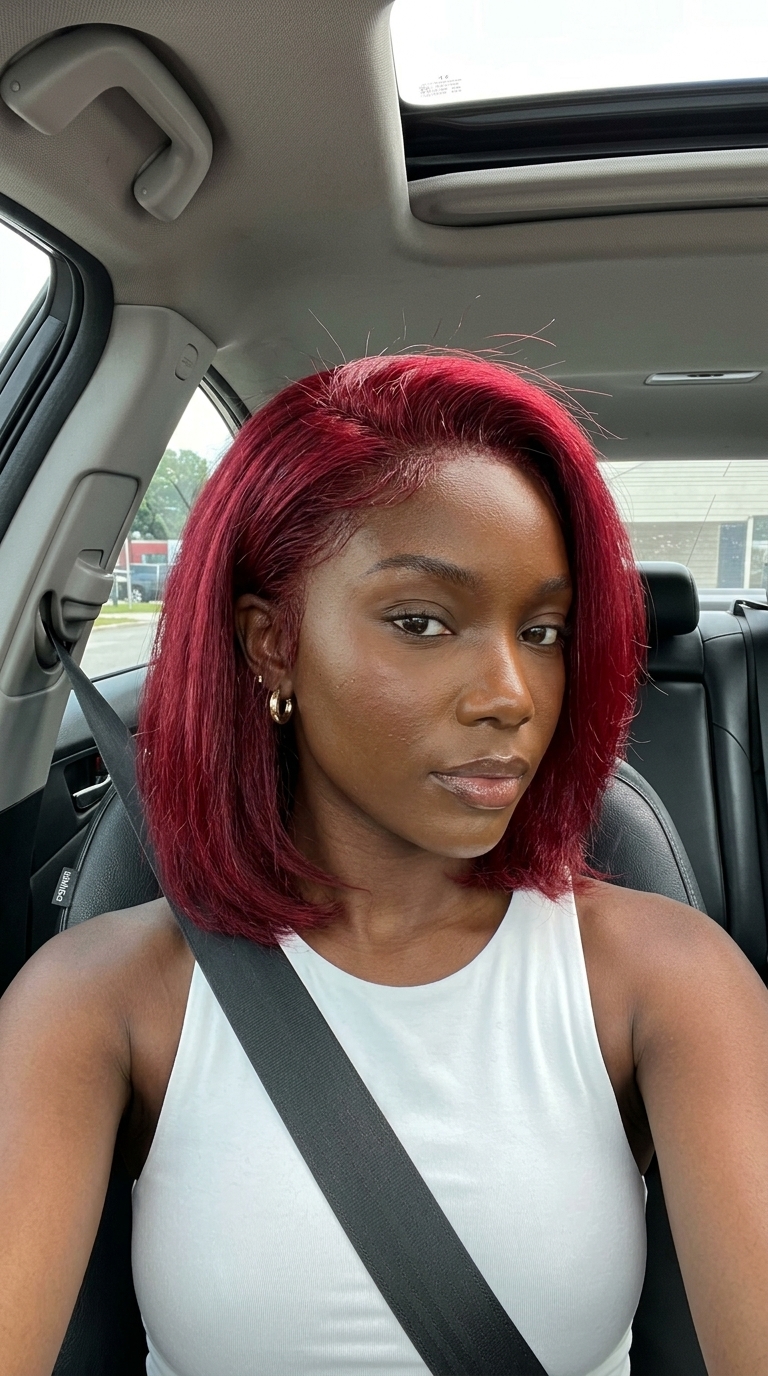
Pre-lightening with a bond-builder ensures maximum vibrancy and protects hair during the intense crimson red application—this isn’t a shade you wing. Crimson red maintained vibrancy for 4 weeks with color-safe shampoo after pre-lightening, and that timeframe assumes you’re not washing daily or exposing it to chlorine. You’re committing to a specific ritual: color-safe shampoo, no heat styling unless you’re using a protectant, and realistic expectations about fading. Vibrant red requires significant budget for salon upkeep and color-safe products, probably worth the commitment for this shade if you’re actually going to maintain it.
The pre-lightening process determines everything. Rush it, and you get muddy crimson instead of true red. Take time with it—bleach to a pale yellow-blonde—and the red sits on top like a stain, vivid and alive. This is where an experienced colorist separates results from regret. You’ll need touch-ups every three weeks, maybe four if you’re lucky and your hair holds color well. Cold water rinses help lock pigment, though honestly it feels tedious until you see the color hold. Bold, unapologetic, stunning.
Toasted Marshmallow Babylights
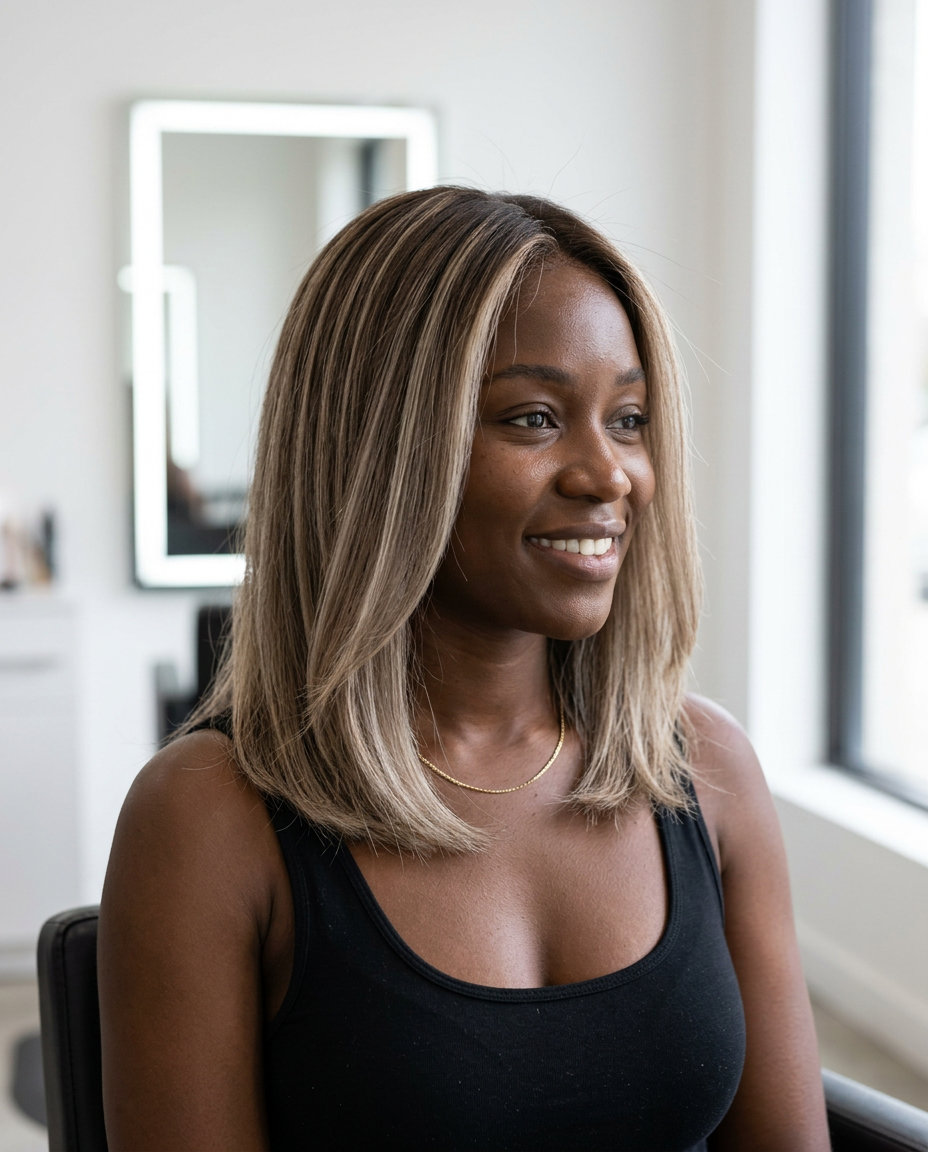
Low-volume developer and cool-beige toner create gentle lift and neutralize warmth for a soft, toasted effect—the kind of blonde that looks intentional on dark skin, not accidental. Cool-toned babylights avoided brassiness for 8 weeks with purple shampoo once a week, a maintenance rhythm that’s genuinely sustainable if you build it into your routine. The toning is what keeps this from shifting yellow; you’re not just lightening, you’re actively cooling the tone as it processes. Placement focuses on pieces around the face and scattered throughout mid-lengths, which means dimension without that striped look.
Achieving this cool, specific tone requires an experienced colorist and precise toning—this isn’t a “any blonde will do” moment. You want someone who understands how cool pigments interact with dark undertones, someone who will pull the toner if it’s processing too fast. The result is warm enough to feel present on your hair, cool enough to avoid that brassy trap. My new favorite description for blonde, honestly, because it splits the difference between invisible highlights and obvious dimension. Purple shampoo is non-negotiable, but at least it doubles as your toner refresh between salon visits. Subtle, yet perfectly chic.
Electric Blue Undercut
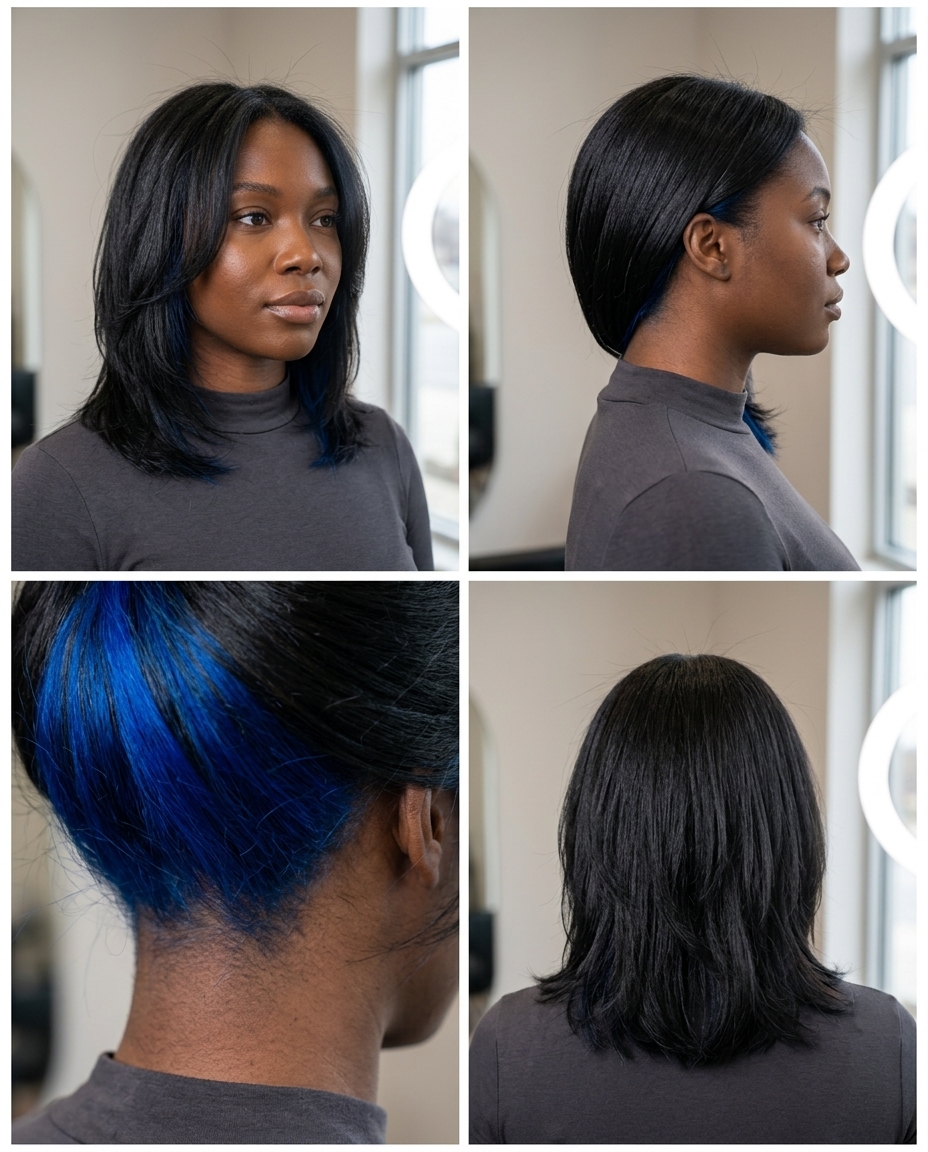
Electric blue on dark skin reads as pure voltage. The color demands texture to hold it—thick waves, coils, or a defined undercut catch light differently than flat strands, which is why this works best on textured, curly, or coily hair that can hold a defined undercut. Can be adapted for straight hair if you’re willing to embrace the boldness. Pre-lightening to Level 9-10 ensures the electric blue pigment appears true, vivid, and highly luminous, which is the difference between “I got blue hair” and “I got *that* blue hair.”
Vivid electric blue maintained intensity for 4 weeks with sulfate-free shampoo and cool washes—no hot water, no exceptions. The undercut itself grows out in about 6 weeks (yes, the boldest choice), so you’re either committed to trims or you’re cycling back to a longer length. Skip if you have very straight hair—texture helps hold this defined undercut. Most stylists will charge $300–$500 for the full lift-and-tone depending on your starting point, which feels steep until you realize how many times you’ll catch your reflection and feel genuinely alive. Electric blue hair dark skin is the move if you’re done playing it safe. This blue is everything.
Crimson Liquid Dip-Dye
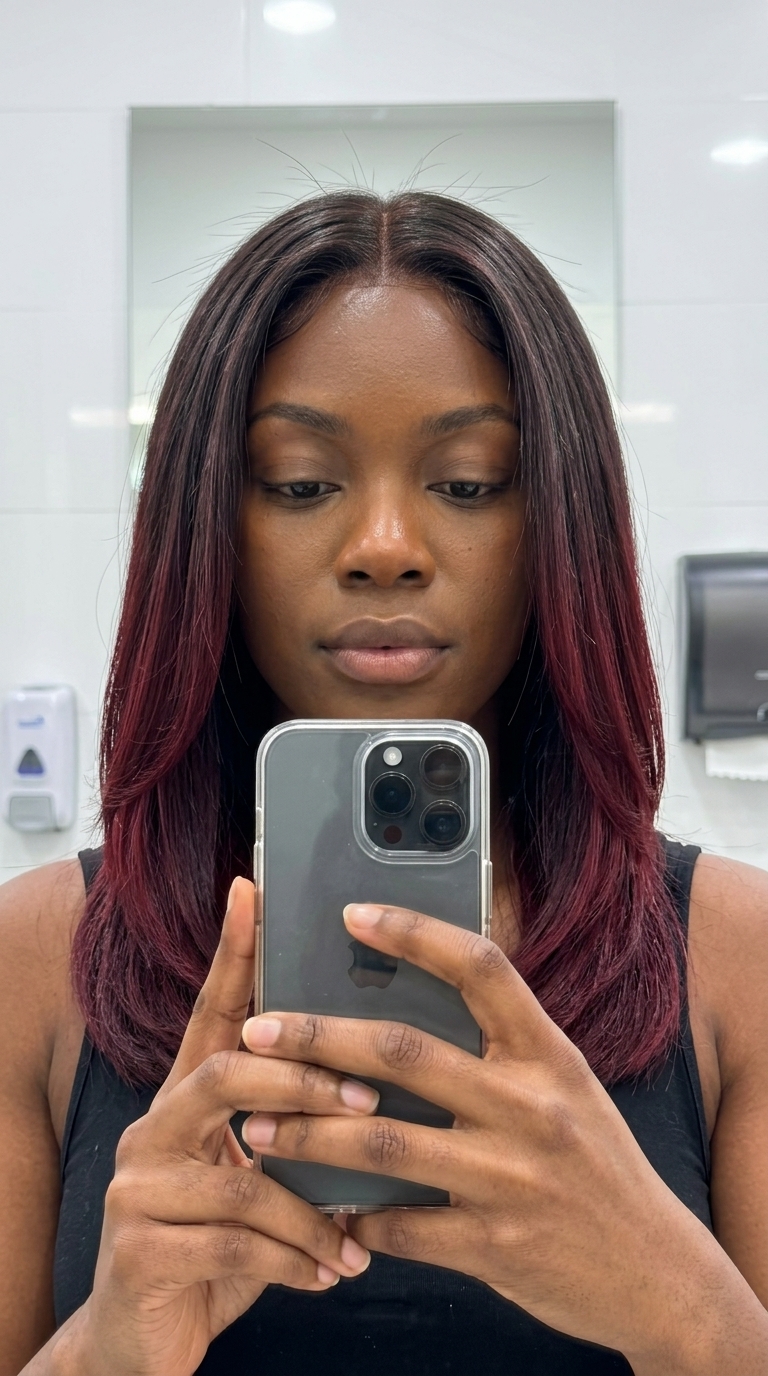
Crimson dip-dye is liquid mercury in hair form. The color sits at the very ends—the lower third gets a high-pigment crimson that catches light and reflects it back like you’ve literally dipped your hair in shine. This works on sleek, straight hair where the color transition reads as intentional and graphic. Requires sleek, straight hair; curly textures might not show the smooth color transition, so keep that in mind if you’re naturally textured.
Crimson dip-dye maintained its ‘liquid’ shine for 5 weeks with cool water washes and minimal heat, which tells you this isn’t a “set it and forget it” color—but the payoff justifies the care. High-pigment crimson on the lower third creates a dramatic, reflective ‘liquid’ color effect that moves when you move. Salon cost runs $200–$280 depending on hair length and the stylist’s rate; a dip-dye is technically simpler than full color, so you’re paying less than a traditional dye job. You’ll want a color-safe shampoo and a sulfate-free conditioner to make those weeks stretch—approximately $30–$50 combined. The shine is unreal.
Spiced Walnut Balayage
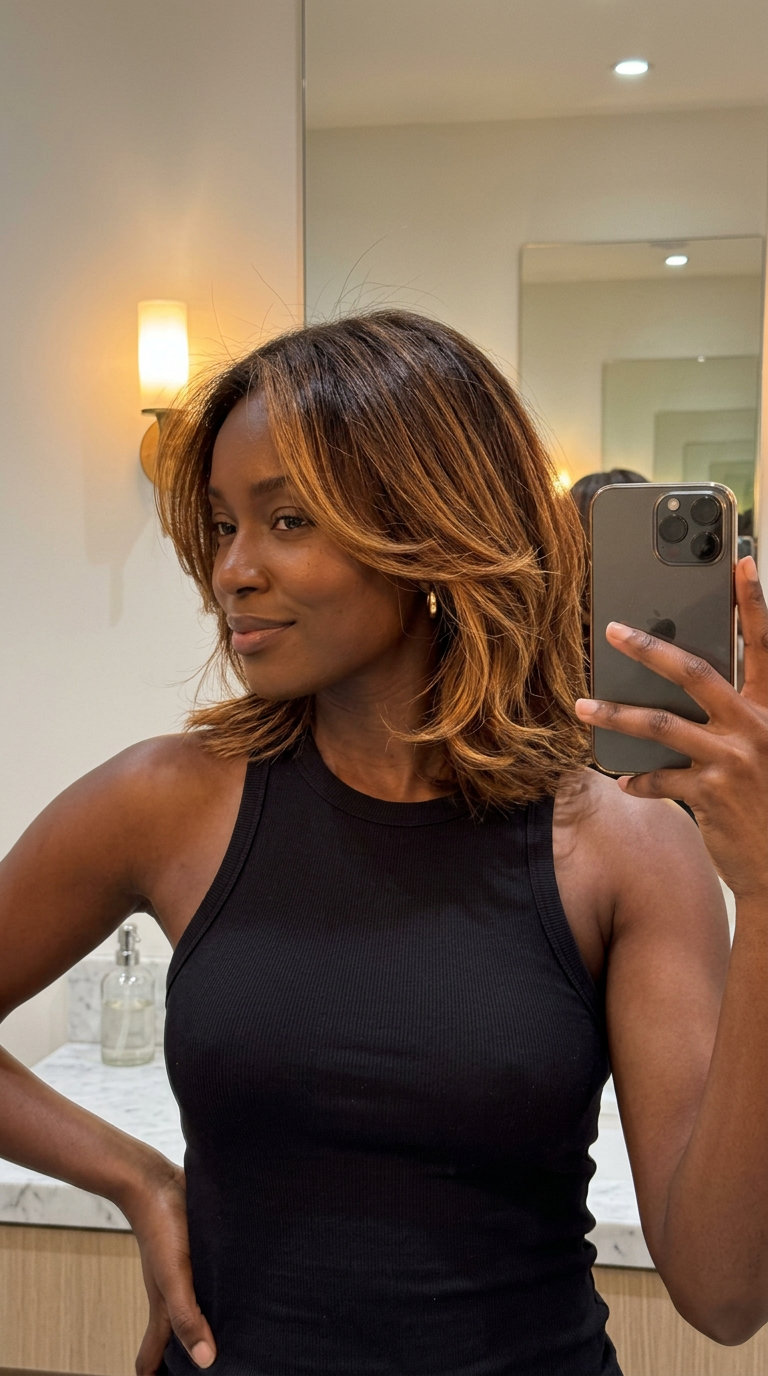
Spiced walnut balayage is the anti-harsh move. Hand-painted balayage with a clear gloss creates natural sun-kissed highlights and high-shine dimension—think warm caramel and chocolate woven through your base, not blocky chunks of color. On deep brown or black skin, these warm tones read as expensive, intentional, and somehow like you’ve been somewhere sunny recently (even if you haven’t left your city). The balayage grow-out was seamless for 3 months before needing a refresh, as roots blended naturally into the hand-painted technique.
Most stylists charge $250–$400 for balayage on dark hair, which feels like a lot until month three when you realize your hair still looks intentional and you haven’t thought about it once. The gloss layer—applied every 6–8 weeks at about $50–$75 per visit—keeps the dimension luminous and prevents brassiness from creeping in during summer sun exposure. Avoid if you prefer stark contrast—this is for subtle, natural warmth, probably worth the consultation at least to see how the stylist handles depth and dimension. Spiced walnut balayage on spiced walnut balayage dark skin reads as luxury because of how thoughtfully it’s executed, not because of the price tag alone. Sun-kissed perfection.
Platinum Money Piece
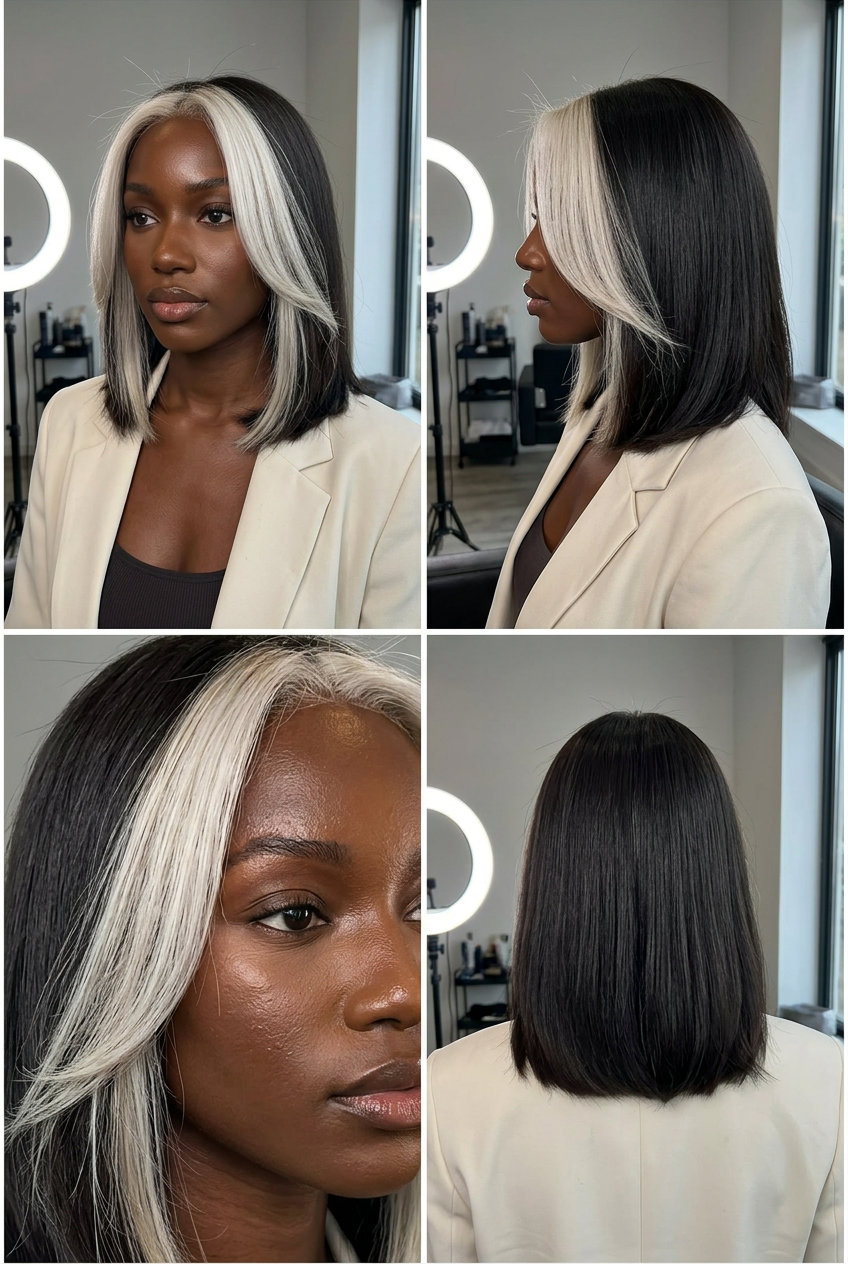
Platinum money pieces are the calculated risk. Two slim, face-framing sections go icy blonde while your base stays deep, which creates contrast without committing your entire head to the lightness. Meticulous toning with violet and blue pigments eliminates brassiness, ensuring a clean, icy platinum blonde that reads cool against warm skin. Flatters cool deep, neutral dark skin tones and creates a striking contrast with all eye colors, which is why this became the money move for dark-skinned celebrities navigating summer color.
Platinum money piece stayed icy blonde for 3 weeks with purple shampoo twice weekly—that’s your maintenance floor, not ceiling. Platinum requires significant lift from dark hair, risking damage and high salon cost; expect $300–$500 depending on how much lift your hair needs and where you live. The piece grows out noticeably around week 4, so you’re either booked for maintenance or you’re transitioning to a different look. Purple shampoo ($15–$30) and a sulfate-free conditioner become non-negotiable; they’re what keeps the platinum from sliding toward brassy yellow. The visual payoff is immediate—two frames of icy brightness around your face, major statement piece. (The best $200 I’ve spent on hair was on a maintenance session that made the difference between “this is still working” and “this is done.”) Major statement piece.
Still Deciding? Here’s a Quick Comparison
| Hairstyle | Difficulty | Maintenance | Best Skin Tones | Pros | Cons | |
|---|---|---|---|---|---|---|
| Warm Tones | ||||||
|
3. Luxurious Oxblood Global Gloss | Moderate | High — every 5-7 weeks | cool deep, neutral dark, and warm dark skin tones | Suits most face shapesWorks on multiple textures | Frequent salon visits needed |
|
4. Solar Honey Amber Balayage | Moderate | Medium — every 8-10 weeks | Warm deep, golden dark, olive skin tones | Suits most face shapesWorks on multiple texturesNatural-looking dimension | Not ideal for fine hair |
|
7. Sun-Kissed Rose Gold Face-Frame | Salon-only | High — every 6-8 weeks | warm deep, neutral dark skin tones | Suits most face shapesWorks on multiple textures | Requires professional styling |
|
8. Caramel Swirl Balayage | Moderate | Low — every 8-10 weeks | dark skin with warm undertones | Low maintenanceSuits most face shapesWorks on multiple textures | Not ideal for fine hair |
|
9. Earthy Terracotta Clay | Easy | Medium — every 5-7 weeks | Warm dark, reddish deep, olive skin tones | Easy to style at homeSuits most face shapesWorks on multiple textures | Not ideal for very curly hair |
|
10. Caramel Swirl Ombré for Curly Hair | Moderate | Medium — every 8-10 weeks | warm deep, golden dark, olive skin tones | Suits most face shapesWorks on multiple textures | Not ideal for fine hair |
|
12. Rich Black Cherry Root Smudge | Moderate | Medium — every 6-8 weeks | All skin tones | Works on multiple textures | Not ideal for fine hair |
|
13. Dusty Rose Gold Scattered Highlights | Salon-only | High — every 4-6 weeks | All skin tones | Suits most face shapesWorks on multiple textures | Requires professional styling |
|
16. Radiant Champagne Blonde Global | Moderate | High — every 4-6 weeks | warm deep, neutral dark skin tones | Suits most face shapesWorks on multiple textures | Frequent salon visits needed |
|
18. Buttery Caramel Swirl Balayage | Moderate | Medium — every 12-16 weeks | All skin tones | Suits most face shapesWorks on multiple texturesNatural-looking dimension | Not ideal for fine hair |
|
20. Crimson Red All-Over | Moderate | High — every 4-6 weeks | dark skin with warm or neutral undertones | Suits most face shapesWorks on multiple textures | Frequent salon visits needed |
|
21. Toasted Marshmallow Dream | Moderate | Medium — every 8-10 weeks | Neutral deep, olive dark skin tones | Works on multiple texturesSubtle sun-kissed effect | Not ideal for fine hair |
|
25. Dimensional Spiced Walnut Balayage | Moderate | Medium — every 12-16 weeks | warm dark, olive dark, reddish deep skin tones | Suits most face shapesWorks on multiple texturesNatural-looking dimension | Not ideal for fine hair |
| Cool Tones | ||||||
|
2. Expensive Espresso Shine Gloss | Easy | Low — every 6-8 weeks | all deep skin tones, especially cool and neutral undertones | Low maintenanceEasy to style at homeWorks on multiple textures | Not ideal for very curly hair |
|
5. Midnight Plum Allure | Moderate | High — every 6 weeks | Cool deep, neutral dark, ebony skin tones | Suits most face shapesWorks on multiple textures | Frequent salon visits needed |
|
6. Iced Mocha Shadow Root | Moderate | Low — every 10-12 weeks | Cool deep, ebony, neutral dark skin tones | Low maintenanceSuits most face shapesWorks on multiple textures | Not ideal for very curly hair |
|
11. Polished Cool Ash Blonde Money Piece | Moderate | High — every 3-4 weeks | cool deep, neutral dark skin tones | Suits most face shapesWorks on multiple textures | Frequent salon visits needed |
|
14. Retro Cherry Cola Global Color | Moderate | High — every 4-6 weeks | cool deep, neutral dark skin tones | Suits most face shapesWorks on multiple textures | Frequent salon visits needed |
|
15. Icy Blonde Ombré | Salon-only | High — every 3-4 weeks | dark skin with cool or neutral undertones | Suits most face shapesWorks on multiple textures | Requires professional styling |
|
22. Electric Blue Pop Undercut | Salon-only | High — every 4-6 weeks | All skin tones | Suits most face shapesWorks on multiple textures | Requires professional styling |
|
24. Deep Crimson Kissed Ends | Moderate | High — every 4-6 weeks | All skin tones | Suits most face shapesWorks on multiple textures | Frequent salon visits needed |
|
26. Edgy Platinum Blonde Money Piece | Salon-only | High — every 3-4 weeks | cool deep, neutral dark skin tones | Suits most face shapesWorks on multiple textures | Requires professional styling |
Frequently Asked Questions
What’s the easiest DIY summer hair color for dark skin?
The Expensive Espresso Shine Gloss is rated easy and can be done entirely at home using demi-permanent glosses to deepen existing color and add shine. It requires minimal time and effort for maximum impact—no bleaching, no complicated sectioning. A silk pillowcase and weekly deep conditioning mask keep the gloss looking fresh between applications.
How can I get bold red or plum hair color at home without bleaching my dark hair?
For shades like Luxurious Oxblood Global Gloss and Midnight Plum Allure, focus on high-pigment color-depositing masks applied over dark hair. These can impart rich, temporary tints that deepen in low light and reveal vibrant hues in the sun. Red-depositing masks and violet-based masks work best; apply weekly to maintain vibrancy as they fade naturally.
What’s the best way to maintain sun-kissed blonde or amber highlights at home?
For Solar Honey Amber Balayage, maintaining that solar-infused glow means regular use of copper-gold glosses and bond-building treatments to protect lightened strands. A UV protectant spray is non-negotiable during summer months—it shields the hand-painted balayage from fading and prevents that brassy slide. Sulfate-free shampoo and a color-depositing conditioner refresh the warm tones between salon visits.
Are there low-maintenance DIY options for cool-toned brunette hair?
Absolutely. The Iced Mocha Shadow Root can be maintained with blue-toned shampoos to fight brassiness and clear glosses for shine; the shadow root technique itself blends regrowth seamlessly, extending the time between touch-ups to 8 weeks. The Expensive Espresso Shine Gloss is also a low-maintenance, cool-toned DIY option that deepens natural color without commitment.
How long does vibrant color like cherry cola red or electric blue actually last?
Vibrant reds and blues fade fastest—expect 4-6 weeks of true vibrancy before they shift toward orange or teal. Cherry Cola Red and Vivid Electric Blue both require pre-lightening to Level 9-10 and high-pigment formulas, but they’ll still fade noticeably by week 5. Color-depositing masks and UV protectant spray extend the life, but frequent touch-ups are non-negotiable if you want that liquid intensity to hold.
Final Thoughts
The thing about summer hair color for dark skin 2026 is that it doesn’t require bleach to make a statement. Espresso deepens to oxblood. Plum shifts to cherry in sunlight. Honey balayage catches without frying. Your stylist will tell you maintenance matters—purple shampoo, bond-building masks, UV protectant—but the payoff is a glow that lasts through August and into fall.
So go forth and experiment with that iced mocha or crimson dip-dye. The maintenance is real, but so is the look. Your summer 2026 is officially in your own capable hands.