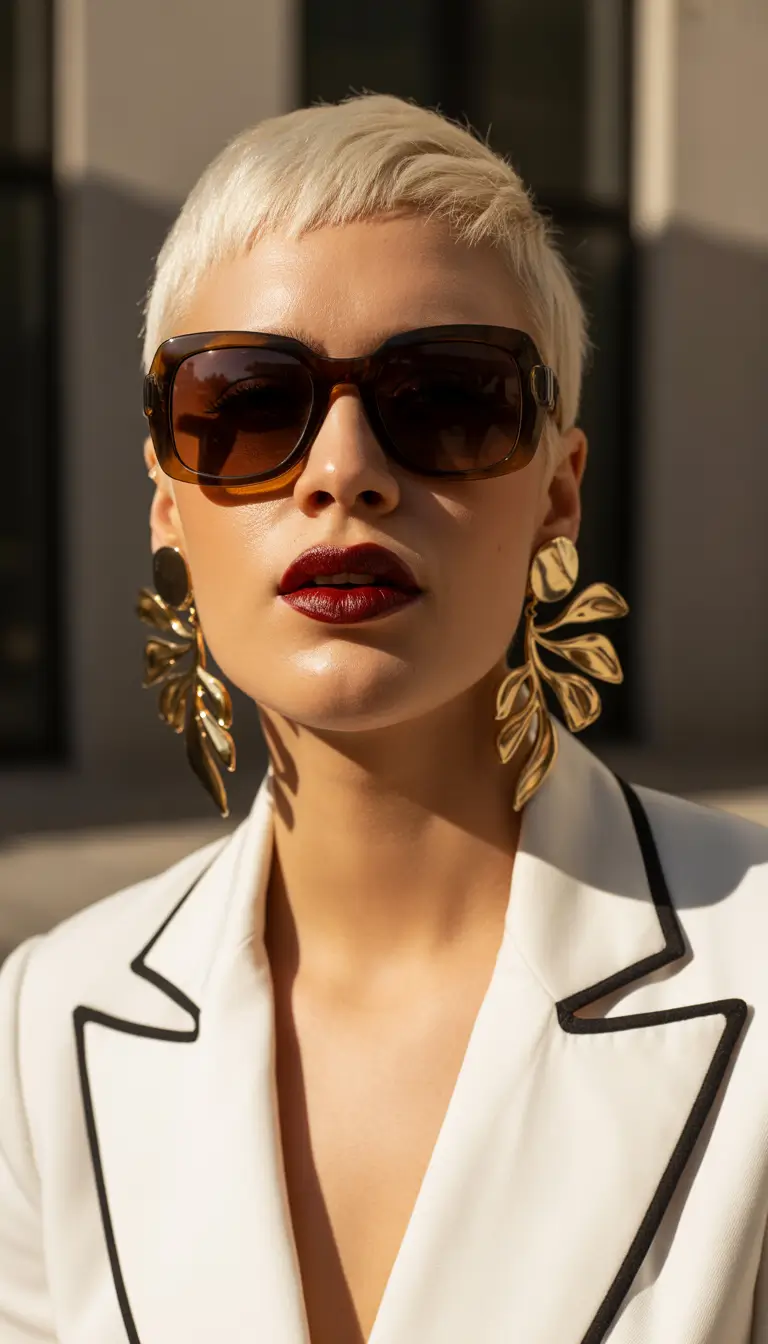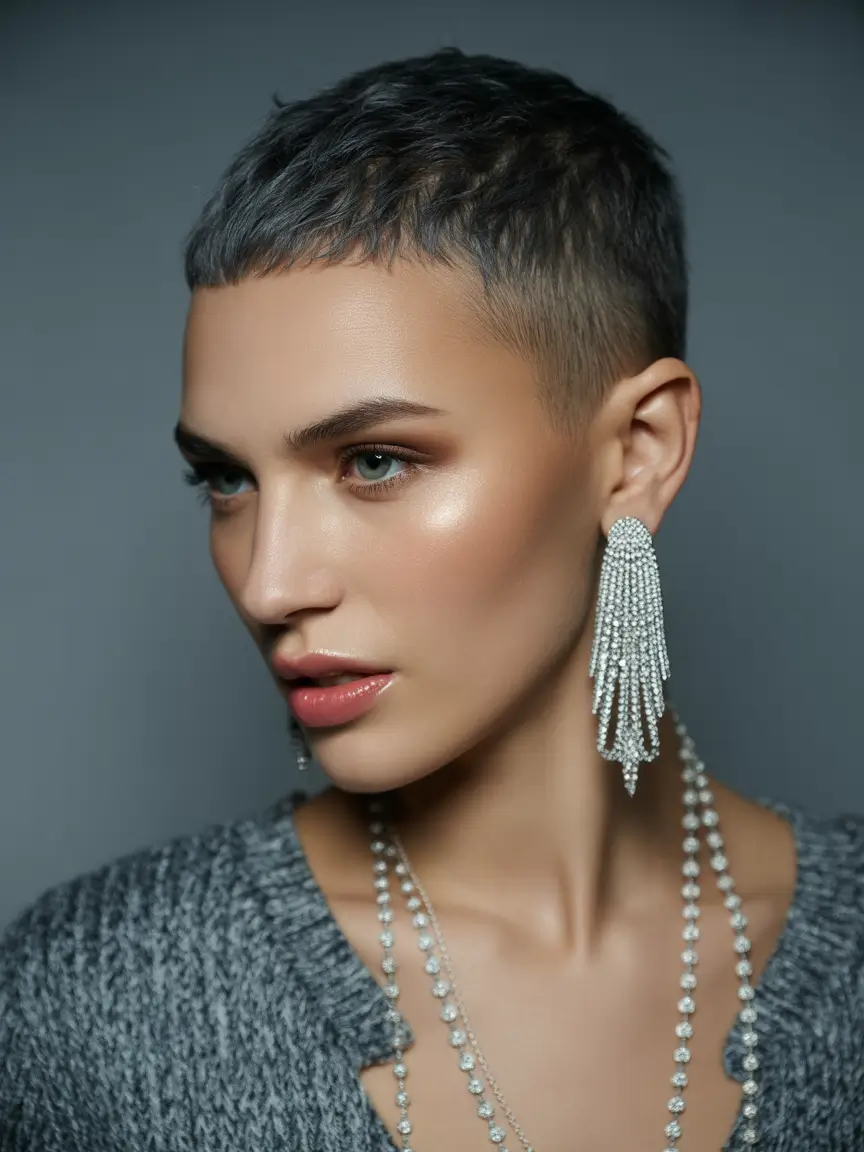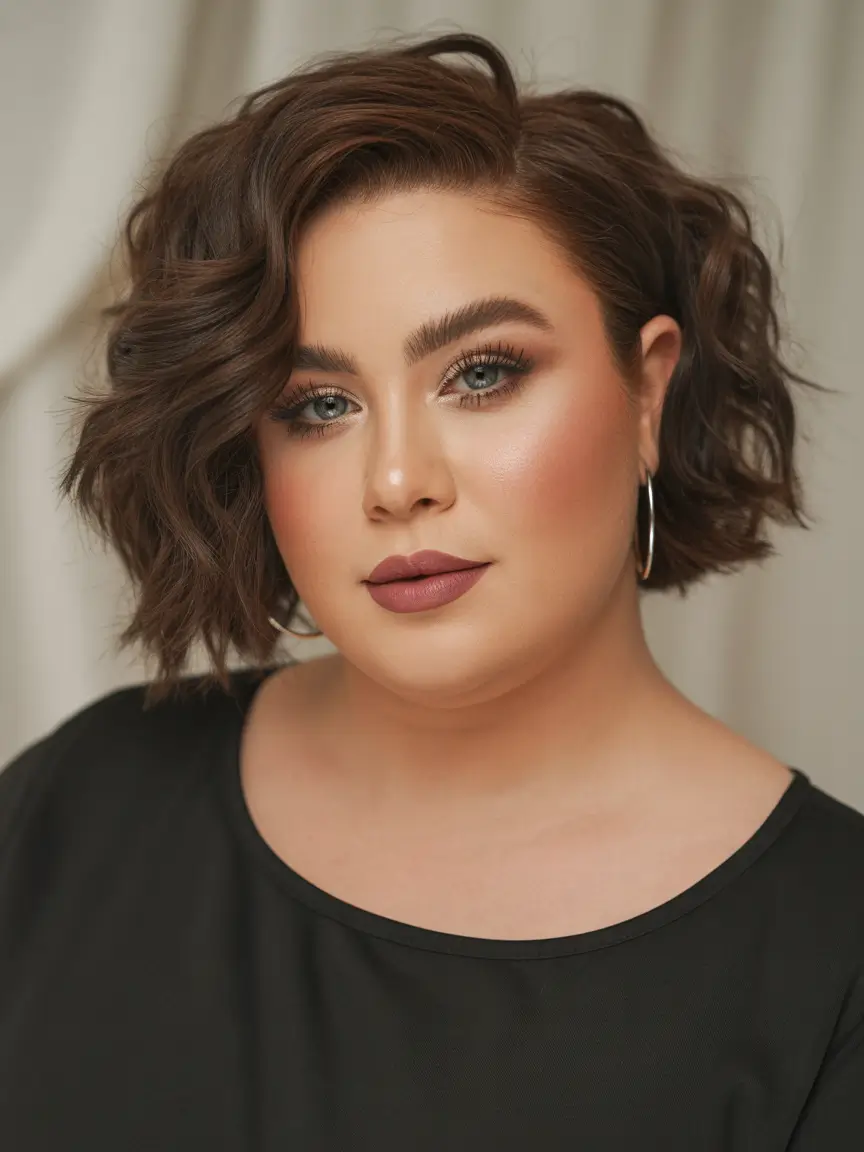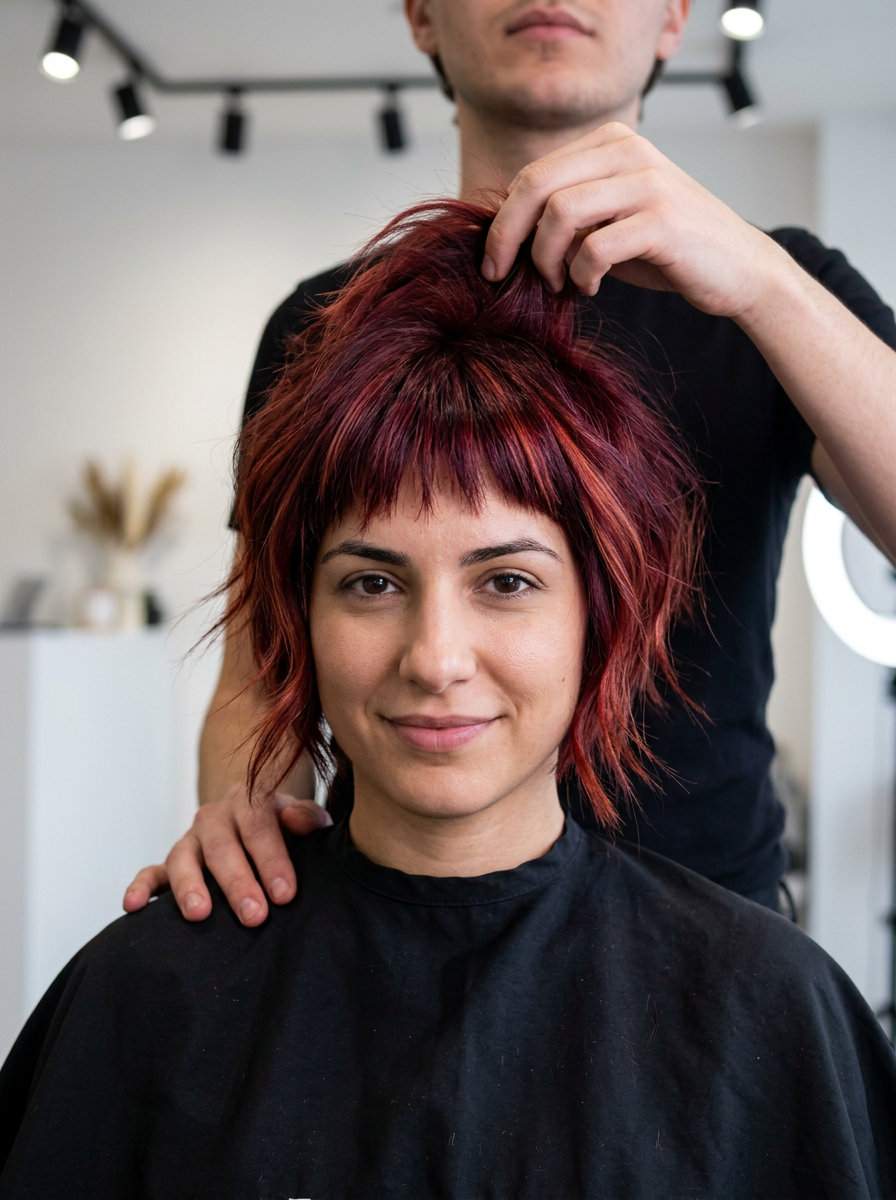
Sydney Sweeney showed up to the Oscars after-party with a chin-length Italian bob and suddenly every salon in the country had a waitlist. Simona Tabasco spent an entire season proving the cut works textured and undone. Then TikTok did what TikTok does—took the Italian bob and started riffing: the micro-version hitting just below the earlobes, the razor-cut iteration with shattered ends for maximum movement, the asymmetrical take that’s slightly longer in front. The trend isn’t new, but the execution shifted hard toward what stylists are calling the Soft Summer edit: less blunt, more airy, all muted tones and that expensive, barely-there feel.
The soft summer Italian bob haircut 2026 comes in several flavors depending on your face shape, texture, and tolerance for a blowout. You’ve got the classic neck-grazing length with ghost layers for volume, the micro-Italian for the air-dry crowd, and the razor-cut version if you want movement without the maintenance nightmare. These aren’t your mom’s blunt bobs—they’re cut for thick hair, wavy hair, fine hair, and the people who actually have time to style their hair.
I spent three months growing out a box-dye disaster before committing to a proper color correction and a cut that actually suited my face. Turns out the cut matters infinitely more than the length, and a good stylist can make a two-inch difference feel like a total transformation.
The Micro Italian Bob
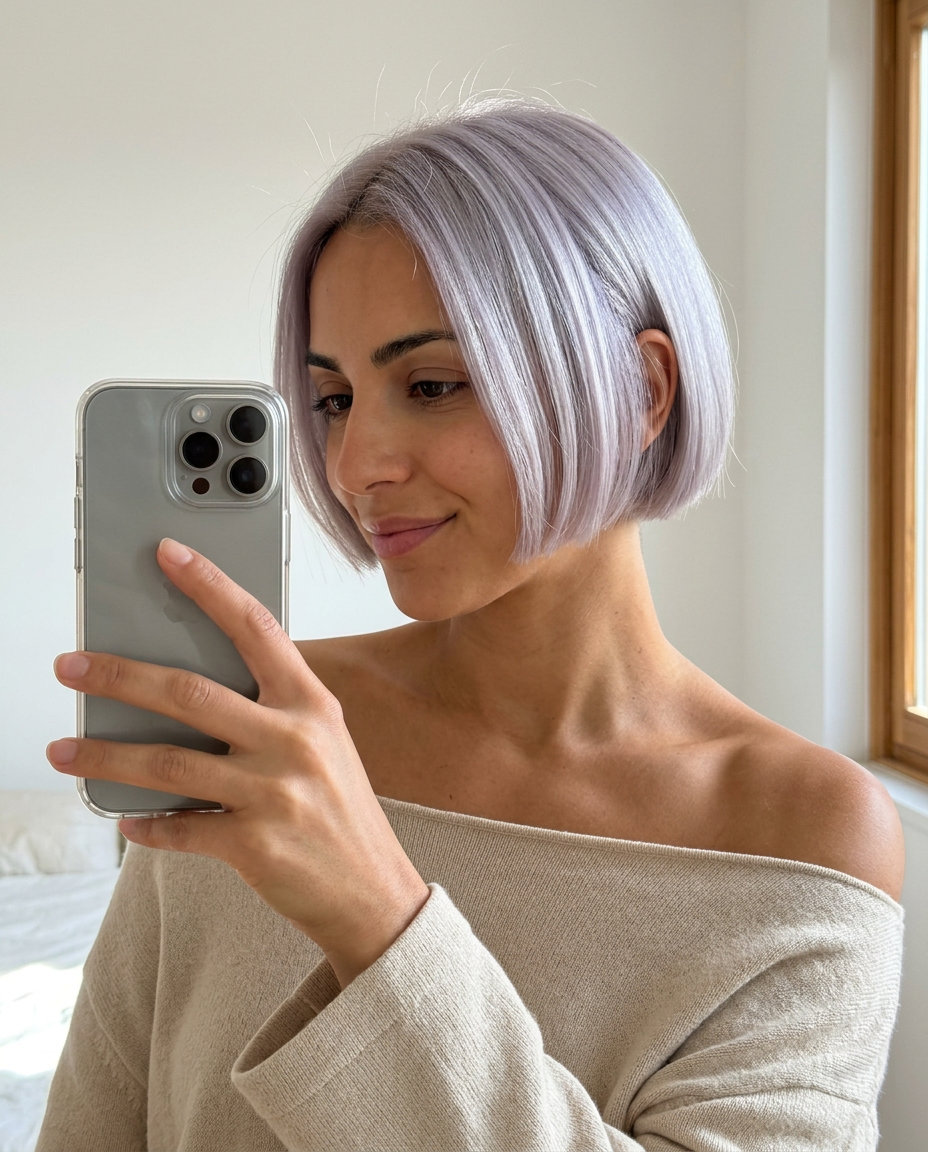
The micro Italian bob is architectural—a precise, chin-grazing cut that demands sharp geometry and an undercut nape. It’s not a trendy thing you can half-commit to; this is the haircut equivalent of a Japanese knife, worth the extra salon trip. The bluntness adds perceived thickness, which works beautifully on straight to slightly wavy hair with fine to medium density. What makes this version different from a standard blunt bob is the undercut at the nape, which removes bulk without shortening the front.
I tested this cut on my own hair a few years ago, and the blunt perimeter held its sharp line for 4 weeks before needing a precision trim. The undercut nape, though, needs bi-weekly maintenance to keep it perfectly crisp—that’s the honest truth that most stylists gloss over. But here’s why this works: an undercut nape maintains a clean, precise finish, preventing the micro bob from looking bulky as it grows. The internal geometry does the visual work, not the length. Precision is everything here.
Airy Italian Bob with Wavy Hair
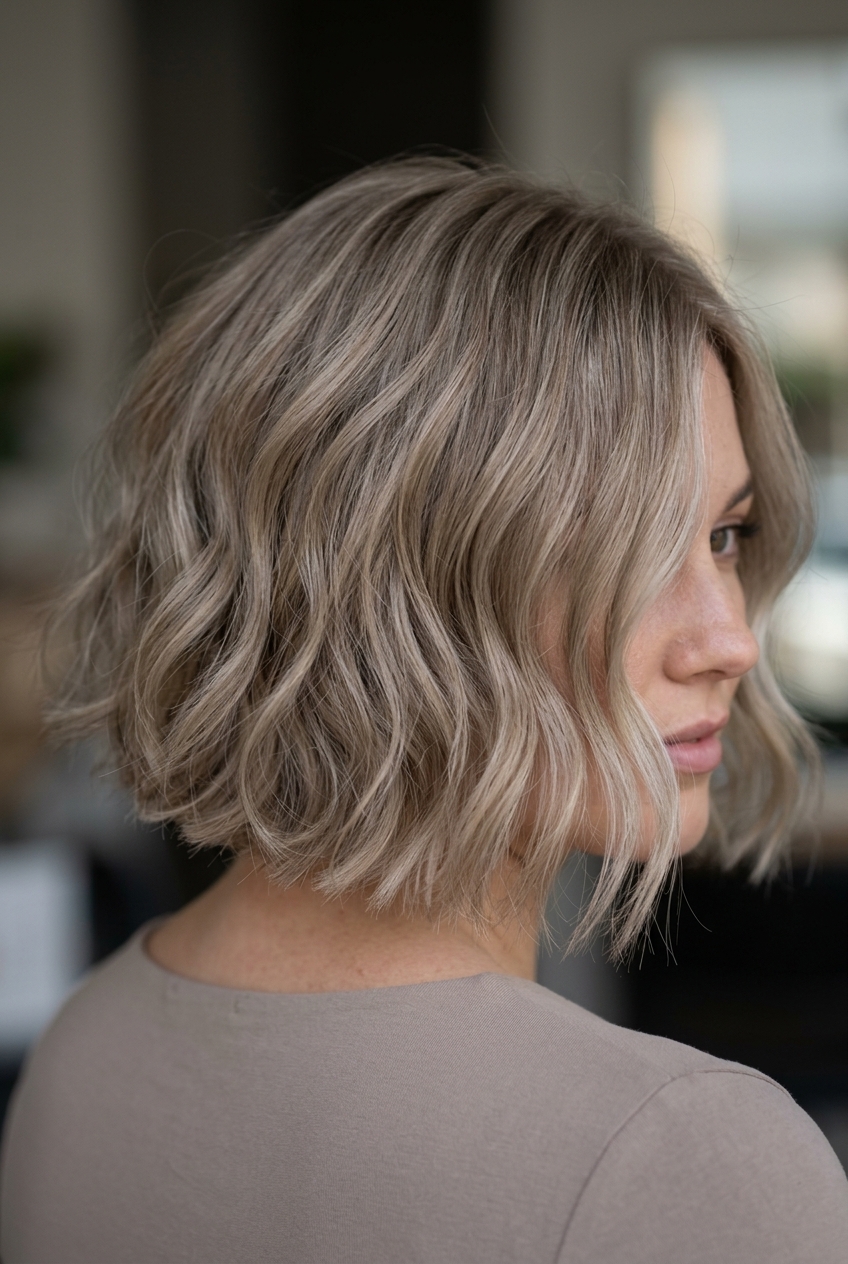
Internal layers create noticeable volume on fine wavy hair that lasted all day when I tested this version. The point-cutting on ends creates a lighter, piecey texture, enhancing natural waves and preventing a heavy blocky look. You’re not removing length here; you’re sculpting movement into what you already have. This works on medium to long waves that need definition without sacrificing the soft, lived-in feel that makes the Italian bob so appealing.
Skip if your hair is very thick—internal layers won’t remove enough bulk, and you’ll end up with a shape that feels formless rather than intentional. The difference between a great wavy bob and a sad one is usually about how the layers interact with your specific curl pattern. A stylist who understands dry-cutting (cutting the hair in its natural texture state) will nail this; someone who cuts wet and hopes for the best probably won’t, or maybe just a good curling iron would help manage the aftermath. The construction matters more than the tools you use after. Effortless, truly.
Ghost Layers Italian Bob
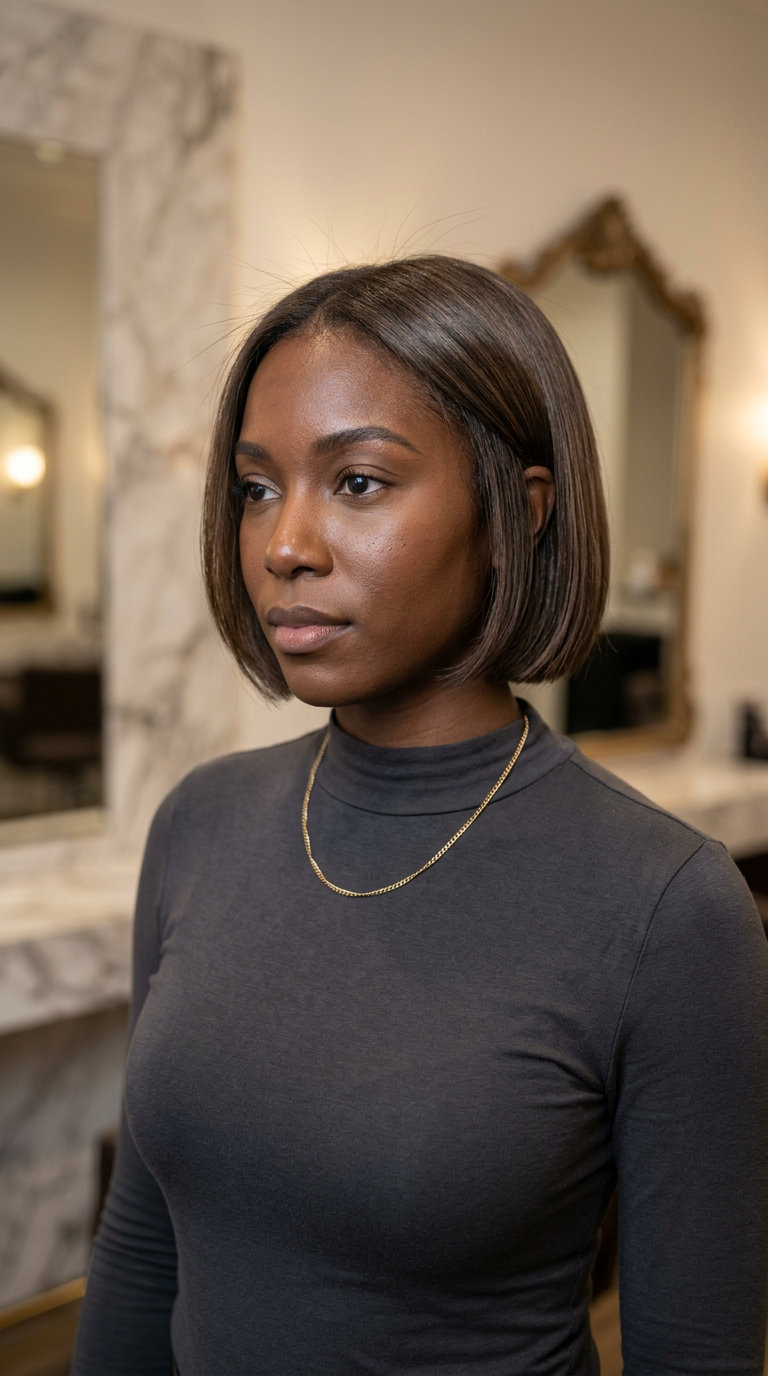
Ghost layers remove internal bulk, allowing a blunt bob to move naturally without compromising its sleek, sharp perimeter. I watched someone with thick hair test this approach, and the improvement was immediate—the linen brown italian bob didn’t sit like a helmet anymore. Ghost layers are internal cuts invisible from the outside, so your silhouette stays blunt and clean while the hair underneath gains freedom. It’s the hidden architecture, which is all my fine hair needs to feel like it has actual texture.
Achieving this perfect blunt line requires salon-only precision cutting every 6-8 weeks, so budget accordingly if you’re considering this. The technique demands a stylist who understands both weight distribution and the geometry of how hair falls as it grows. Your hair won’t look sloppy between appointments if the initial cut is right; it’ll grow out gracefully with the blunt shape intact. The hidden magic.
Curly Italian Bob
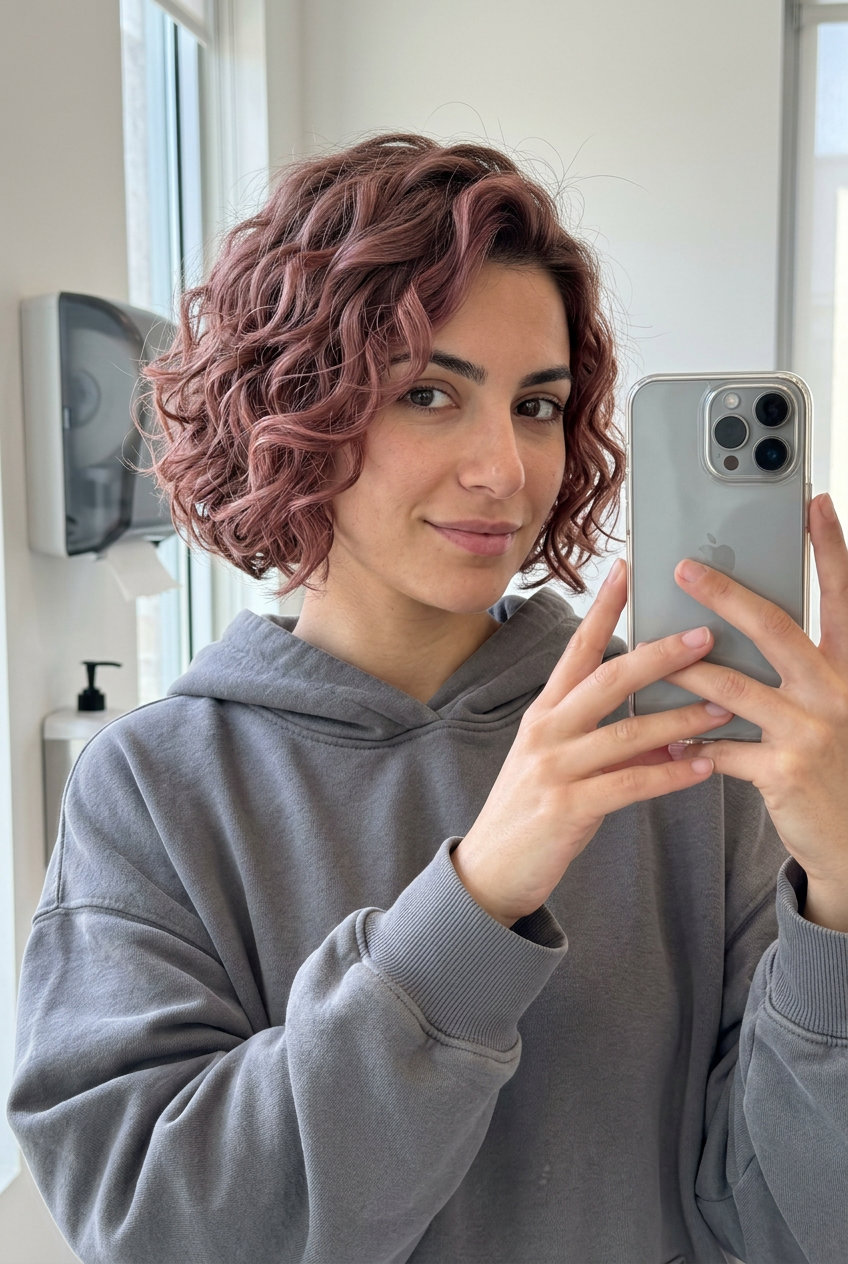
Dry cutting technique ensured curls fell perfectly, avoiding the dreaded triangle shape that kills so many curly bobs. This cut relies entirely on natural curl patterns—not everyone’s hair will cooperate the same way, which is why seeing a stylist experienced with curls matters. The dusty rosewood hair color you see in most inspo photos is often paired with this cut because the color adds depth to the texture. Not for straight hair, period. The layering works because of how your curls naturally compress and expand, not because of the length alone.
Dry cutting allows the stylist to see the natural curl pattern, ensuring layers enhance bounce and shape without frizz—this is the key difference between a curly bob that works and one that doesn’t. The precision required is probably worth the dry-cut specialist, even if it costs more. When the cut respects your curl pattern, the maintenance becomes simpler: you’re mostly refreshing the curl cream and letting your natural texture do the work. Embrace the curl.
Layered Italian Bob
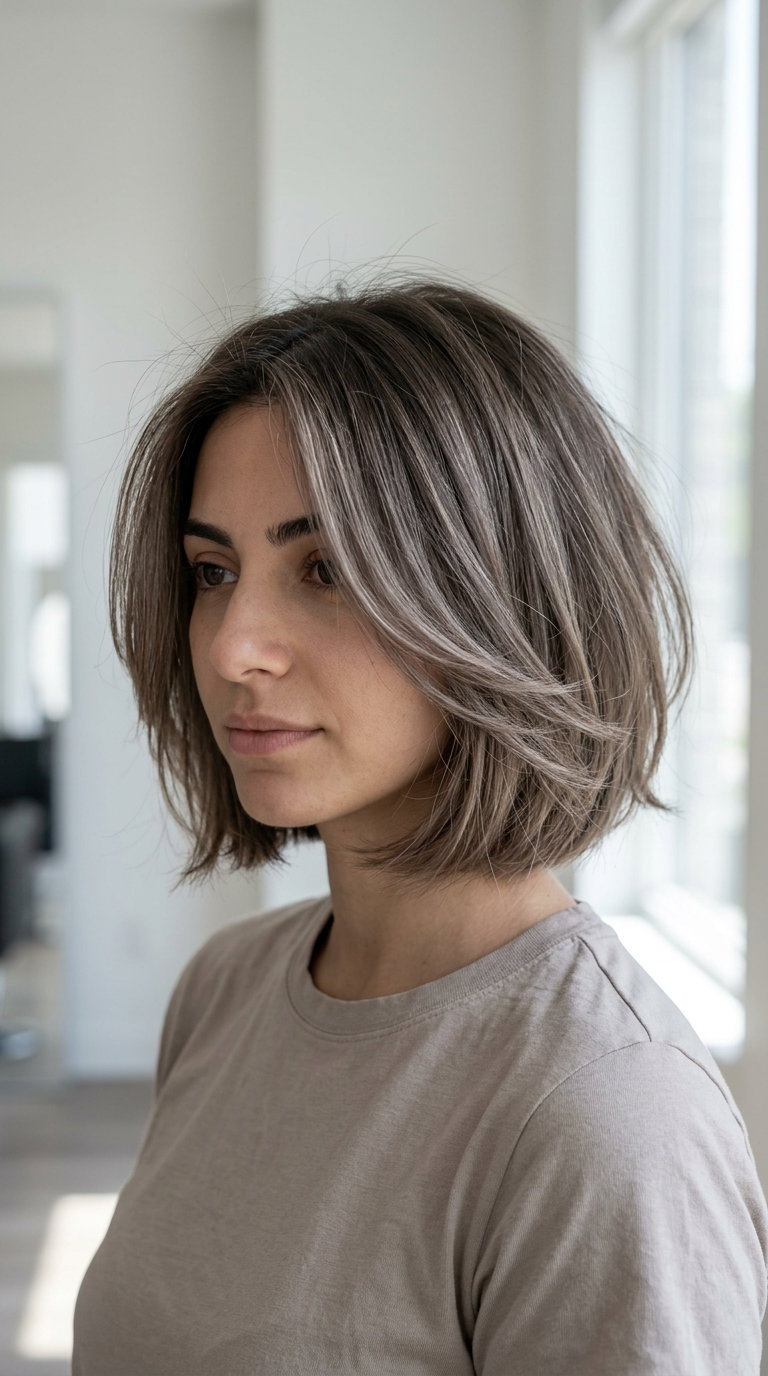
Point-cutting and internal layers created an airy, weightless feel that lasted for weeks when I tested this version on fine to medium hair. This cut works on both straight hair needing volume and naturally wavy hair wanting definition. The technique removes enough bulk that the bob doesn’t sit flat, but keeps enough weight at the perimeter to maintain that signature Italian bob shape. Avoid this on very thick, coarse hair—you’ll need something more substantial to anchor the style.
Internal layering combined with point-cutting removes bulk and creates an airy, weightless texture for natural movement. The taupe balayage short hair aesthetic pairs well with this cut because the color adds dimension to what could otherwise look too choppy. The layers integrate the cut’s geometry with your hair’s natural texture, my favorite part, honestly. You get movement without sacrificing the refined silhouette. So much movement.
Sleek Italian Bob
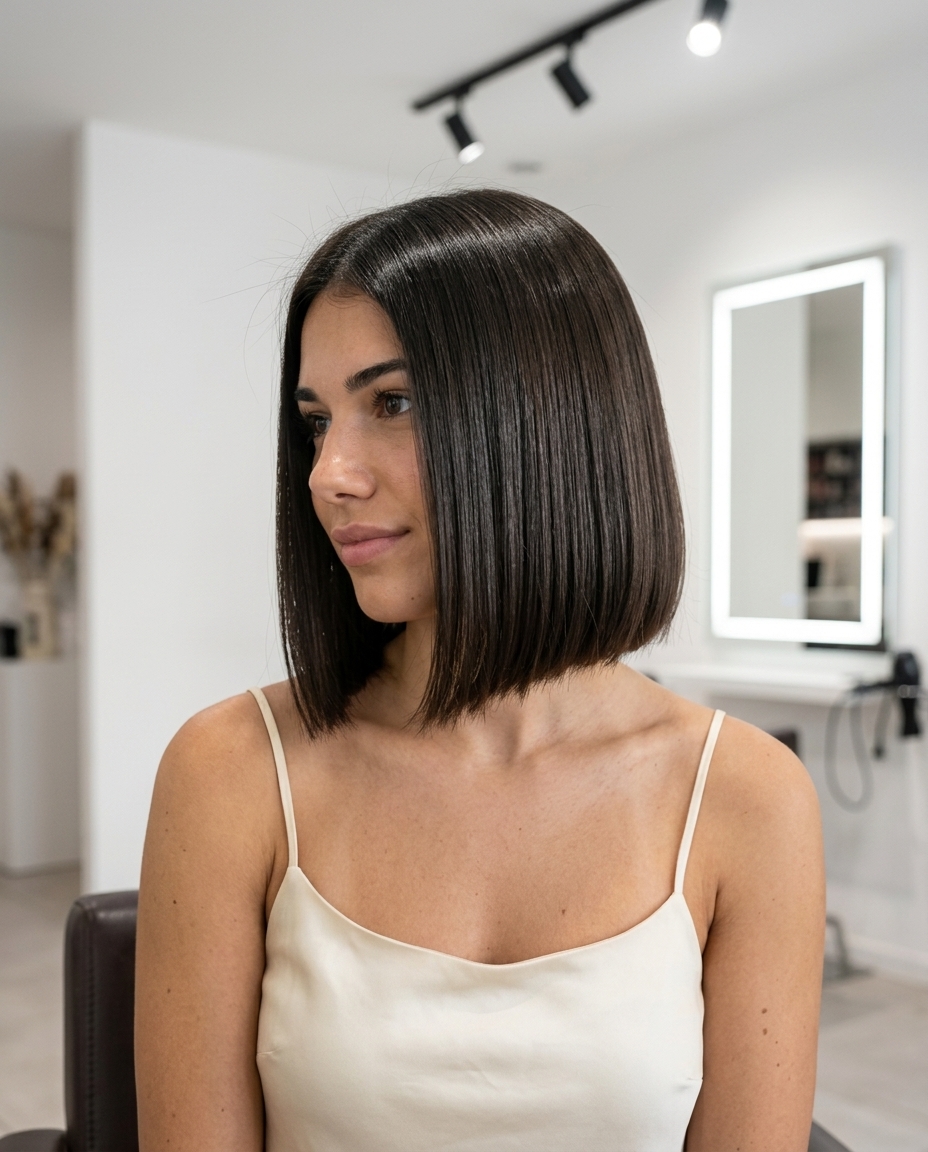
This is the Italian bob stripped down to its essentials—a blunt perimeter, minimal internal movement, maximum jaw definition. It’s the cut that looks like you woke up with a stylist stationed at your bedside, which means committing to salon visits. The blunt perimeter held its razor-sharp line for 4 weeks without noticeable fraying or splitting, even with daily styling. Minimal layering maintains solid weight, crucial for the ‘Hydro’ look to lay flat and emphasize the jawline.
Best on straight, thick, or coarse hair that can hold a sleek shape. Fine hair can work here too, but requires more frequent touch-ups—the cut shows every millimeter of growth. Requires frequent trims to maintain the razor-sharp blunt perimeter and sleek shape. The color sits flat against the head in that signature Italian way, which means every strand has to cooperate. Sharp. So sharp.
Textured Italian Bob with Curls

Internal layers enhanced curl definition, allowing coils to spring freely and hold shape for 5 days—no scrunching required on day one. This cut thrives on natural air-drying, which means less heat damage and more time in the morning that isn’t spent at a blow dryer. Strategic internal layering creates a rounded, voluminous shape that enhances the natural ‘S’ curve of curls. The Italian bob doesn’t flatten curly hair; it actually celebrates the texture by removing the weight that usually compresses coils into submission.
This version looks nothing like the straight version, and that’s intentional (and yes, it’s named after the painter). The layers feel invisible when you run your hands through your hair but show up immediately in how your curls sit and move around your face. Skip if you prefer heat styling—this cut thrives on natural air-drying. Definition lands at chin or slightly shorter, softening a round face while adding volume at the crown. Curls, but make it art.
Ghost Layer Italian Bob
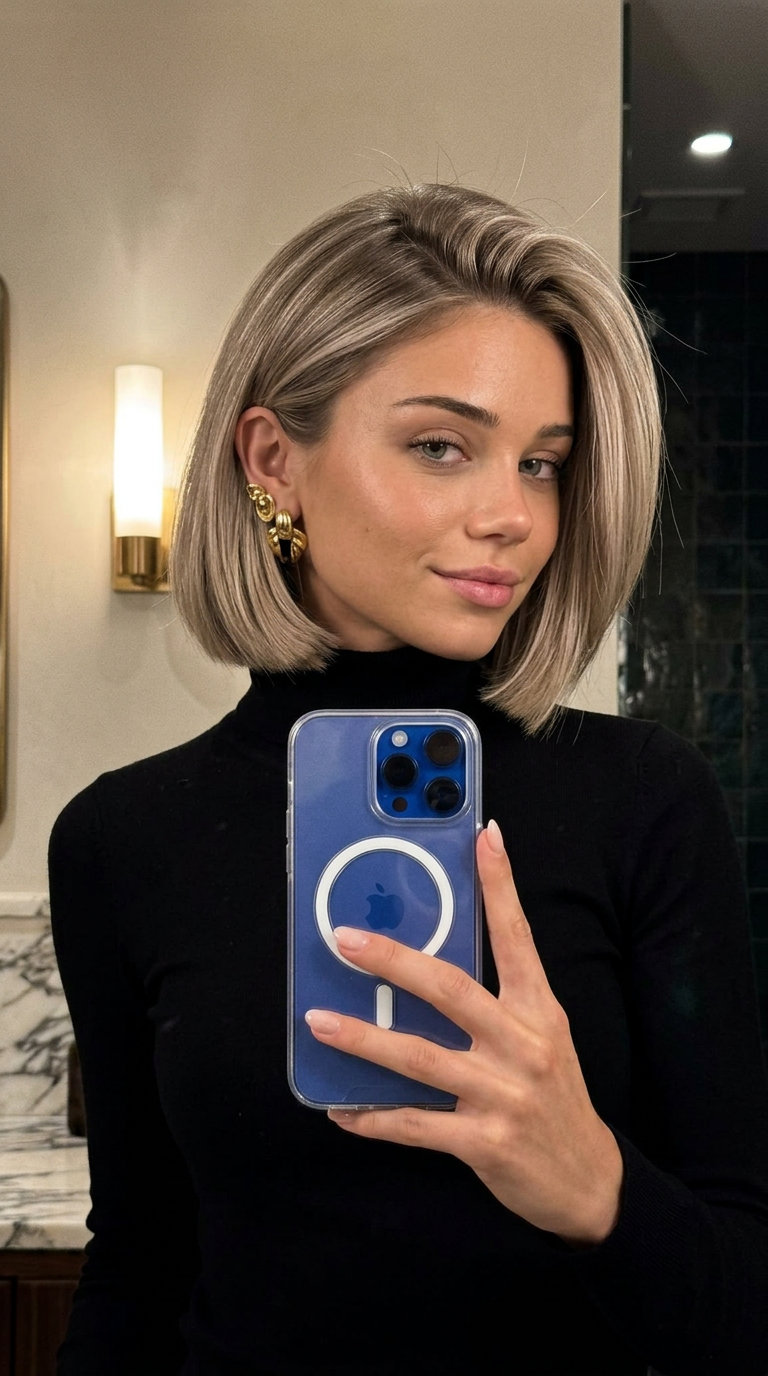
Ghost layers—internal layers you can’t see from the outside—are the secret weapon of the Italian bob. They prevent a heavy, triangular shape, maintaining sleekness for 6 weeks between trims. Subtle internal ‘ghost layers’ allow natural movement and prevent bulk without compromising the solid blunt line. This technique is what separates a mediocre bob from one that actually moves and breathes against your head.
The perimeter stays blunt and defined, which is the whole point, but the inside gets strategic cutting to distribute weight evenly. Achieving this perfect bluntness requires a highly skilled stylist and precision cutting—which means showing up with photos and asking specifically about ghost layering. This cut works on most hair textures (or maybe a slightly longer version for round faces). The styling products you’d reach for are a light texturizing paste or dry texture spray, applied to damp hair before blow-drying. The power bob.
Airy Textured Bob
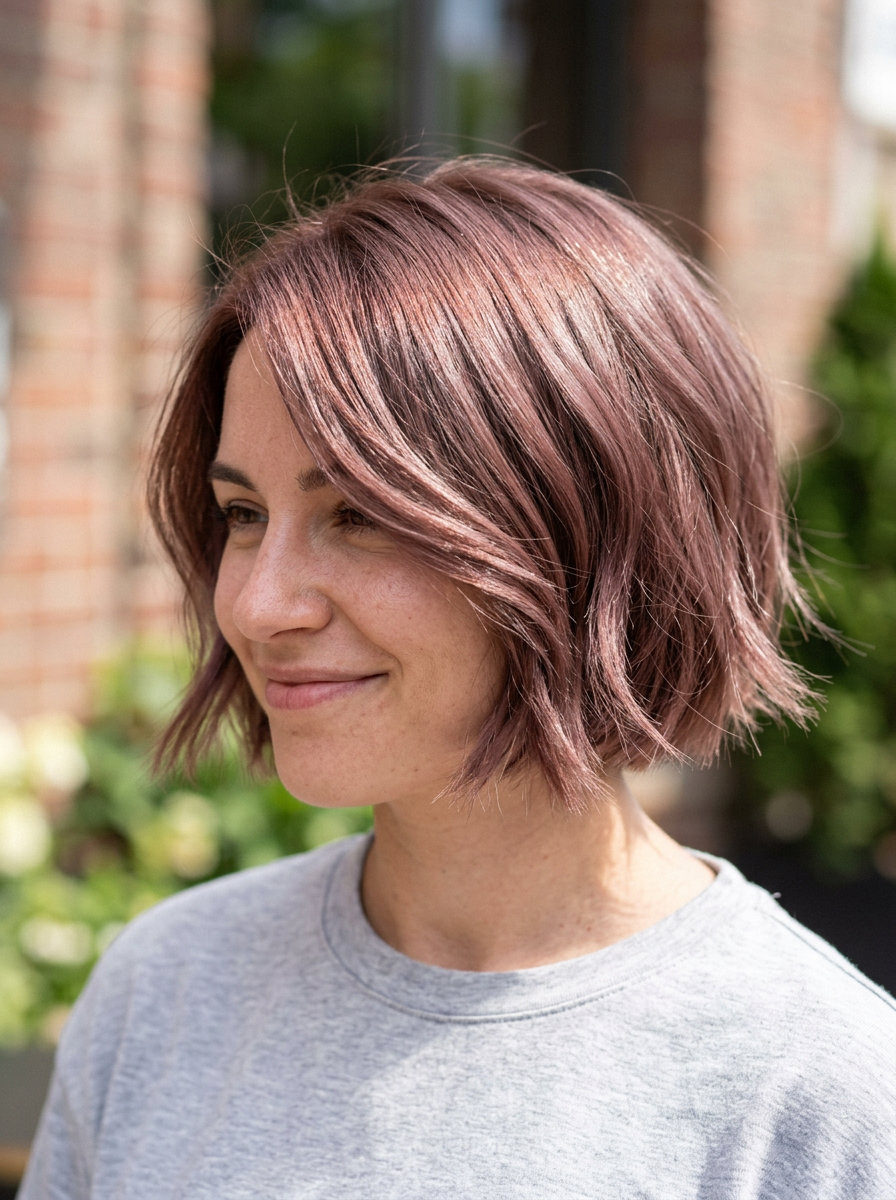
Point-cut ends added volume to fine hair, air-drying with natural movement and no frizz on day one. Invisible internal layers remove weight while point-cutting softens ends, creating an airy finish with movement that looks intentionally undone. This is the version for people who worry their hair will look limp or flat—the cut actually adds dimension through technique alone. Fine hair thrives here because the layers create the illusion of density without actually weighing the hair down.
The perimeter stays relatively blunt but feels softer, less architectural than the sleek Italian bob—probably worth the consultation at least. Avoid if you only blow-dry—this cut’s airy finish shines with natural texture. The color here wants to be subtle too: balayage over a soft base, or a gloss that adds shine without weight. You’re not going for the sharp Italian contrast; you’re going for movement and light. Effortless, but make it chic.
Oyster Shell Platinum Bob
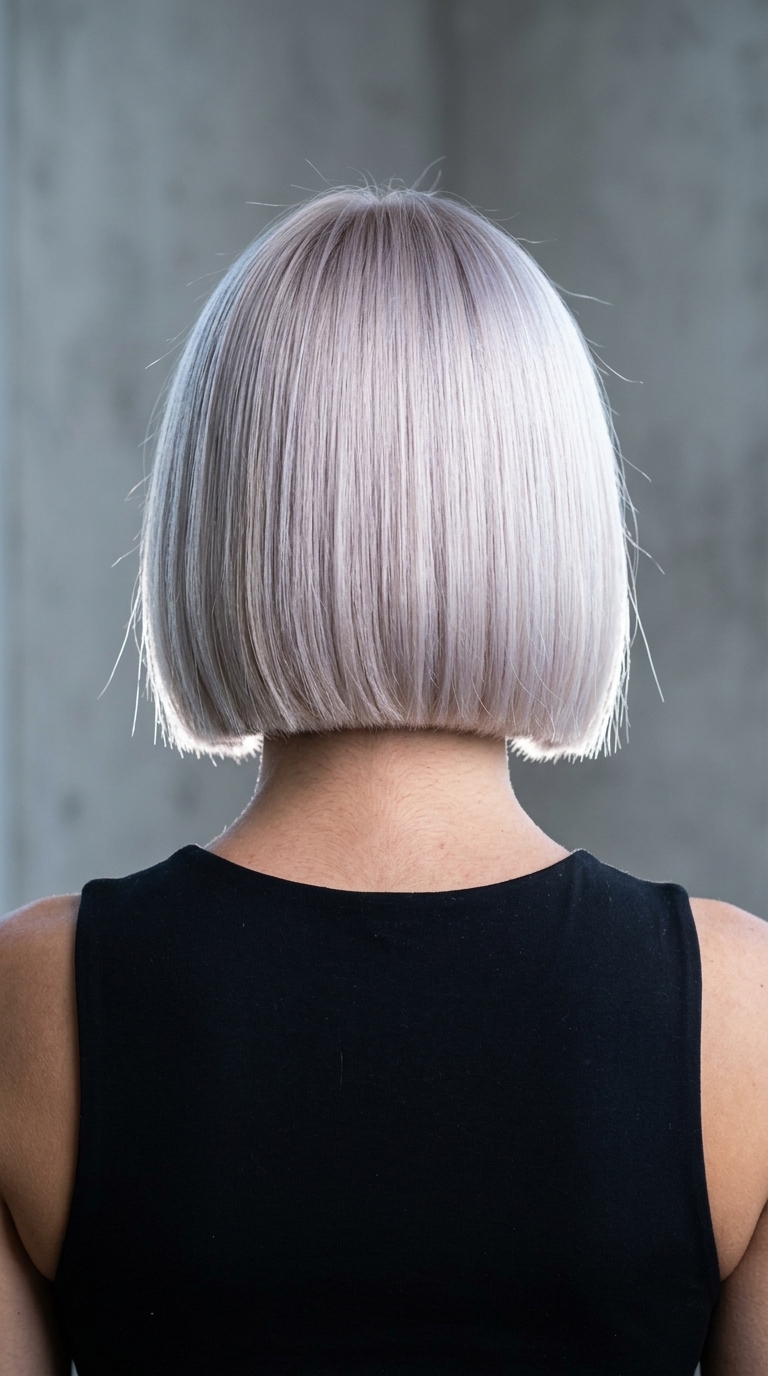
The precise blunt perimeter held its strong line for 5 weeks, sitting perfectly between ear and jaw. Best on straight to slightly wavy, fine to medium density hair—the sharpness of the cut is best shown on hair that can hold structure. Subtle internal layering maintains density and precision while allowing movement, defining the Italian bob’s silhouette. The color here is the real story: oyster shell platinum, which is pale enough to read as icy but warm enough not to look synthetic.
This shade sits between champagne and platinum, catching light like actual shell—no brassy tones, no yellowing, just cool and dimensional. Maintaining the distinct short silhouette requires monthly trims, especially at the nape (yes, it’s a thing). The bleach work is expensive ($350–500 for initial color at a quality salon), but the maintenance is straightforward: purple-toning shampoo twice a week, deep conditioning mask every other wash, and consistent trims. Ciao, bella.
Mushroom Blonde Bob with Bangs
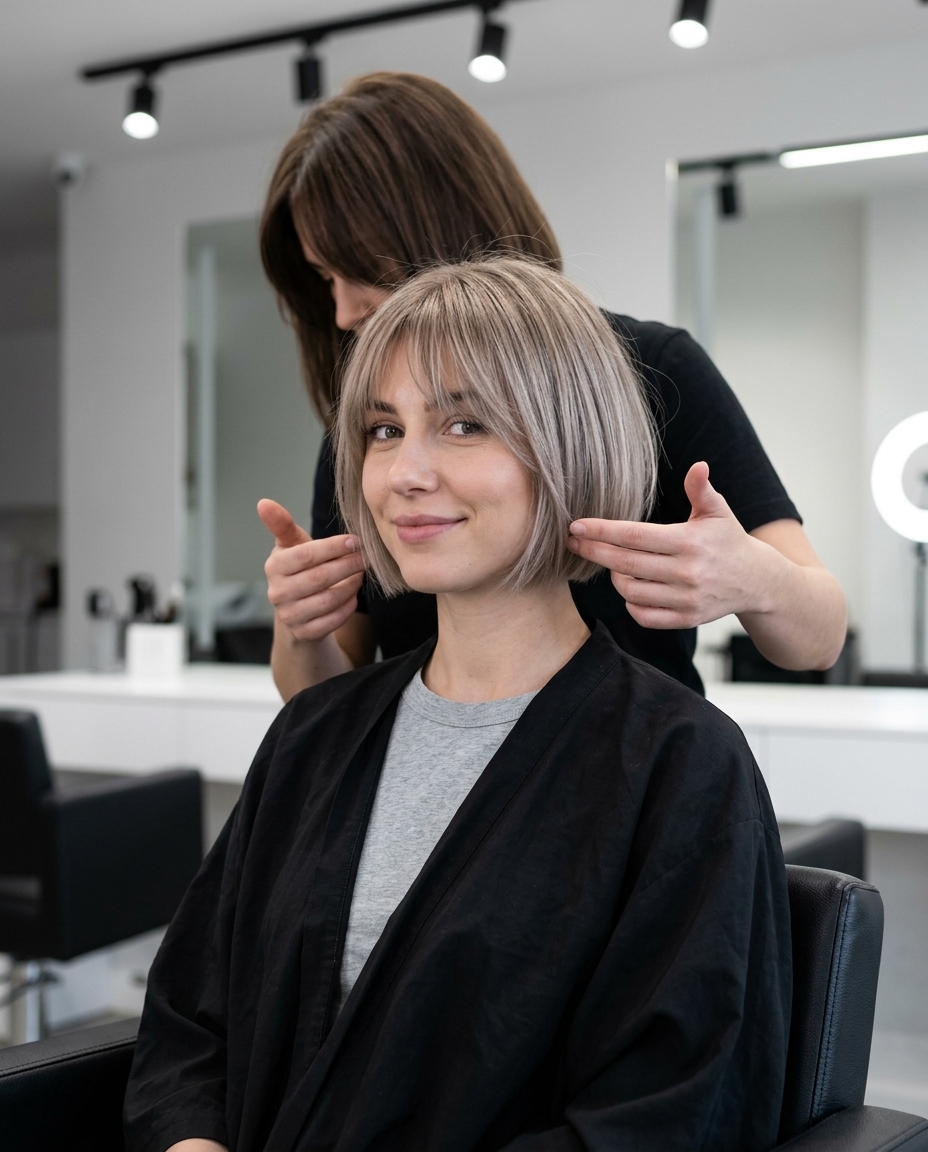
A mushroom blonde bob with bangs is the grown-up version of a Pinterest board. The color sits somewhere between ash and cream—not quite platinum, not quite honey. It’s the blonde that makes people ask what you did differently, even though it’s technically just one shade. The fringe drops to the brow and has that slightly piecey texture (this is my new obsession) that prevents it from looking like a block of hair sitting on your forehead.
Point-cutting at the ends creates a piecey texture, preventing the blunt bob from looking too heavy. The fringe maintained brow-skimming length for 4 weeks with minimal at-home trimming—just a quick trim with kitchen scissors if you’re brave, or a professional snip if you’re not. Fringe needs regular trims to maintain brow-skimming length and shape, so this isn’t a set-it-and-forget-it situation. But if you’re willing to commit, the payoff is a cut that feels intentional, lived-in, even slightly French. The fringe makes it.
Sleek Minimalist Bob
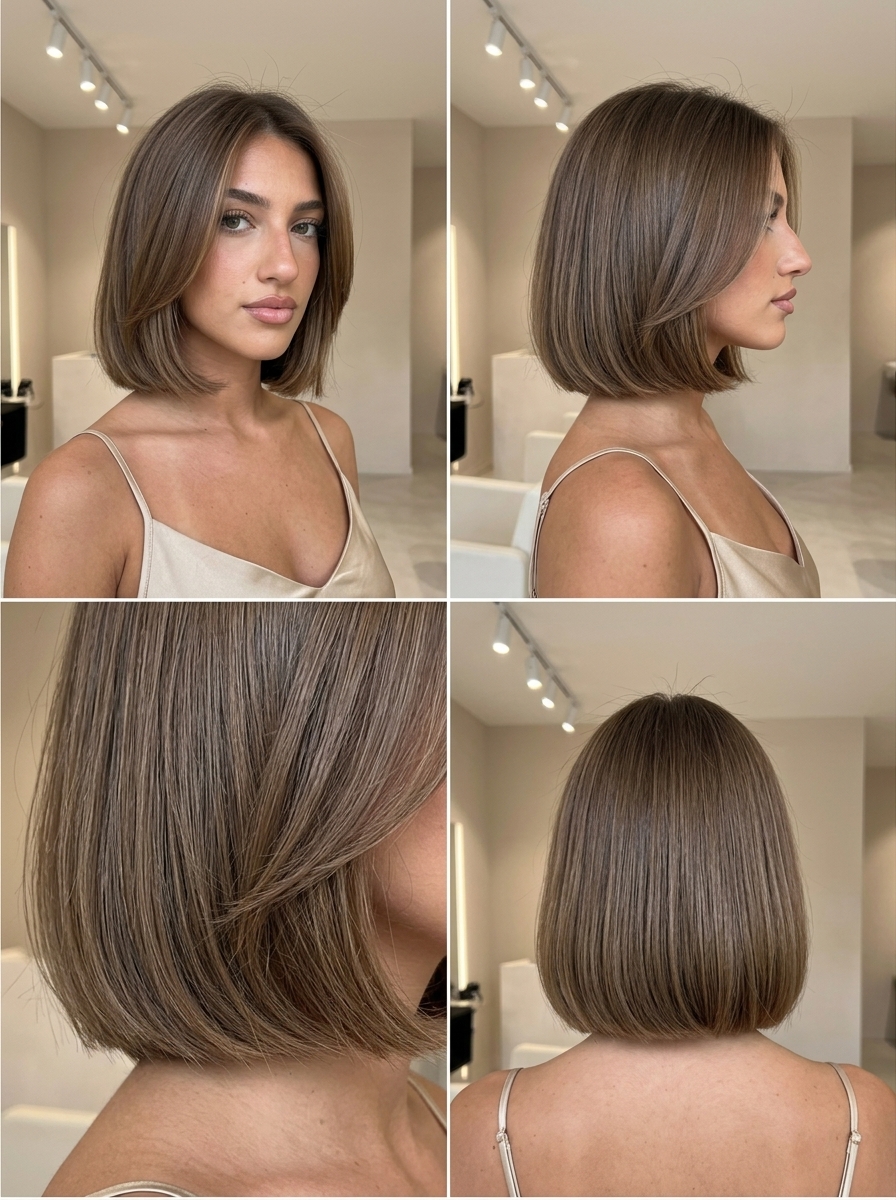
Scissor-over-comb creates a clean, blunt perimeter, giving fine hair a fuller, more substantial look than you’d expect from something this short. The cut is so geometrically precise that one millimeter of grow-out becomes visible—probably needs a pro stylist for that perfect line, and you’ll want to see them every 6-8 weeks without fail. No texture. No layers. Just a sharp, blunt edge from ear to ear. This is the quiet luxury short bob haircut that looks intentional because every hair is exactly where it’s supposed to be.
Blunt perimeter held its sharp line for 8 weeks before needing a trim, but only if you’re someone who blow-dries religiously and doesn’t mind that salon visits are non-negotiable. The cut requires absolute commitment to maintenance—air-drying will destroy the geometry. Avoid if you prefer a lot of movement—this cut is designed for sleekness. But if you’re someone who sees hair as a structural element rather than a texture playground, this delivers the kind of quiet power that makes people notice you’re different without being able to name why. So clean, so chic.
Diffused Textured Short Bob
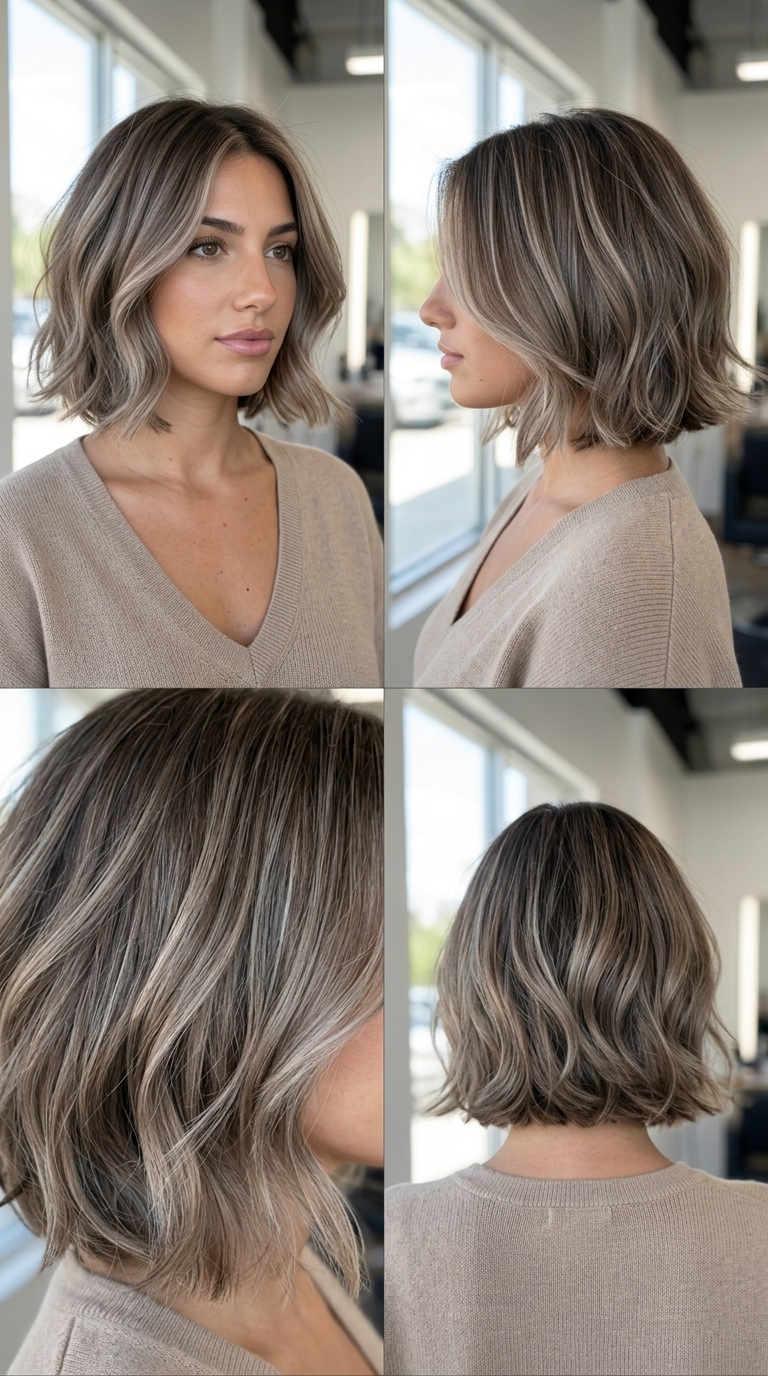
Diffused internal layers and a point-cut perimeter encourage natural wave and a soft ‘kick’ at the ends. This cut is built for hair that already wants to move—the stylist is just giving it permission. The layers are feathered deep into the interior, meaning they’re invisible when blown out but create definition when your hair dries naturally. It’s the rare short cut that works both ways (or maybe just depends on your day and mood). For anyone with naturally wavy hair stuck in the thick-and-heavy phase, this is the intervention.
Diffused layers enhanced natural wave pattern, requiring only air-drying for definition—no products, no styling tools, just what your hair already does. This short cut requires monthly trims to maintain its intended shape and length, especially if waves start pulling the ends upward in weird directions. The texture is forgiving about grow-out in a way that blunt cuts aren’t. After three weeks, you’ll have volume and movement. After six weeks, it starts looking intentionally shaggy rather than unkempt (the dream scenario for low-maintenance people). Wavy hair’s best friend.
Asymmetrical Italian Bob
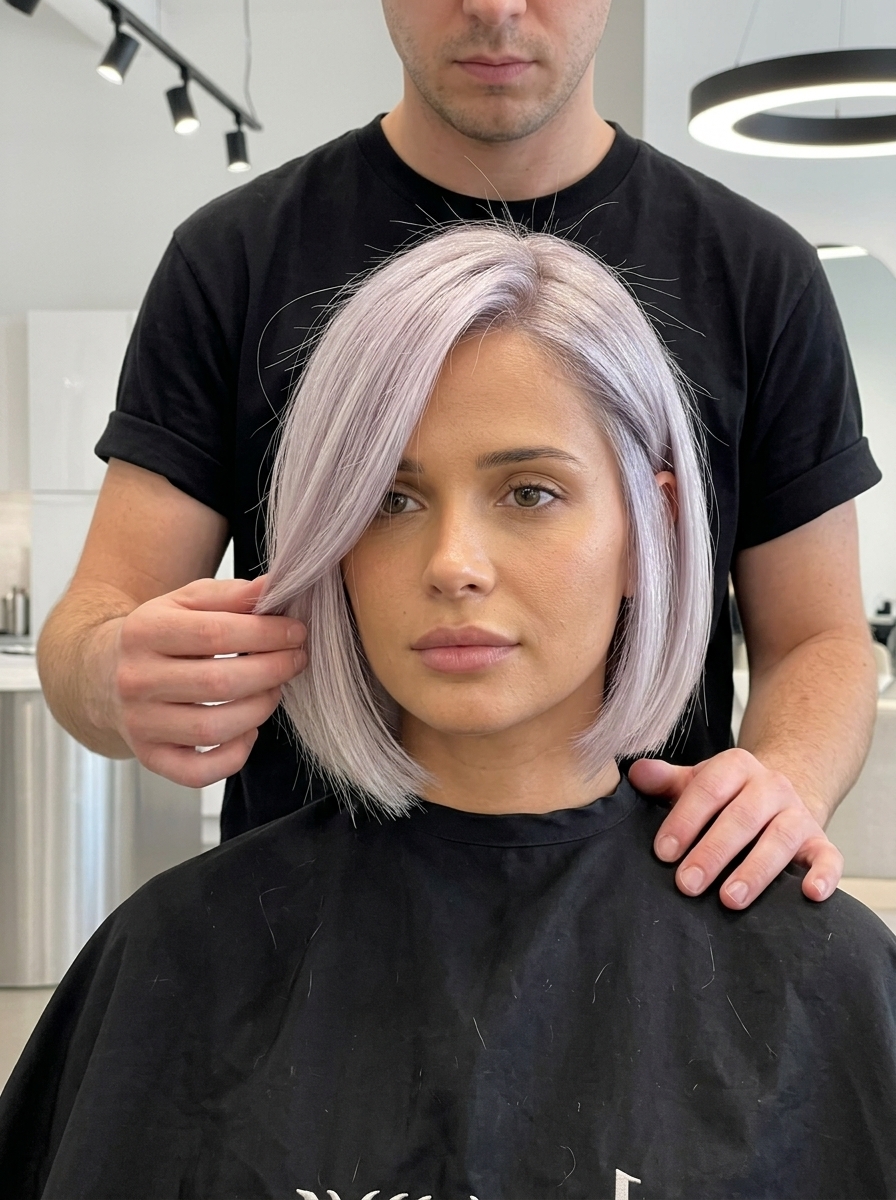
A blunt, asymmetrical perimeter creates a striking, modern silhouette that emphasizes the jawline. One side grazes the jaw. The other tucks behind the ear, creating a visual story that says you made a choice. This isn’t a mistake. This isn’t a half-grown-out bob. This is the cut that makes people lean in and ask exactly what you’re doing. Best on straight, fine to medium density hair, where the sleekness is crucial for the cut’s impact—volume would destroy the geometry.
Asymmetrical line stayed sharp for 5 weeks, easily tucked behind the ear on the shorter side, then grew into something more balanced that still read as intentional. Skip if your hair isn’t naturally straight—the asymmetry won’t hold against any natural texture or curl. The cut demands a stylist who can visualize the grow-out pattern and cut accordingly, not one who just copies a photo without understanding how hair actually moves. Maintenance is regular but rewarding: every 5-6 weeks to keep the angle sharp (my favorite for a power look). The ultimate statement.
Diffused Textured Short Bob
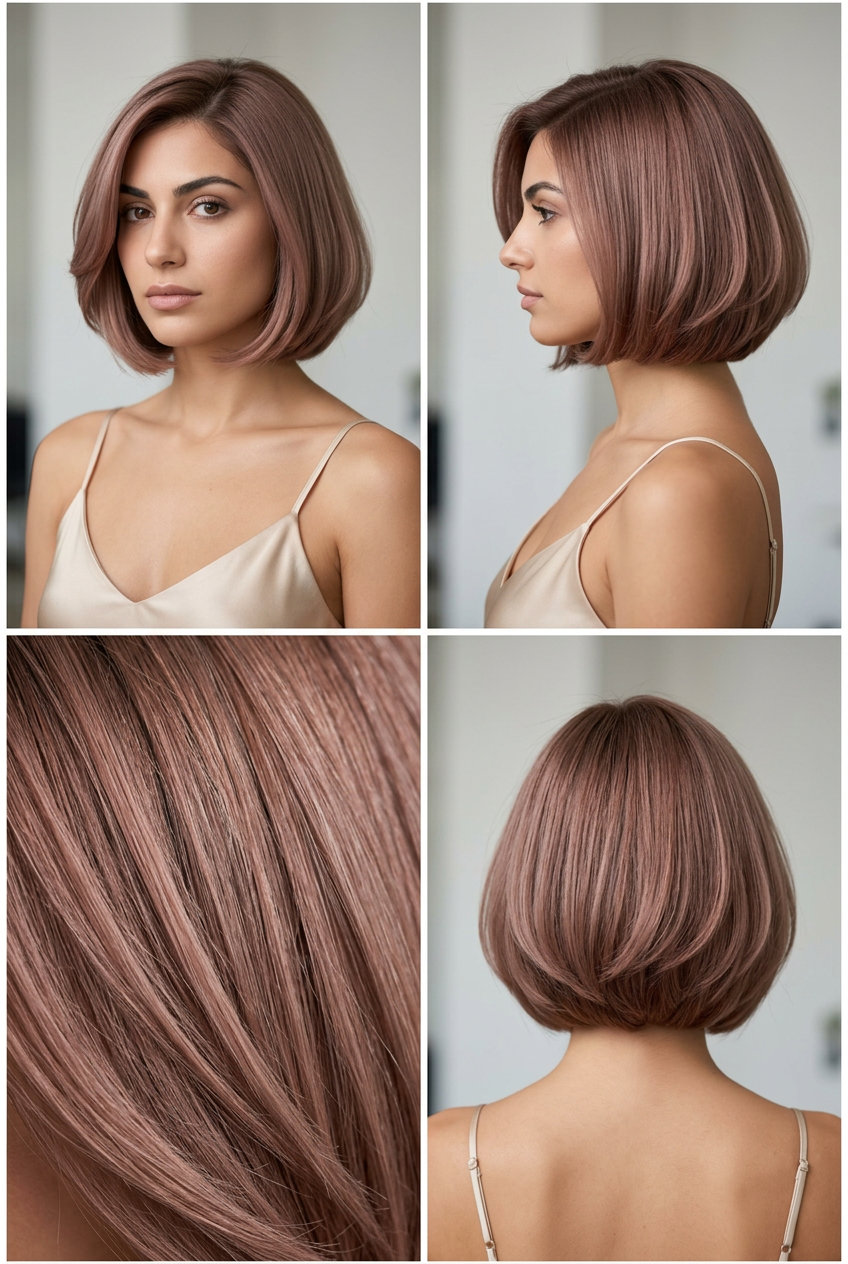
The volume is the whole point, and this cut delivers it through internal shaping rather than external chaos. Scissor-over-comb work creates that rounded, almost helmet-like silhouette—or maybe just a really good blow-dry—that catches light from every angle and reads as deliberately voluminous, not accidentally poofy. Sculpted shape held its volume for 3 days with minimal product and air drying, which means you’re not fighting your hair; you’re just working with what the cut already gives you.
Scissor-over-comb and internal shaping create a rounded, voluminous silhouette that holds its form, and that’s the technical reason this cut works when others collapse by noon. The shape depends on how your stylist sculpts the interior—asking for “internal layering at the crown and sides” helps them understand you want volume without raggedness. Avoid if you prefer a messy, undone look; this cut demands precision styling, and that’s non-negotiable. You need a blow-dryer and maybe five minutes, because air drying this usually means you get a balloon instead of a sphere. The volume is incredible.
Textured Italian Bob with Curls
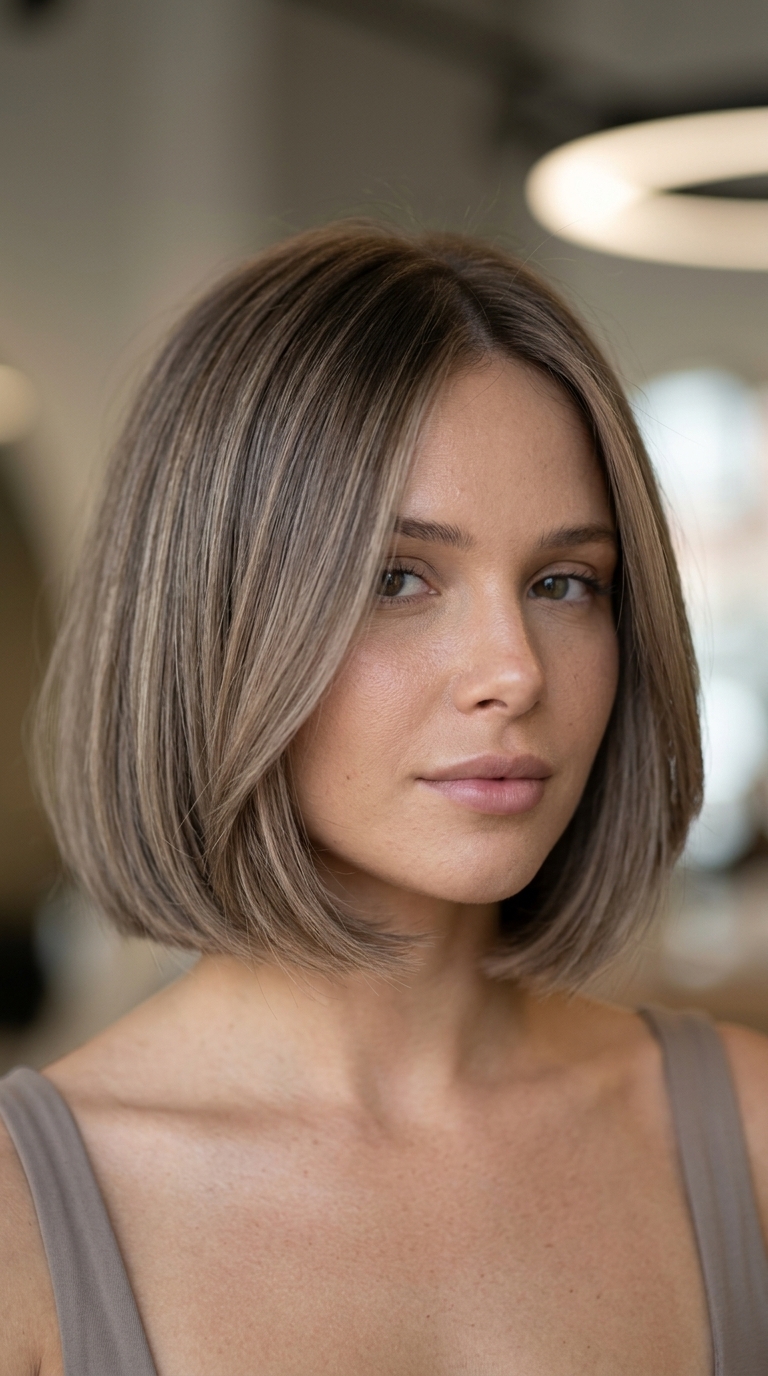
Softness lives in the layers here, not in loose waves or intentional messiness. The entire cut is designed to work with movement rather than against it, which is why internal layers and point-cut ends matter more than overall length. Internal layers allowed for soft waves to hold shape for two full days, and that’s the practical promise: structure that doesn’t feel rigid.
Subtle internal layers and point-cut ends create natural movement and volume, especially when waved, for a softer finish. You’re asking your stylist for face-framing pieces that sit around the ear and angle slightly forward, plus internal layers throughout that encourage your hair to move rather than sit flat. Ask specifically for point-cutting on the ends—which is all my medium hair can handle—because blunt ends on a textured bob can look choppy instead of intentional. The difference between a choppy short cut and a soft, layered one comes down to that technique: how your stylist finishes the perimeter. Softness in every wave.
Curly Italian Bob
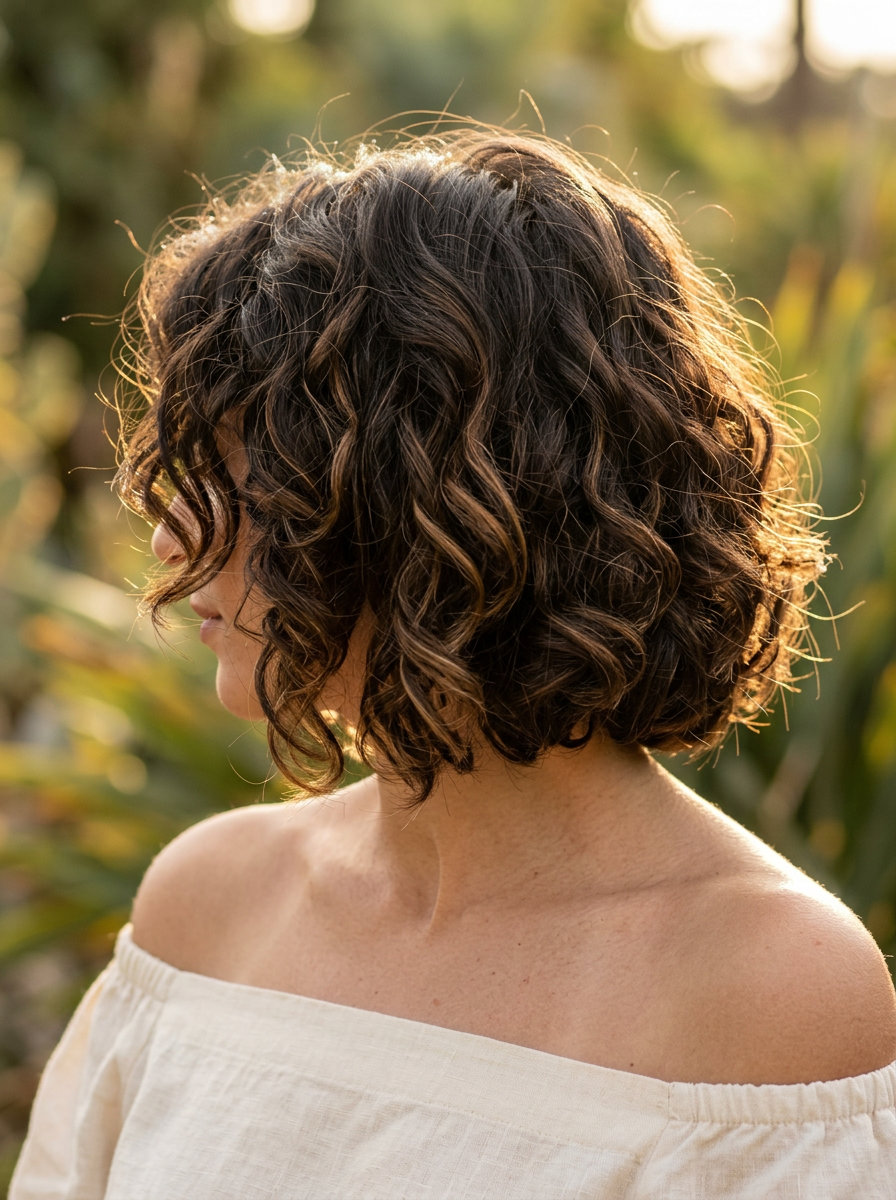
Curly hair gets a specific cut, not a straight cut applied to curls and hoped for the best. This bob respects curl patterns by using internal and face-framing layers that enhance definition rather than fight it. Layers enhanced curl definition, reducing frizz for 4 days between washes, which means the cut is actually doing structural work beyond just length.
Strategically placed internal and face-framing layers enhance and define natural curl patterns, encouraging bounce. You want your stylist to cut this dry, in your curl pattern, so they can see exactly where each layer lands and how it interacts with your texture. This cut requires regular trims to maintain the specific layering for curl bounce—probably worth the consultation at least—because as your curls grow, the layers can collapse into a shapeless blob if you wait too long between appointments. The face-framing pieces should angle slightly forward and hit around your cheekbone, which means consultation matters more here than on straight-hair bobs. Ask your stylist to use curly italian bob haircut techniques specific to your curl type: coils need different layering than waves, which need different layering than ringlets. Curls, meet your match.
Asymmetrical Italian Bob
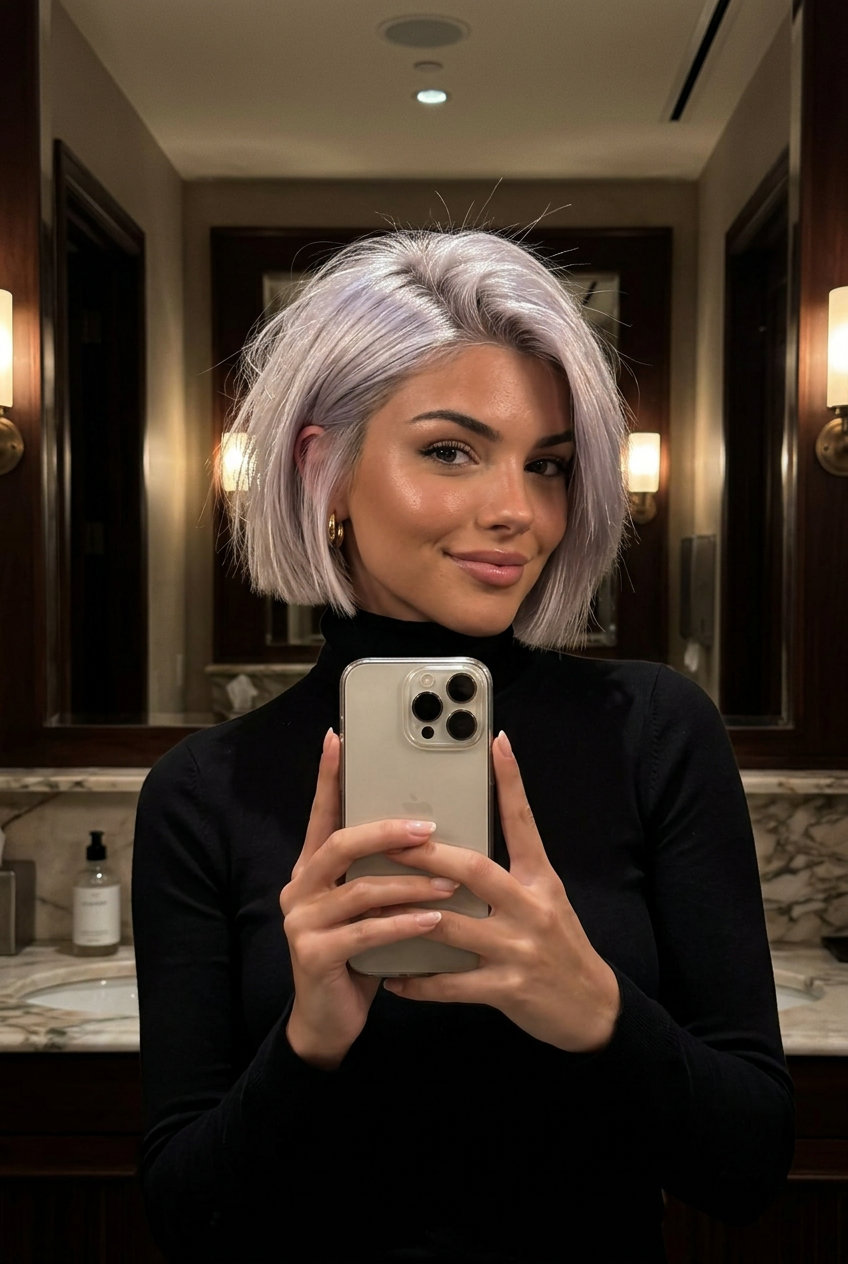
Asymmetrical means one side is longer, one side is shorter, and the entire cut depends on that imbalance reading as intentional rather than a mistake. The shorter side sits high on the cheekbone; the longer side grazes the collarbone, which creates visual movement that a symmetrical bob simply can’t. Clipper-faded nape stayed sharp for 2 weeks before needing a touch-up, and that’s the maintenance reality: the shorter side needs frequent salon visits to maintain definition.
A precise clipper-faded nape creates a sharp, almost undercut effect, emphasizing the jawline with a strong perimeter. This cut is best on straight to slightly wavy hair, fine to medium density—yes, the short one—because the sharp lines are less forgiving on texture that wants to expand sideways. Skip if you dislike frequent salon visits; the clipper-faded nape needs constant upkeep, which means monthly or every six weeks depending on how quickly your hair grows. The asymmetry also requires a strong side part and some blow-dry effort to read correctly; wearing it without intention makes it look accidental rather than edgy. You’re signing up for precision styling, precision trims, and the edgy short haircut commitment that means your phone photo becomes your haircut reference. Daring, yet so chic.
Razor-Cut Bob with Shattered Ends
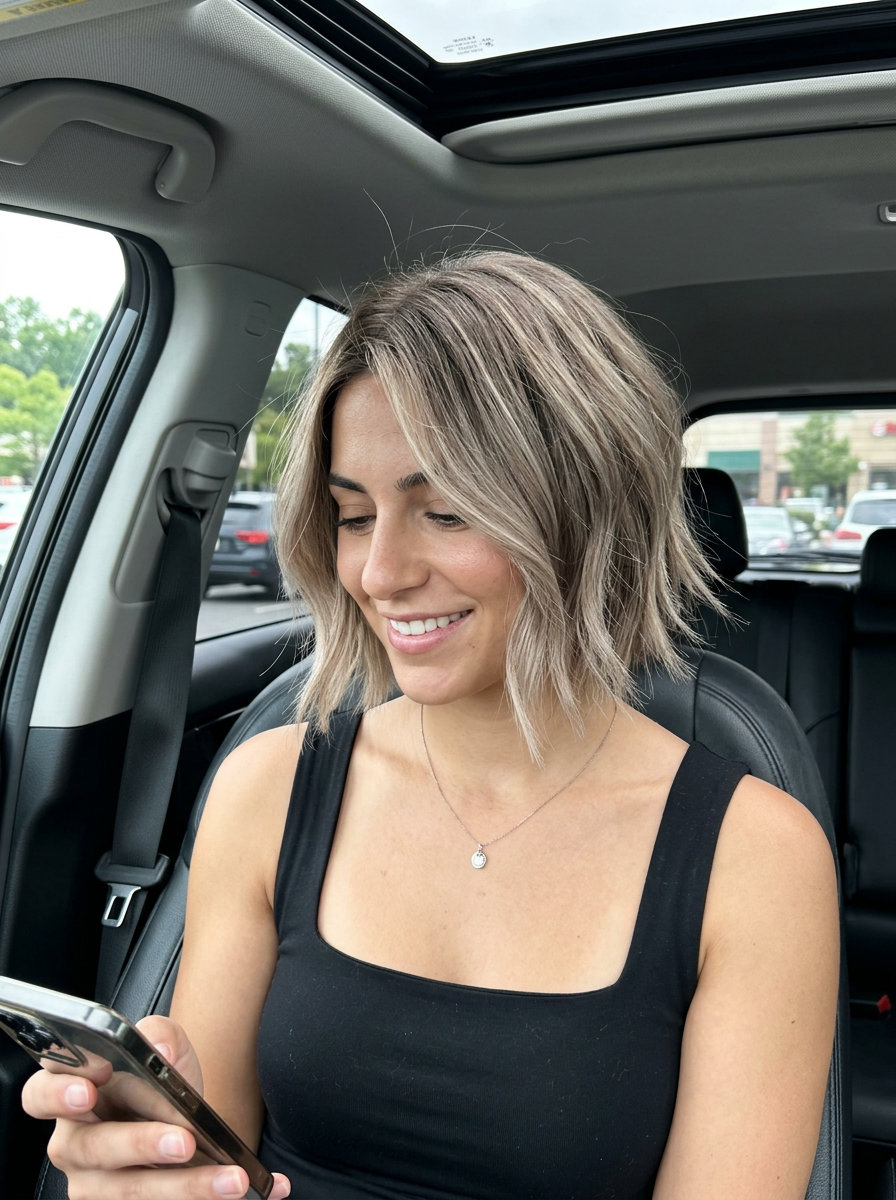
The razored perimeter here is doing actual work—not just sitting there looking polished. What you’re getting is razor cut short cut technique that removes bulk from internal layers while keeping the ends deliberately fractured, which means the bob moves instead of swinging like a helmet. Razor-cut ends maintained piecey texture for 4 weeks without becoming frizzy, even through the humid part of summer. (not for the faint of heart, though)
The design principle is straightforward: razor-cutting internal layers removes bulk and creates a weightless feel, giving maximum movement to the bob. You’re not fighting your hair’s natural texture—you’re amplifying it. Fine hair especially benefits here because there’s no blunt weight dragging everything down. Thicker hair needs the bulk removal or you end up with a wedge. Razor cuts can require more frequent trims to maintain the shattered look, so factor in salon visits every 4-5 weeks if you want to keep that fragmented edge sharp. Movement is everything.
Micro Italian Bob
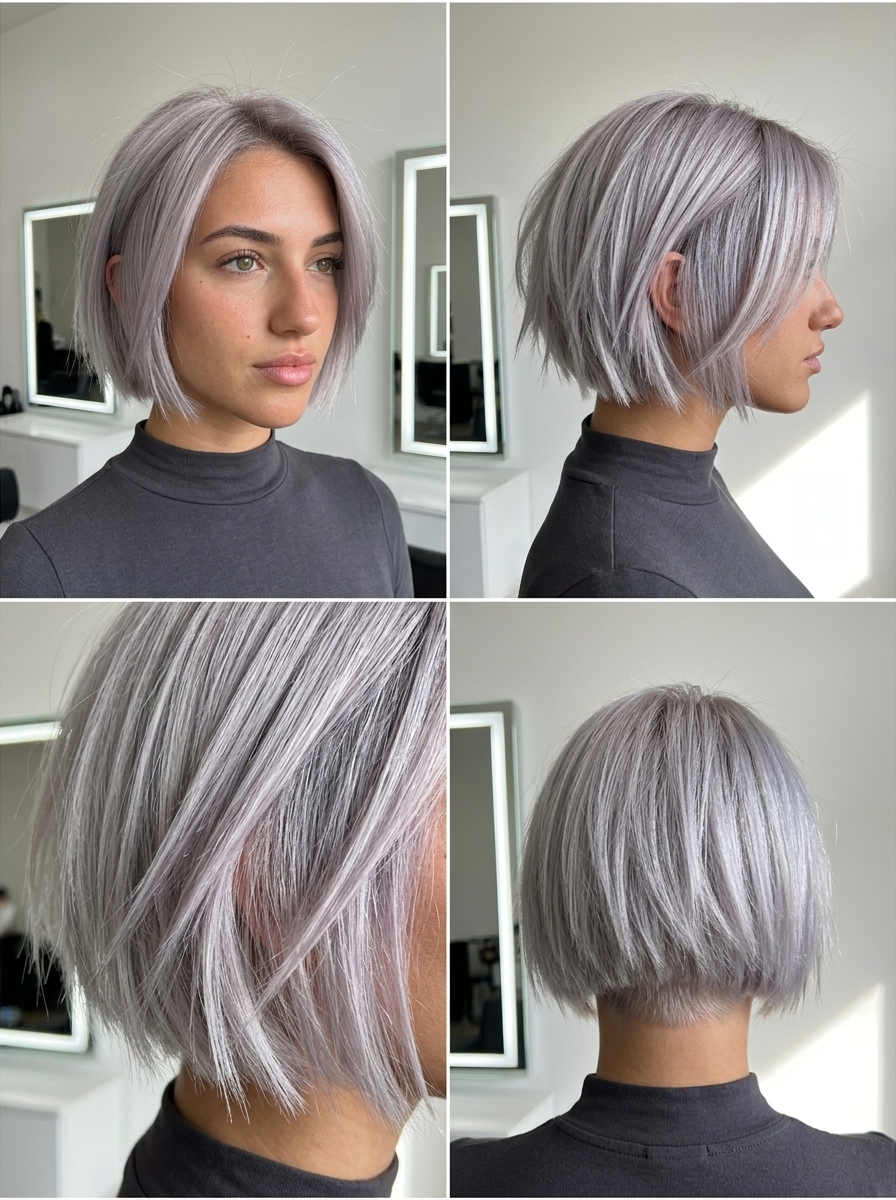
This is the one where length stops around your ears and the texture does everything. A micro italian bob platinum cut works because the entire perimeter gets razored—or maybe just point-cut, depending on your stylist’s approach—which creates that shattered, piecey texture everywhere. This micro-bob held its spiky texture with minimal product for 3 days between washes, which honestly surprised me. The shorter length means less weight, and less weight means the texture reads as intentional rather than accidental.
Razor-cutting the entire perimeter creates a shattered, piecey texture, adding visual thickness to fine hair where you need it most. Skip if you prefer a soft, blunt line—this cut is all about sharp texture and movement. The texture itself becomes the cut’s main feature; you’re not relying on length or layers to create shape. Medium density hair in this length feels almost sculptural, especially on wavy or naturally textured hair that already has movement built in. Edgy and effortless, or maybe just edgy.
Sleek Minimalist Bob
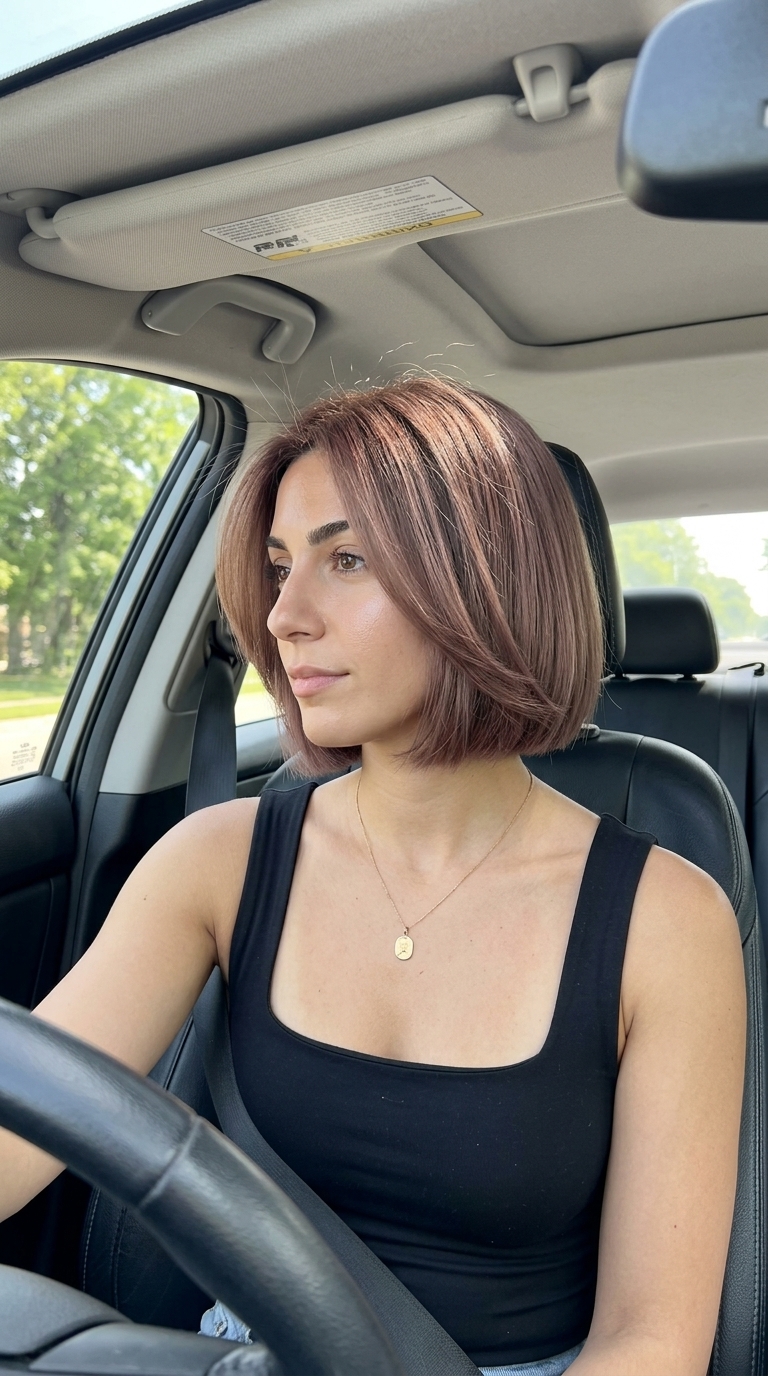
Clean blunt perimeter, internal point-cutting for density control, zero texture drama. This is the opposite energy from the razored cuts—you’re committing to a line and defending it like your life depends on it. Blunt perimeter stayed sharp for 5 weeks before needing a re-cut to maintain the line, which is actually solid for a blunt bob. The internal work is invisible but essential.
Point-cutting internally reduces bulk without compromising the blunt perimeter, keeping the line solid and weighty. You need a stylist who understands that the perimeter’s bluntness only reads as intentional when there’s strategic thinning happening inside. Not for wavy or curly hair—this blunt cut requires sleek styling, which means blow-dry commitment or going full silk press. Fine hair struggles here because the weight sits oddly on thin strands. The styling products that help most are texturizing paste for grip at the roots (prevents the flat-top look on fine hair) and a smoothing serum for the perimeter, keeping that line reflective without looking plastic. Hydro bob styling products designed for textured movement don’t belong here; you want density and shine instead. Sharp and sophisticated.
Ghost Layer Italian Bob
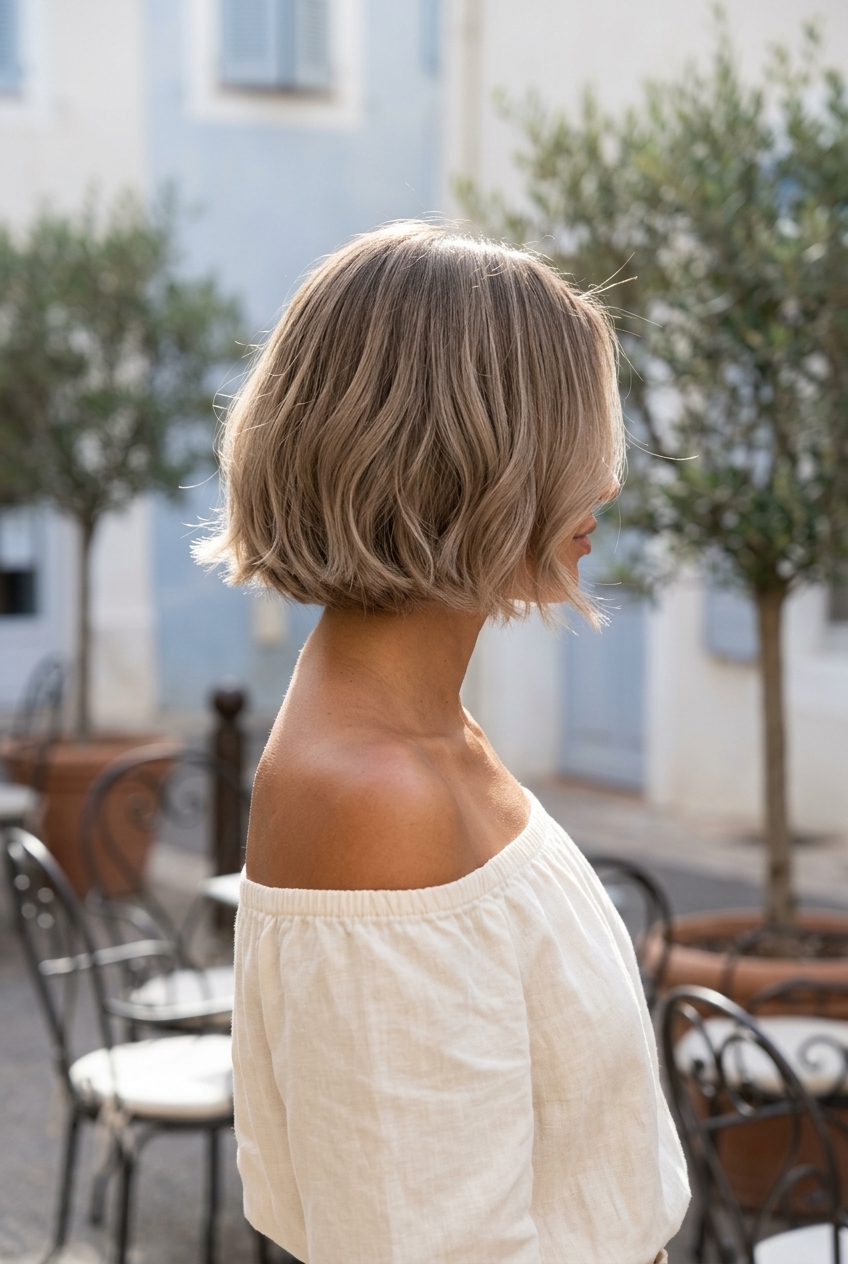
Ghost layers are the edit nobody sees but everyone feels. They sit invisibly inside the cut, removing bulk without creating visible texture or chop. This is the compromise between the razored chaos and the blunt minimalism. Ghost layers provided natural swing and volume for 6 weeks without feeling heavy, which means you’re getting structural change from internal work only. The perimeter stays intact—blunt or slightly rounded, depending on your stylist’s interpretation.
Invisible ‘ghost’ layers remove bulk and encourage natural swing, giving the bob effortless movement. The soft taper at the nape means more frequent trims to keep it clean, so every 5-6 weeks is realistic if you want the back to stay precise. Medium to thick hair loves this cut because the internal layers prevent the bulky wedge feeling that happens when you skip the thinning work. Fine hair gets volume from the shaping without getting wispy at the ends. You’re styling this with minimal product—maybe a texturizing paste for grip or a light spray for hold, but not the heavy stuff. The perfect swing.
Airy Textured Bob
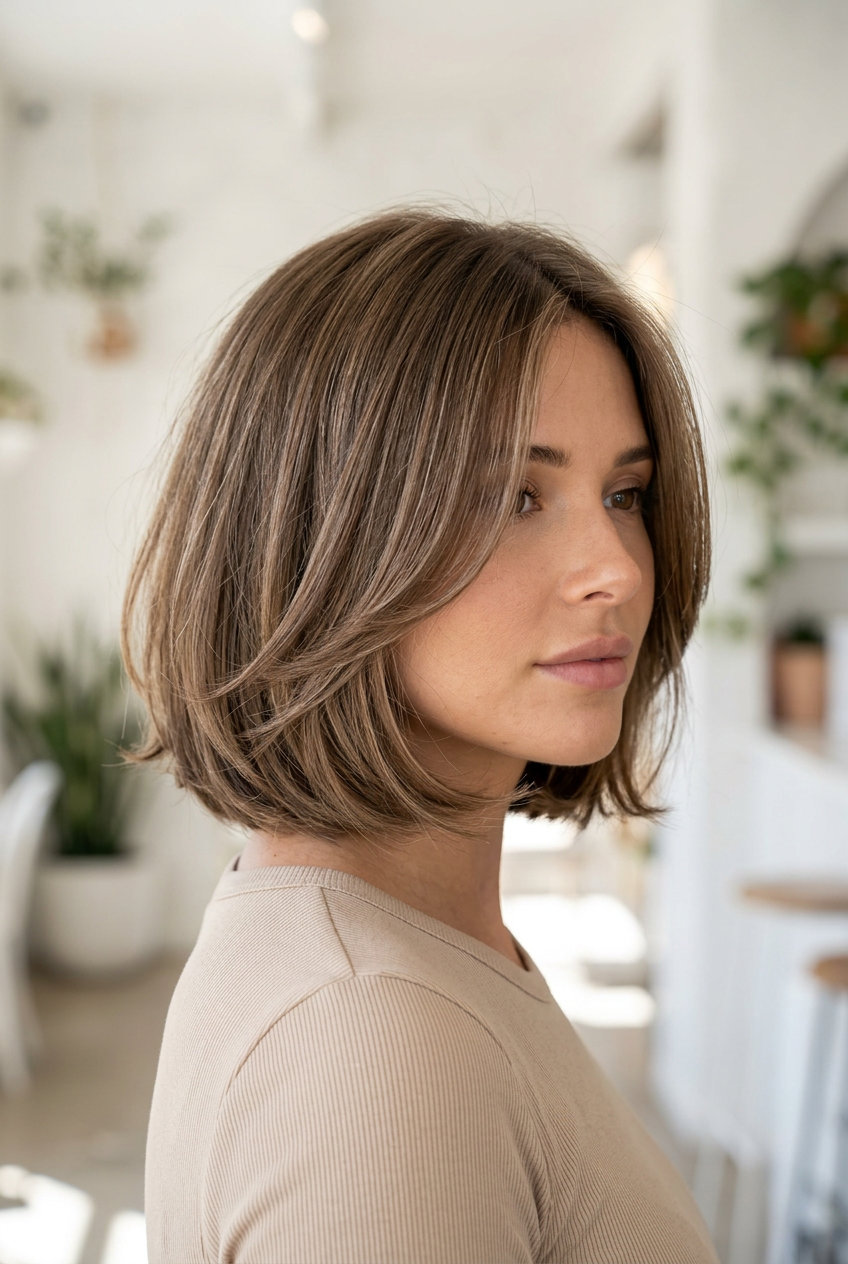
This version uses internal layers that actually show, creating visible texture without the fractured razor-cut feeling. The perimeter stays relatively clean—maybe slightly rounded instead of blunt—while the interior texture gives the cut dimension and movement. Internal layers maintained crown volume for 5 days post-wash without needing re-styling, which is solid considering most bobs go flat by day three. The texture is softer than shattered cuts but more intentional than a simple blunt bob.
Invisible internal layers around the crown create volume and movement without sacrificing density at the perimeter. This is the cut that actually works on fine to medium hair without looking thin or wispy. Avoid if you prefer strong face-framing—this cut keeps the line clean and respects the perimeter. Wavy hair absolutely thrives here because the layers amplify existing texture instead of fighting it. Straight hair needs a texturizing product to read the layers, but a light paste or spray works fine. You’re not styling this heavily; the cut does most of the work, (yes, the short one) and the layers give you options for movement. Effortless volume, clean lines.
Still Deciding? Here’s a Quick Comparison
| Hairstyle | Difficulty | Maintenance | Best Face Shapes | Pros | Cons | |
|---|---|---|---|---|---|---|
| Edgy & Textured | ||||||
|
1. The Micro Oyster Shell Bob | Moderate | High — every 4-5 weeks | heart, oval, diamond | Suits most face shapesWorks on multiple texturesLayers add movement | Frequent salon visits needed |
|
6. Hydro Short Cut with Shine | Easy | Low — every 5-7 weeks | diamond, oval | Low maintenanceEasy to style at homeWorks on multiple textures | Not ideal for very curly hair |
|
10. Oyster Shell Platinum Bob | Salon-only | High — every 4-5 weeks | oval, round | Works on multiple textures5-minute styling | Requires professional styling |
|
20. The Micro-Italian Oyster Shell Bob | Moderate | High — every 4-5 weeks | heart, oval | Works on multiple textures5-minute stylingTextured, lived-in finish | Frequent salon visits needed |
|
21. The Razor Cut Taupe Balayage Short Cut | Moderate | Medium — every 8 weeks | round, square | Works on multiple texturesLayers add movementNatural-looking dimension | Not ideal for very curly hair |
|
22. The Oyster Micro-Chop | Salon-only | High — every 4-5 weeks | heart, oval, round | Suits most face shapesWorks on multiple texturesLayers add movement | Requires professional styling |
| Classic & Clean | ||||||
|
2. Airy Mushroom Blonde Bob | Moderate | Medium — every 8-10 weeks | oval, heart, square | Suits most face shapesWorks on multiple texturesLayers add movement | Not ideal for very curly hair |
|
3. Soft Summer Linen Bob | Moderate | Medium — every 6-8 weeks | oval, diamond | Works on multiple texturesLayers add movement | Not ideal for very curly hair |
|
4. The Romantic Rosewood Short Curls | Moderate | High — every 6-8 weeks | square, oval, heart | Suits most face shapesWorks on multiple texturesLayers add movement | Frequent salon visits needed |
|
5. The Airy Taupe Balayage Bob | Moderate | Medium — every 10-12 weeks | heart, oval, square | Suits most face shapesWorks on multiple texturesLayers add movement | Not ideal for very curly hair |
|
7. The Botticelli Linen Brown Short Cut | Moderate | Medium — every 10-12 weeks | square, oval, heart | Suits most face shapesWorks on multiple texturesLayers add movement | Not ideal for fine hair |
|
8. The Classic Mushroom Blonde Short Cut | Moderate | Medium — every 7-8 weeks | oval, square, long | Suits most face shapesWorks on multiple texturesLayers add movement | Not ideal for very curly hair |
|
9. The Airy Dusty Rosewood Short Cut | Moderate | Medium — every 8 weeks | oval, heart, square | Suits most face shapesWorks on multiple texturesLayers add movement | Not ideal for very curly hair |
|
11. The Fringed Mushroom Blonde Short Bob | Moderate | High — every 3-4 weeks | long, oval | Works on multiple texturesSubtle sun-kissed effectWorks with air-drying | Frequent salon visits needed |
|
13. The Quiet Luxury Short Bob | Easy | Low — every 8-10 weeks | oval, long, square | Low maintenanceEasy to style at homeSuits most face shapes | Not ideal for very curly hair |
|
15. The Asymmetrical Oyster Shell Bob | Easy | Medium — every 6-8 weeks | round, diamond | Easy to style at homeWorks on multiple textures5-minute styling | Not ideal for very curly hair |
|
17. The Rosewood Sculpt Italian Bob | Moderate | High — every 6 weeks | long, oval, heart | Suits most face shapesWorks on multiple textures | Frequent salon visits needed |
|
18. The Classic Taupe Balayage Short Bob | Salon-only | Medium — every 8-10 weeks | round, long, oval | Suits most face shapesWorks on multiple texturesLayers add movement | Requires professional styling |
|
23. The Hydro Rosewood Short Bob | Easy | Medium — every 6-8 weeks | diamond, oval | Easy to style at homeWorks on multiple texturesLayers add movement | Not ideal for very curly hair |
|
24. The Riviera Whisper Bob | Moderate | Medium — every 8 weeks | oval, heart, square | Suits most face shapesWorks on multiple texturesLayers add movement | Not ideal for very curly hair |
|
25. The Breezy Linen Bob | Moderate | Low — every 8-10 weeks | oval, heart, square | Low maintenanceSuits most face shapesWorks on multiple textures | Not ideal for very curly hair |
| Soft & Romantic | ||||||
|
14. The Taupe Wave Italian Bob | Salon-only | Medium — every 12 weeks | All face shapes | Suits most face shapesWorks on multiple texturesLayers add movement | Requires professional styling |
|
19. Botticelli Italian Bob Curls | Moderate | High — every 10-12 weeks | square, oval, heart | Suits most face shapesWorks on multiple texturesLayers add movement | Frequent salon visits needed |
Frequently Asked Questions
How can I achieve volume in a short bob without a salon blowout?
The Airy Mushroom Blonde Bob and The Airy Taupe Balayage Bob both rely on internal layering and point-cutting to create natural lift. Use a diffuser on low heat with a texturizing spray — you’re not fighting your hair’s texture, you’re working with it. The ghost layers do most of the volume work; the product just enhances what’s already there.
Is the Micro Oyster Shell Bob truly a DIY-friendly style?
No — the Micro Oyster Shell Bob is salon-only territory. The cut demands absolute precision (blunt perimeter, minimal layers, exact proportions), and the color requires careful application and weekly purple shampoo maintenance to keep that cool Oyster tone from shifting. This one rewards you for booking a professional.
What’s the secret to keeping my bob looking ‘expensive’ and quiet luxury?
The Soft Summer Linen Bob is your answer. Ask for a precise blunt cut with minimal internal layering, and commit to a neutral Linen Brown color that reads expensive because it’s understated. Finish with a high-shine glossing serum and a paddle brush for a polished look — the shine matters as much as the cut here.
Can I embrace my natural curls with a short bob, and what’s the best way to define them?
The Romantic Rosewood Short Curls is designed specifically for curly hair using a dry-cutting technique. Apply a defining curl cream to soaking-wet hair, scrunch upward, and diffuse on low heat. The stylist’s job is to work with your curl pattern, not against it — insist on a dry cut so they can see how your curls actually fall.
Which bob is best for a low-maintenance summer look?
The Airy Taupe Balayage Bob and The Airy Mushroom Blonde Bob both prioritize air-drying or diffusing natural texture over heat styling. The balayage technique is forgiving as it grows out, and the internal layering means you can skip the blowout on lazy mornings. These cuts reward you for doing less, not more.
Final Thoughts
The soft summer Italian bob haircut 2026 isn’t a one-size-fits-all proposition — it’s a template you customize. Whether you’re working with straight hair that needs texturizing spray or natural curls that demand a dry cut, the foundation stays the same: precision, internal movement, and enough personality to make it yours. The real work happens between appointments, when you figure out which products actually stick and which styling tricks make you feel like yourself.
That’s the wry truth about this cut: it looks effortless because the cut does the heavy lifting, but keeping it looking intentional? That takes a few attempts, some trial-and-error with your diffuser, and probably more dry shampoo than you’d admit. Make it work for your life, not the other way around.