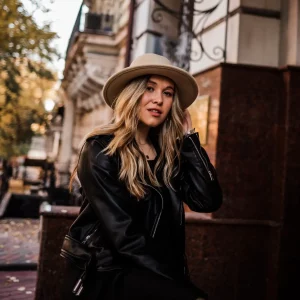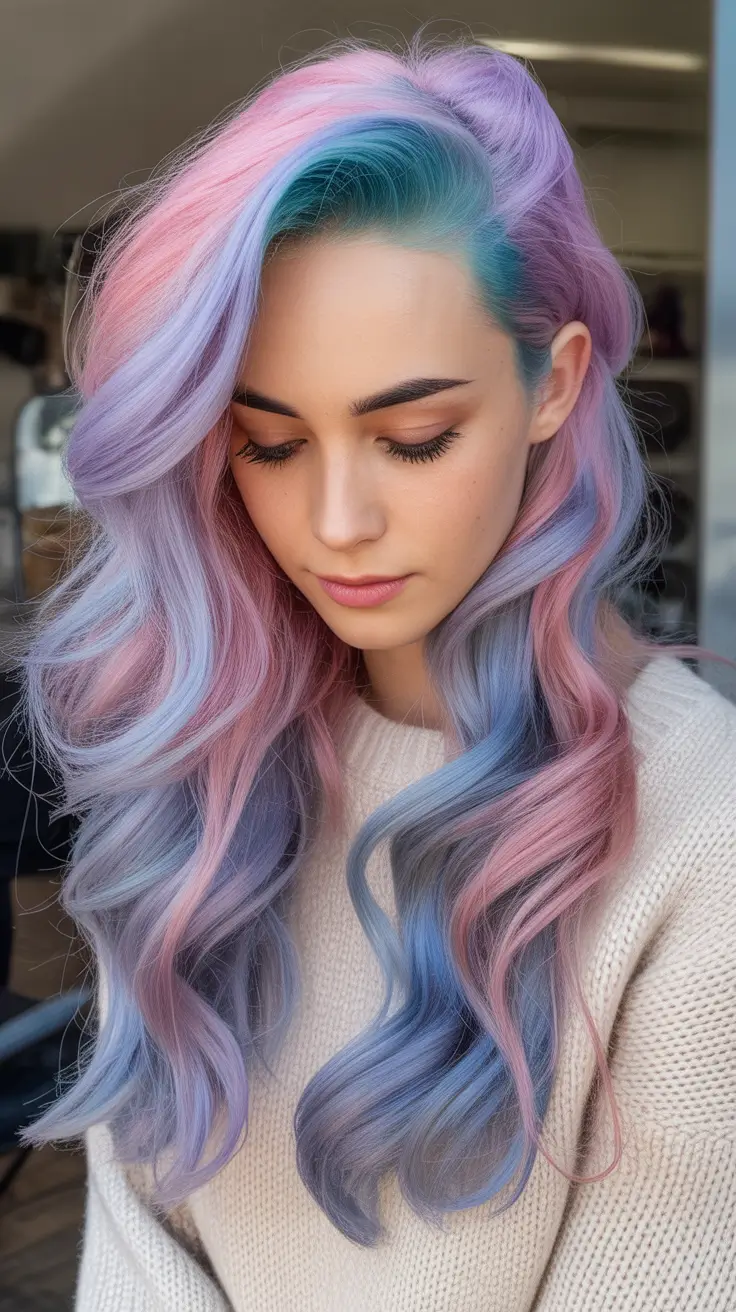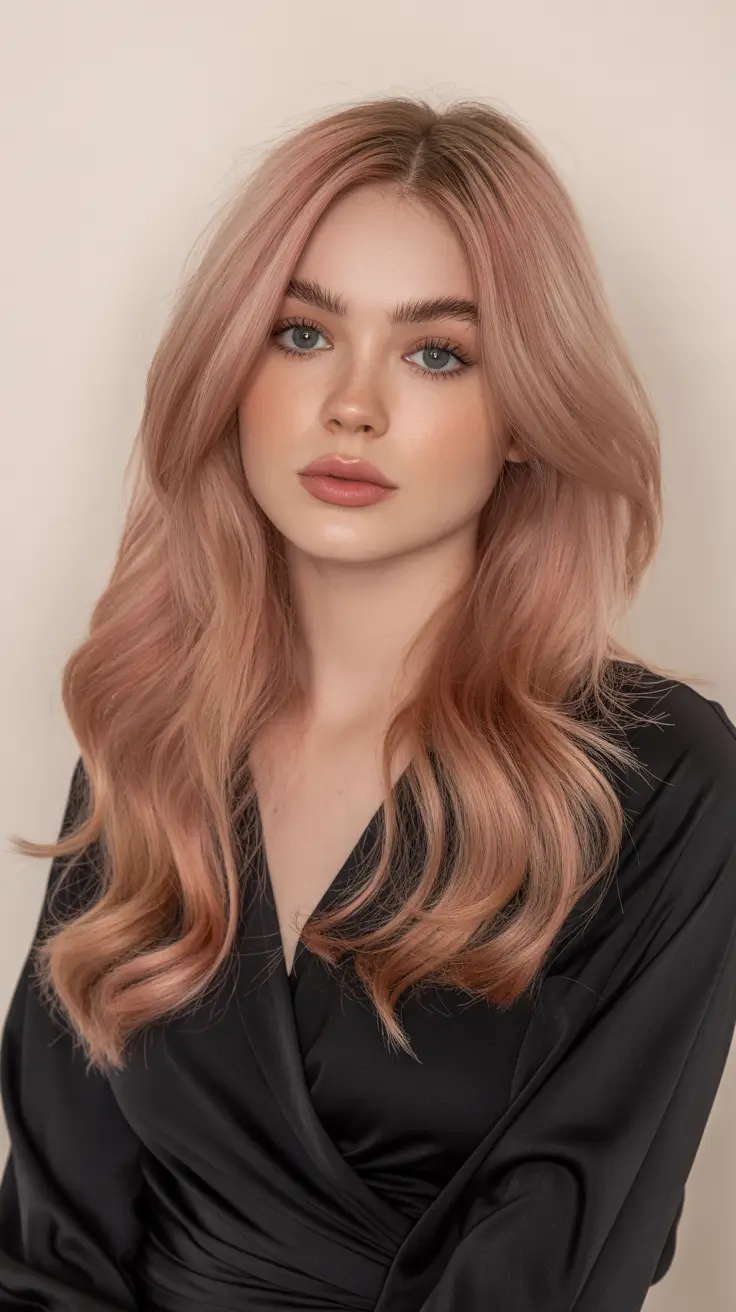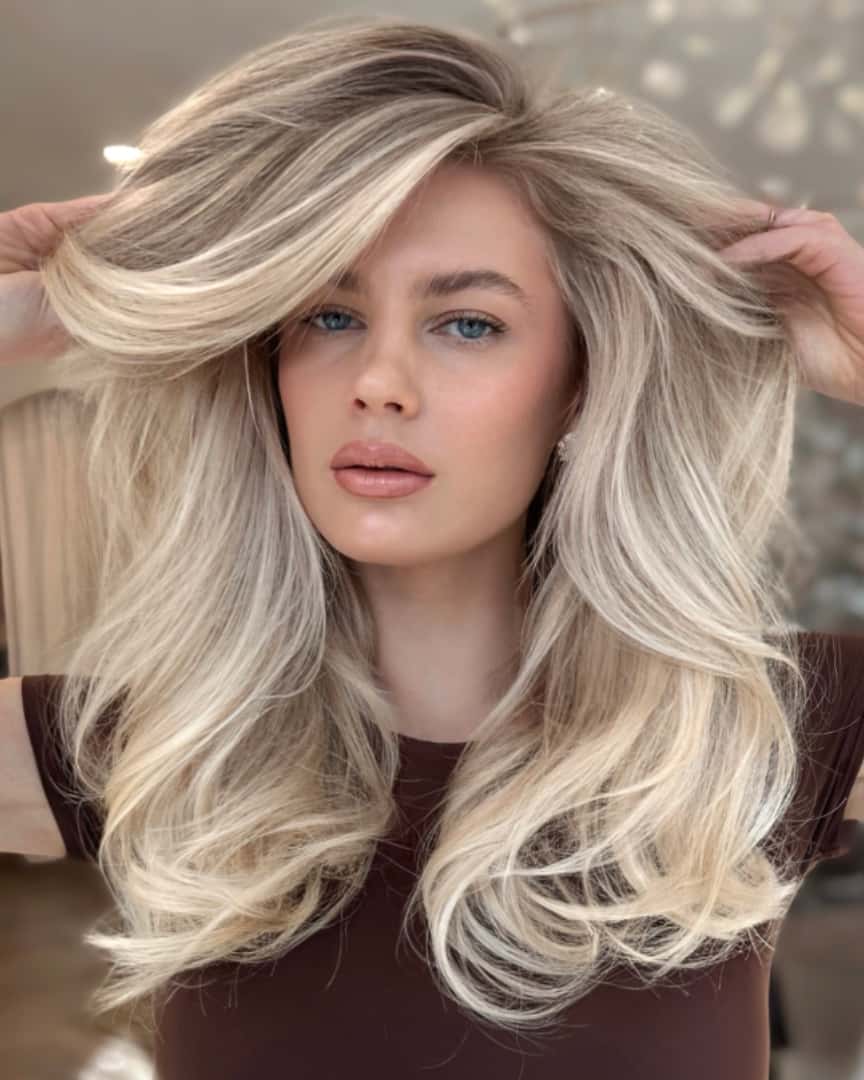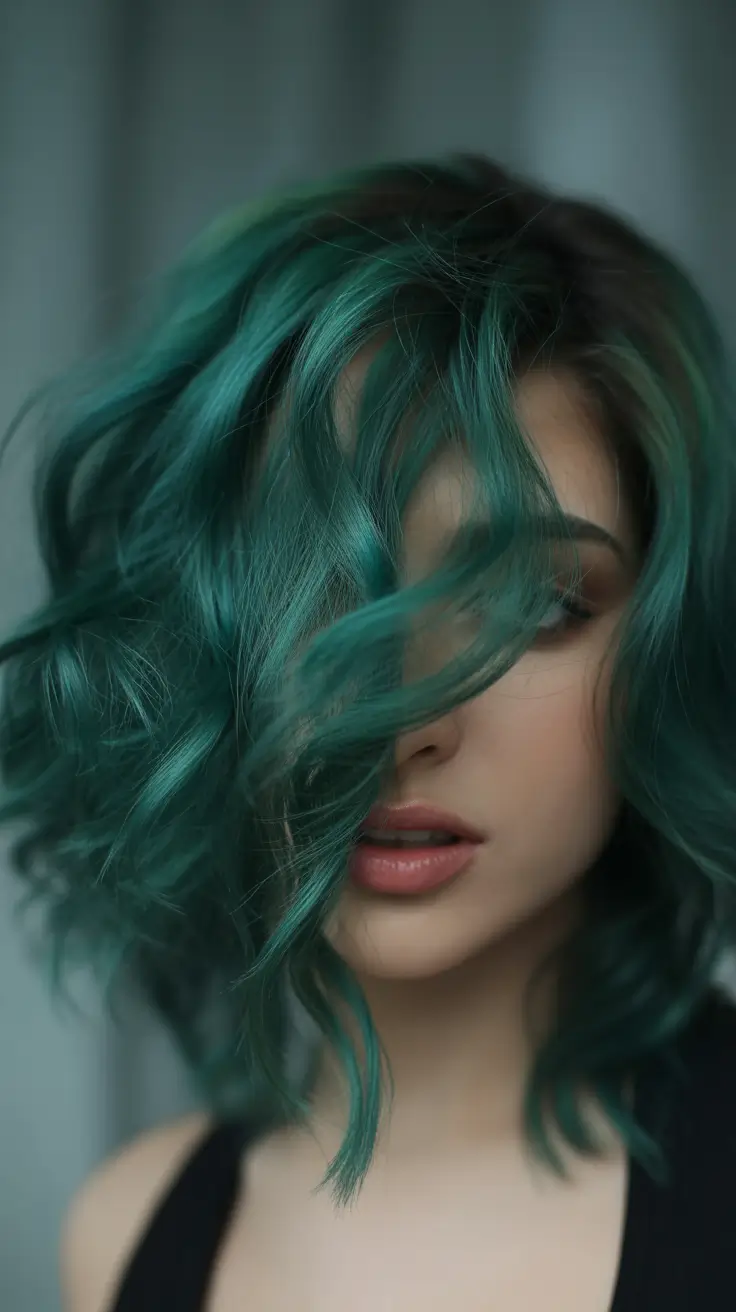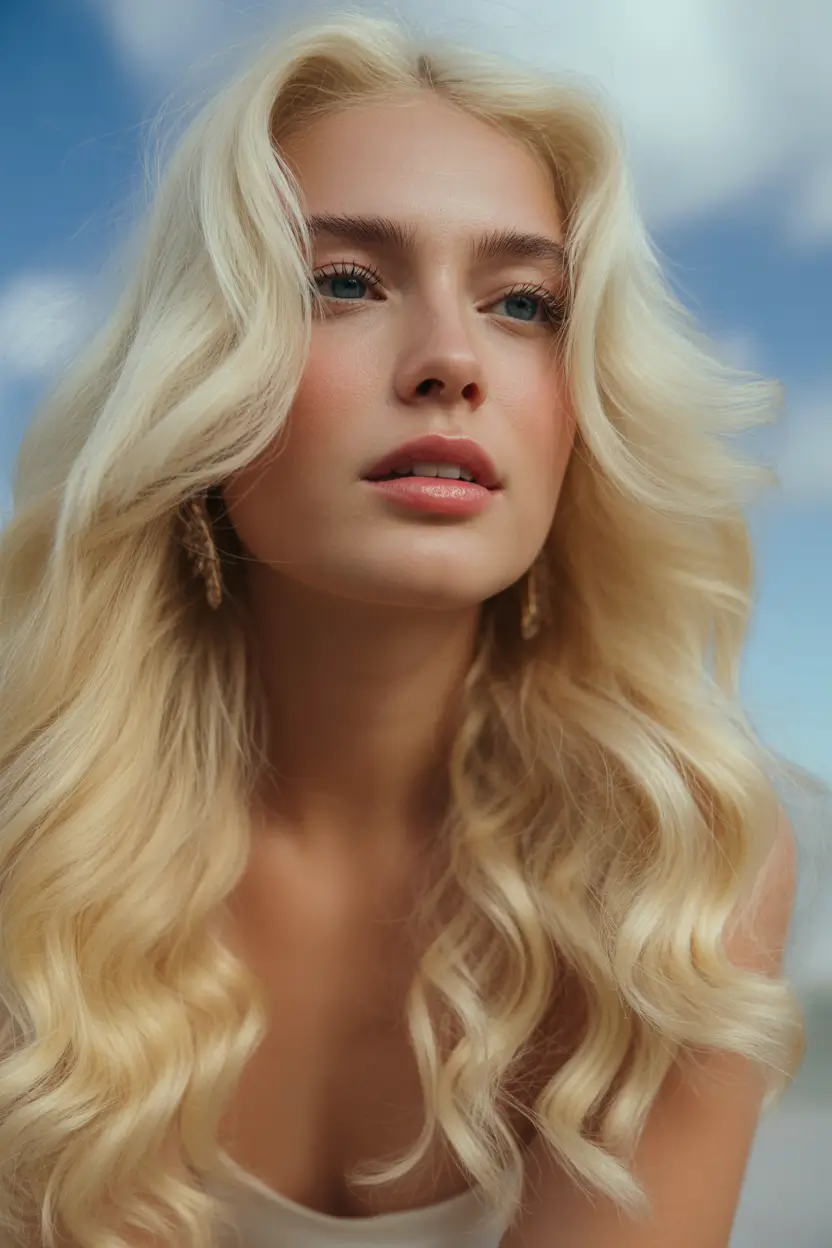
I’ve been seeing more chin-length bobs with balayage in my feed. It’s not just a trend, it’s a practical choice for wavy hair. The colour placement is getting softer, less stripey. I like it.
This roundup has 41 ideas for balayage on wavy hair in 2027, ranging from chin bobs to mid-back waves, with colour from soft vanilla blonde to warm copper and caramel. Some are low-upkeep root shadows, others need a trim every eight weeks. Whether your waves go flat by 4pm or crave dimension, there’s a look that works. Balayage on Wavy Hair 2027 is about natural placement and easy grow-out, no harsh lines.
Chin Bob With Blonde Balayage And Curtain Bangs
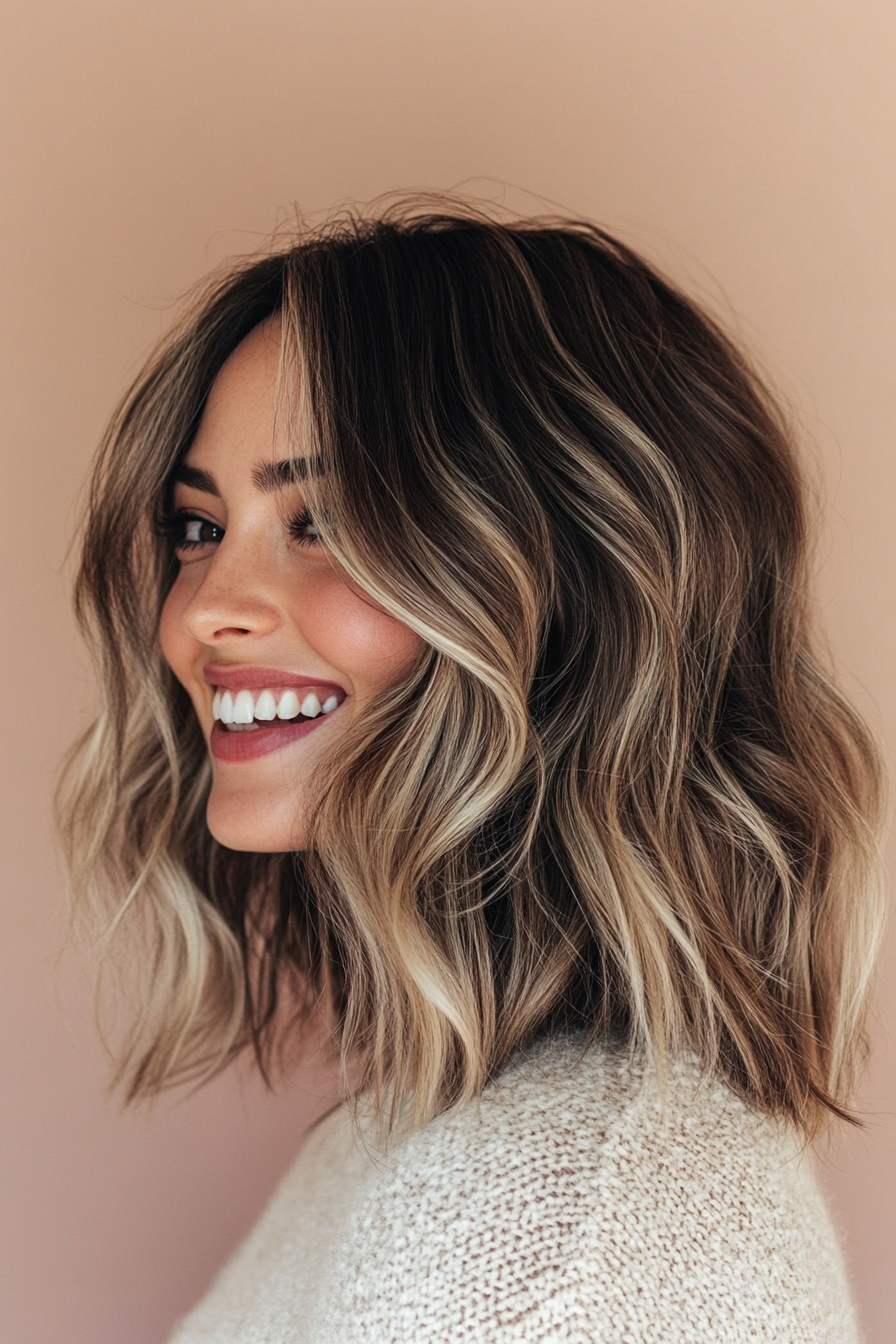
Who can actually wear a blonde balayage bob with bangs this short? If you have wavy hair with medium density, the chin bob with curtain bangs is a solid bet. The dark base with blonde balayage creates a soft tone that doesn’t wash out wavy texture. The technique is hand-painted, so the blonde hits the ends and face-framing pieces. Length hits right at the chin, which works for oval and heart face shapes. The wavy texture adds movement without needing a lot of styling.
Dark Chocolate Bob With Copper Balayage
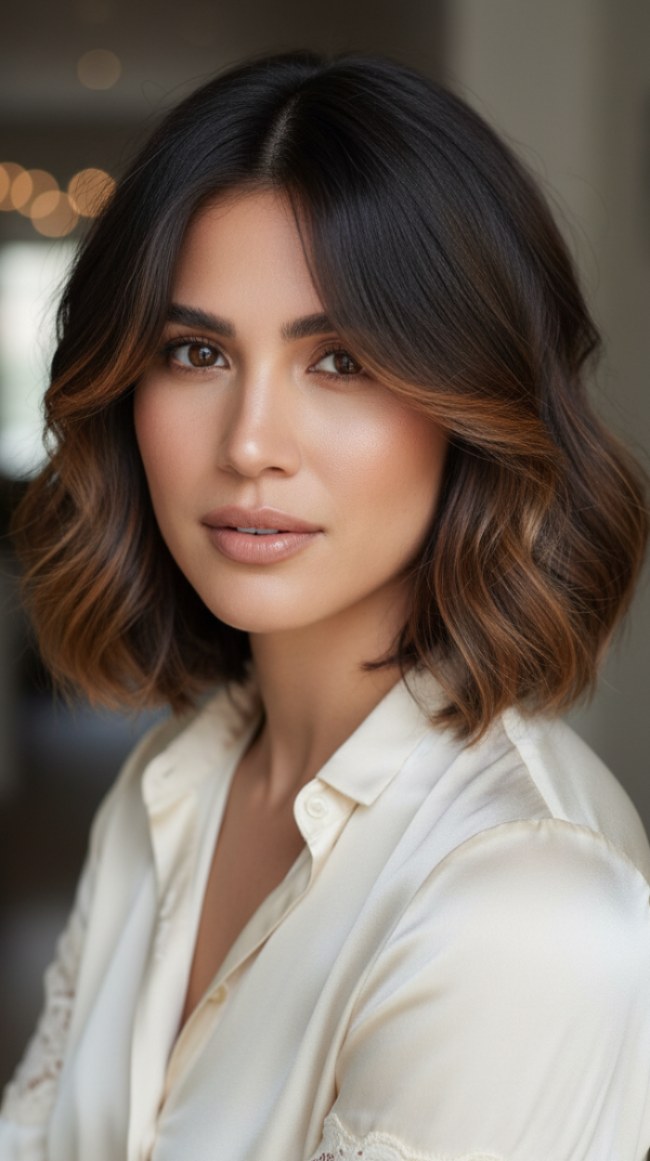
This copper balayage wavy bob beats every cool-toned alternative I have seen. The dark chocolate base with copper balayage gives a warm tone that pops on wavy texture. The technique is a freehand balayage, so the copper fades naturally into the dark chocolate. Length is chin, which keeps the bob shape bouncy. The wavy texture, medium density, holds the copper color well without looking brassy. If you are debating between copper and rose gold, pick copper. It is richer, more dimensional, and grows out softer. The dark chocolate root means you can stretch salon visits longer than with a full blonde.
Collarbone Bob With Vanilla Blonde Balayage
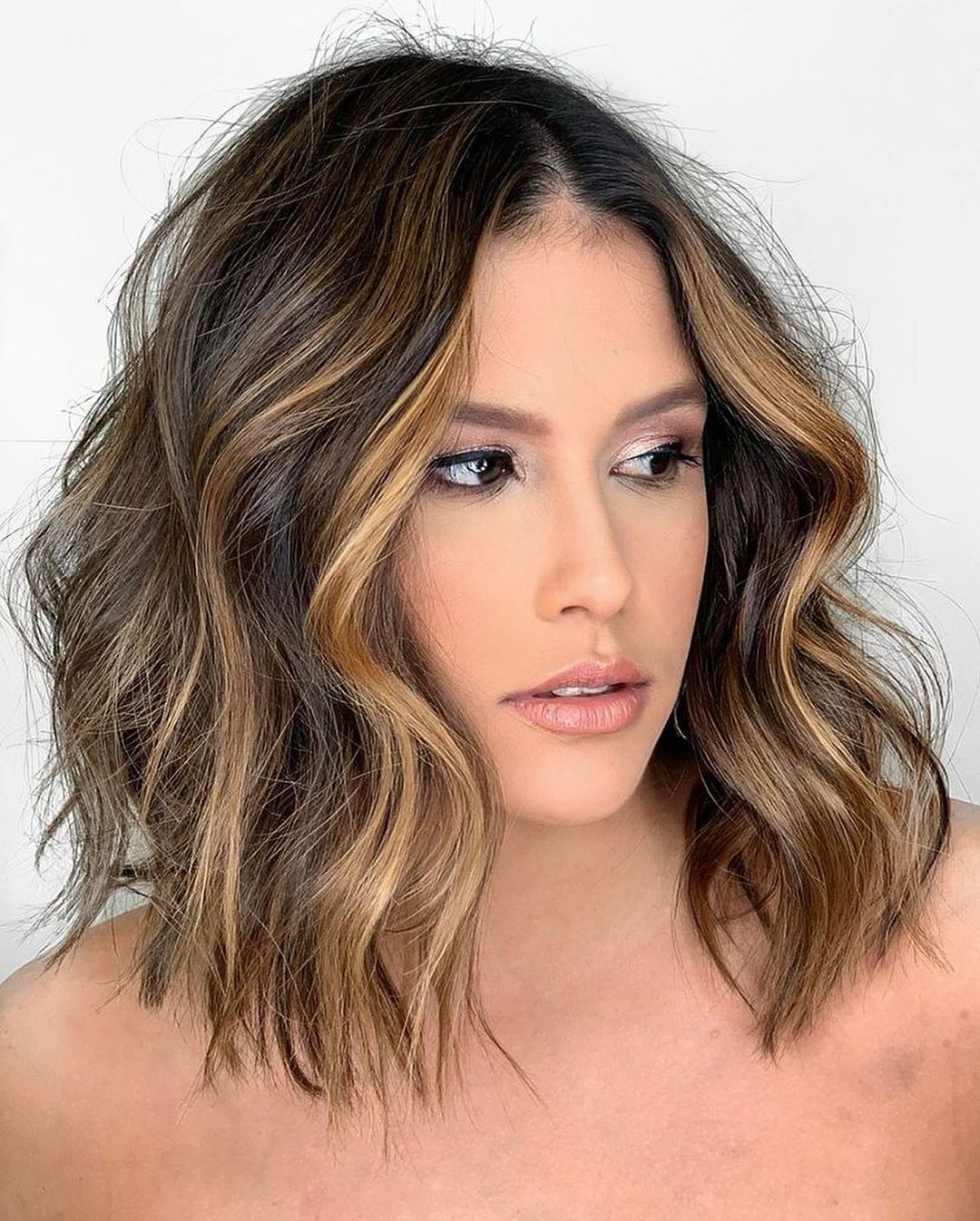
The creamy vanilla blonde balayage here is painted in a way that hits the midshaft and ends, leaving the root dark. That precise placement is what makes the vanilla blonde tone look creamy rather than yellow. On a collarbone bob with wavy thick texture, the balayage technique creates soft curls that catch the light without overwhelming the dark brown base. The length is collarbone, which is long enough to show off the color but short enough to keep the waves defined.
What to tell your stylist: ask for a hand-painted balayage with a soft root shadow, keeping the creamy vanilla blonde concentrated on the midshaft to ends. Request that the tone be a warm vanilla, not icy, to complement the thick wavy texture. Specify that you want the bob cut with a slight A-line to frame the face. And remind them to keep the balayage subtle enough that grow-out is seamless.
Chin Lob With Subtle Blonde Balayage
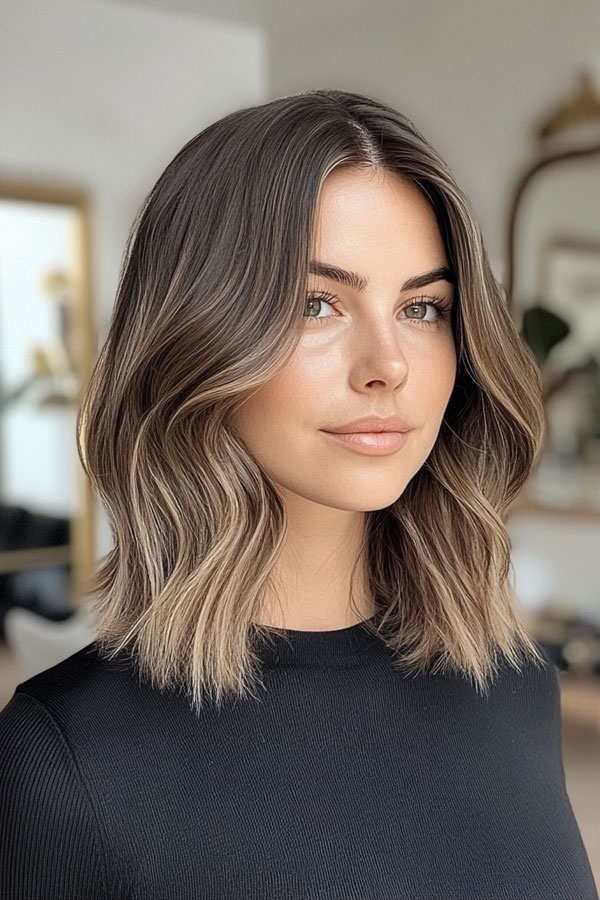
I admit I was skeptical about subtle balayage on fine wavy hair. But this subtle blonde balayage lob proved me wrong. The dark brown base with subtle blonde balayage creates a tone that is barely there but adds dimension. The technique is a light hand-painted balayage, so the color is concentrated on the ends. Length is chin, which gives the lob a soft shape that doesn’t weigh down fine wavy texture. Upkeep is minimal: trims every 6-8 weeks keep the lob from looking straggly, and the subtle color grows out without a harsh line.
Collarbone Lob With Golden Blonde Balayage
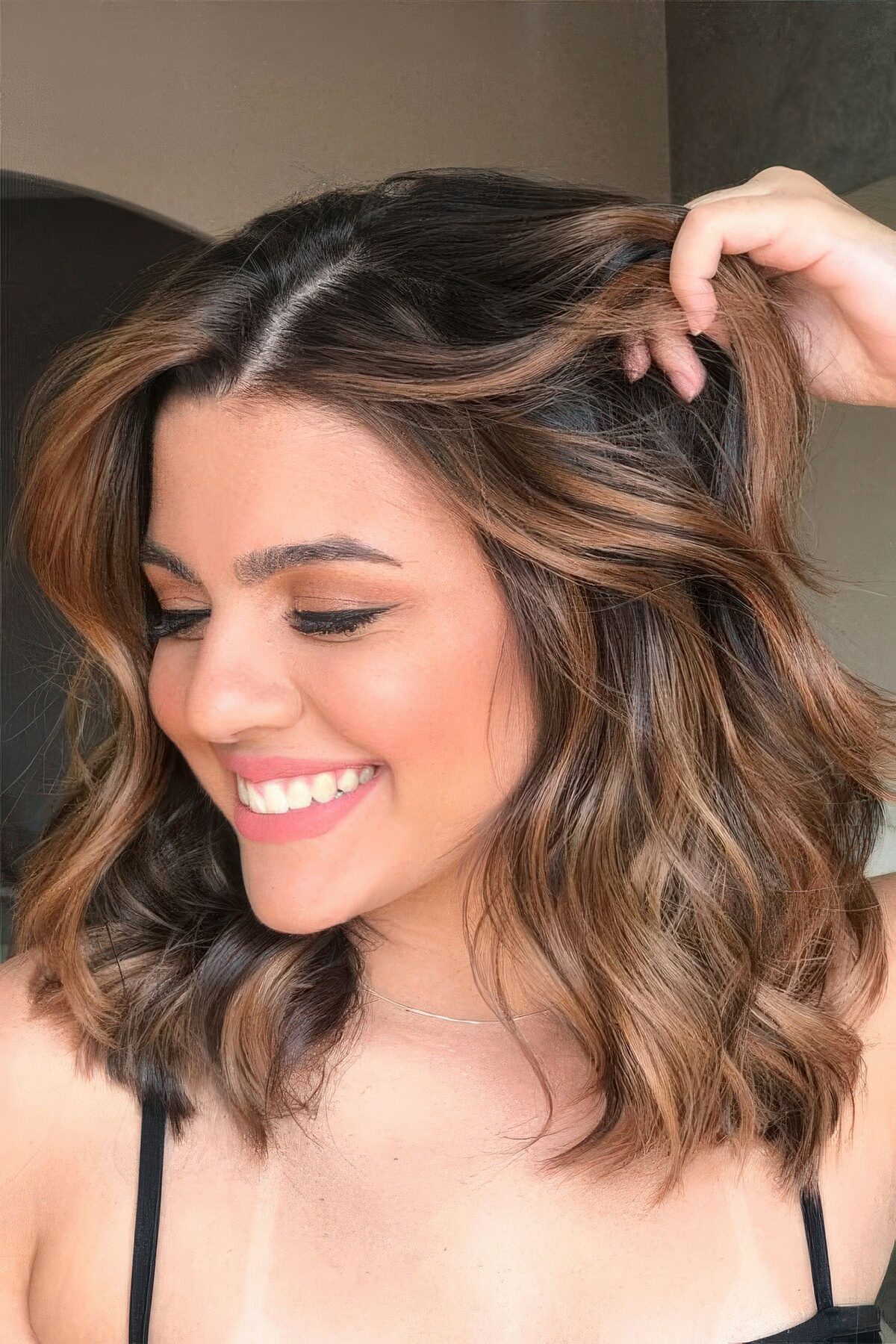
How much chair time does a golden blonde balayage lob actually take? Plan for about two to three hours for the application. The brunette base with golden blonde balayage requires a careful hand-painted technique to ensure the tone is warm and blended. The seamless balayage transition means no harsh root line, which makes this collarbone lob low-maintenance for weeks. The wavy medium density texture holds the golden blonde without needing constant toning. This look works for any season, from summer to winter, and transitions from work to weekend without effort. The length is collarbone, which is versatile for both casual and dressy occasions.
Collarbone Lob With Caramel Balayage
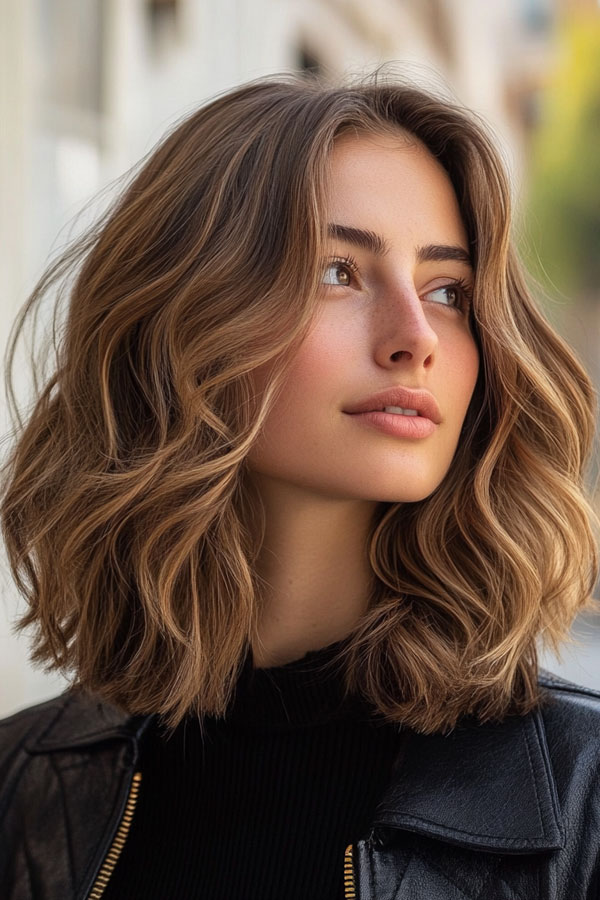
This one looks like you paid someone to do it. You did. The medium brown base is deep enough to read as your natural colour. The caramel balayage wavy lob is painted on with a hand that knows where the light hits. That ribbon of gold from mid-lengths to ends, that’s not something a box does. The tone is warm but not brassy, thanks to a stylist who knows caramel wants to lean honey. Wavy, medium-density hair catches the contrast best. A lob at collarbone keeps the ends thick enough to hold the wave.
You can tell yourself you’ll try this at home. The internet sells kits. But balayage placement on waves is a geometry problem. The light pieces need to land on the crest of the wave, not the hollow. A mirror at the back of your head is not your friend. Book this one. Bring a reference photo. The grow-out is soft and forgiving for about eight weeks, then the root line starts announcing itself. A root shadow buys you two more. But the initial lift? That’s a chair job.
Brunette Lob With Caramel Balayage Dimension
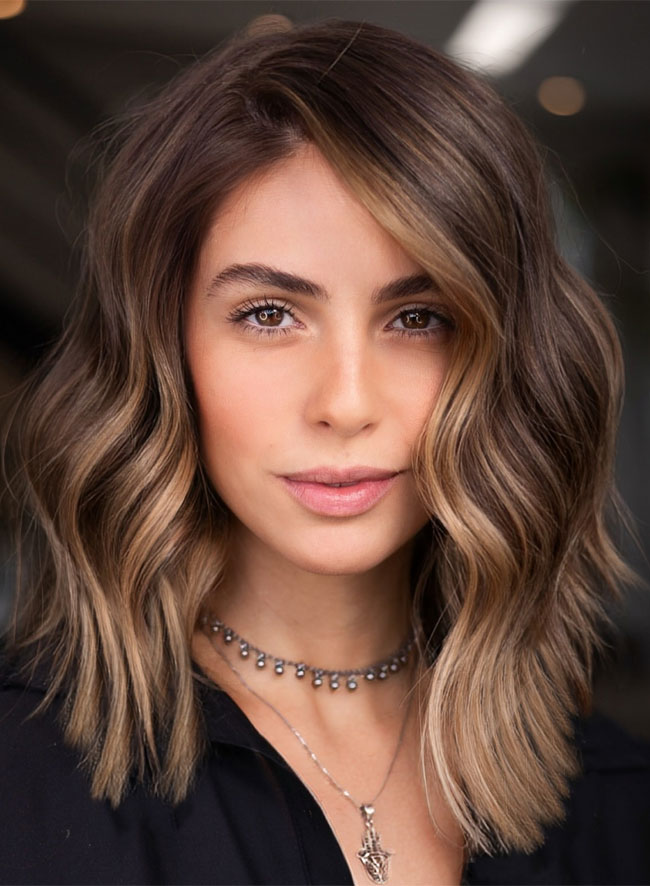
A brunette balayage with caramel is a trick of light and pigment. The stylist weaves fine sections, painting caramel only where the wave will catch it. The result is dimensional caramel that shifts from brown to gold depending on the curl. You could try to recreate this with a teasing comb and a bowl, but the honest downside is this: without a trained eye, the caramel lands in the wrong places and you get a stripe at the crown instead of a glow. Wavy, medium-density hair forgives some mistakes, but not all.
Mid-Back Layers With Honey Balayage
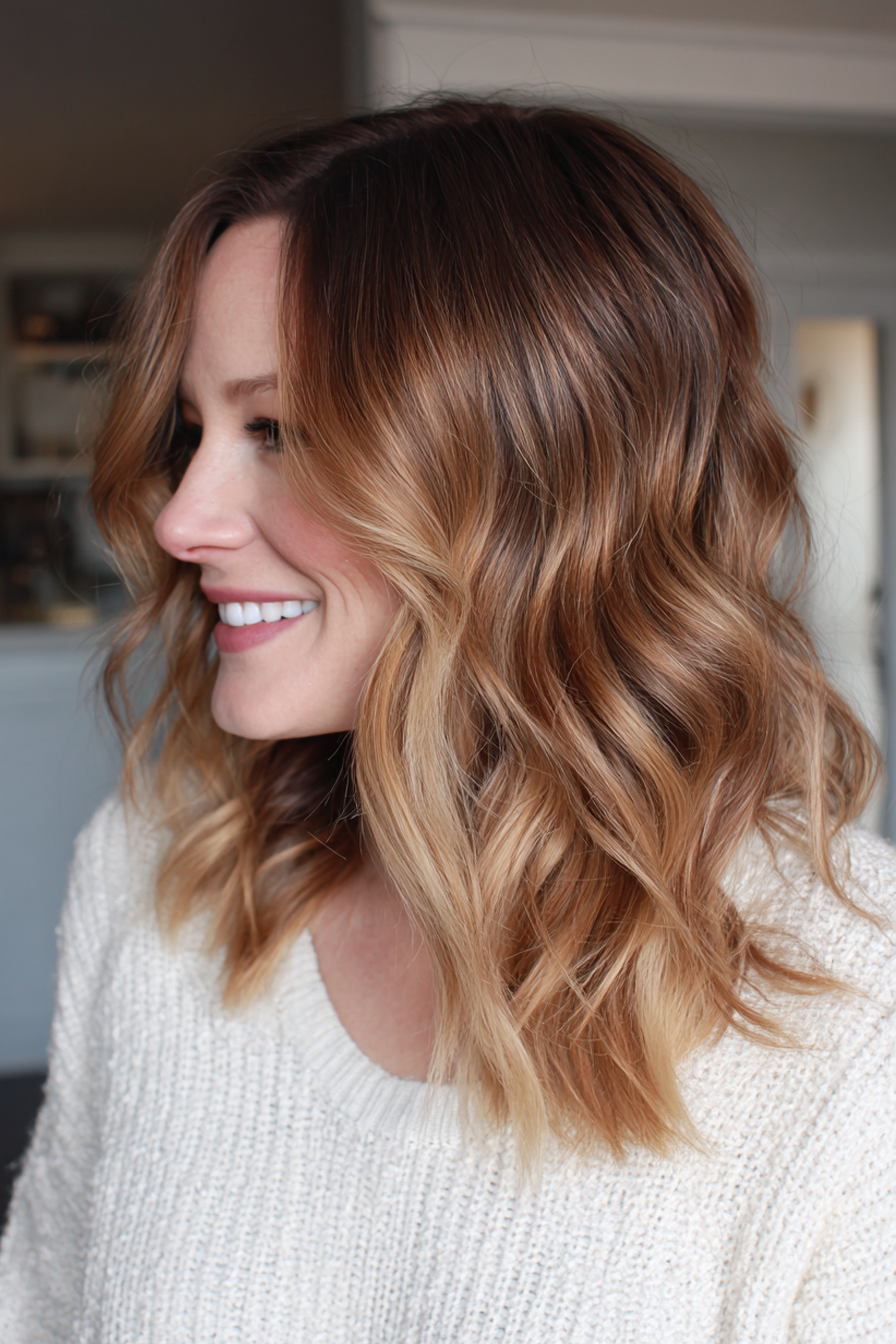
The first warm day of spring and your hair finally matches the sun. This honey balayage long wavy hair is built on a warm blonde base that feels like it spent a month at the beach. The technique is a hand-painted ribbon of honey from mid-shaft to ends, skipping the roots entirely so the grow-out is a non-event. The tone is honey, not lemon: golden, not acidic. At mid-back, the waves have room to fall and catch the light at each bend. Medium-density hair carries the colour without going brassy as long as you use a purple shampoo once a week. This is the colour you pull off in April and let ride through October.
Collarbone Lob With Fringe And Honey Blonde Balayage
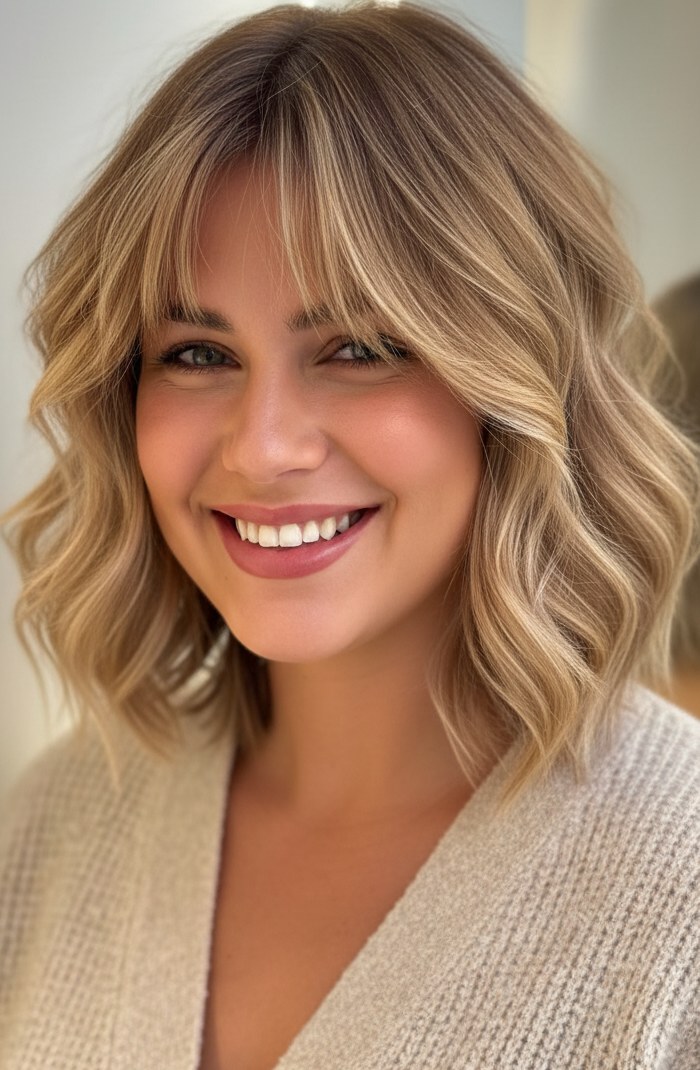
Do you have a cowlick at your hairline? If yes, this honey blonde balayage with fringe is going to fight you. If no, this is one of the most flattering cuts for a round or heart-shaped face. The warm honey blonde tone sits just above the brow bone, pulling the eye upward. The lob ends at collarbone, which gives the wave enough weight to not collapse. Medium-density, wavy hair holds the fringe without needing a flat iron every morning. A stylist who understands your hairline is the difference between a soft frame and a wet dishrag. This one works if your texture has any grip.
Collarbone Layers With Honey Balayage Blowout
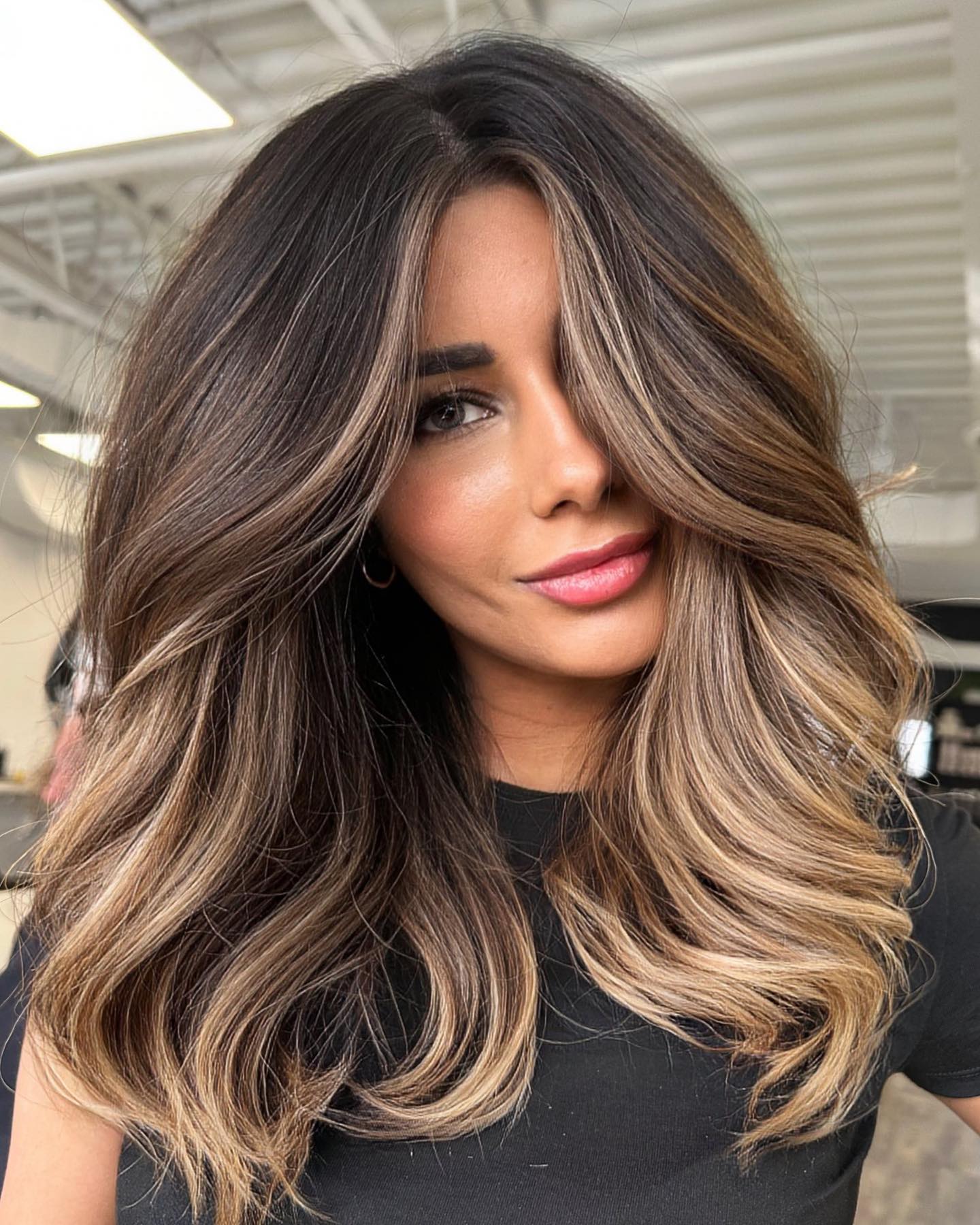
A blowout on thick wavy hair is not a five-minute job. The dark brown base provides the canvas, and the honey blonde balayage curtain bangs are painted on with deliberate asymmetry. The technique relies on heavy sectioning and a round brush to smooth the wave without killing the body. The tone is honey, not ash, to keep the dark brown from looking flat.
The short list for styling this at home: one, apply a heat protectant on damp hair. Two, blow-dry the roots forward using a concentrator nozzle. Three, wrap each curtain bang section around a large round brush and pull outward, not downward. Four, switch to a curling wand for the rest of the layers, alternating directions so the wave doesn’t lie in one flat sheet. Five, let everything cool before finger combing. This wavy blowout works because the honey catches on the bends, and thick hair holds the shape for a full day.
Collarbone Lob With Fringe Golden Beige Balayage
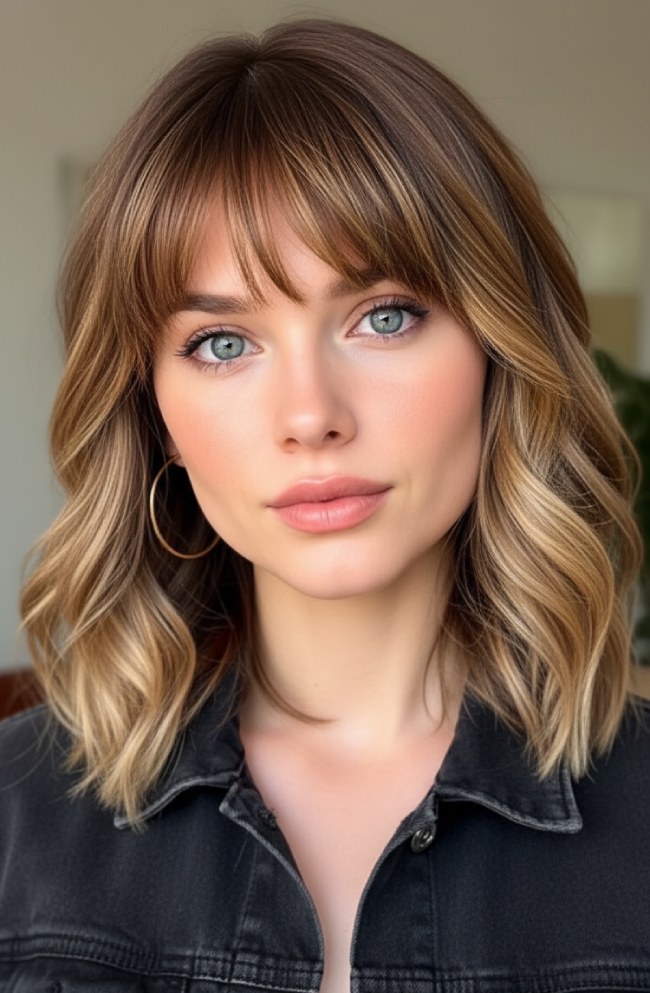
Golden beige balayage fringe is the shade that makes other beiges look flat. Where ash beige goes grey and vanilla goes yellow, this sits somewhere in between — warm enough to read as sunlit, cool enough to stay dimensional. The balayage technique keeps the colour concentrated on the mid-lengths and ends, so the root stays dark and the fringe gets the lightest hit. The tone is soft, not brassy, which is rare for a beige. On a collarbone lob with wavy medium texture, the colour lands exactly where the wave bends, so every turn catches a different shade. The result is soft dimensional colour that moves with the hair. I’d pick this over a flat all-over blonde every time.
Mid-Back Waves With Radiance Honey Gold Balayage
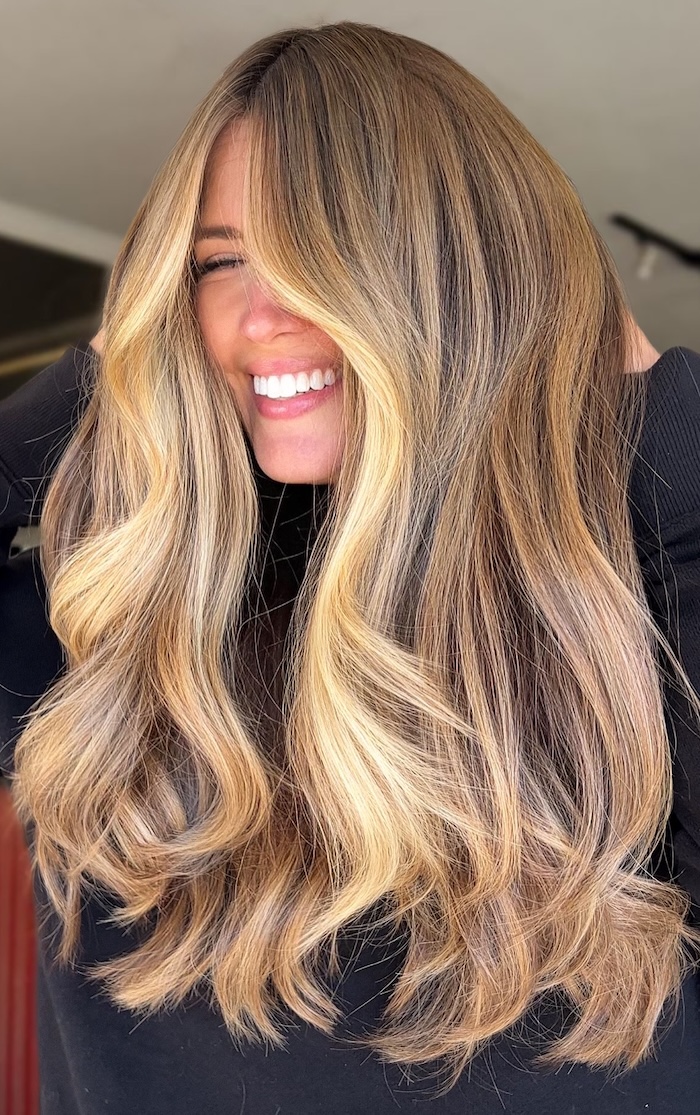
I’ll confess: I was skeptical about how a warm, honey-toned balayage would hold up on thick wavy hair past the first wash. The radiance honey gold balayage on this mid-back length proves me wrong. The colour stays luminous for weeks, and the waves keep the highlights from settling into a flat stripe. What you don’t see in the photo is the grow-out: the root shadow is soft enough that you can stretch trims to ten weeks. The tone reads warm without tipping into brass, as long as you use a purple shampoo once a week. The technique is hand-painted, so the colour lands where the waves catch light naturally. For upkeep, I book a gloss every eight weeks to keep the gold from fading to yellow. The thickness means you need more product to maintain the tone, but the payoff is a colour that moves with you. I’ve found that air-drying with a leave-in conditioner preserves the wave pattern and the colour better than heat.
Collarbone Waves With Sun-Kissed Balayage
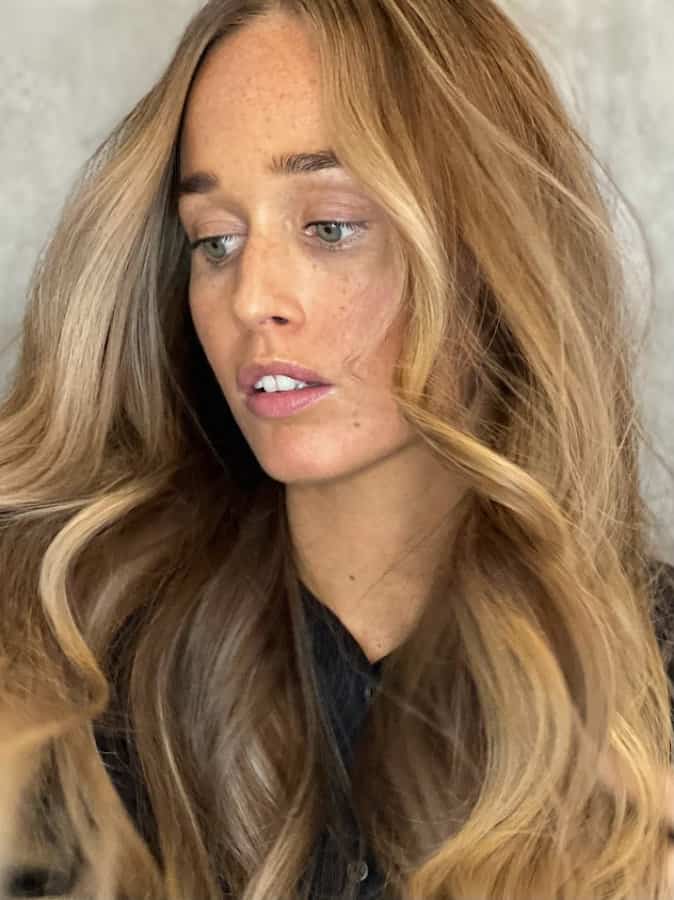
How much time does a sun-kissed balayage wavy hair look actually cost? For this collarbone length, the salon session runs about three hours. DIY is not an option — the lift needs precision to avoid patchiness. The tone is a soft natural blonde that reads beachy, not brassy. The thick wavy texture diffuses the colour, so fewer foils are needed. Expect a toner refresh every six weeks to maintain the effect.
Mid-Back Waves With Sun-Kissed Balayage Effect
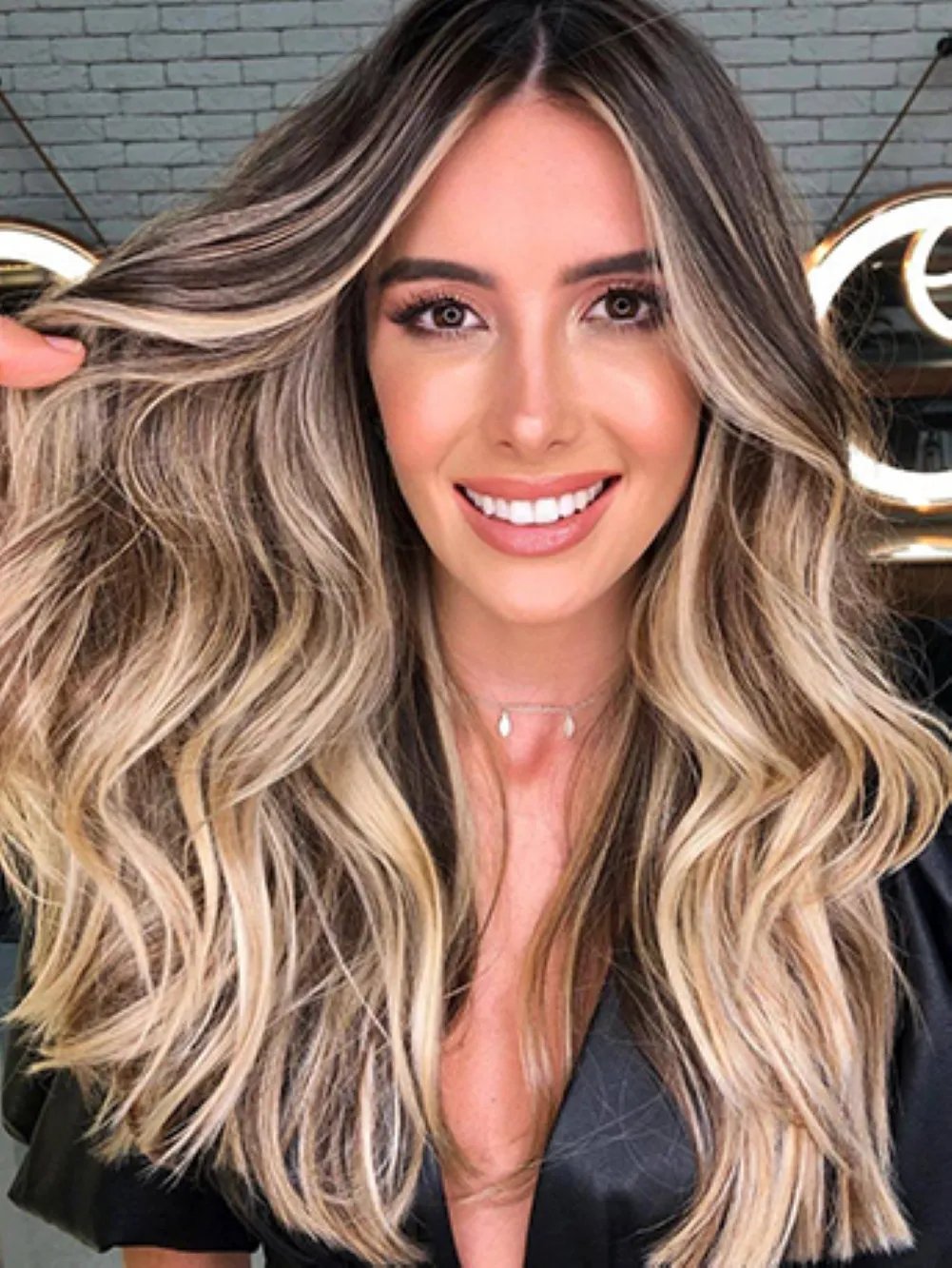
The sun-kissed effect is lovely, but it doesn’t last as long as you’d hope. This dark blonde to light blonde balayage on mid-back wavy hair looks effortless at first, but the lighter pieces can turn brassy within four weeks if you skip a purple shampoo. The technique relies on a soft gradient, but on thick wavy hair, the demarcation line can become visible sooner than on straight hair. The tone is warm and natural, but the upkeep is real: you’ll need a gloss every six weeks to keep the sun-kissed effect from fading to a muddy yellow. The waves hide some of the grow-out, but not all. I’d call it a high-maintenance look disguised as low-maintenance.
Mid-Back Waves With Ash Blonde Balayage
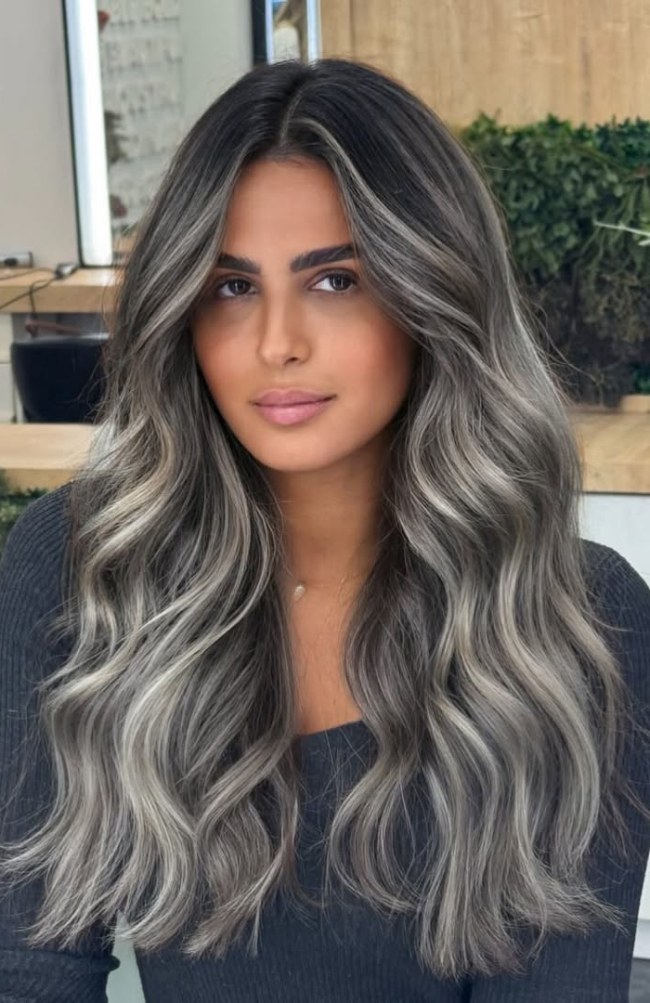
Ash blonde balayage reads cool next to warm skin. That is the trick. The mid-back length makes it feel grown out on purpose, not neglected. Curtain bangs frame a round face well. Thick wavy hair takes the colour without getting brassy for four weeks. You can watch the tone shift around week five. A purple shampoo weekly holds the cool shimmer longer. My hair went flat at the root after three days. Air drying with a scrunch is plenty. The layers keep volume at the bottom.
Book this for the fade. Ash tones change dramatically. The first month is silver-sage, month two soft beige, month three barely there. A root shadow fixes the line when you are tired of bookmarks. I sat for six hours once. That is what cool dimension costs for thick wavy textures. A middle part widens a round face. Curtain bangs shorten it. Consider the balance.
No Bangs Mid-Back Waves With Blonde Balayage Highlights
Side part with dark brown base and blonde balayage highlights lands best in March. The transition season. Mid-back waves catch sun differently. The dark base keeps roots unseen for eight weeks. Thick wavy texture needs no bangs. Side-swept layers open the face. Loose waves from air drying make the highlights read dimensional across the length. Spring calls for less heat. A scrunch with a wave spray is all you need. For this length, trims every 10-12 weeks keep the layers looking fresh. The high-contrast effect holds less effort than all-over blonde. My box-dye regrets taught me that.
Mid-Back Balayage With Root Shadow
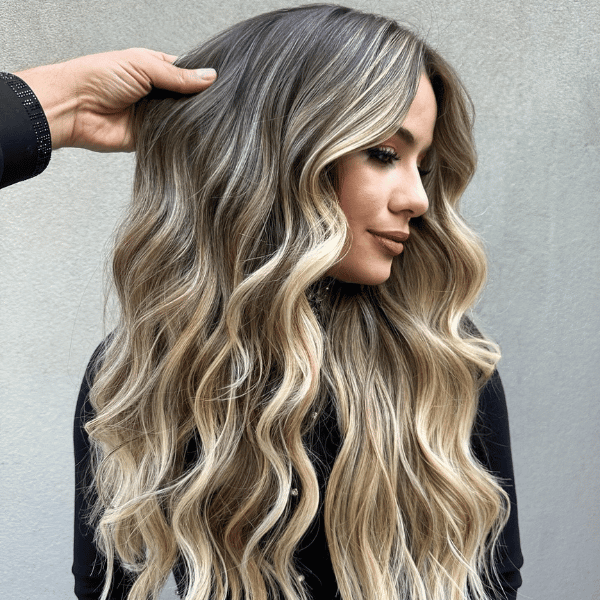
Is your hair medium to thick and wavy? Then this dimensional blonde balayage with root shadow is worth considering. The root shadow adds depth without weighing down thicker textures, and the balayage technique paints the lighter pieces from mid-lengths to ends for a soft grow-out. The tone is a cool blonde that reads dimensional rather than flat. At mid-back length, the waves catch the light in different places. Upkeep: the root shadow buys you about six weeks between touch-ups, and a purple shampoo once a week keeps the blonde from turning brassy.
Visual Idea
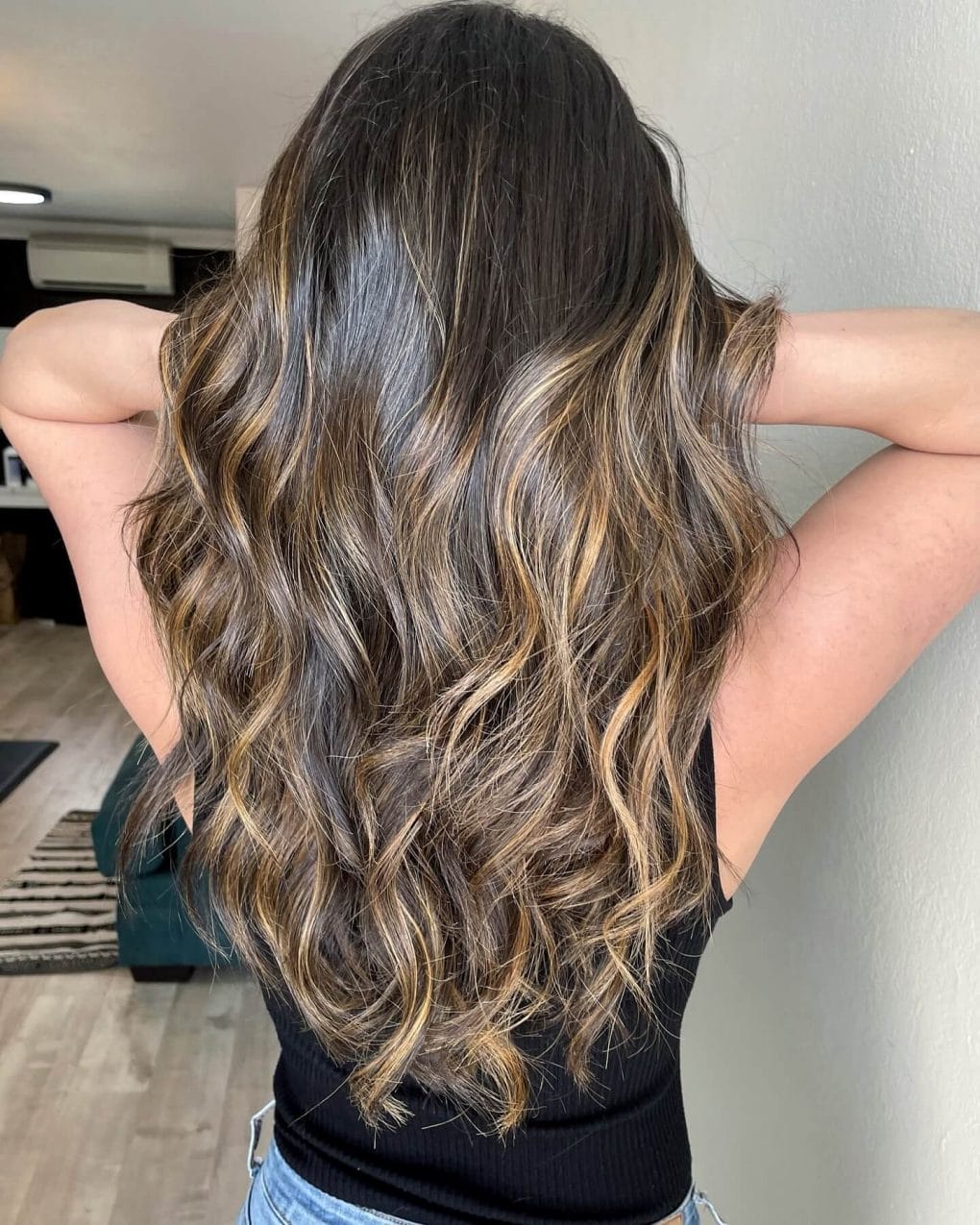
The contrast here comes from where the lightest pieces land. On a dark brown base, the stylist paints caramel and blonde balayage highlights through the mid-lengths and ends, keeping the root area deep. The technique focuses on the surface layers for a sunlit effect, with the tone alternating between warm caramel and cool blonde. The freehand painting allows the colour to graduate naturally, so the dark base stays rich while the lighter pieces catch the light. At mid-back length, wavy thick hair gives the colour room to move and prevents it from looking flat.
The honest downside: if the highlights are placed too far apart, the contrast can look stripey rather than blended. Ask your stylist to weave fine sections and use a balayage board for soft edges. It is a salon job, not a box dye project.
Mid-Back Visual Idea

Ash blonde wins over warm honey for this texture. On a dark blonde base, ash blonde balayage gives a cooler, more muted dimension that does not clash with wavy thick hair’s natural volume. Warmer tones can look brassy faster, especially on thick hair that holds heat. The balayage technique keeps the root darker, so the ash tone fades gracefully without a harsh line. At mid-back length, the loose waves show off the subtle gradation from dark blonde to ash. If you usually go for honey or caramel, this is the cooler cousin that still has dimension. It is a low-contrast look that reads expensive rather than obvious, and it suits anyone who wants less maintenance than a full blonde.
Collarbone Visual Idea
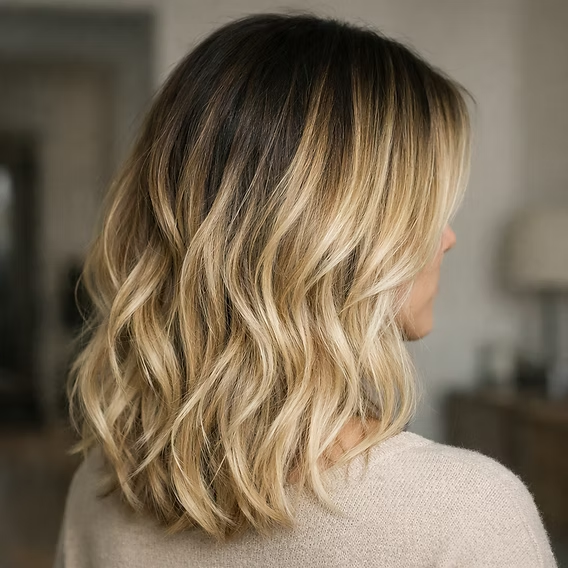
I admit I was skeptical about ash blonde on a dark base. But the grow-out here is remarkably soft because the root stays dark and the balayage starts a few inches down. At collarbone length with curtain bangs, the wavy blowout shows off the blended tone. The medium density waves help the colour read as dimensional rather than flat.
Upkeep: a purple shampoo every other wash keeps the ash from turning greenish, and the dark root means you can stretch touch-ups to eight weeks.
Dark Brown Base With Blonde Balayage Visual Idea
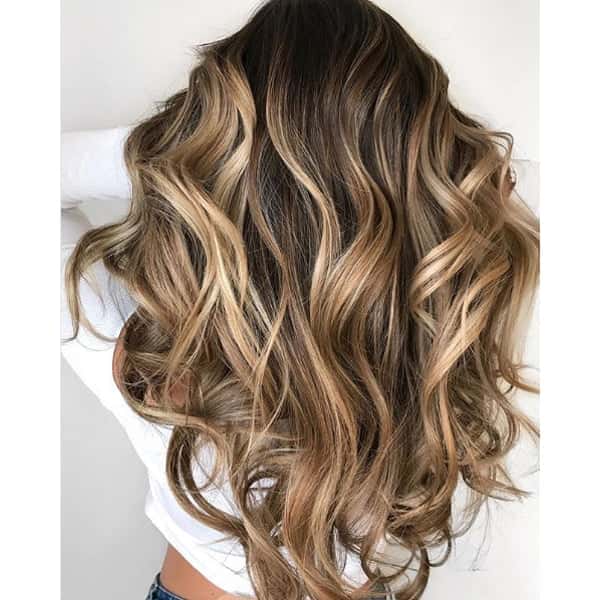
How much time are you willing to sit in a chair? Because that dark brown base with blonde balayage does not happen in an hour. The colour here is a two-step process: the brunette base stays deep and rich at the roots, then the blonde balayage is painted freehand through the mid-lengths and ends. The technique is hand-painted, which means the stylist works section by section, feathering the light colour so it blends without a hard line. The tone on this length is a cool, neutral blonde that reads expensive against the dark base. Texture is wavy and thick, which helps the colour land softly instead of screaming for attention.
I have done this. It took four and a half hours, and I read an entire magazine. The grow-out is forgiving — the dark root blends into the balayage for about three months before you start seeing a line. This is not a bathroom-mirror job. You need a salon, a stylist who understands dimensional colour, and a willingness to sit. If you want the transition to look sunlit rather than striped, book the full appointment.
Medium Brown Base With Caramel Balayage Visual Idea
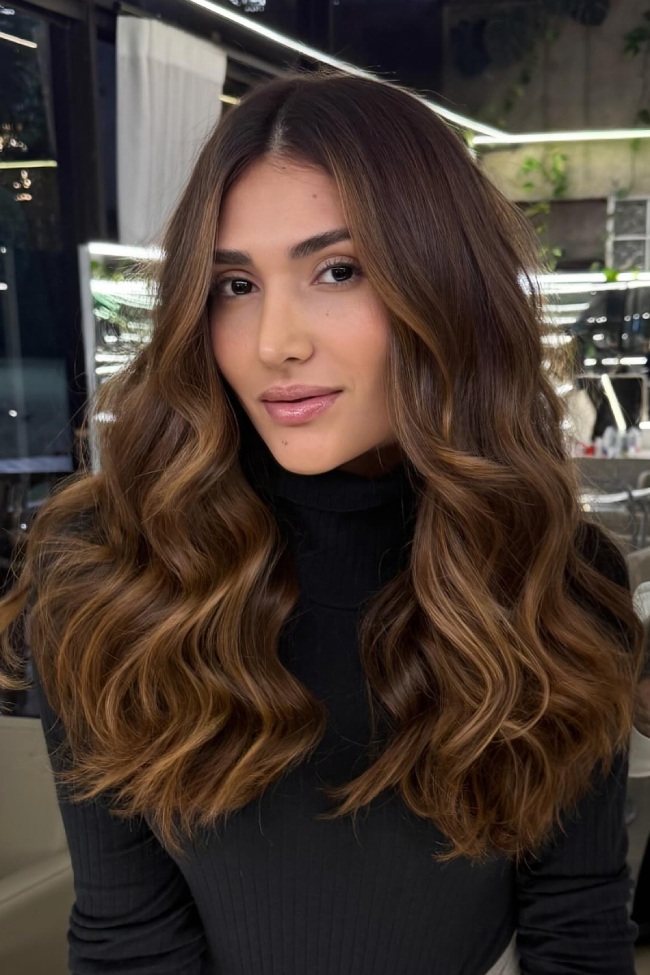
I want to believe the rich caramel balayage on that medium brown base will stay this warm and glossy for weeks. But here is the honest downside: caramel tones fade faster than you expect, especially on wavy, thick hair that gets washed more than twice a week. The technique is a soft balayage painted from the mid-shaft down, avoiding the roots to keep the base intact. The tone is warm and golden, not ashy, which means it can pull brassy if you use the wrong shampoo or spend too much time in the sun. The length is mid-back, and the colour has room to travel. My friend got this done and by week five the caramel had softened to a honey beige. She was not mad about it, but she was not expecting it either.
Shoulder Visual Idea
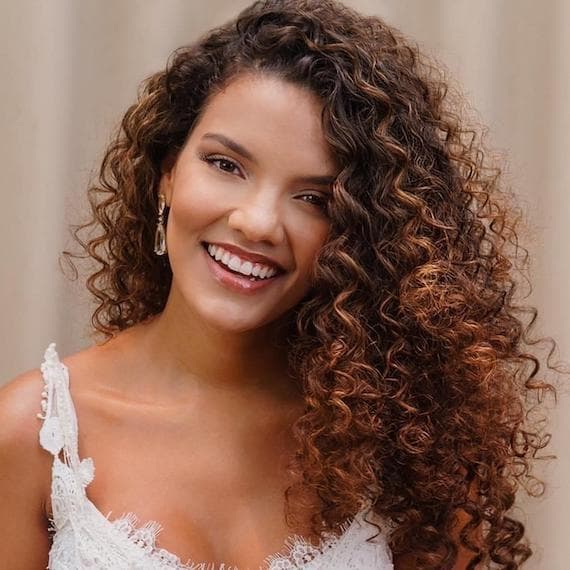
Notice how the honey blonde balayage sits mostly on the ends, not climbing all the way to the root? That is the trick for curly, thick hair at shoulder length. The cut is layered, and the warm brown base stays visible through the top layers while the lighter colour catches on the curls. The technique is a low balayage, meaning the stylist paints the colour lower down the strand so the curls do not get a solid band of blonde. The tone is honey, warm enough to read natural but lighter than the base. To get close at home, part your dry hair into sections and apply a lightening formula only to the bottom third of each section, focusing on the ends. It will not be as precise as a salon, but it gives a similar sun-struck effect.
Layers Visual Idea
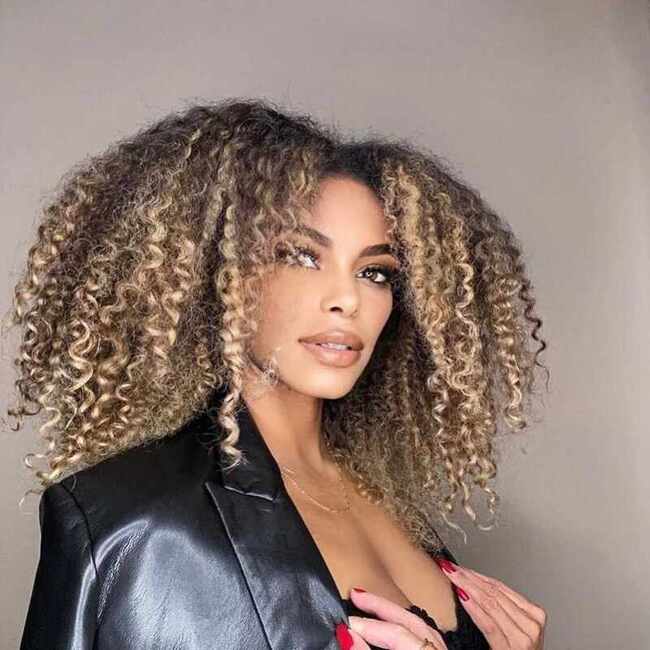
This is the look for a holiday dinner where you want your hair to do the talking. The dark brown base with blonde and caramel balayage creates a contrast that shows up in candlelight and under chandeliers. The technique is a multi-tonal balayage, with both blonde and caramel painted through the layers so the colour looks three-dimensional. The cut has curtain bangs and the texture is curly and thick, which gives the colour volume and movement. The tone is warm throughout, no cool ash here, which suits a festive setting. The curls drop slightly by the end of the evening, but the colour keeps its depth because the caramel tones reflect light even when the wave loosens. My aunt asked me if I had just come from the salon. I had not.
No Bangs Visual Idea
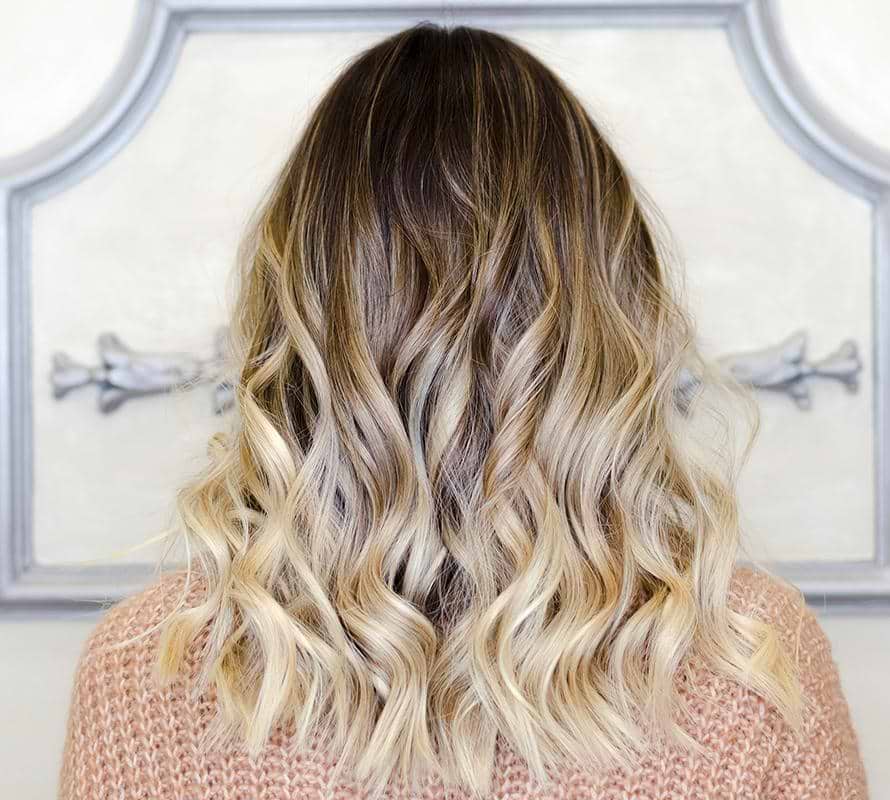
Who is this dark brown to blonde balayage actually for? It suits a long oval or heart-shaped face best, because the dramatic colour transition draws the eye down without bangs to break the line. The length is mid-back and the texture is wavy with medium density, which means the colour has enough surface area to show the gradient without looking sparse. The technique is a high-contrast balayage starting several inches from the root, so the darker base stays prominent at the top. The tone is a cool blonde, almost icy at the ends. If your face is round or square, the straight vertical line of the colour can emphasize width. You might want a softer transition or some face-framing pieces to balance it. Commitment wise, this is a salon look that needs a root touch-up every eight weeks.
Brunette Balayage With Blonde Highlights Visual Idea
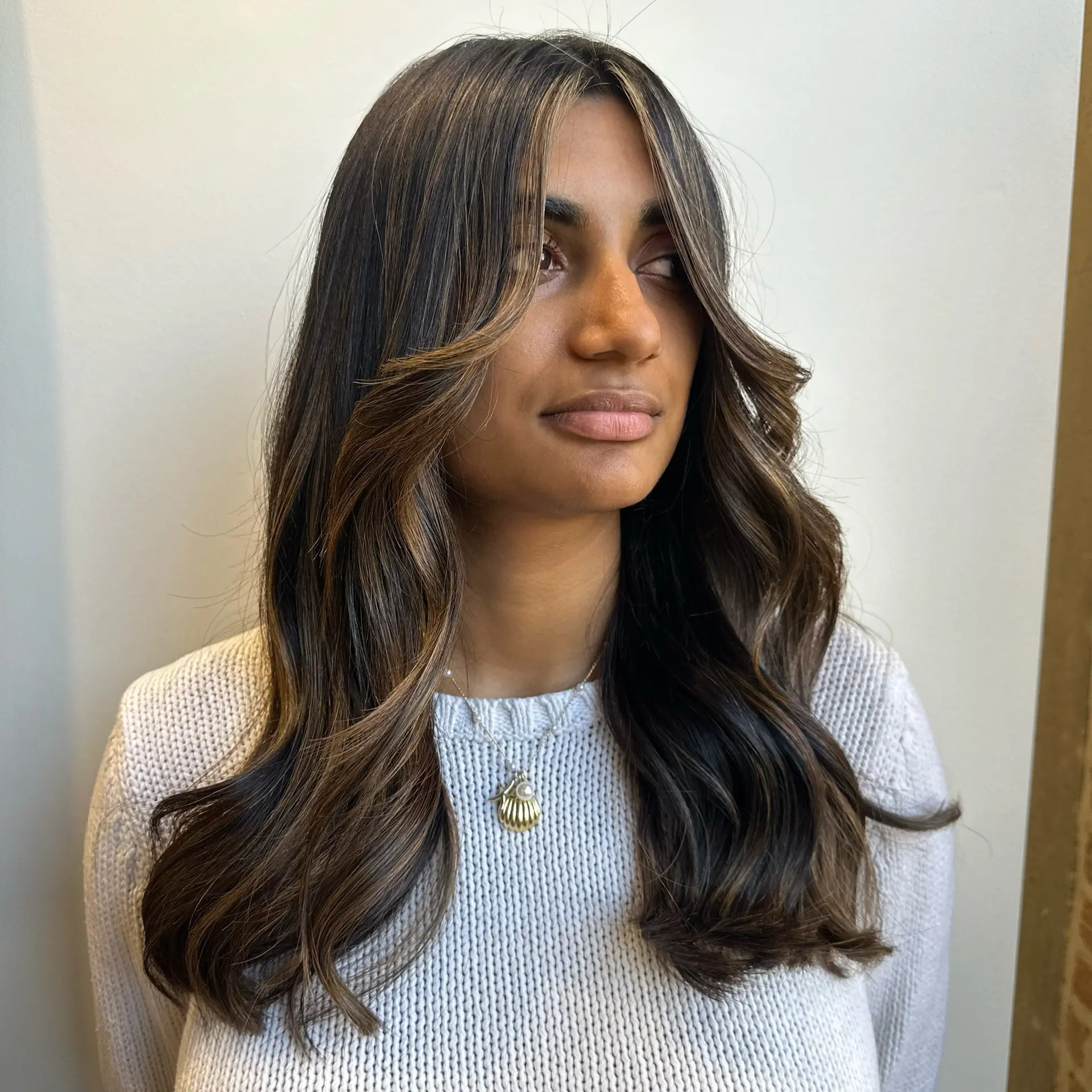
The precision of face-framing balayage is in where the lightest strands begin. This brunette balayage with blonde highlights uses a side part and warm-toned blonde pieces that start below the chin, then soften into the mid-back length. The wavy, medium-density texture catches the contrast without looking stripey. Ask your stylist for a side part, face-framing highlights that begin below the chin, and a soft gradient into the mid-back length.
Layered Visual Idea
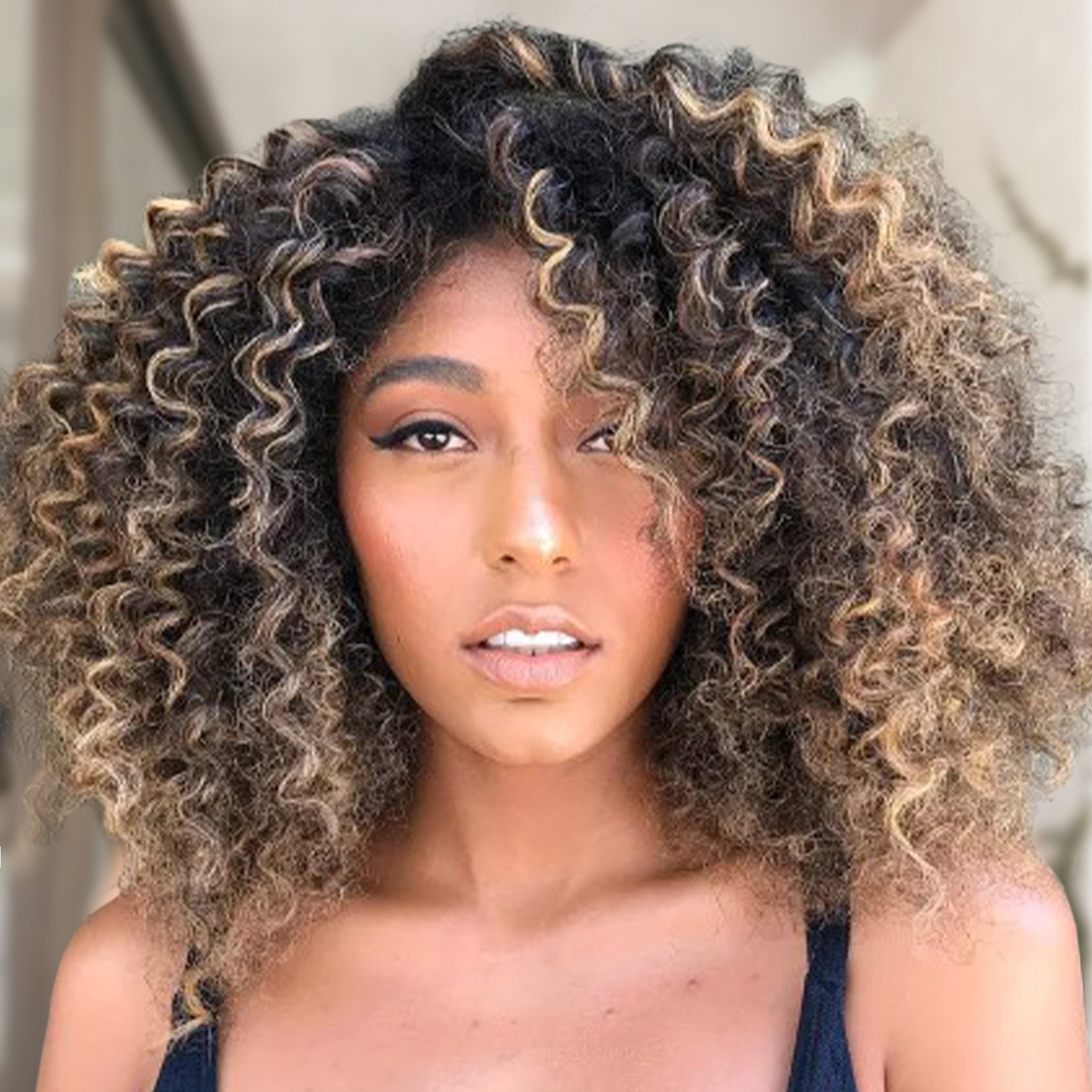
Defined curls and blonde balayage beat loose waves every time. On a dark brown base with neutral-toned blonde balayage, each curl catches the light individually, creating a dimensional effect that straight hair just can’t match. The shoulder-length cut with no bangs lets the thick, curly texture do the work.
Compare that to balayage on looser textures, where the colour blends into a single wash. Here, the vibrant curl definition makes the blonde pop against the dark base, and the layers keep the shape from turning into a triangle. This is balayage designed for curl, not fighting it.
Long Layers Visual Idea
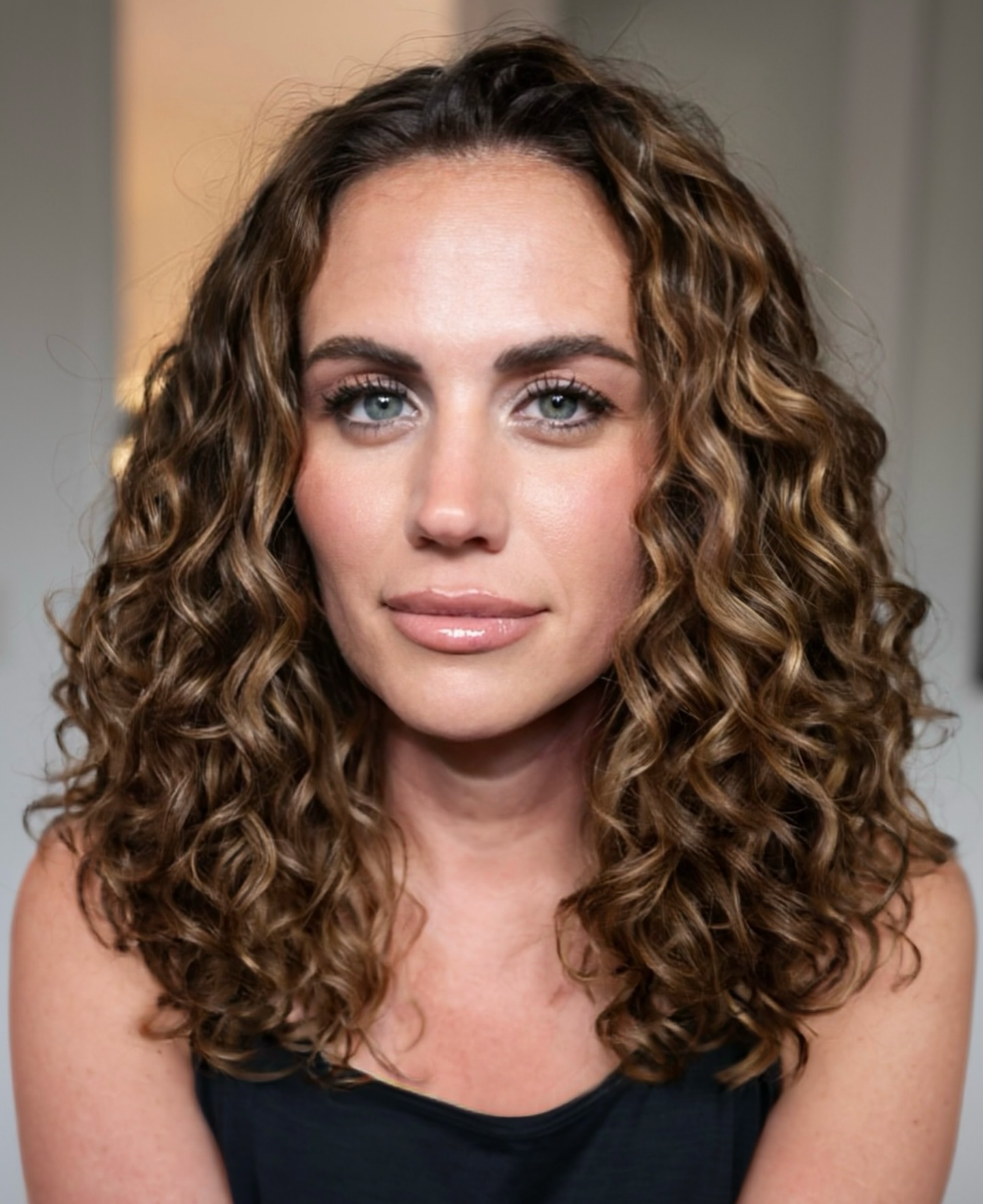
I was wrong about honey blonde on dark brown curls. I expected a harsh grow-out line, but the honey blonde balayage on this dark brown base fades so softly that the mid-back length looks intentional for months. The curly, medium-density texture hides the transition, and the long layers keep the colour from pooling at the ends. Upkeep is real: a toner every eight weeks keeps the honey tone from turning brassy, and the curls need extra moisture after lightening. But the grow-out is the easiest I have seen on curly hair.
Dark Brown To Caramel Balayage Visual Idea
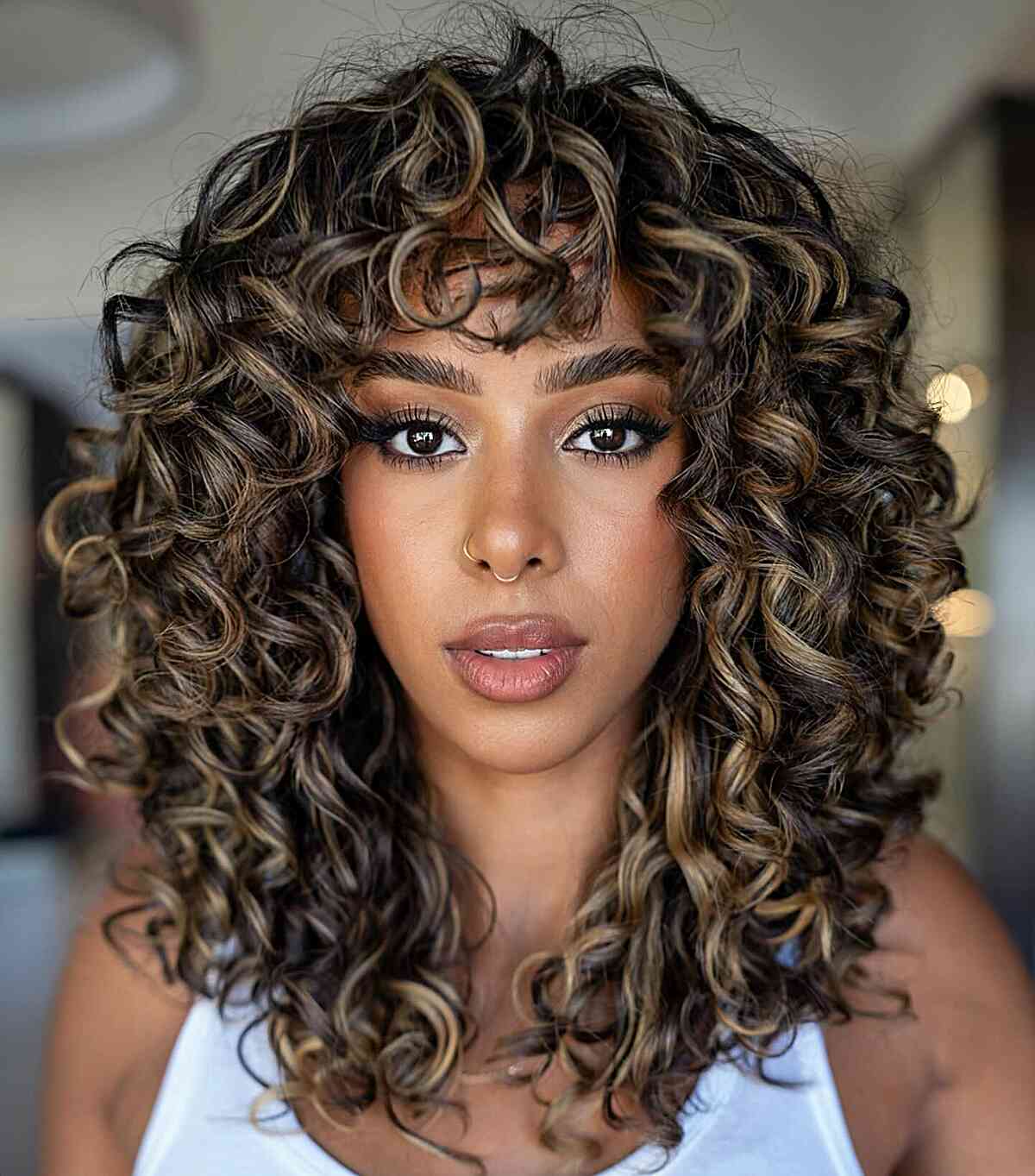
How much time does a shag with full bangs and caramel balayage cost you? More than a single appointment, if you want it right. The dark brown to caramel balayage on shoulder-length, thick curly hair needs a stylist who understands both the cut and the colour. The shag layers require precise texturising, and the balayage is hand-painted to avoid a blunt line. This is not a DIY project. Expect three to four hours in the chair for the full transformation.
Curtain Bangs Visual Idea
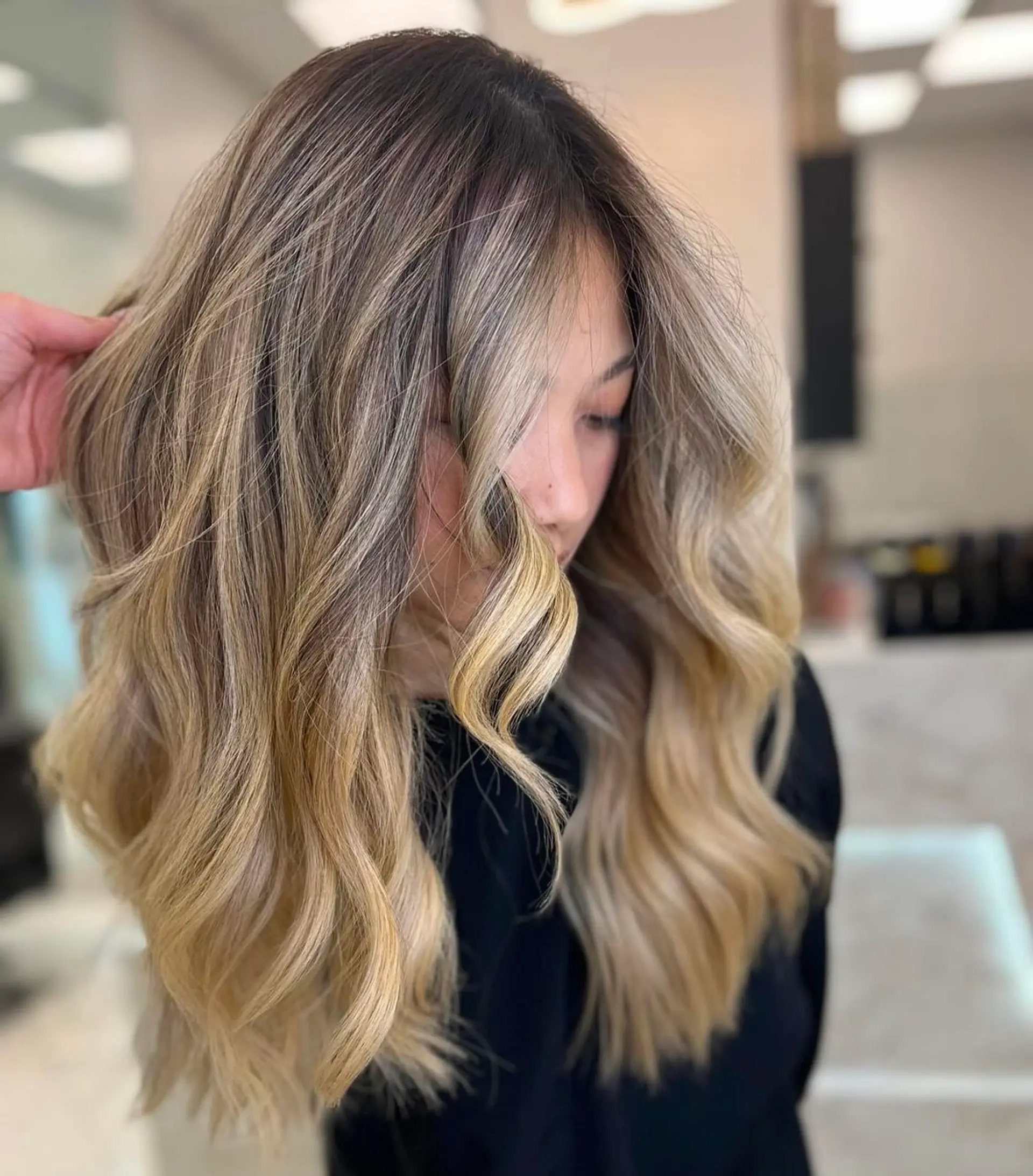
Curtain bangs with honey blonde balayage are a commitment I am not sure everyone should make. The honey blonde balayage on this light brown base adds warmth to collarbone-length waves, and the curtain bangs frame the face nicely in the photo. But the daily reality is different.
The bangs need a blow-dryer and round brush every morning, and the honey tone requires a purple shampoo at least once a week to stay golden rather than brassy. On wavy, medium-density hair, the bangs can separate into odd pieces by noon. This look works best for someone who does not mind a few minutes of styling each day and a toner every six weeks.
Front View Visual Idea
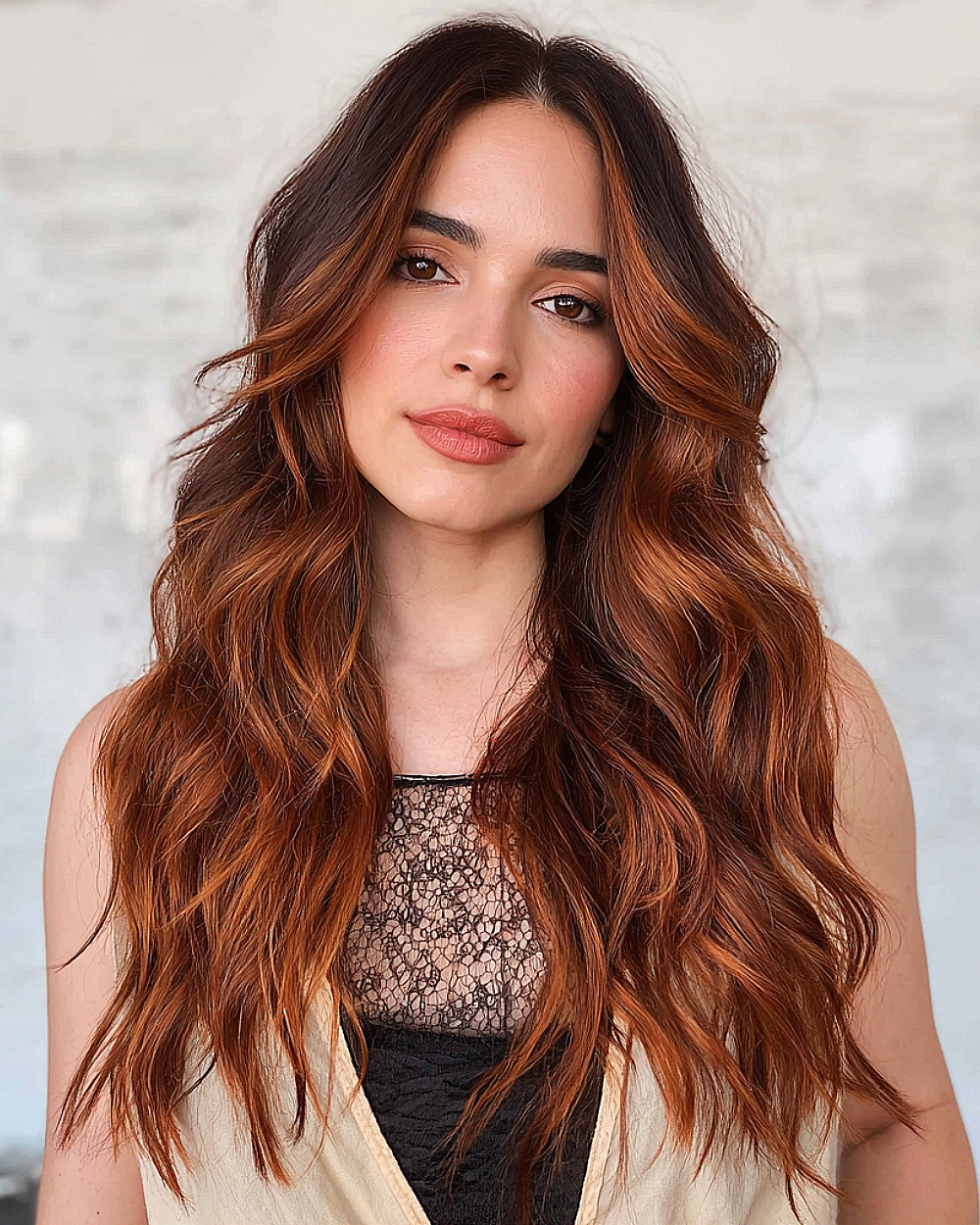
Copper balayage on dark brown hair needs a light hand. To get close at home, use a balayage board or foil to paint thin sections from mid-length to ends, focusing on the top layers for a natural sunlit effect. The tone should be a warm copper that complements the dark base without looking orange. At mid-back length, wavy thick hair holds the colour well. The key is to avoid painting too close to the root, or you will get a harsh line. Use a wide-tooth comb to blend the colour after application, and process for less time than you think to keep the copper soft rather than brassy.
Back View Close Crop Visual Idea
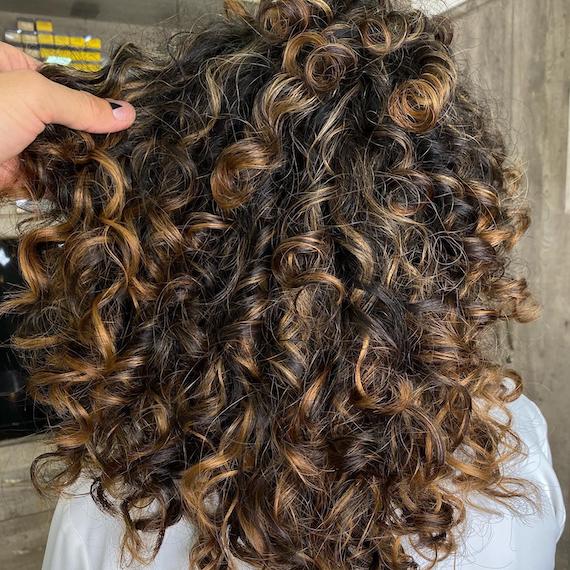
Close crop back view shows the true mileage of the blonde balayage highlights. Collarbone length. Dark brown base. Thick curly texture needs room to coil. The contrast tells you exactly how far the colour travelled. Summer demands low upkeep. This cut lets the curls do the heavy lifting. Middle part widens a round face. No bangs shorten it. Air drying is the only styling. Curls hold the tone without brass for five weeks. A refresh of the dark base every twelve weeks removes the fade line. My fine hair skipped blush.
Side Visual Idea
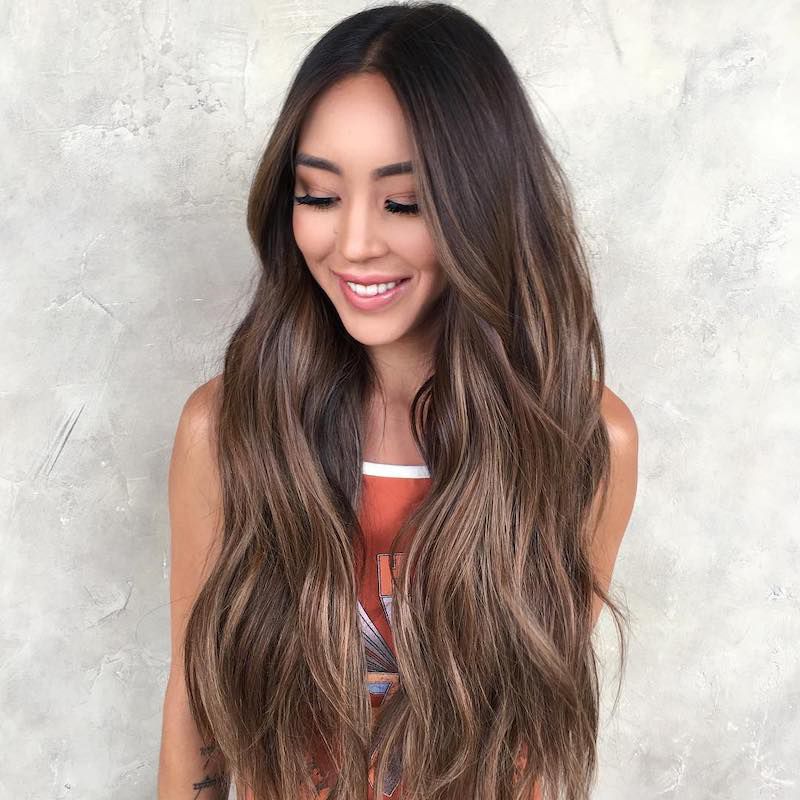
Who exactly should ask for ash brown and blonde balayage on a dark brown base? This colour combination, with its cool ash tones against warm blonde, flatters medium to olive skin tones best. The dark brown base stays deep, while the balayage technique lifts the mid-lengths and ends into a muted blonde that reads sophisticated, not brassy. On wavy, thick hair at mid-back length, the ash tones catch the light in the waves, creating a soft, dimensional effect that doesn’t scream for attention.
If you have very fair skin with pink undertones, the ash can pull muddy. And fine hair? The dark base might feel heavy. This is a colour for those who want subtle contrast without a harsh regrowth line. The side part here helps the lighter pieces frame the face naturally, but the real winner is the tone: cool enough to be modern, warm enough to stay wearable.
Back View Visual Idea
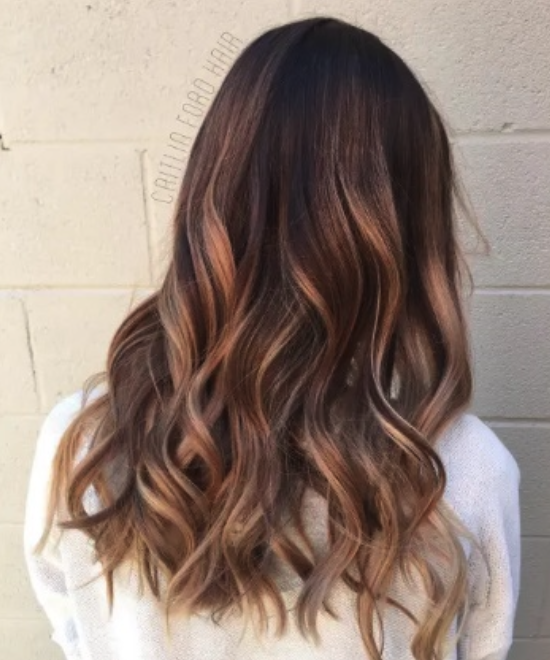
The caramel and copper balayage here is applied in a specific pattern: the colour concentrates on the mid-lengths and ends, leaving the dark brown base untouched at the roots. On wavy, thick hair at mid-back length, the warm tones create a gradient that mimics sun exposure. To style, start with damp hair, apply a heat protectant, then use a large-barrel curling iron to create loose waves. Let the waves cool before breaking them apart with fingers. A texture spray adds grip without weighing down the waves. The result is a warm, dimensional look that moves with the hair’s natural wave pattern.
Middle Visual Idea
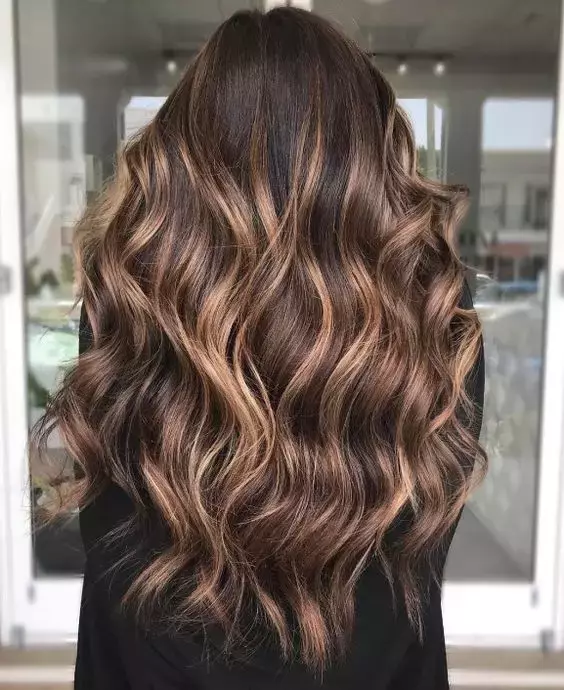
Caramel balayage highlights win over more dramatic colorations for one reason: they don’t fight the hair’s natural depth. On a dark brown base, caramel lifts just enough to add warmth without creating a stark line. The balayage technique places the highlights strategically, so the wavy, thick texture at mid-back length catches the light in a way that looks intentional but not overdone. This is the colour for someone who wants dimension without the maintenance of a full blonde.
Compare it to a platinum or honey blonde balayage: those demand regular toning and root touch-ups. Caramel blends with the dark base, so grow-out is softer. The tone stays warm but not orange, and the waves help diffuse any potential harshness. If you want a change that doesn’t announce itself, this is the side to pick.
Loose Waves Visual Idea
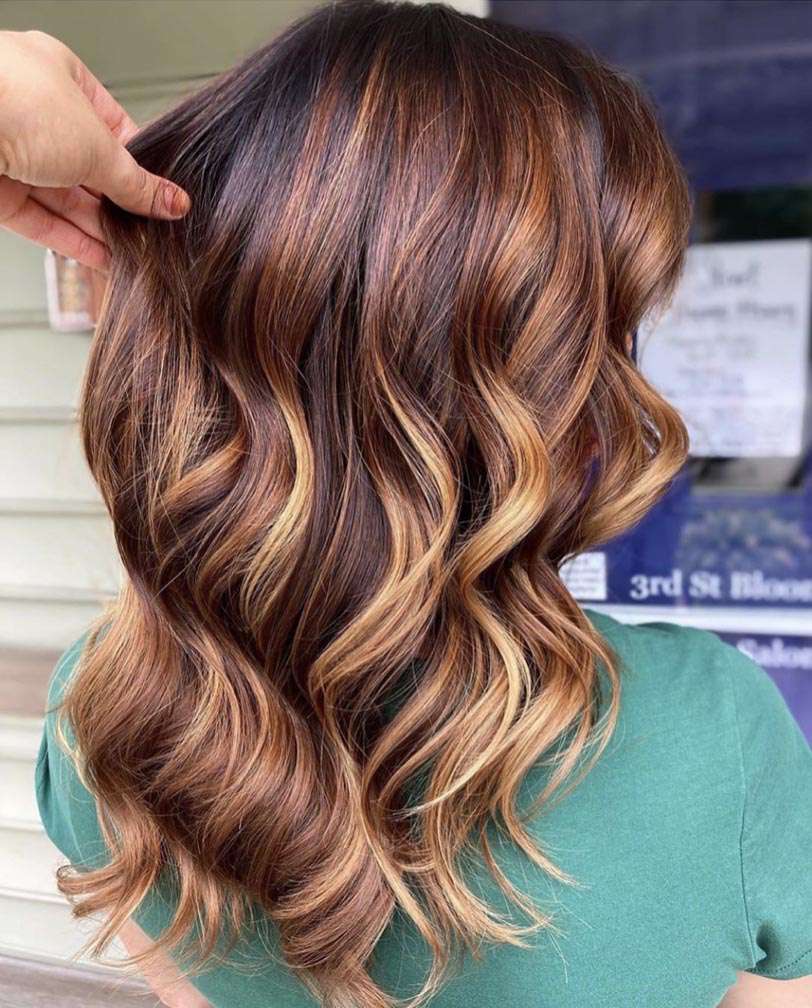
I’ll admit, I didn’t think loose waves would last past lunch on my thick hair. But this dark brown base with caramel and blonde balayage has enough contrast that the waves read defined even when they start to drop. The balayage technique keeps the tone soft from root to end, so grow-out is forgiving — the dark base hides new growth for weeks. At mid-back length, the weight pulls the waves longer by day three, but the colour still catches light. A quick refresh with a wide-tooth comb and a spritz of water brings the texture back. That’s the real wear reality: it holds better than I expected.
Wavy Blowout Visual Idea
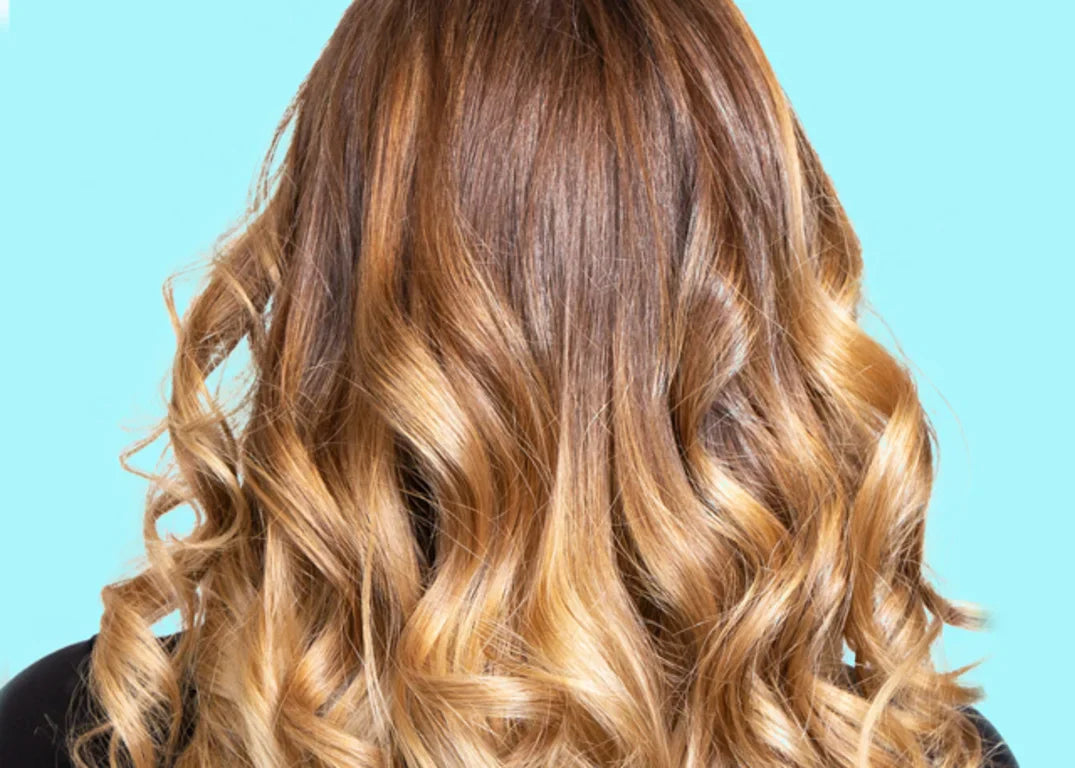
How much time does a wavy blowout with this balayage actually take? The colour — brunette base with caramel and blonde balayage at collarbone length — is a salon job, no question. Three hours in the chair for the technique, plus a toning session every six weeks if you want the blonde to stay bright. The blowout itself? Another 30 minutes with a round brush and a diffuser. You can do it at home once you learn the sectioning, but the first time, book it. The balayage transition is too precise to risk a DIY blowout that flattens the waves.
Wavy Thick Visual Idea

This is a beautiful look, but I have concerns. The medium brown base with caramel balayage on thick wavy hair at mid-back length is warm and dimensional — the balayage technique places lighter pieces where the waves crest. But caramel tones on thick texture have a habit of pulling brassy after a month. The wave pattern traps heat and moisture, which speeds up fading.
Here’s the honest downside: you will see orange undertones by week five if you don’t tone. The wavy texture makes even subtle brassiness look muddy. Ask your stylist for a cooler caramel — a beige undertone instead of golden — and plan a toning gloss at eight weeks. It’s not a dealbreaker, but go in knowing the upkeep.
Honey Beige Balayage Visual Idea
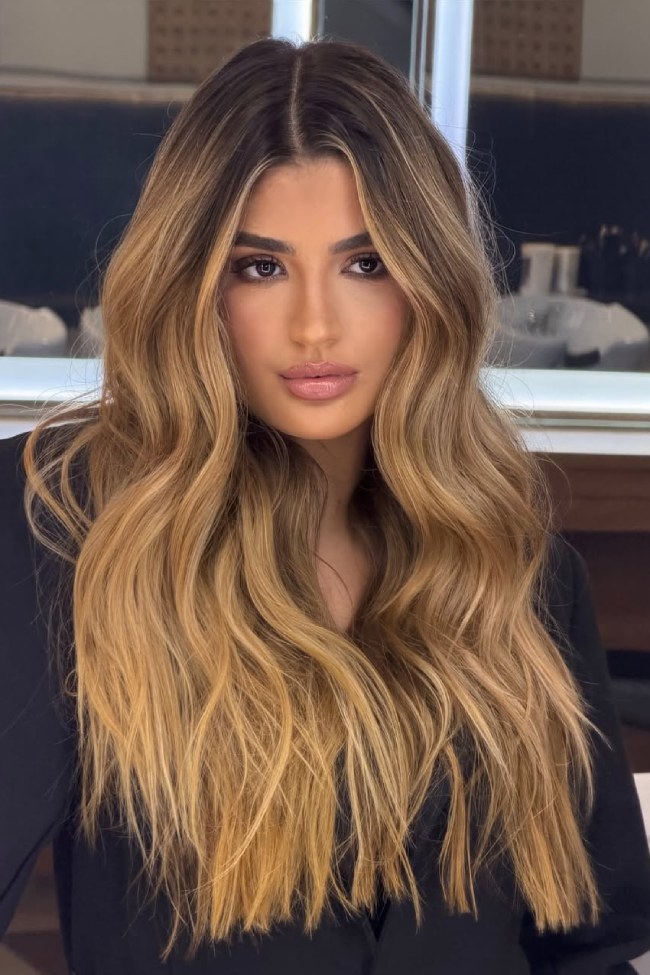
Honey beige balayage on wavy thick hair is a specific kind of warm. I start by sectioning the mid-back length into four quarters. Using a balayage technique, I paint the lightener onto the mid-lengths and ends, feathering it upward to avoid a harsh line. The honey beige tone comes from a toner with a touch of gold after rinsing. On wavy thick texture, the colour spreads softly through each wave, so I don’t need to saturate every strand. A middle part keeps the front view balanced. That’s the Honey Beige Balayage Visual Idea in a few steps: thin slices, warm toner, and a patient hand.
Face-Framing Layers And Balayage Visual Idea
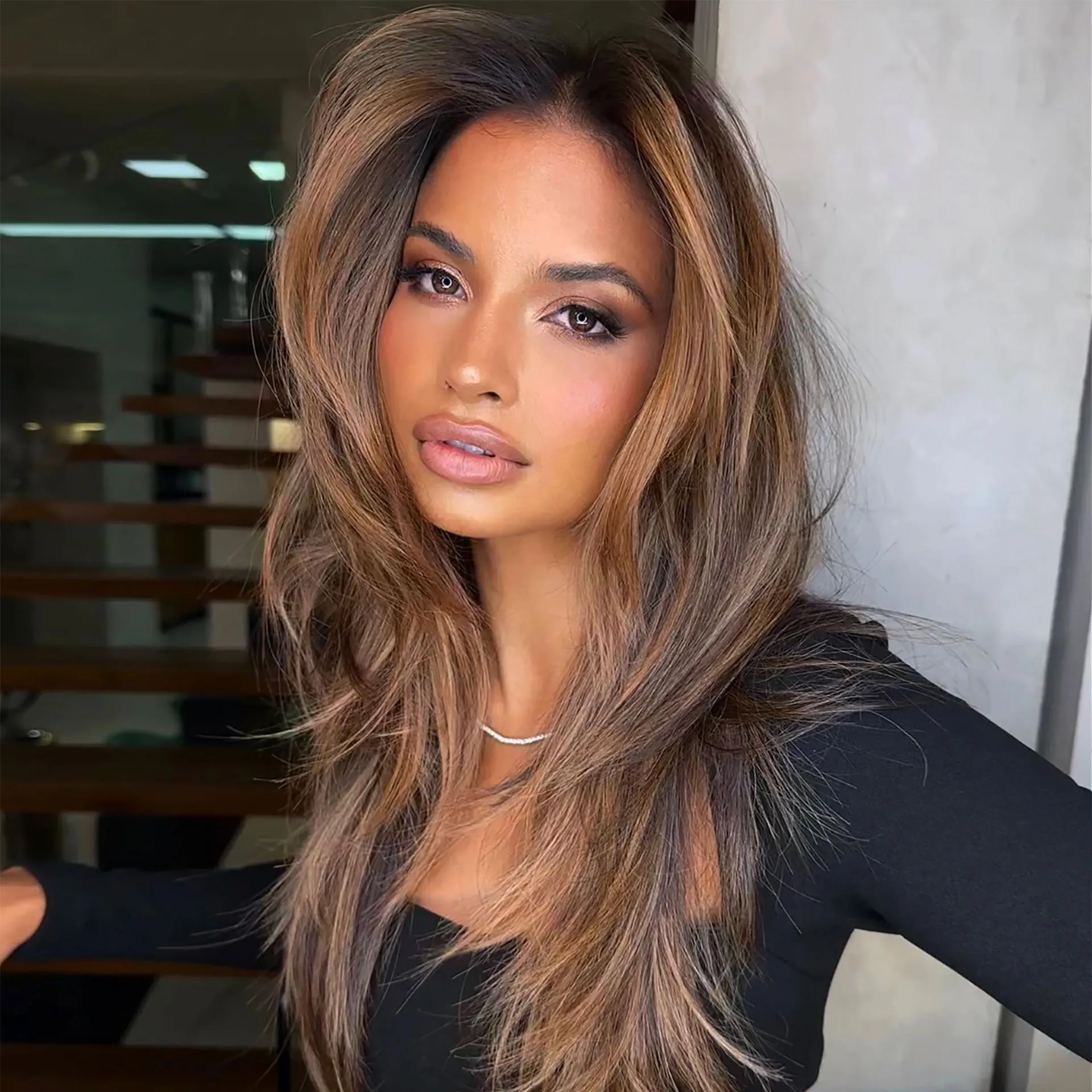
The first frost of November made me reach for a heavier coat, and my hair needed something to match the season. Long layers with curtain bangs, a dark blonde base with honey and caramel balayage, and a voluminous wavy blowout at mid-back length. The balayage technique places the warm tones where they’ll catch the low autumn light, and the face-framing layers soften the whole shape.
For a holiday party or a crisp afternoon, this is the look that says cozy but polished. The honey lifts the dark blonde base without going too bright, and the caramel adds depth. On wavy thick hair, the blowout lasts through the evening. The curtain bangs frame the face without needing constant trimming. The waves hold their shape from morning to evening, and the colour doesn’t wash out in one season. The dark blonde base means less root maintenance than a full blonde, and the balayage grows out gracefully. That’s the Face-Framing Layers And Balayage Visual Idea for the season: warm, voluminous, and ready for a toast.
Sunlit Caramel Balayage On Brunette Visual Idea
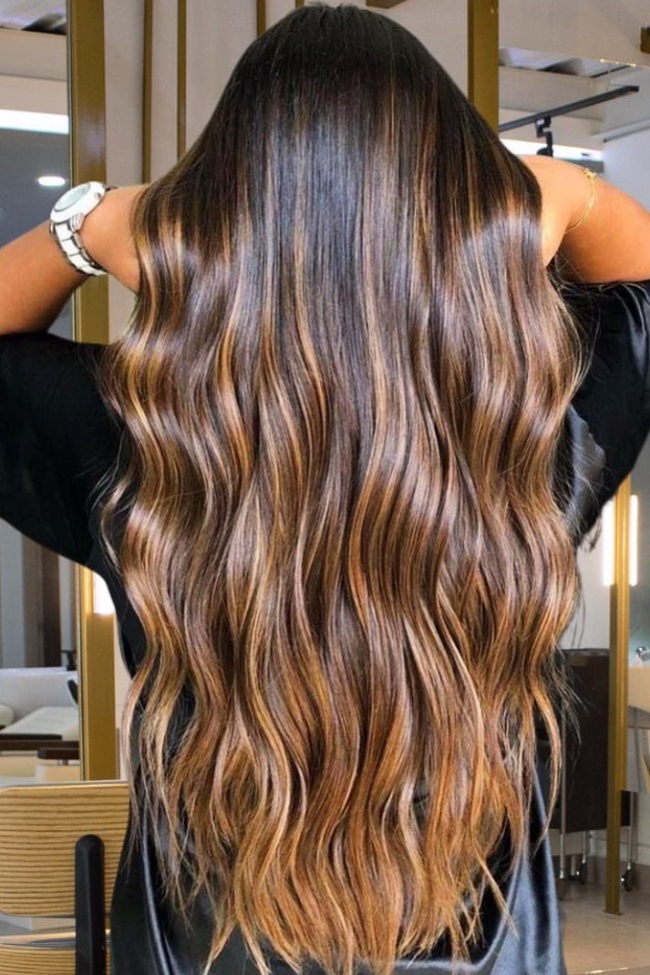
Wondering if sunlit caramel balayage on brunette is for you? It flatters warm skin tones best, especially those with golden or olive undertones. On wavy thick hair at mid-back length, the caramel lifts the brunette base without going too light, creating a sun-kissed effect. The balayage technique keeps the colour concentrated on the ends, so it doesn’t overwhelm the roots. If your skin runs cool or pink, this warm tone might clash. That’s the Sunlit Caramel Balayage On Brunette Visual Idea: a warm glow for the right complexion.
Final Thoughts
After writing all 41, I keep coming back to the chin bobs. They hold their shape on wavy hair without constant blow-drying. The colour placement here is softer than last year’s balayage, less stripe, more melt. That’s the 2027 update I can get behind. I’m booking a collarbone lob with caramel balayage next week. It’s the grow-out I need.