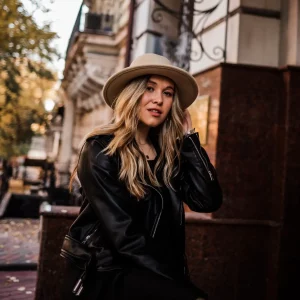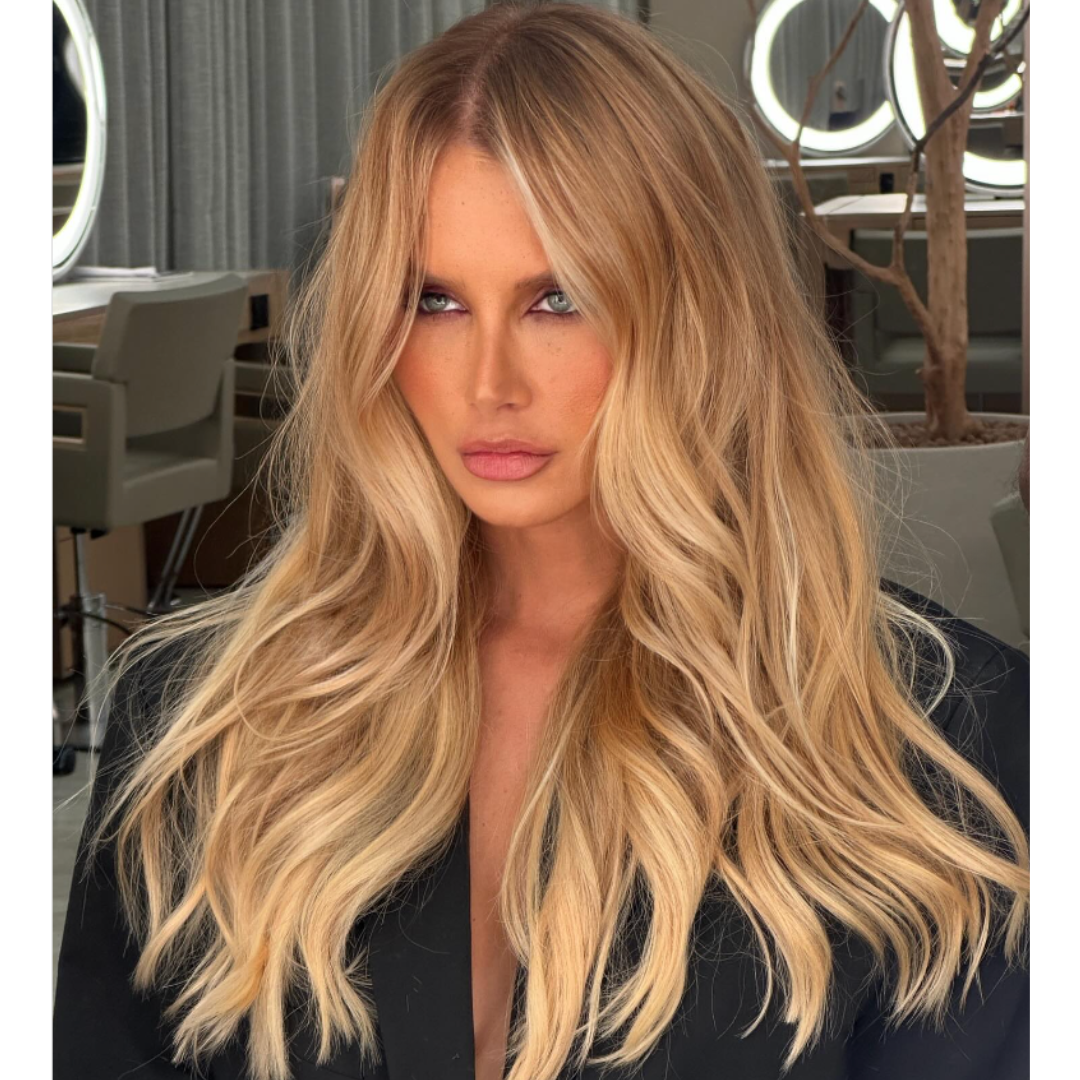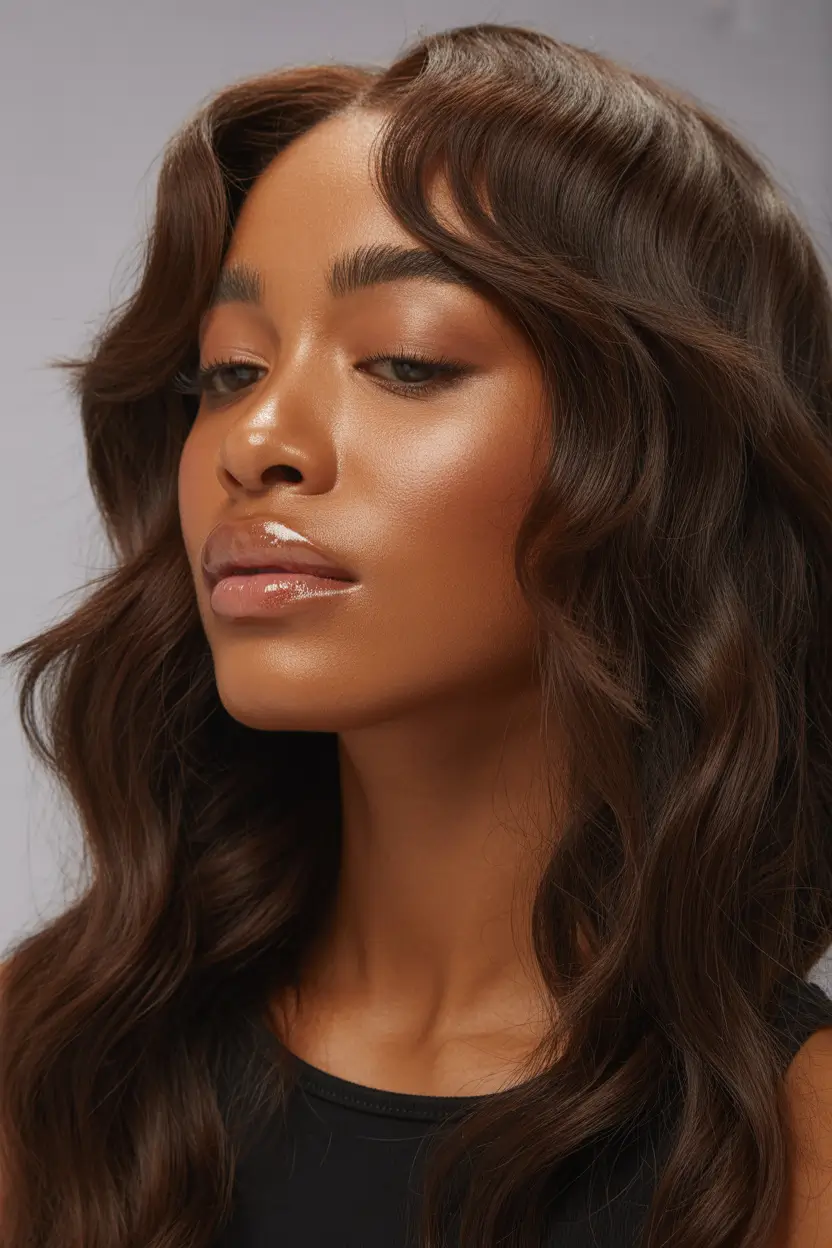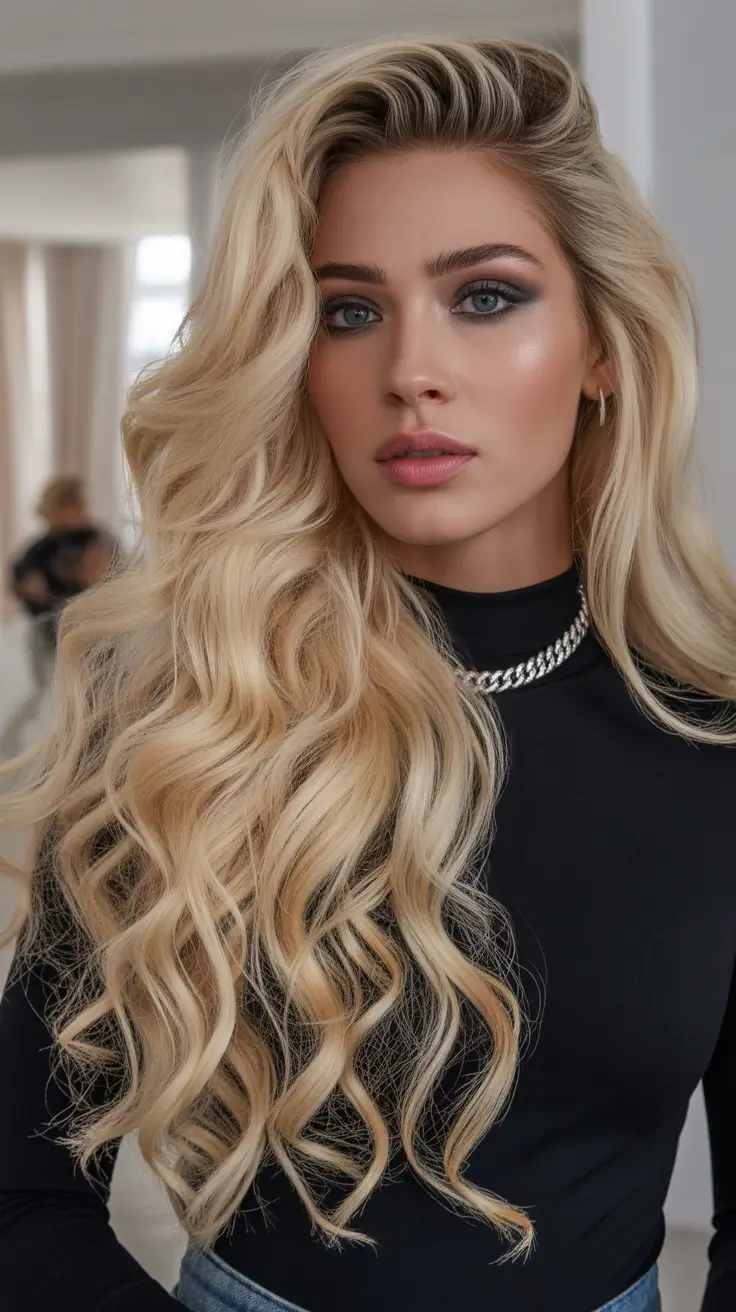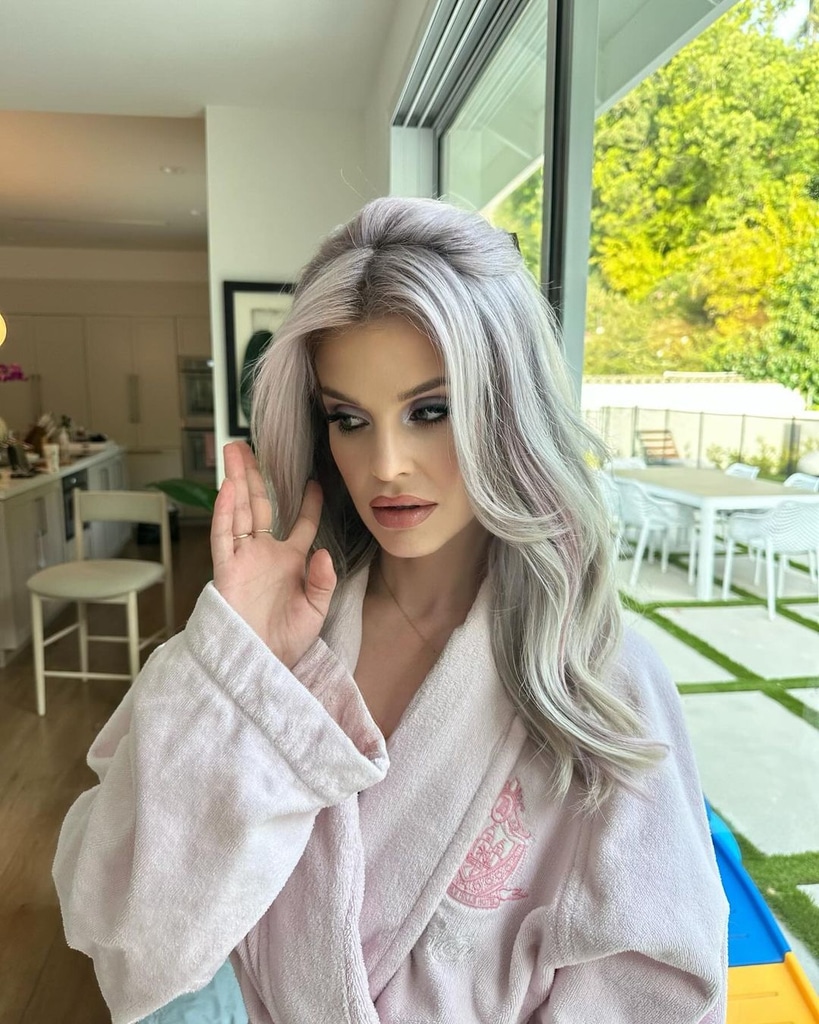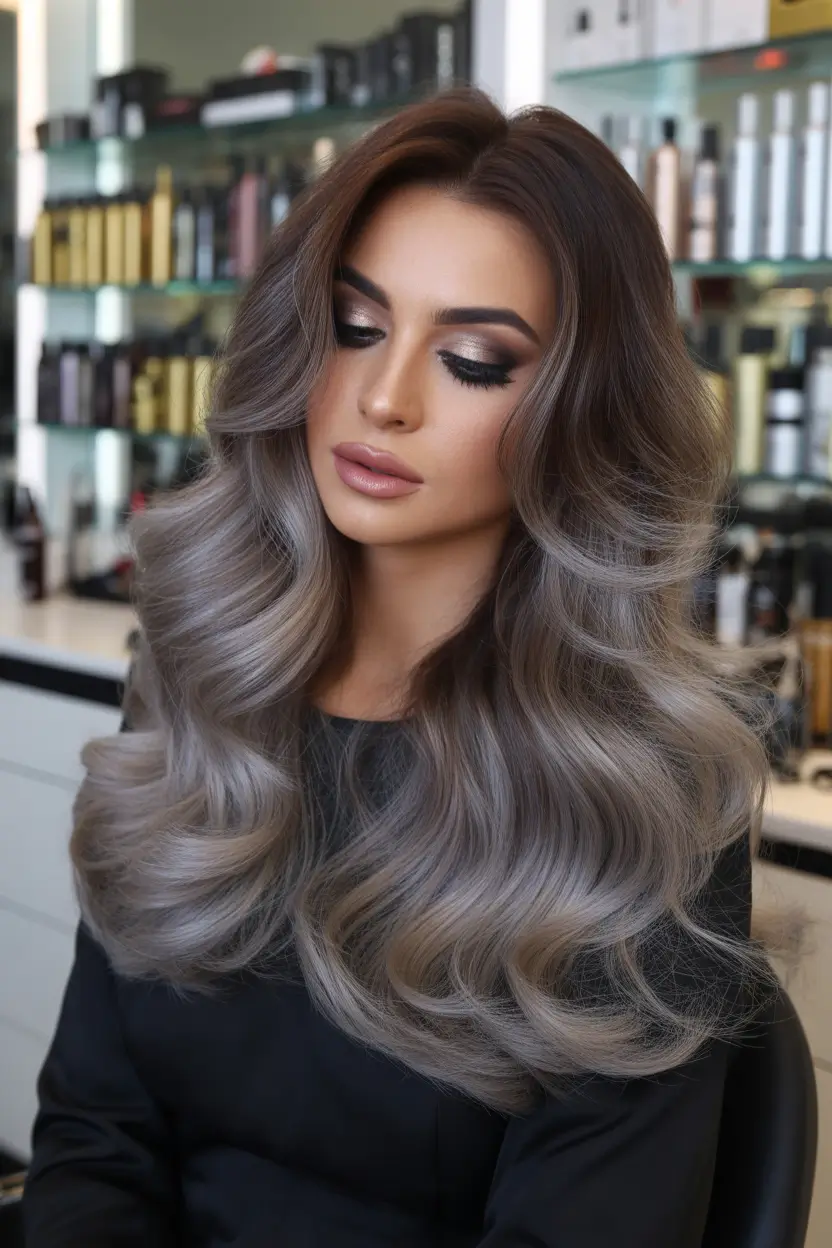
I keep seeing the same thing in the salon chair next to mine: dark brown hair getting warmer, not lighter. Caramel and cinnamon tones, soft ash, a root shadow that buys six calm weeks. It is not about going blonde anymore. It is about making brown look expensive.
Here are 39 ways to do Balayage on Dark Brown Hair 2027, from a chin-length bob that holds its shape to mid-back waves that grow out without a harsh line. I have fine hair that goes flat by 4 pm, so I tested which ones actually hold a curl and which ones collapse by lunch. Some need a round brush and patience. Others work with air-dry and a prayer.
Warm Blonde Balayage With Curtain Bangs
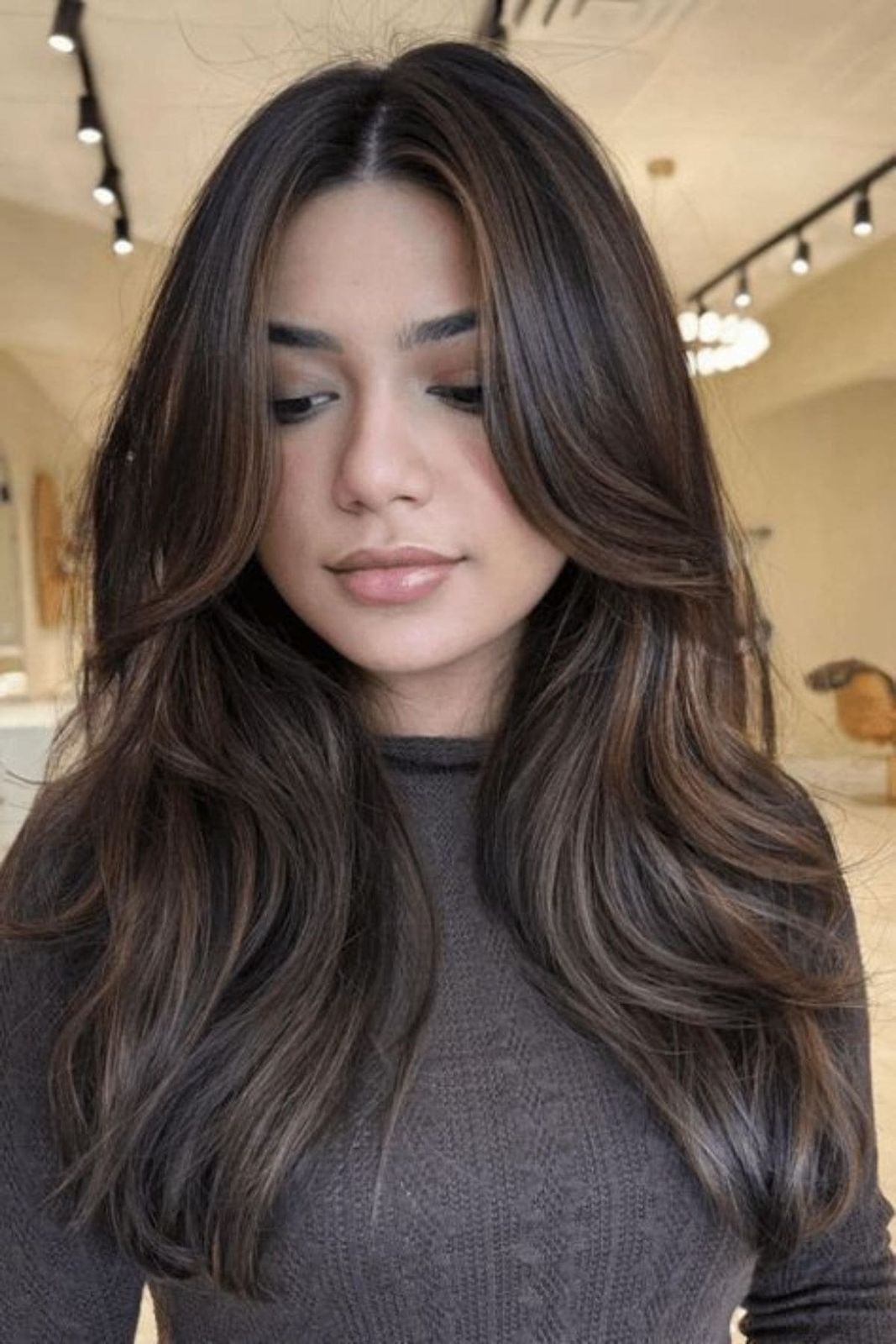
A middle part and curtain bangs that sweep just past the cheekbone, that combination is the whole trick. The warm blonde balayage starts low enough that the dark brown base stays rich at the root, so the grow-out is gentle. Shoulder length on fine to medium straight hair with volume at the crown, and the soft waves hold the shape. The tone is golden without going brassy, and because the bangs are cut to blend into the layers, you get the face-framing effect without a blunt line. This one flatters oval and heart shapes best. A round face? The curtain bangs need to start lower, ask your stylist to keep them long.
Caramel Honey Balayage On A Bob
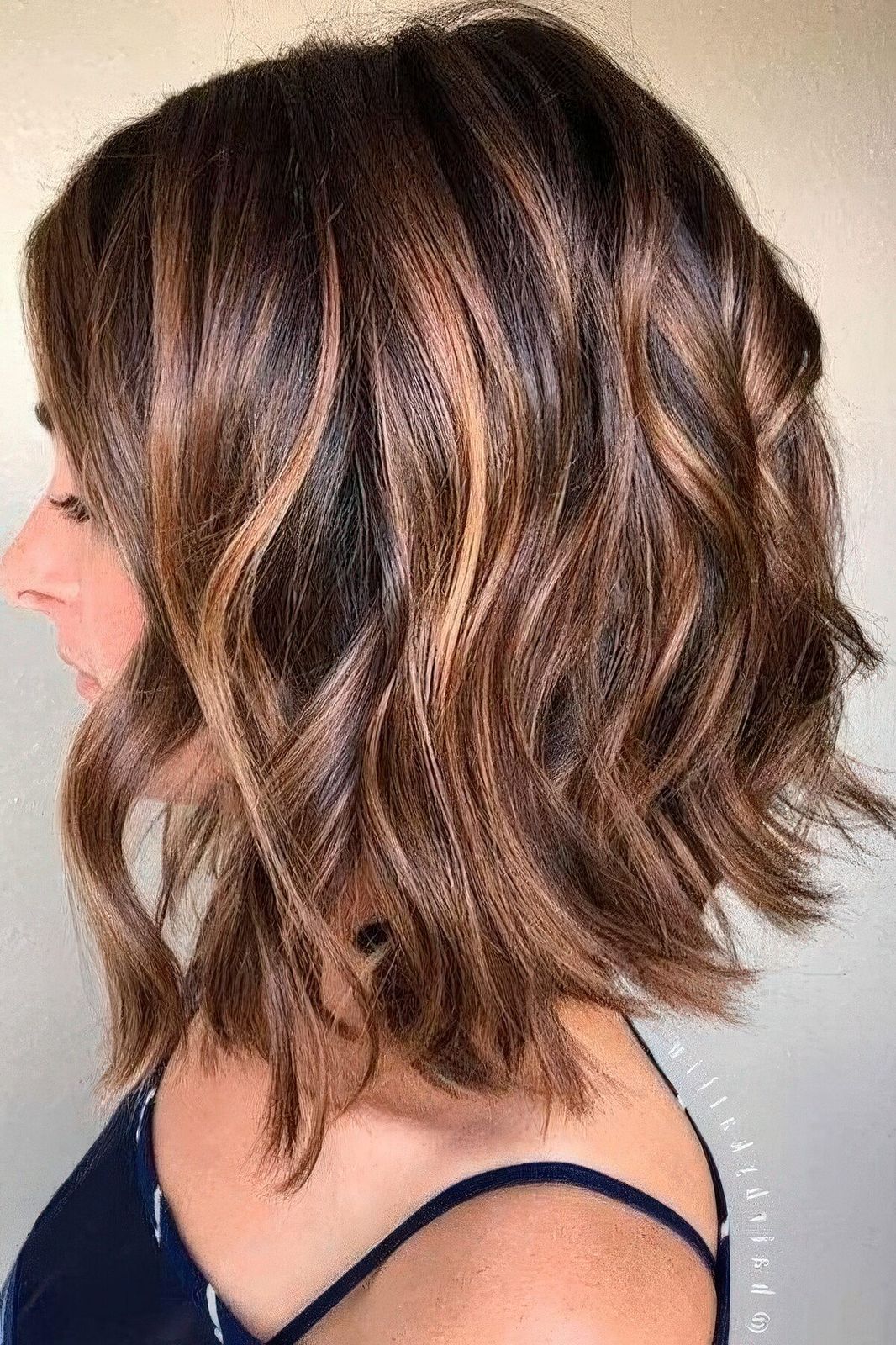
A chin-length bob with caramel honey balayage beats a cool-toned bob every time if your base is dark brown. The warmth lifts the face without washing you out. Side part, wavy blowout, medium density hair that actually holds the wave. The tone is rich, not golden, more honey than butter. Upkeep is real: a bob needs a trim every four to six weeks or the shape collapses. The balayage itself grows out soft, so you can stretch the colour to ten weeks. Skip this if your hair is very fine and straight, the bob can look severe without texture to soften it.
Beige Caramel Balayage On Collarbone Layers
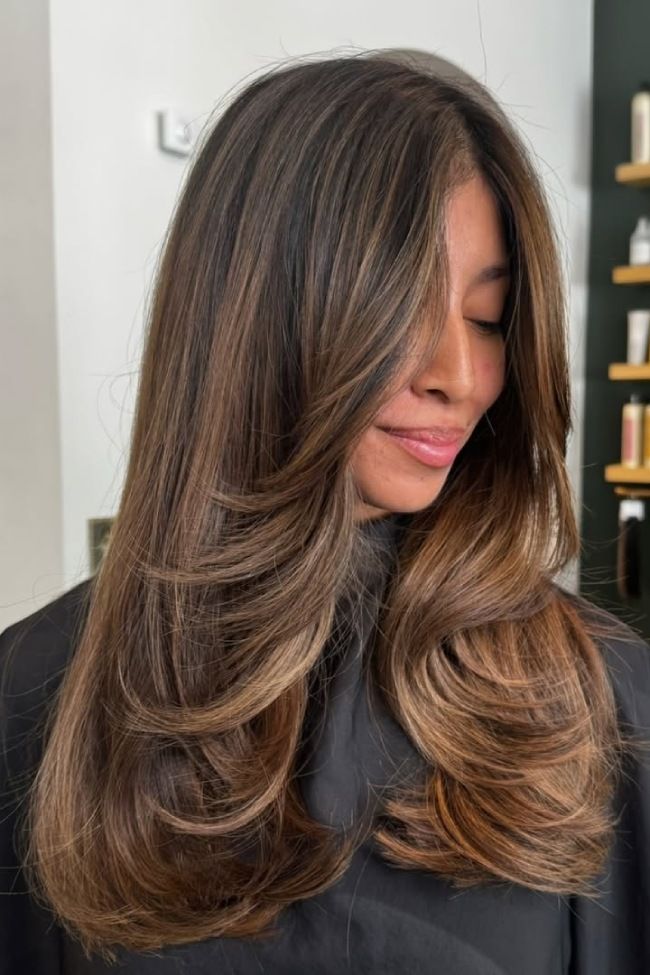
The beige caramel balayage sits somewhere between a warm blonde and a true brown, a tone that reads neutral and expensive. On a dark mocha brown base with collarbone layers, the technique matters. The stylist paints fine sections from mid-length down, keeping the root untouched, then blends into the face-framing pieces last. The result is a soft, diffused lift around the face without a stripe.
What to ask for: a beige caramel tone with no red or gold, a middle part, layers that start at the chin, and a root shadow that stays natural. Wavy texture, medium density, a layered blowout that takes twenty minutes. The layers need a trim every six to eight weeks or the collarbone shape gets heavy.
Dimensional Caramel Ash Balayage Lob
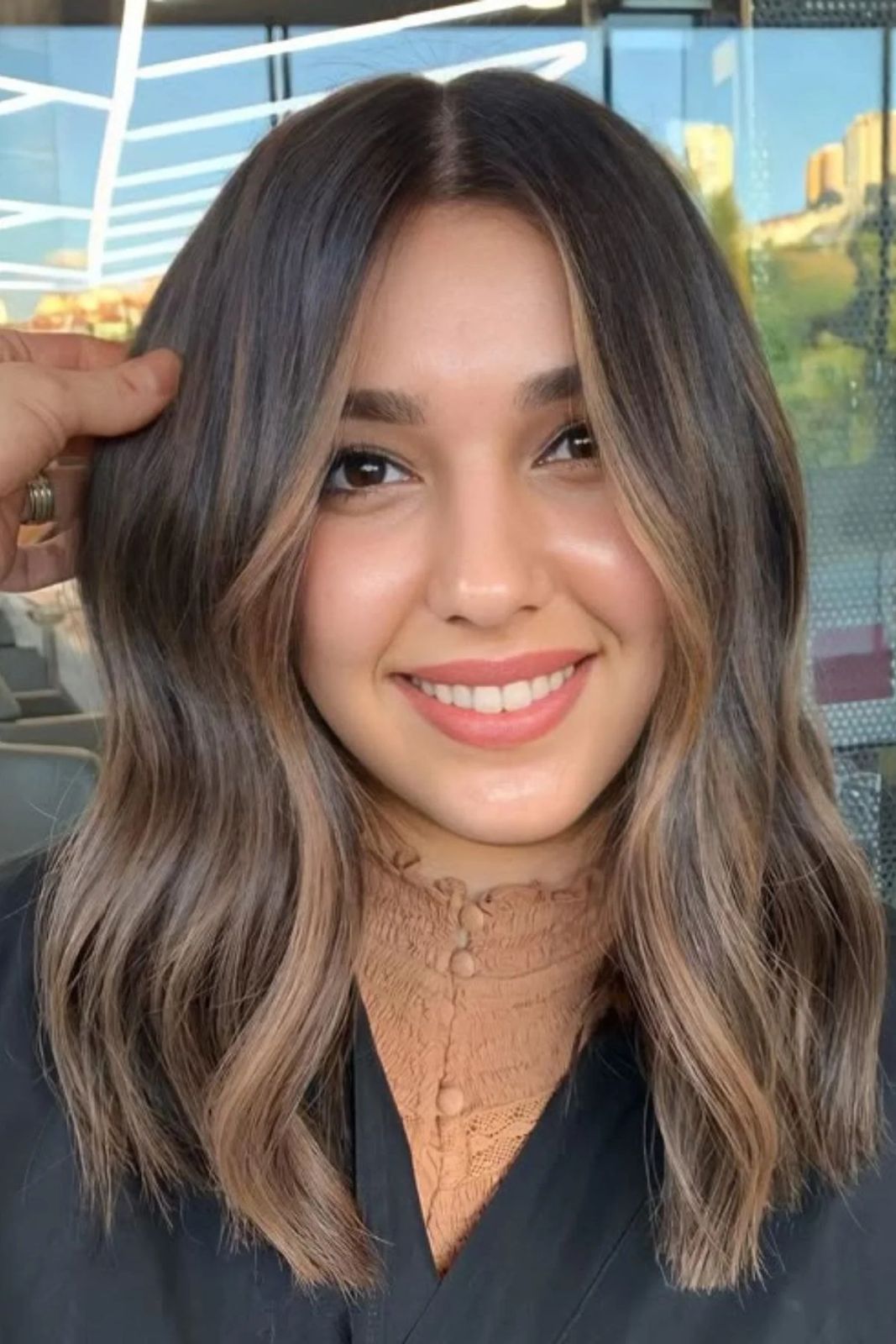
Does a dimensional balayage actually hold up past day three? With a caramel ash balayage on a lob, yes, but not in the way you expect. The ash brown tones sit deeper, the caramel pieces catch light, and the contrast stays visible even when the waves drop. By day four, the dimension reads as intentional shadow, not faded colour. The honest downside: ash tones pull cool, so if your dark brown base has any warmth, the caramel can look separate. A toner refresh at six weeks keeps everything unified. Loose waves, collarbone length, medium density hair that holds a bend. The lob itself needs a trim every six to eight weeks, but the colour grow-out is invisible because the root was never lifted.
Dark Brown Base With Caramel Balayage Caramel Balayage On Collarbone Layers
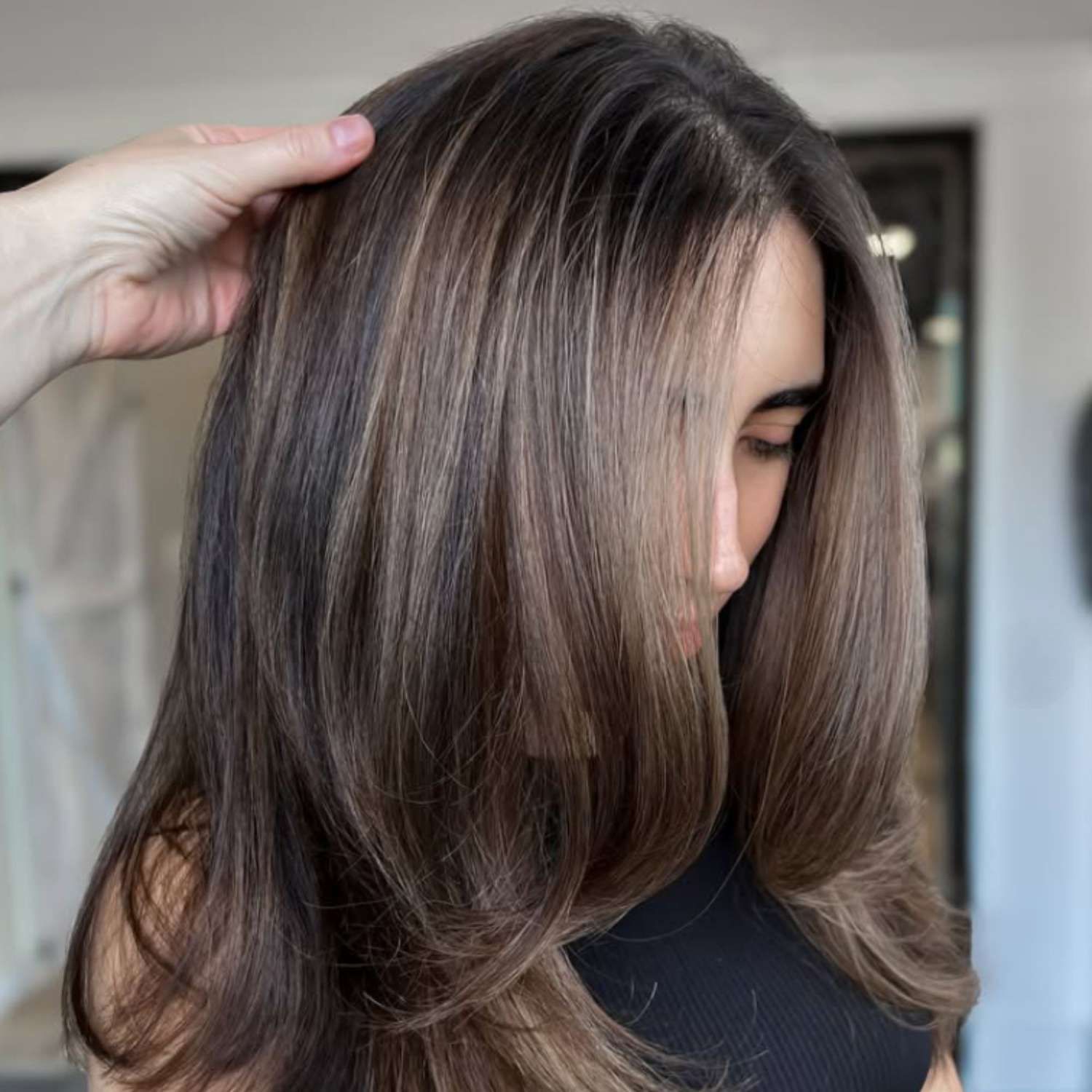
You walk into the salon with a dark brown base and walk out with caramel balayage on collarbone layers that looks like you spent a weekend somewhere sunny. The side part and soft waves keep it natural, not styled. This length works for both a desk job and a dinner out, the layers add movement without requiring a full blowout. Wavy texture, medium density, the caramel tone is warm but not golden, so it suits both warm and neutral skin undertones. The collarbone length flatters round and oval faces because the layers break at the jaw and sweep forward. A trim every six weeks keeps the shape light. This is the one you book when you want a change that nobody will question.
Sun-Kissed Caramel Balayage For Collarbone Length
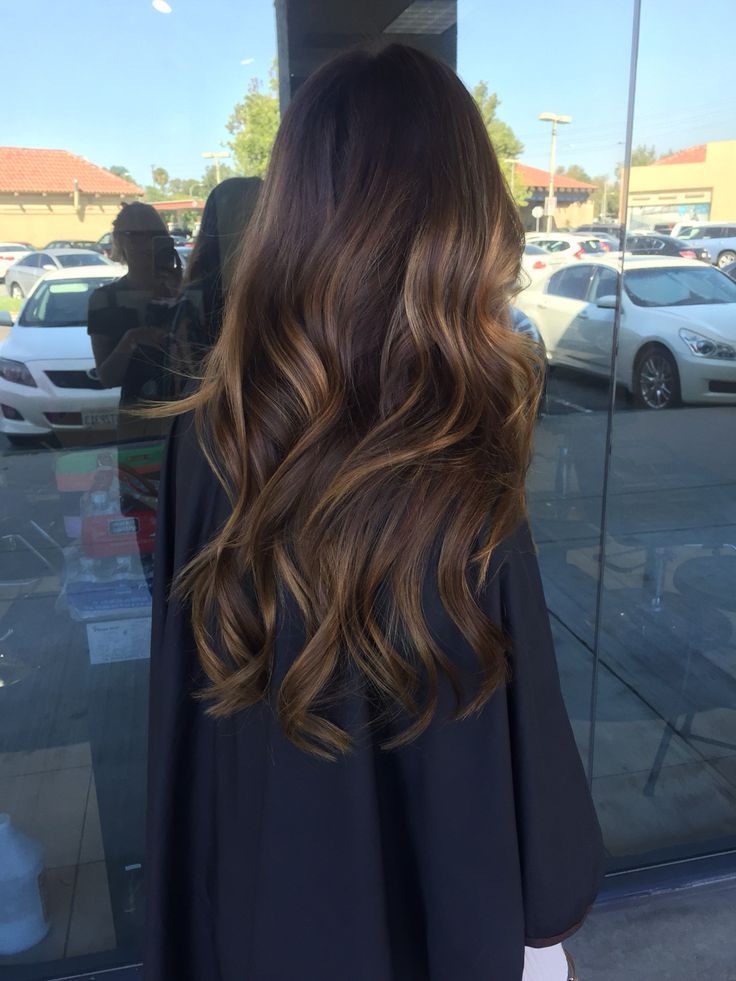
Rich Cinnamon Balayage On A Chin Lob
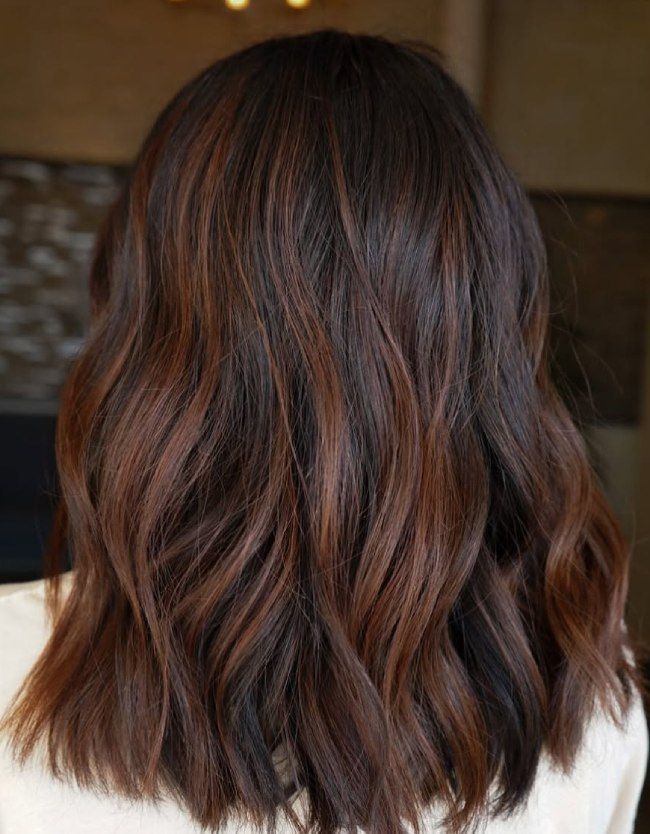
I booked a cinnamon balayage lob once and walked out looking like a fall candle. The mistake was letting the toner sit too long, turning that rich cinnamon tone brassy before I even left the chair. A salon does it right: painted on dark brown hair, lifted warm but not orange, toned to that copper-sweet spot that reads intentional. Doing it at home means you fight the undertones for weeks. The chin length means you see every mistake, every uneven lift. A trim every four to six weeks keeps the lob sharp and the colour fresh. Book the salon, skip the box.
Rich Chocolate Balayage Mid-Back
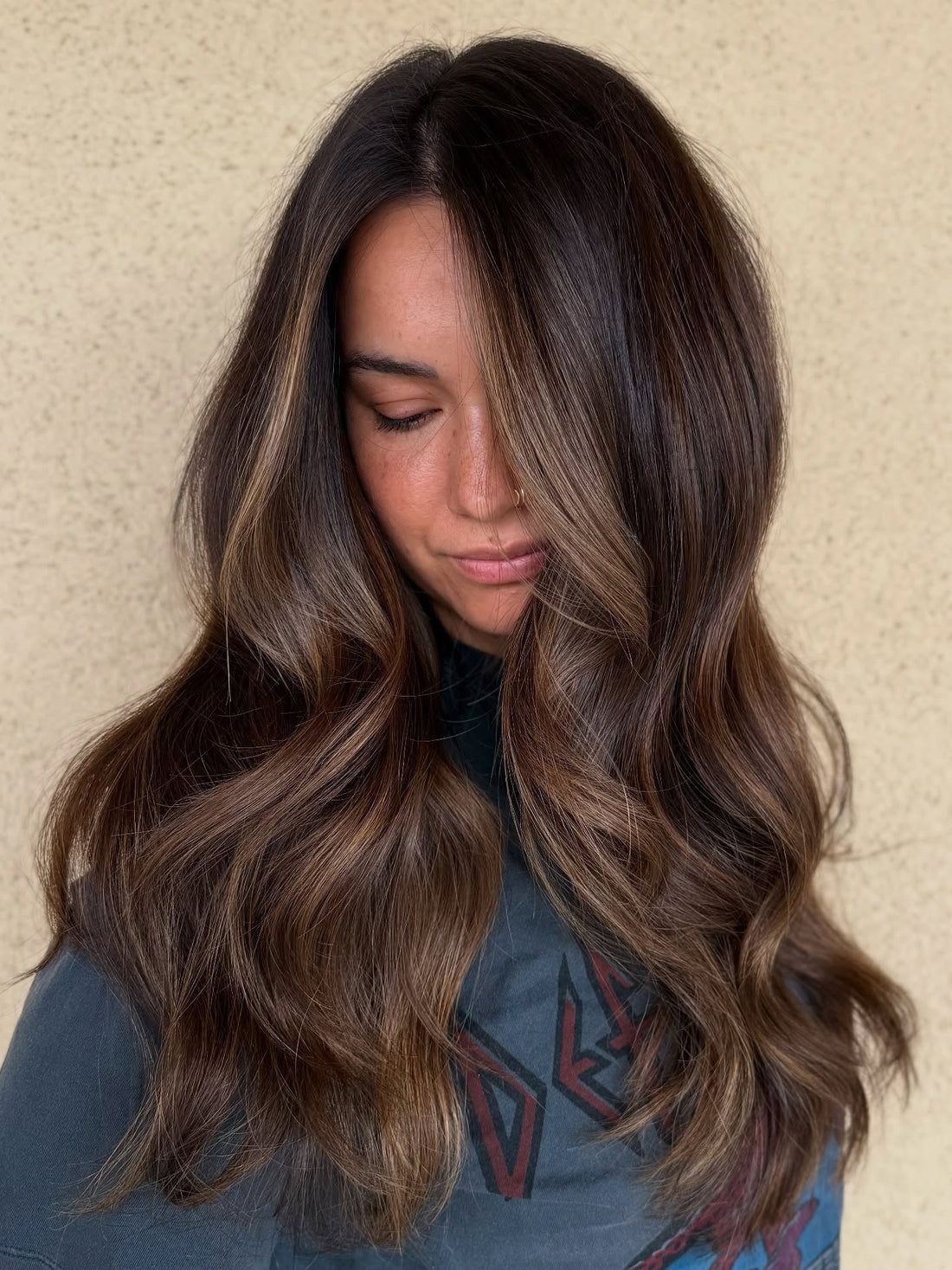
I sat down in the chair and said, make it look expensive. The stylist nodded, pulled sections through foils, and painted a rich chocolate balayage mid-back that moved like liquid. The base stayed dark brown, the balayage technique swept through the mid-lengths, and the tone landed somewhere between cocoa and espresso. No harsh line, just a seamless blend that caught the light when I turned my head.
My hair is thick and wavy, so the loose waves took about twenty minutes with a round brush. The mid-back length kept the weight, the layers gave it shape, and the colour did the rest. I walked out feeling like I had spent more than I did. Trims every eight to ten weeks keep the ends sharp. That is the whole recipe.
Chocolate Brown With Caramel Balayage
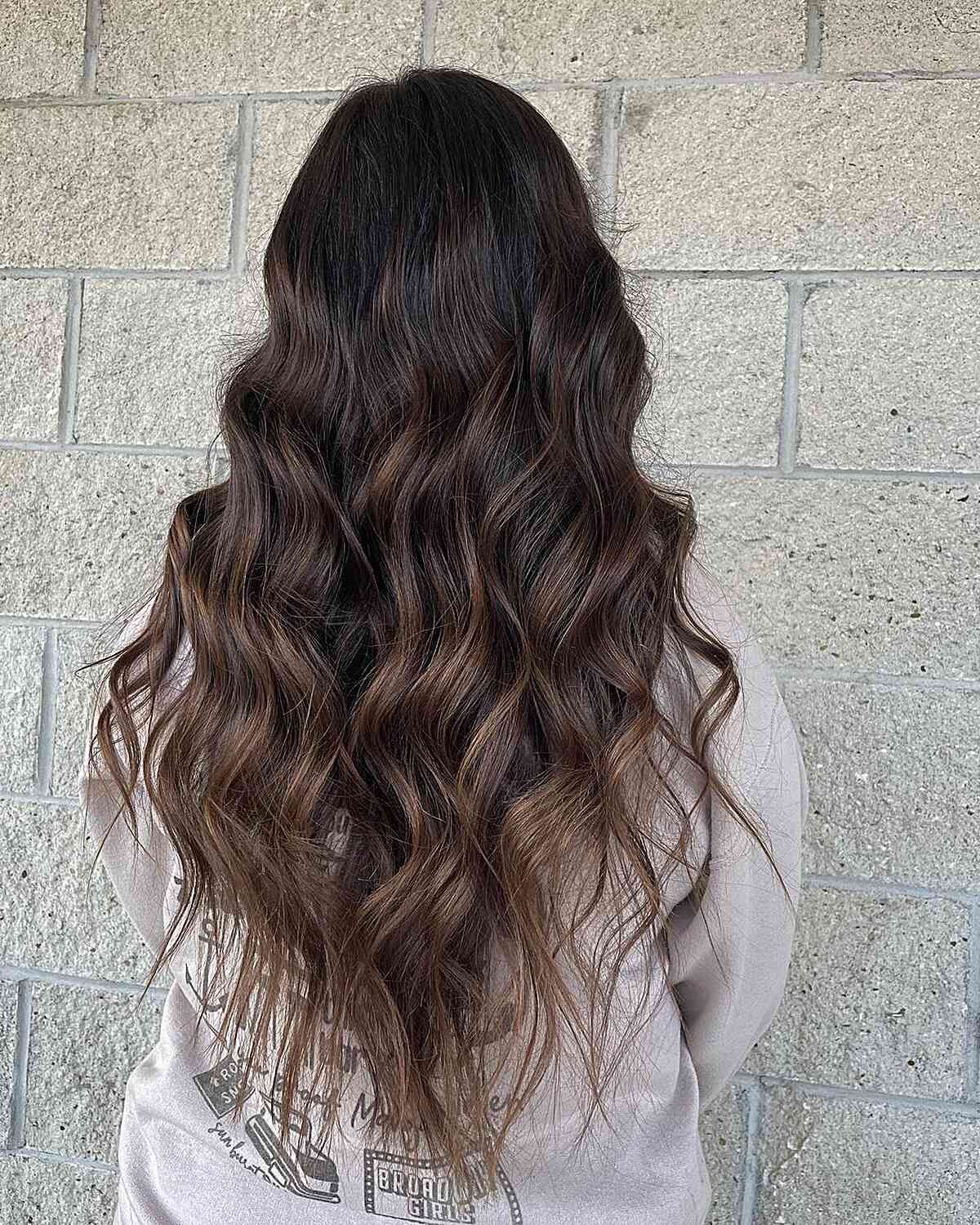
Does chocolate brown caramel balayage actually work on thick hair, or does it just sit on top like a bad highlight? I was skeptical. Then I saw the back view: wavy, thick, and the caramel balayage lands deep enough to move with the texture, not against it. Dark brown base, mid-back length, loose waves, no bangs. The honest downside is that thick hair eats lighter tones. The caramel needs to be placed deeper into the strands, not just on the surface, or it reads chunky. And you will want a purple shampoo to keep the caramel from pulling too warm by week six. It works, but you have to ask for it right.
Dark Chocolate With Rich Caramel Balayage
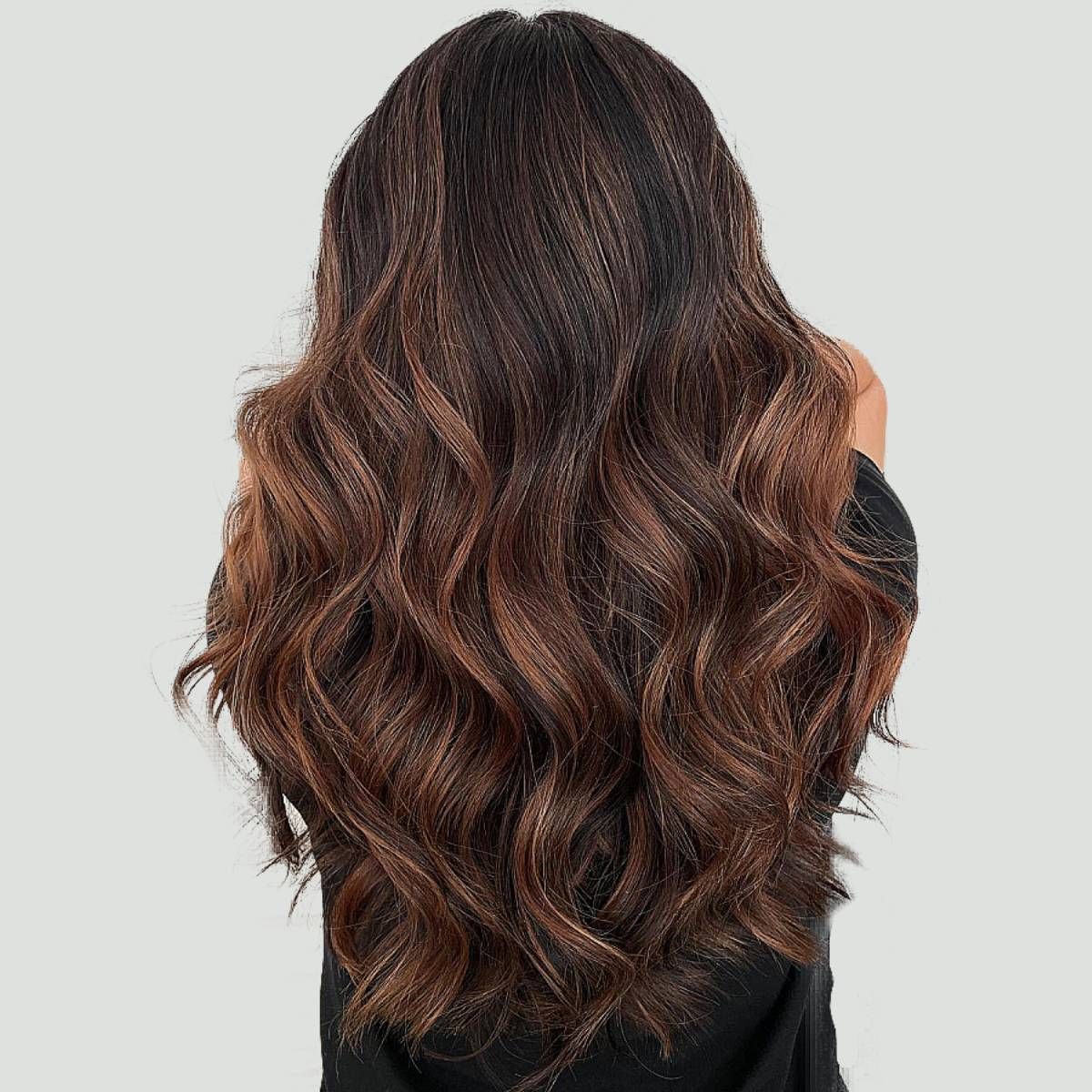
The difference between this and a lighter caramel comes down to shine. Dark chocolate caramel balayage on a dark brown base does not need the lightness to glow, it relies on the depth. The base reads nearly black in low light, and the rich caramel tones hit only where the wave bends, like a reflection. Wavy, thick hair at mid-back length gives the colour somewhere to live. The upkeep is regular: trims every eight to ten weeks, a toning gloss every second appointment to keep the caramel from drifting orange. It is glossier than ash, warmer than blonde, and when the light catches it, the brown and caramel read as one continuous shine. That is the comparison winner.
Subtle Ash Blonde Balayage Mid-Back
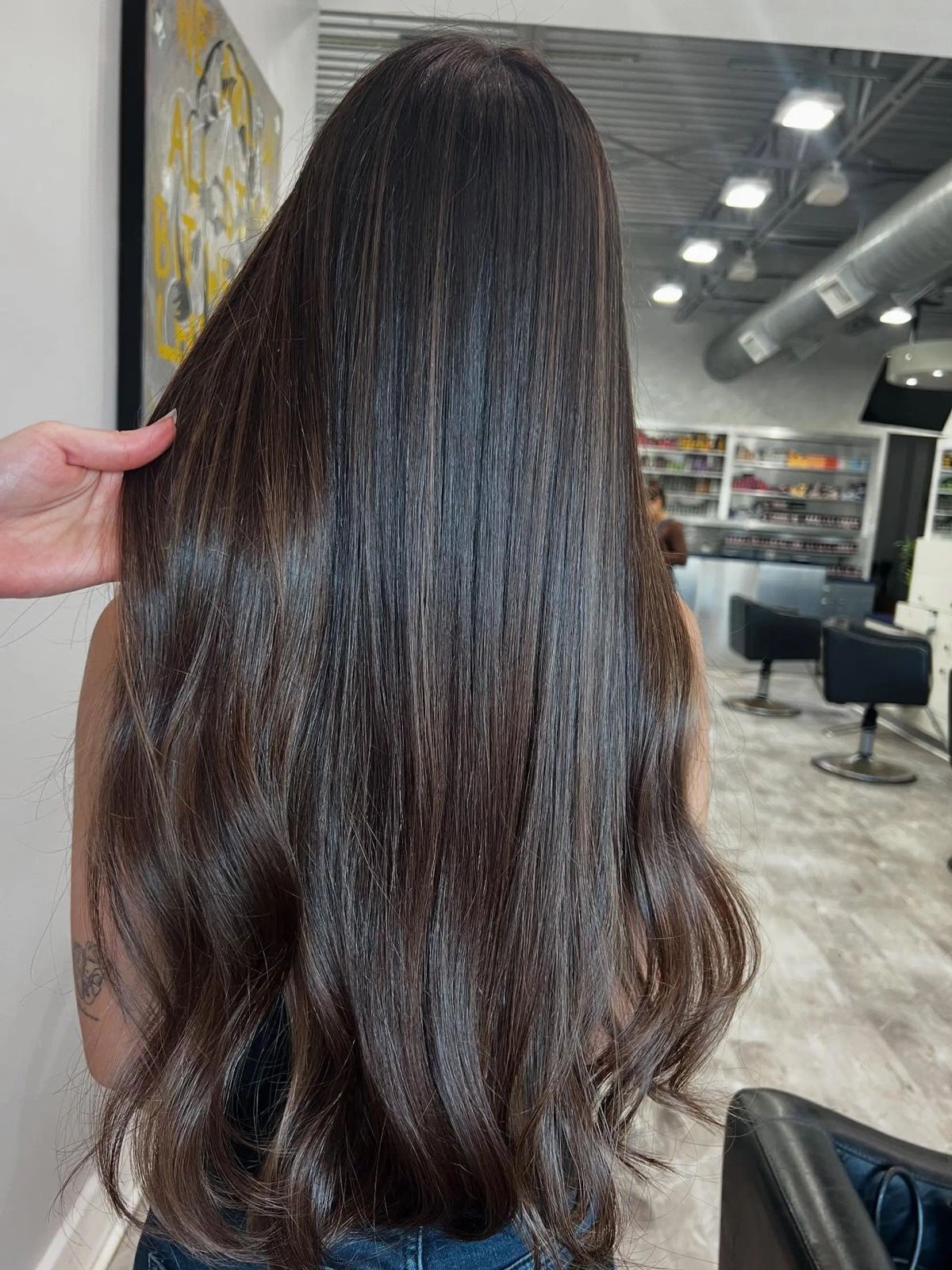
Why does everyone think ash blonde balayage has to shout? This one whispers, and that is exactly the point. The ash blonde balayage sits on a dark brown base that stays rich at the roots, so the grow-out is a non-event for months. The subtle ash blonde is woven in fine ribbons through the mid-back length, catching light only when the loose waves turn. On thick, wavy hair, the dimension reads as shadow and shine rather than stripes. A middle part frames the face softly, and the long layers keep the weight moving. This is the colour you ask for when you want a hint of lightness without the high contrast. It is sophisticated, yes, but it is also realistic: I did not have to book a toner emergency by week three.
Ash Brown Balayage On Mid-Back Waves
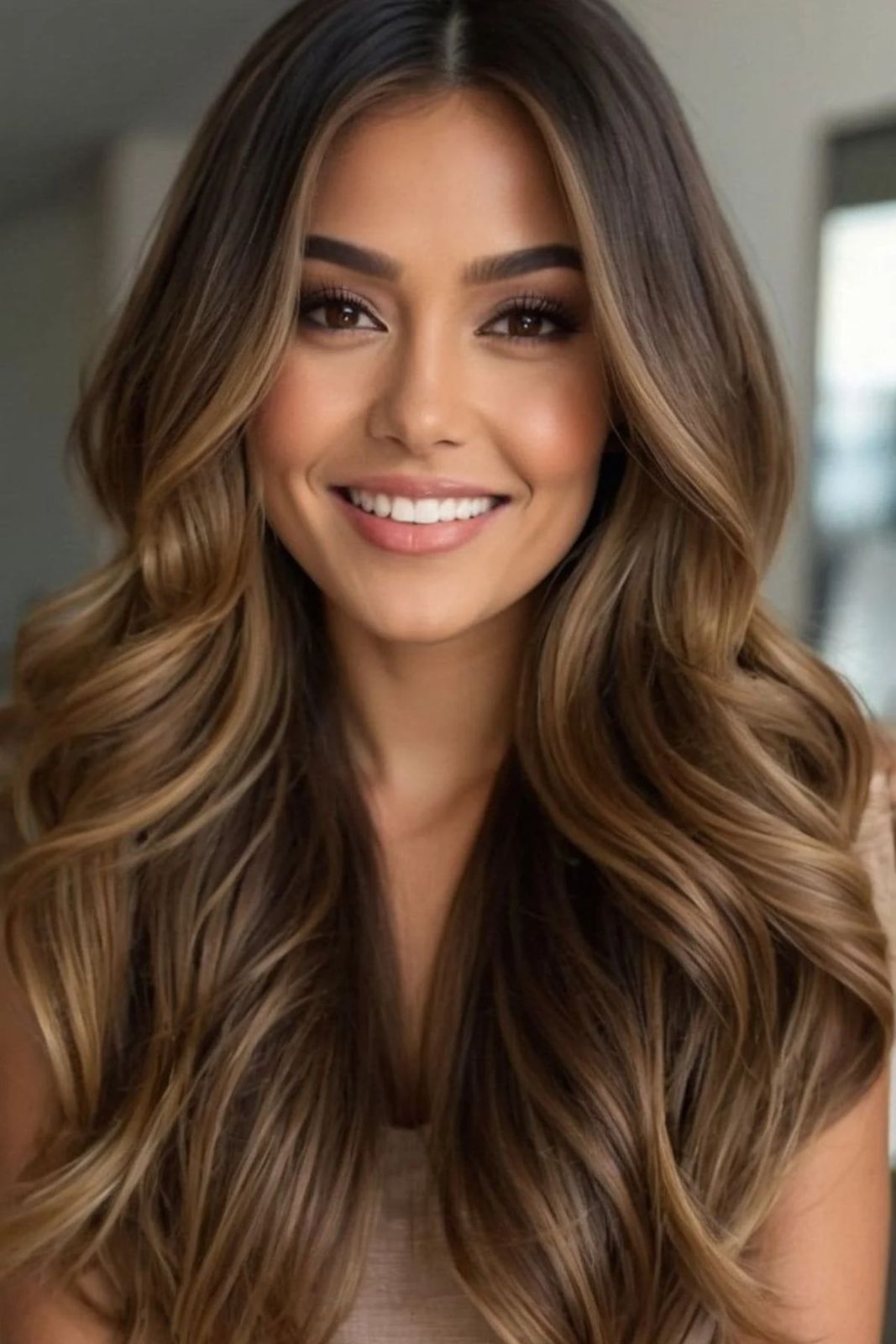
Ash brown balayage is the quiet sibling of the blonde family, and on a dark brown base it finally gets its moment. The technique here is a hand-painted sweep that starts below the ears, so the roots stay deep and the mid-back waves carry all the colour. The tone is cool without tipping into grey, which means it flatters warm skin without fighting it. On thick, wavy hair, the ash brown balayage adds texture by making each wave catch the light separately. A middle part and long layers keep the shape soft, and the loose waves take about twenty minutes with a wand. This is a salon job, no question: getting that cool, non-brassy tone at home is a gamble I would not take. The payoff is a dimensional look that reads natural, not painted.
Dark Brown Base With Ash Blonde Balayage Ash Blonde Balayage With Curtain Bangs
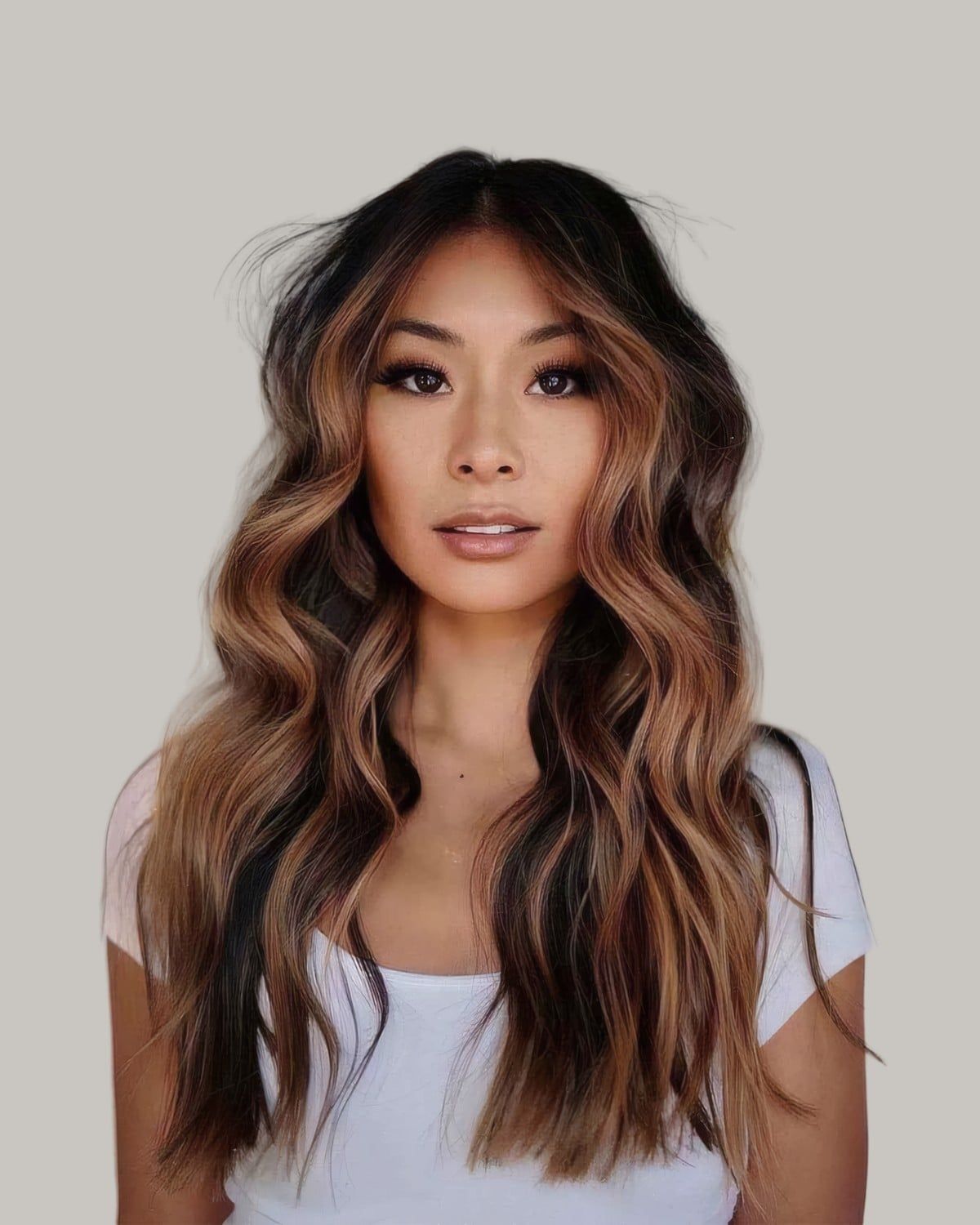
Curtain bangs and ash blonde balayage together feel like a spring uniform, the kind of fresh that does not need a season to justify it. The dark brown base stays grounded, while the ash blonde balayage lifts the mid-back length into something airy. The curtain bangs are the real workhorse here: they sweep the face and pull the ash blonde forward, so the colour frames your features instead of hiding behind them. On thick, wavy hair, the long layers give the bangs something to blend into, and the loose waves keep the whole thing from feeling heavy. This is a salon-only situation, because matching the bangs to the balayage takes a steady hand and a good eye. I have tried the DIY route; let us just say the toner did not survive.
Ash Blonde Balayage With Face-Framing Layers
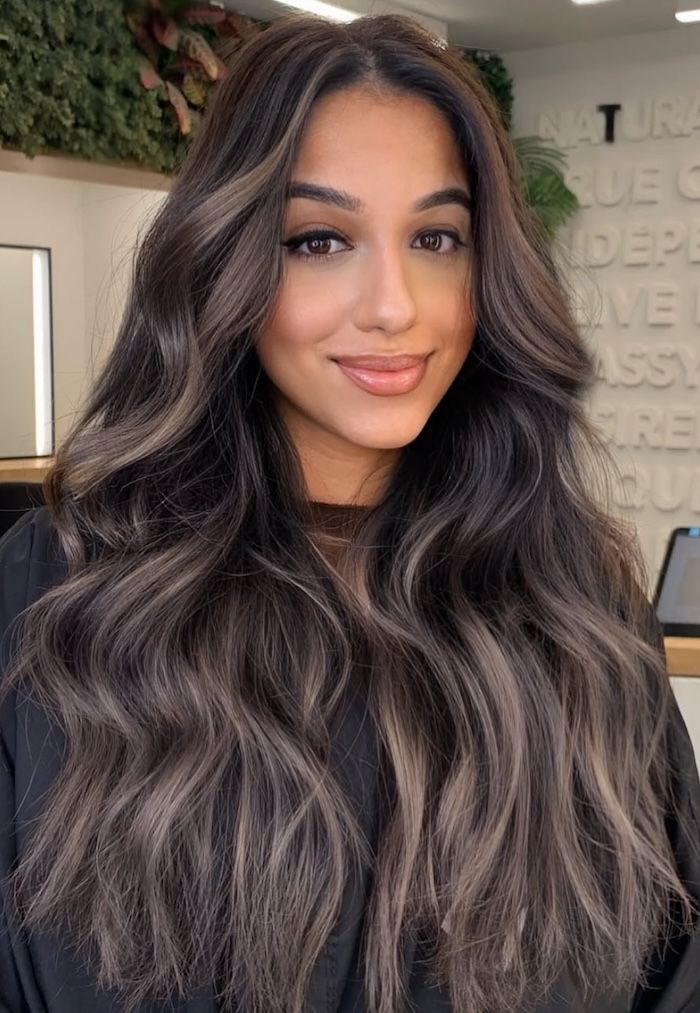
Face-framing layers and ash blonde balayage are a match made in low-maintenance heaven, especially when the base is dark brown. The ash blonde balayage starts around the cheekbones, so the lightest pieces land right where they catch the eye, and the mid-back length keeps the rest of the colour subtle. On wavy, thick hair, the layers give the waves room to move, and the middle part lets the face-framing pieces do their job. This is a dimensional ash blonde that reads cool and soft, not brassy or flat. The grow-out is forgiving because the dark base does the heavy lifting, and trims every eight to ten weeks keep the layers honest. I would not attempt this at home; the risk of patchy, uneven colour is too real.
Dimensional Ash Blonde Balayage
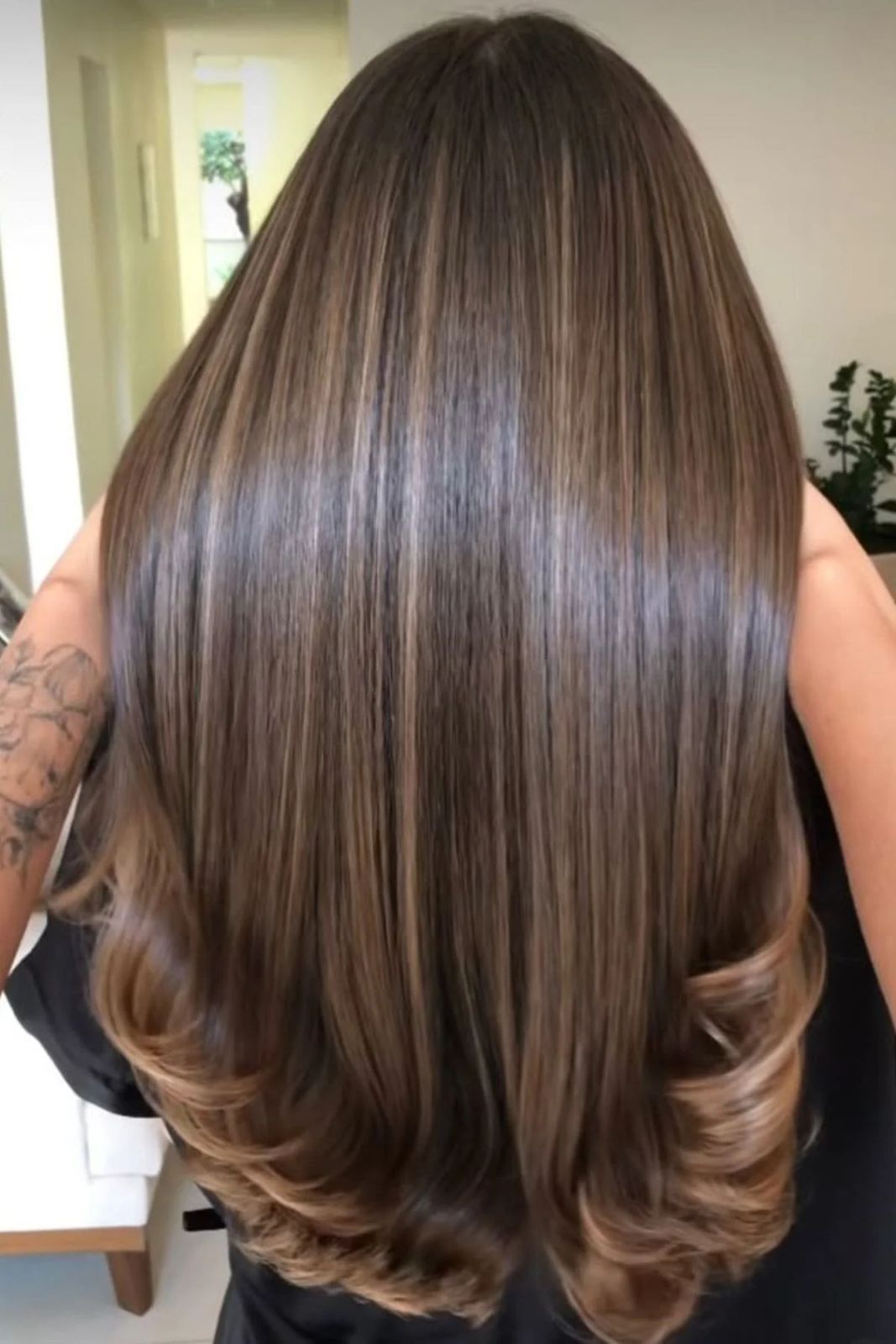
Can you really get a dimensional ash blonde balayage at home without it turning into a muddy mess? The honest answer is: risky. The ash blonde balayage on a dark brown base requires precision, because the lightener has to be placed just so to avoid banding. The tone is the tricky part: ash blonde balayage needs a toner to keep it from pulling warm, and getting that wrong at home means a brassy, uneven result. The technique is not impossible, but it is a gamble. If you have the patience and a good mirror, you might get close. But the risk of ending up with orange patches is high. I would book the salon, because the subtle dimension you want is not something a box can promise.
Glossy Ash Brown Balayage
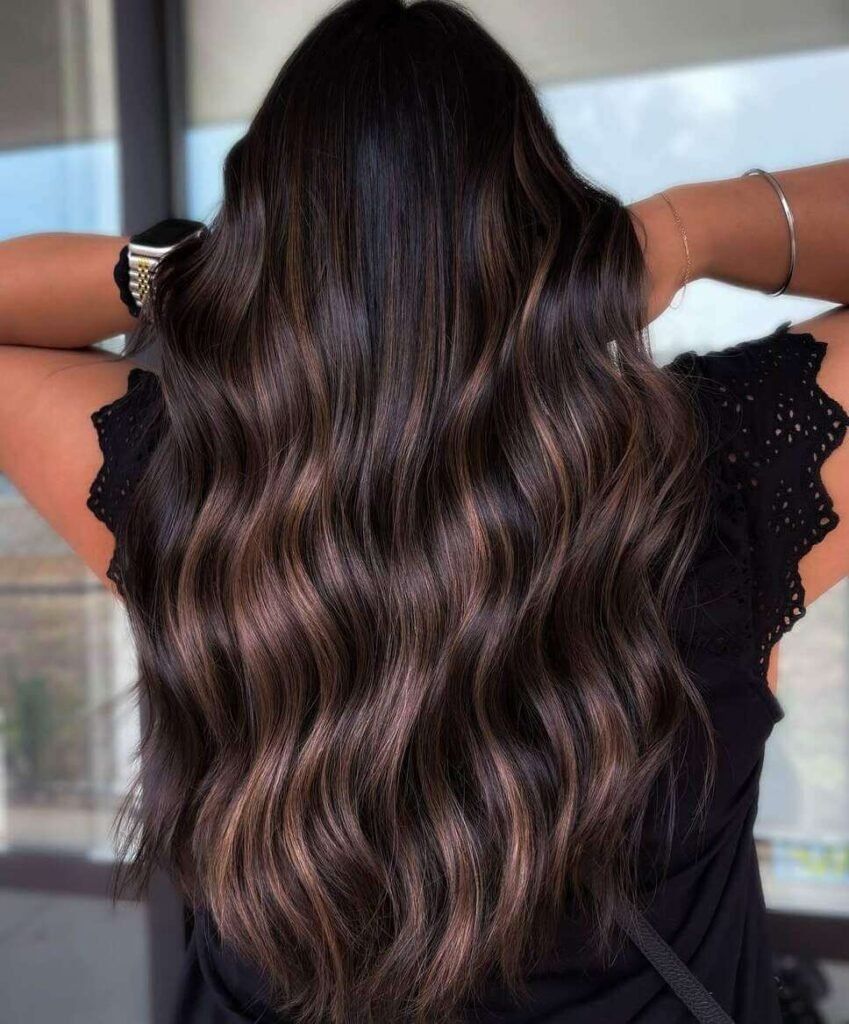
I spent a full year chasing a glossy ash brown that didn’t pull green. This one doesn’t. The dark brown base stays deep, the ash brown balayage sweeps through long layers from mid-shaft to ends, and the tone lands cool without veering ashy-grey. Mid-back length, thick wavy texture, no bangs. The gloss is the trick: it seals the cuticle so light bounces off the surface instead of sinking into the hair shaft. My waves held that polished finish past 4 pm, which my fine hair never does. Took about 20 minutes with a curling wand and a cool shot.
Maintenance is real but manageable. A purple shampoo once a week keeps the ash from warming up. Trims every eight to ten weeks because split ends show faster on a glossy surface. The grow-out is forgiving: the balayage technique leaves a soft line, not a stripe. I book the gloss every third wash, at home, with a clear gloss treatment. Works.
Ash Brown Balayage With Side Part
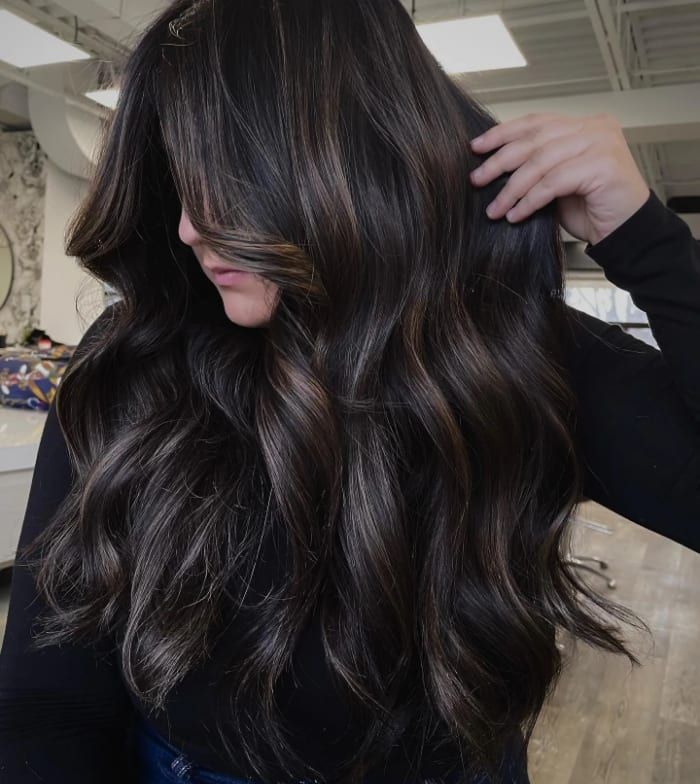
Best verdict I can give an ash brown side part: it makes a mid-back length look intentional, not accidental. The dark brown base anchors the roots, the ash brown balayage runs through thick wavy layers, and the side part changes everything. Swap the part and the colour shifts: deeper on the heavy side, lighter where the waves fall. A multi-dimensional colour that moves with you, not against you. Tell your stylist: keep the balayage dense around the face-framing sections, feather it out toward the back. No bangs. Twenty minutes of loose waves with a one-inch iron. That is it.
Subtle Ash Highlights Blowout
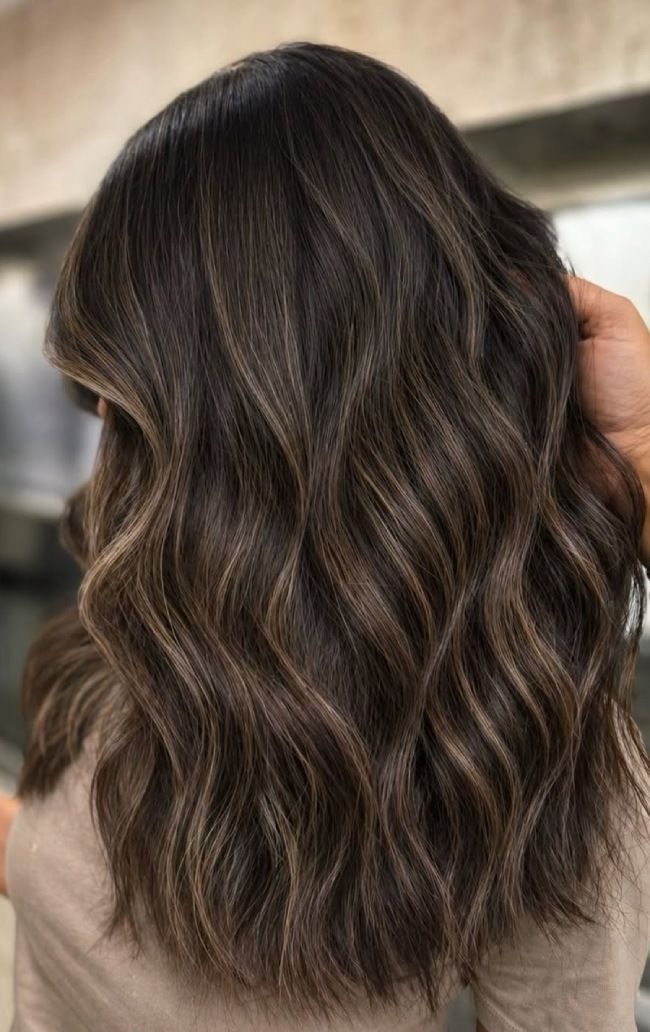
Subtle ash highlights on a dark brown base are not for everyone. They work best on medium-density hair that takes a blowout without fighting it. Straight to wavy texture, mid-back length, middle part, no bangs. The ash-toned balayage sits fine and spaced, so the dimension reads as texture, not stripes. On low-density hair, the gaps between highlights can look sparse. On coarse, thick hair, the ash can sit too heavy and read as a solid stripe. But on that middle ground, the blowout is a 20-minute polished wave that holds shape until dinner. The base stays dark, the highlights stay cool, and the grow-out is a soft fade, not a line.
I recommend this for anyone whose hair goes flat by noon. The subtle ash highlights add visual density without weight. A root shadow at the bowl keeps the grow-out calm for six weeks. Trims every eight to ten weeks for the layers. That is the whole deal.
Visual Idea
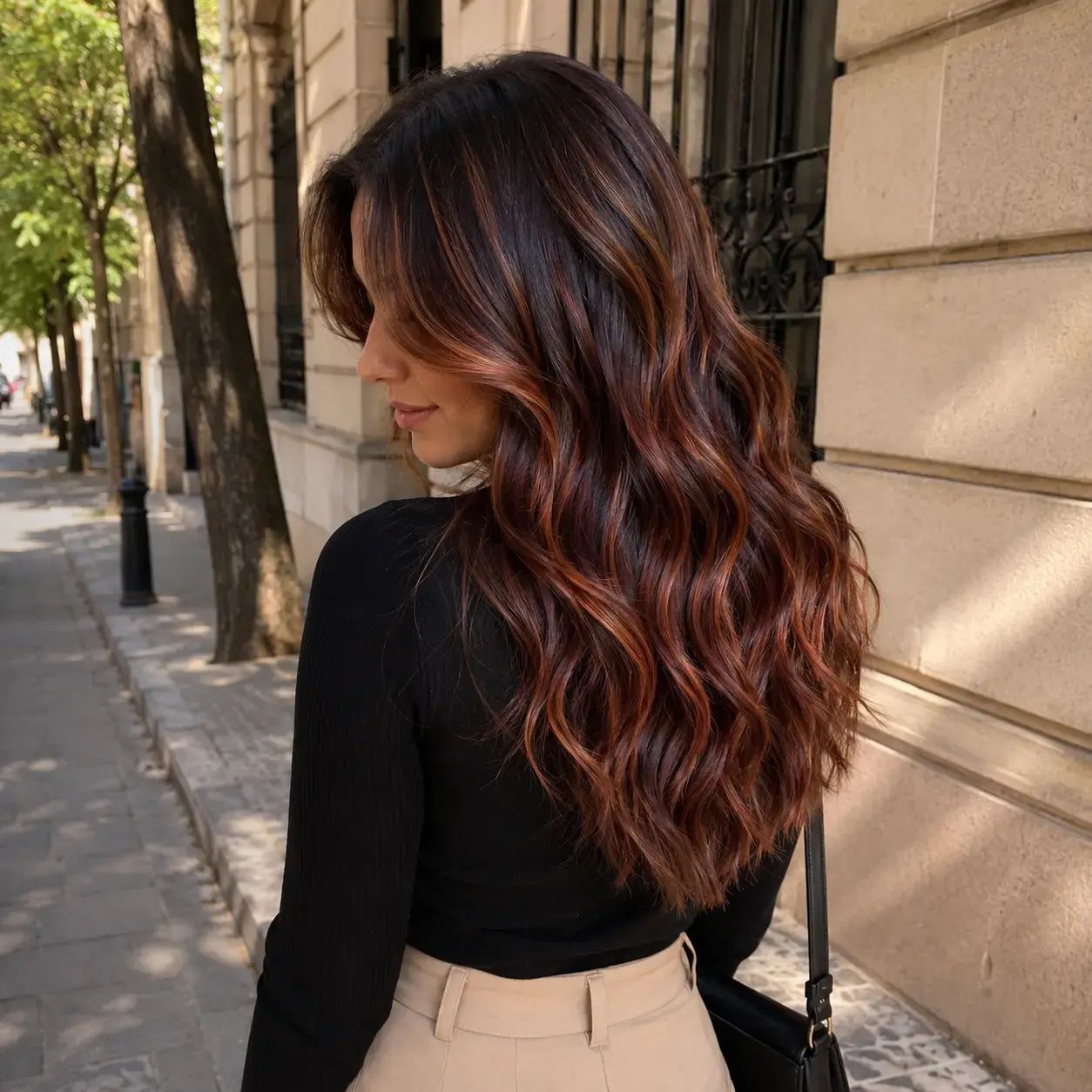
Late September light, a side part, curtain bangs brushing the cheekbone. That is where this warm caramel balayage lives. Dark brown base, mid-back length, wavy medium-density texture, loose waves. The caramel hits the mid-shaft and ends, leaving the root untouched, so the grow-out is a slow fade. Curtain bangs catch the light differently than the rest, which is the point. Side view shows the depth: warm without being orange, dimensional without being busy. Takes about 20 minutes with a round brush and a cool shot. Trims every eight to ten weeks for the bangs alone. A transition colour that works into autumn without looking like a summer holdover.
Mid-Back Visual Idea
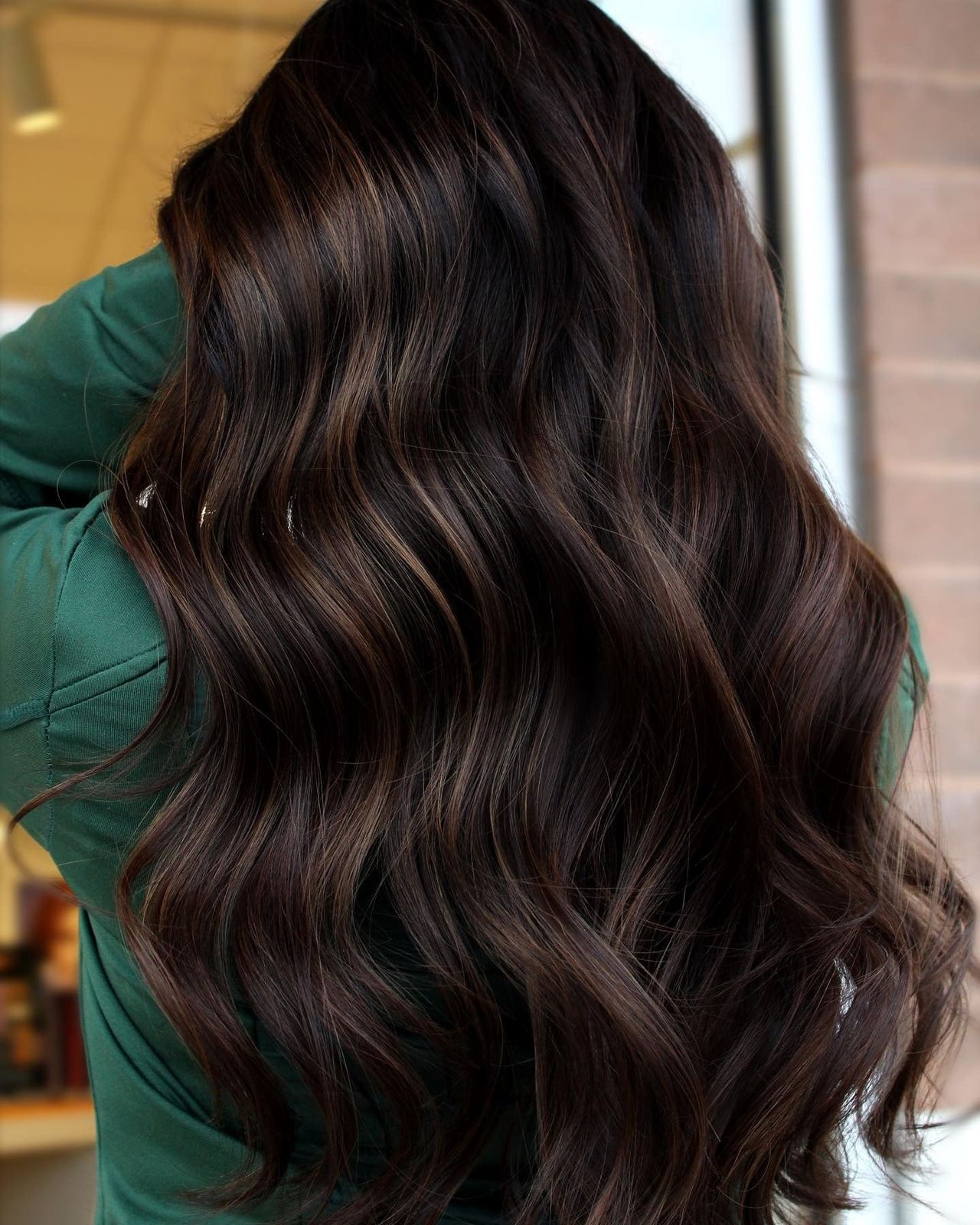
Can subtle caramel balayage actually show on dark brown hair? Yes, but it takes a specific hand. The dark brown base here is the anchor. The subtle caramel balayage runs through long layers from the mid-back length down, thick wavy texture, middle part, no bangs. The colour is not loud. It is a soft lift at the ends, enough to catch overhead light but not enough to read as a highlight from across the room. That is the honest downside: if you want visible dimension from the front, this is not it. The payoff is the grow-out. No line, no root panic, no toning appointment at week four.
The upkeep is a trim every eight to ten weeks and a purple shampoo every other wash to keep the caramel from warming into brass. Loose waves with a one-inch iron, 20 minutes. The doubt is fair. But if you want a balayage that disappears into your natural colour, this is the one.
Dark Brown Base With Warm Brown Balayage Visual Idea
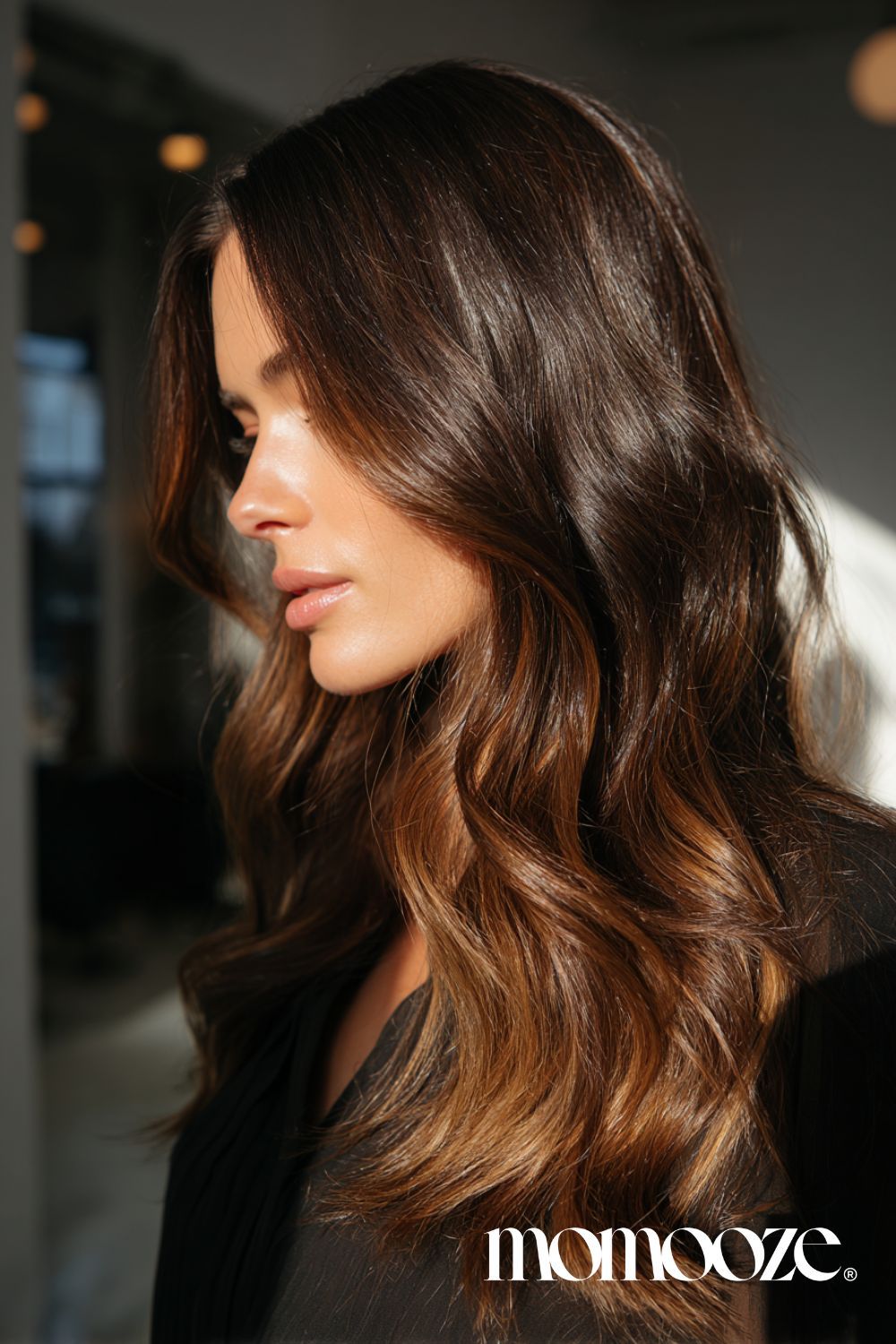
The warmth stays close to the root, then softens through the mid-lengths. That is the trick: the stylist paints the warm brown balayage in a narrow band around the face and lets it fade into the dark brown base by the time it hits the ends. Long layers keep the colour from sitting in one flat block. Thick, wavy texture helps the warmth catch light at different angles, so it never looks like one solid stripe. The side part does the heavy lifting here — it lets the warm pieces fall forward instead of getting swallowed by the rest of the hair.
A wide-tooth comb and a few minutes with a diffuser. That is all the styling this needs. The colour does the rest.
Long Layers Visual Idea
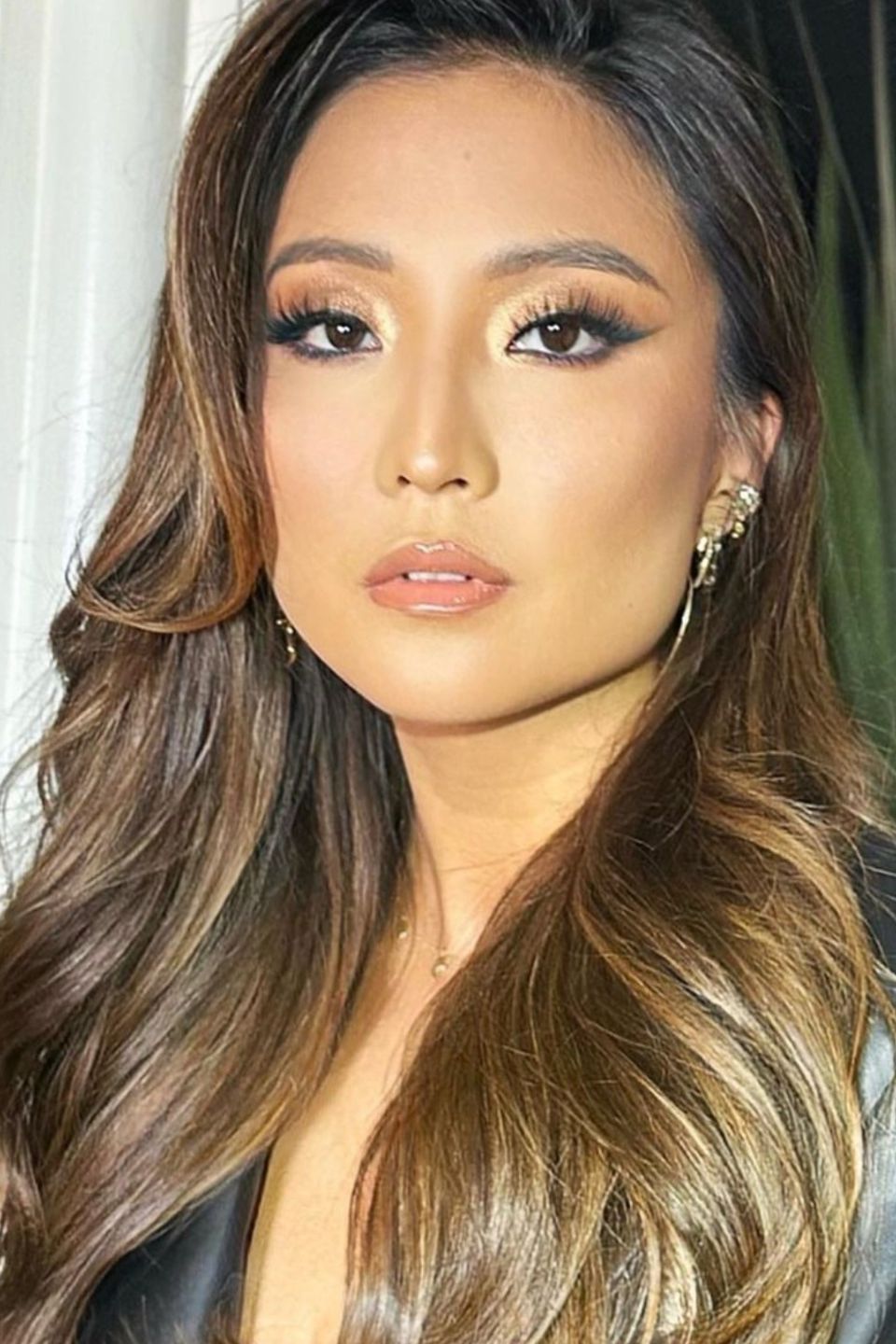
I will say it: I tried a golden brown balayage at home once. It turned orange by week two. This one is salon-only, and here is why. The golden brown balayage sits on a dark brown base, and the transition between the two is what makes it work. Long layers keep the colour from settling in one thick line. The middle part splits the warmth evenly, so both sides get the same soft lift. Thick, wavy texture hides any unevenness, which is generous because home balayage is rarely even.
If you attempt this yourself, use a bowl and a brush, not a cap. Paint in thin sections. And accept that the back of your head will be a surprise. Mine was.
Layers Visual Idea
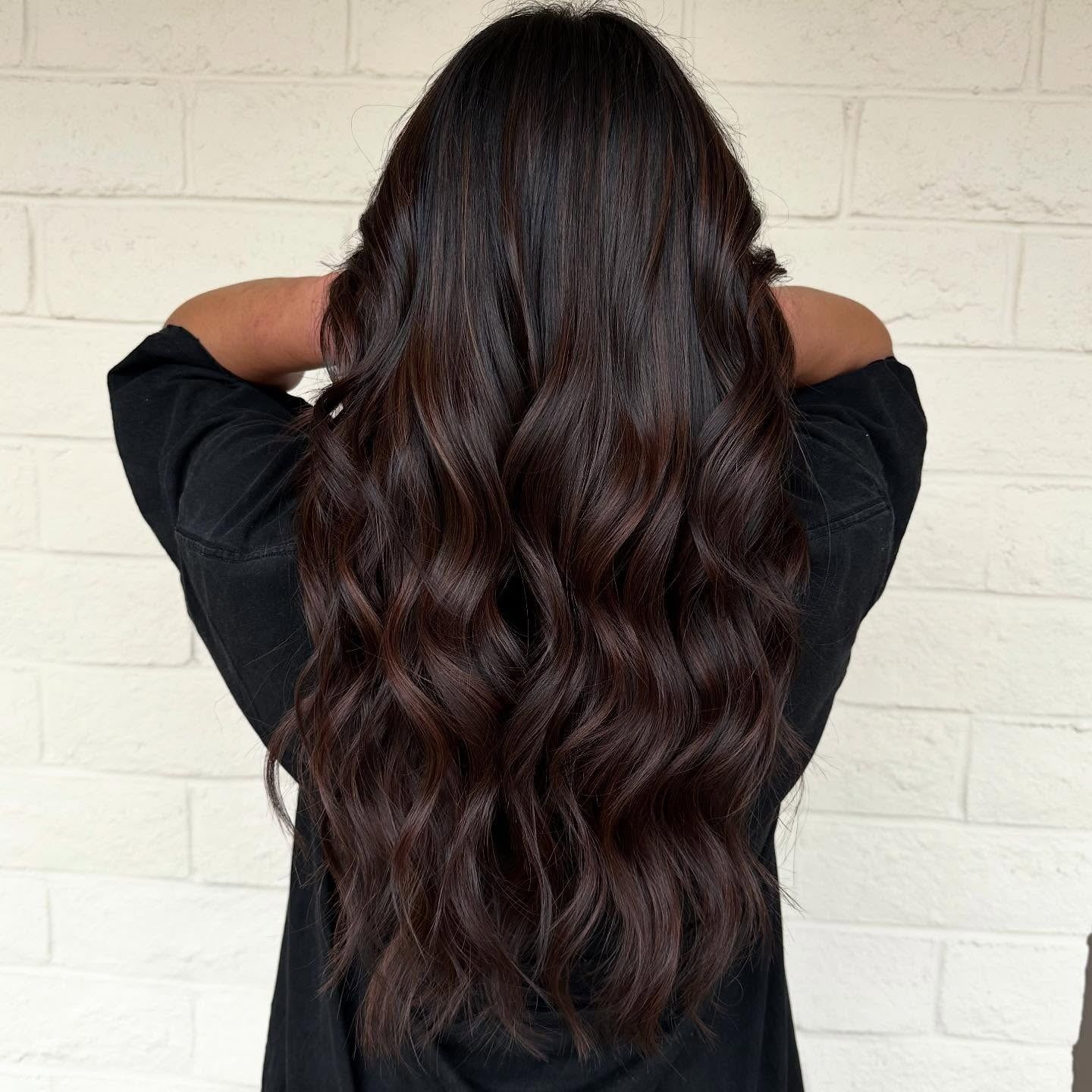
I sat down in the chair and said, “I want it darker. Richer. Less obvious.” The stylist nodded and pulled out a tube the colour of wet bark. That is the dark brown base. Then she painted in subtle lighter tones, thin ribbons, not chunks. The caramel balayage came through only when the light hit. The rest of the time, it just looked expensive. Layers helped — they let the lighter pieces sit on top of the darker ones without blending into one muddy mess. Thick, wavy texture kept the colour from settling flat.
I walked out feeling like I had gotten away with something. The colour was there, but you had to look for it.
Dark Brown With Subtle Caramel Balayage Visual Idea
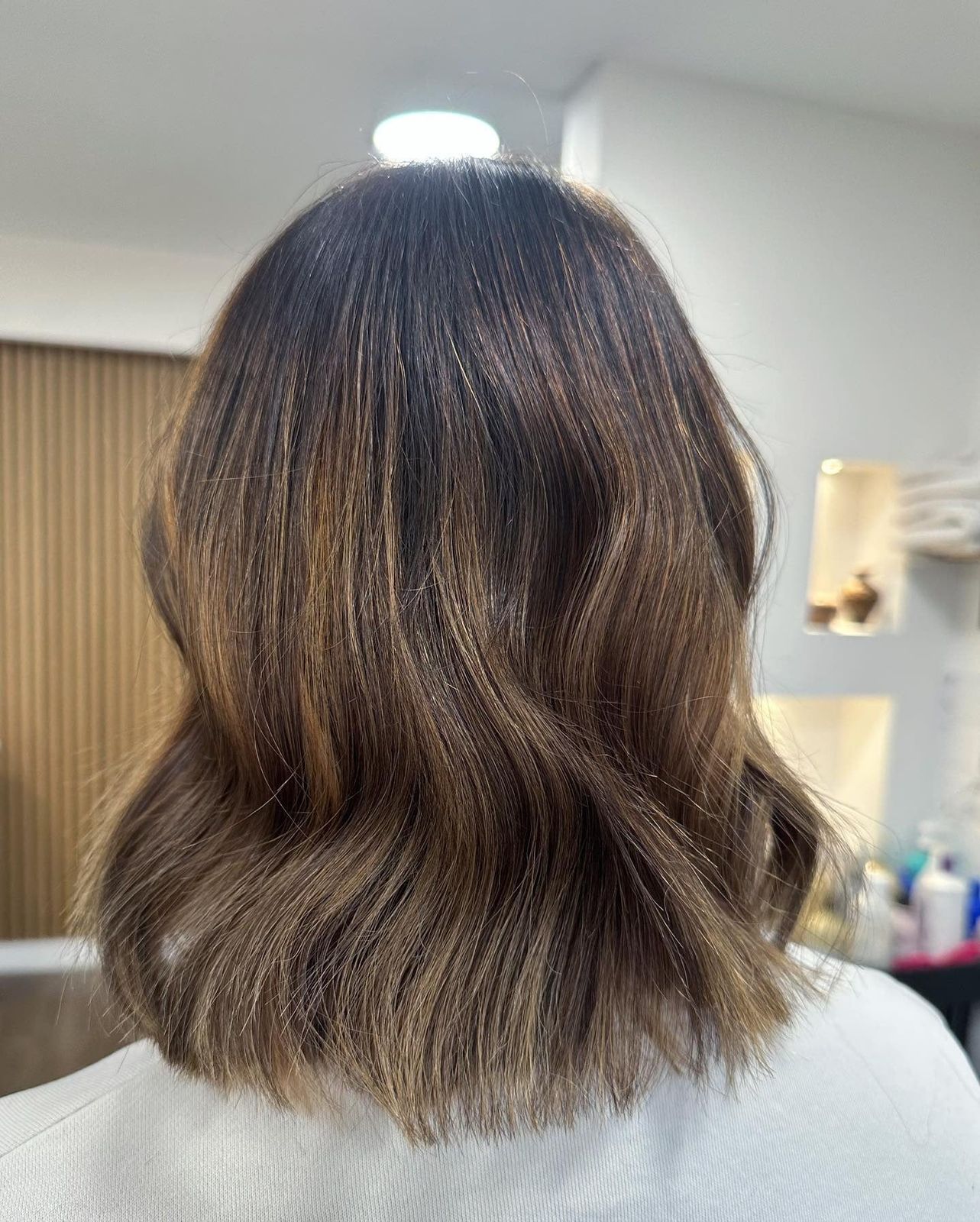
This is the quiet version. The one that does not announce itself. The subtle colour dimension of this balayage sits close to the dark brown base, just a shade or two lighter, so it reads as natural depth rather than a deliberate highlight. Compare that to a high-contrast caramel balayage, which hits you from across the room. This one waits until you are close. Long layers keep the dimension moving through the hair instead of pooling at the ends. Thick, wavy texture catches the lighter pieces at random intervals, so the colour never looks painted on.
Upkeep is minimal. A gloss every eight weeks keeps the warmth from going flat. No root touch-up needed — the base is already dark brown, so the grow-out is invisible until the lighter pieces start to fade.
No Bangs Visual Idea
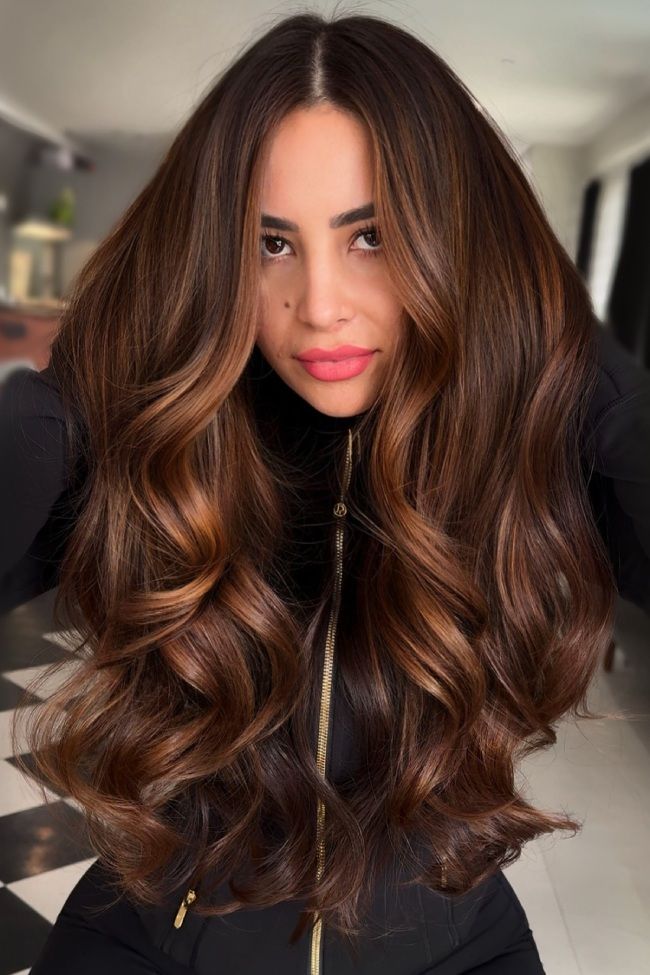
She walked in with a photo of copper hair and cool undertones. The stylist said no. Copper looks alive against warm skin, the kind that tans easily and stays golden. Against cool skin, it pulls orange, and not in a good way. The rich dark brown base with copper-toned balayage works because the copper is a thread, not a blanket — thin pieces woven through the layers, not slapped on the ends. No bangs means the copper frames the face without cutting across it. Thick, wavy texture gives the copper something to catch on. If your skin runs pink or blue, skip the copper and ask for a neutral caramel instead. Same warmth, no regret.
Face-Framing Layers Visual Idea
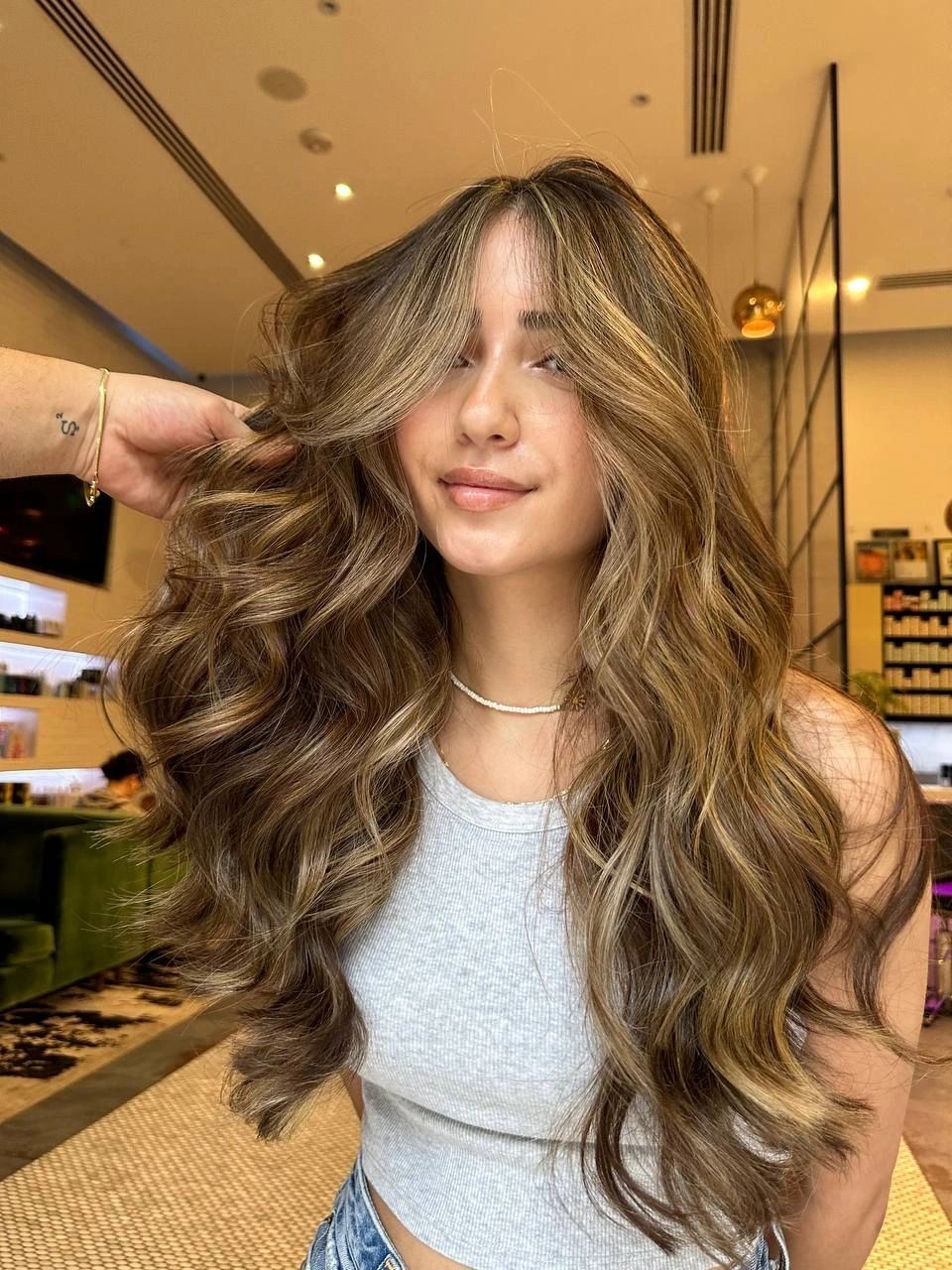
Does anyone actually style face-framing layers every morning? The dark brown base with blonde balayage sits on mid-back length, wavy and thick, and the front view with a slight side angle tells the truth. Those layers catch the light around your jaw, and the balayage technique places the blonde where the wave bends.
Here is the honest part. Face-framing layers and balayage together mean split ends show faster on the lightened pieces, and if your texture is fine like mine, the layers separate by noon. A salon did this, not a bathroom mirror, and the middle part widens a round face. I still book it because the grow-out is gentle, but I also keep a trim rhythm of every eight weeks. The tone stays warm, never brassy, if you use a purple shampoo once a week.
Front View Visual Idea
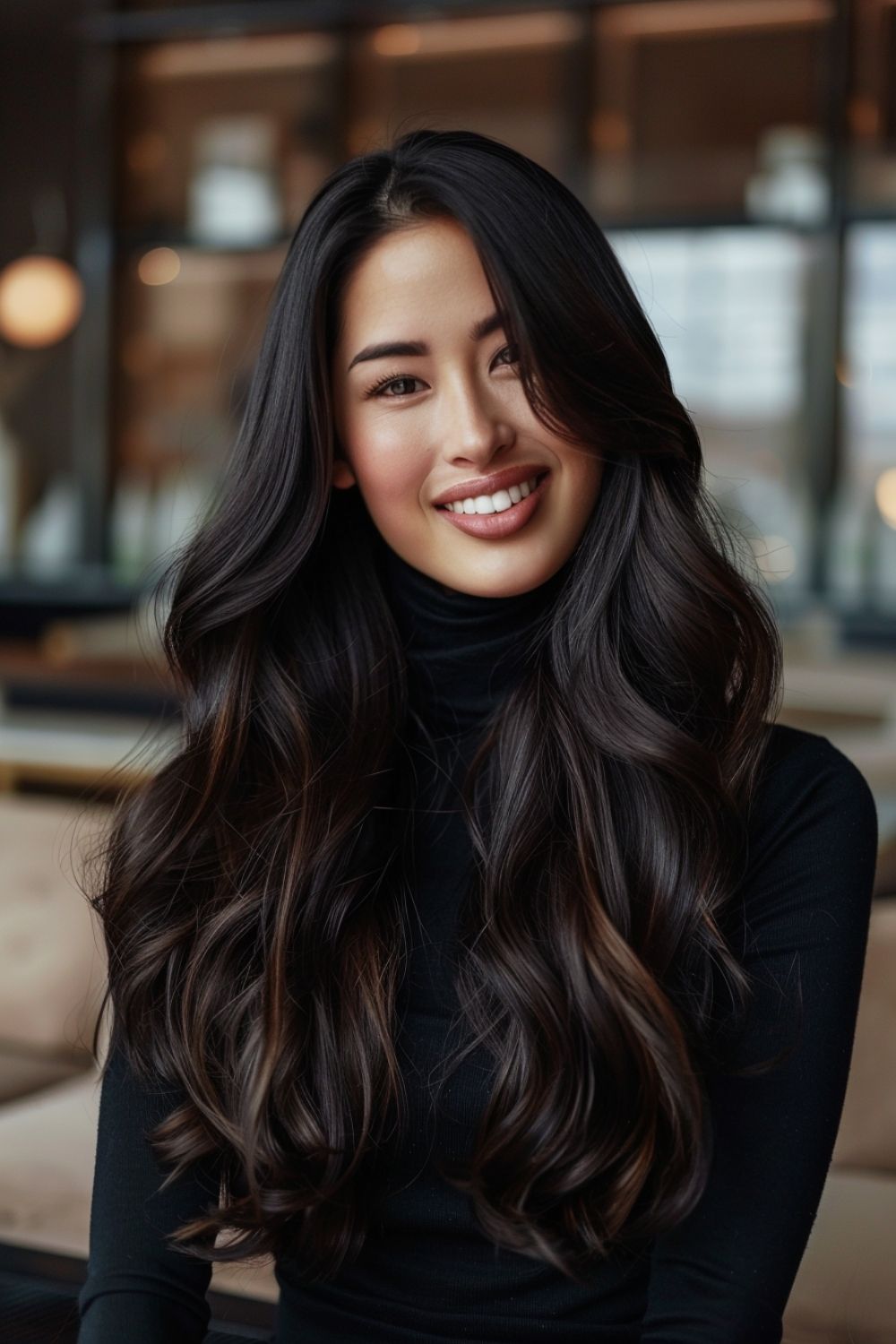
The seamless blend of dark brown and caramel tones from a front view, side part, is what makes a salon balayage worth the chair time. The technique places the caramel balayage higher near the face on thick, wavy mid-back length, then feathers it down so no harsh line appears. The dark brown base stays rich at the roots, and the caramel tone reads warm against the brown, never ashy.
Ask your stylist for this in the consultation: keep the saturation dense at the mid-lengths, not just the ends, and use a teasing method to soften the transition. The layers here are subtle, no bangs, just loose waves that catch the light. It is not a quick tone, it is a deliberate placement.
Curtain Bangs Visual Idea
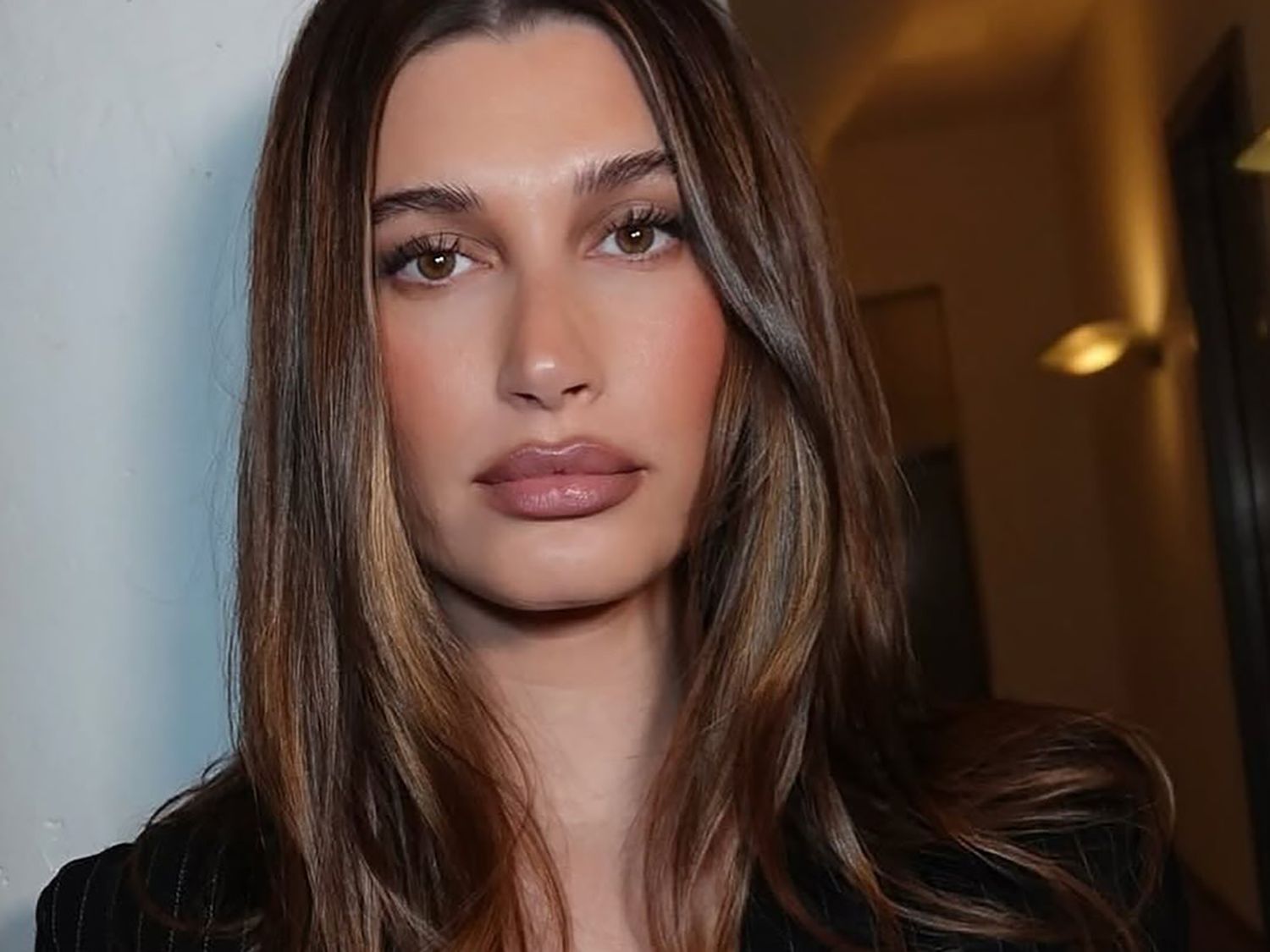
I will admit it: I resisted curtain bangs for two years. Then I saw this medium brown base with lighter brown balayage on mid-back length, wavy and medium-thick, and the middle part with curtain bangs changed my mind. The balayage technique sweeps the lighter brown tone right where the bangs frame the cheekbones, so the colour and the cut work together.
This lands in early autumn, when the light is softer and a warm brown tone does not compete with summer sun. The loose waves hold the curtain bangs open, not stuck to the forehead, and the grow-out from a medium brown base is forgiving. A salon cut this, and the bangs need a trim every six weeks, but the colour fades gracefully. Spring would also work if the tone leans slightly ashier.
Side Visual Idea
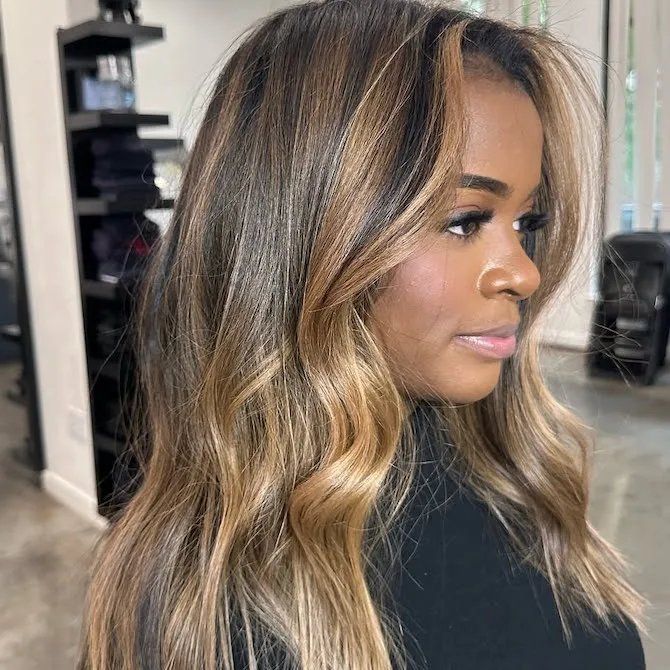
My gut says do not try subtle honey balayage at home. The dark brown base with honey balayage on thick, wavy mid-back length, side part, loose curls, looks achievable until you place the first section. The honey tone lifts the dark brown without going brassy, but the saturation has to be uneven on purpose: heavier on the mid-lengths, lighter near the roots. A DIY kit will give you stripes, not this seamless blend. The technique requires a stylist who paints freehand, not a foil, and the honey tone needs a warm toner to keep it from pulling orange. Book the salon, skip the bathroom mirror.
Back View Visual Idea
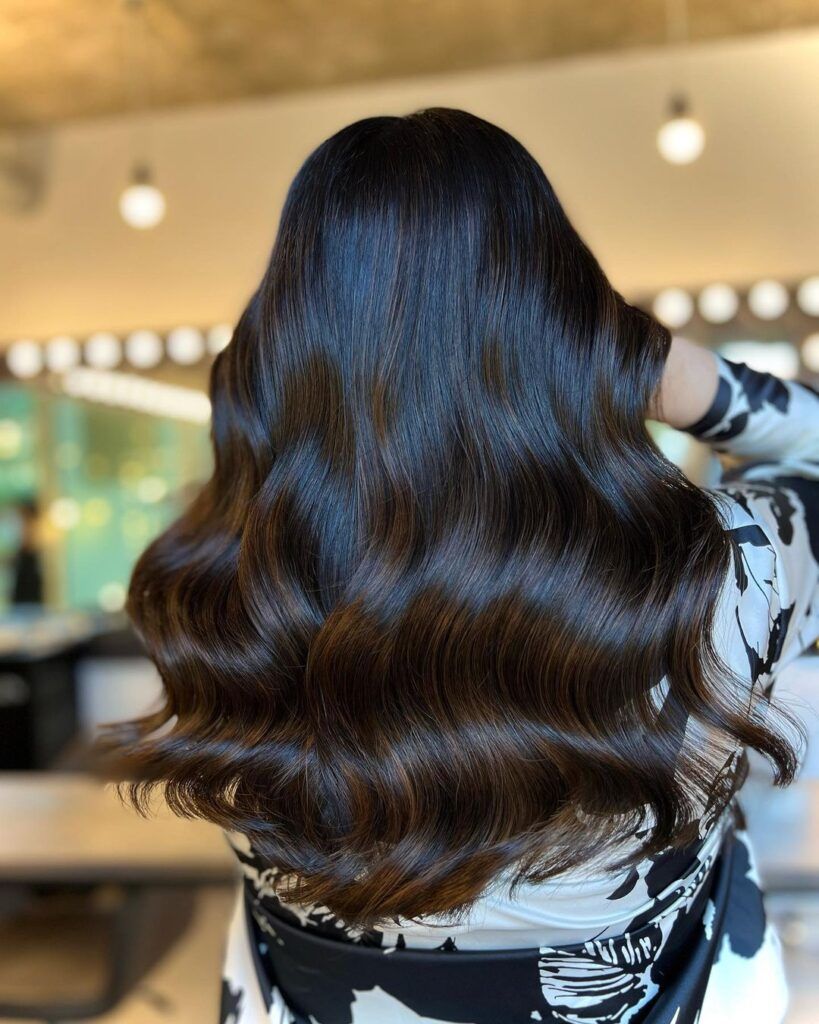
The back view of a dimensional balayage tells you everything the front hides. My dark brown base with subtle balayage on mid-back length, wavy and thick, middle part, loose waves, looked flat from the front until the stylist turned me around. The technique places the lighter tone in a V-shape through the interior layers, so the colour moves when the hair does. The tone here is neutral, not warm, not ashy, just a soft lift from the dark brown base.
For upkeep, I learned that dimensional balayage needs a gloss every ten weeks, not a full retouch. The grow-out line stays blurred because the stylist painted only the mid-lengths and ends, leaving the roots untouched. A purple shampoo keeps the neutral tone from warming up, and a trim every eight weeks stops the ends from tangling. I have been doing this for three years, and the back view still surprises me.
Front View Medium Crop Visual Idea
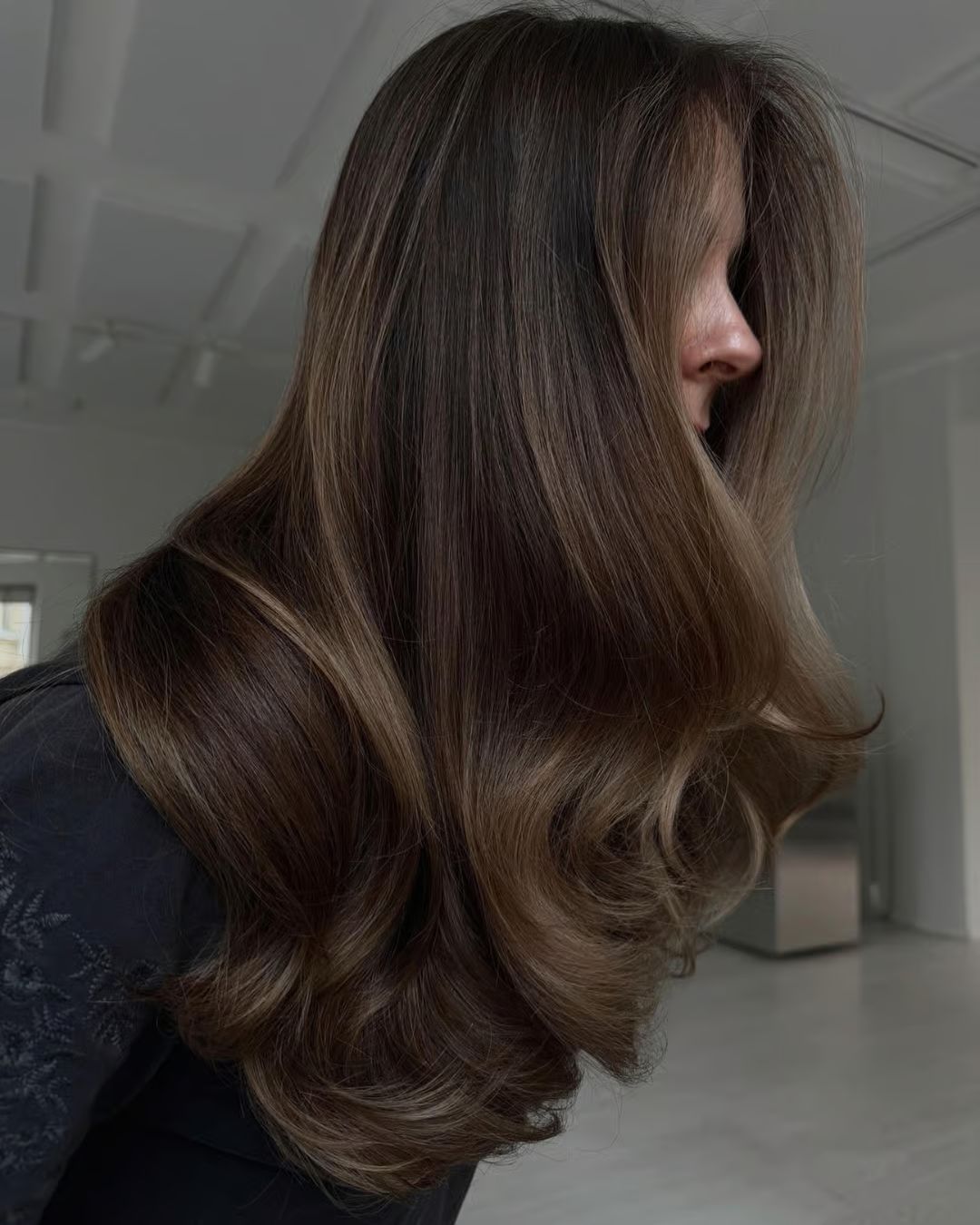
Curtain bangs or no bangs — which one actually makes the balayage work harder? On this mid-back cut with a dark brown base and caramel balayage, the curtain bangs win. They catch the lightest pieces of the hand-painted colour, so the tone reads brighter around the face without extra foils. The long layers underneath keep the wavy, thick texture from turning triangular, and the middle part lets the bangs fall open instead of sitting heavy. A blunt fringe would hide the colour transition. These frame it.
Shoulder Visual Idea
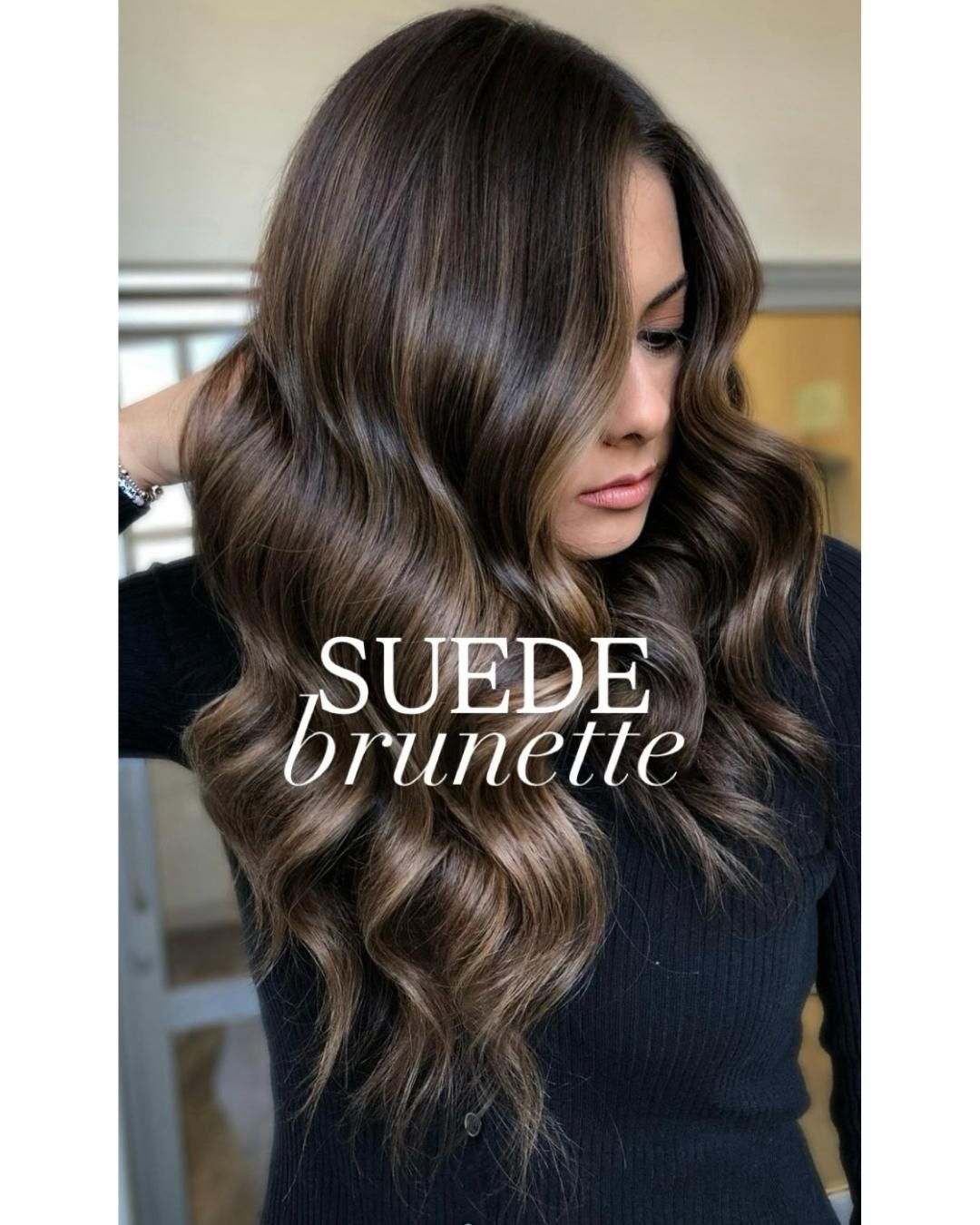
This one is for medium-density, wavy hair that does not need volume help. The dark brown base with subtle blonde balayage lands at shoulder length with loose waves and a middle part, no bangs. The tone is cool enough to read as ash, warm enough to stop the brown from looking flat. It flatters oval and heart face shapes because the layers start below the jaw — no extra width at the cheeks. If your hair is fine and straight, the blonde pieces can look sparse. Thicker textures carry the spread better.
Middle Visual Idea
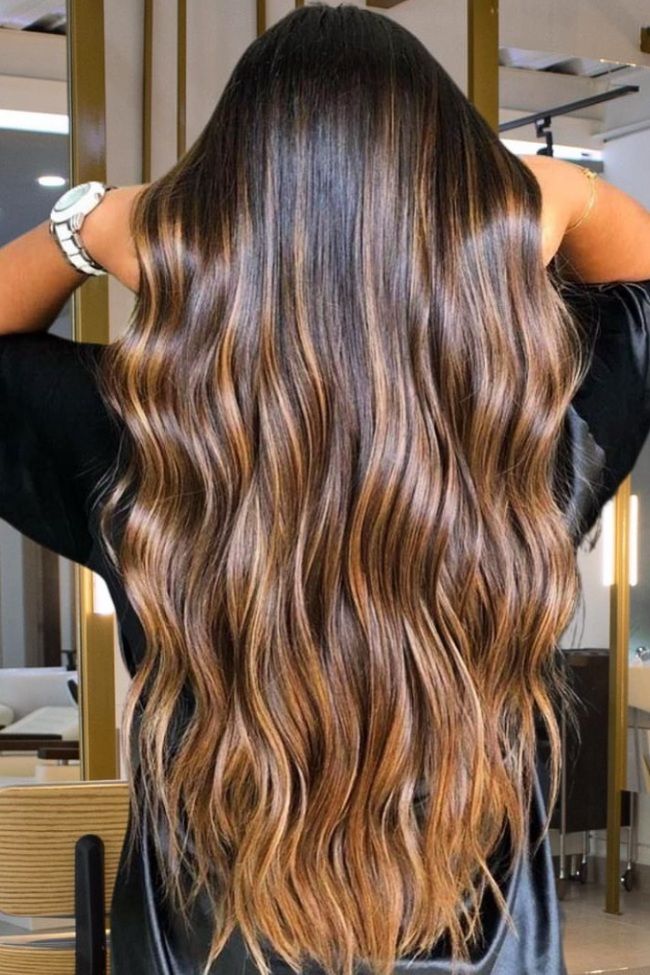
Wednesday morning, you wash it. By Friday, the sunlit caramel balayage is already pulling warm. That is the reality of a dark brown base with caramel tones on mid-back length, thick, wavy hair — the lighter pieces oxidise faster than the base, especially if you use heat tools without a protectant. A purple shampoo helps, but it is a cool toner, not a brass eraser. You can stretch the tone with a clarifying wash every two weeks, but honestly, this is a salon colour. The grow-out is soft because the technique is hand-painted, not foiled to the root.
That means you can skip the six-week touch-up. The middle part and loose waves hide the line for closer to ten weeks. Just do not expect the caramel to stay that butter shade past week four without a toning gloss.
Loose Waves Visual Idea
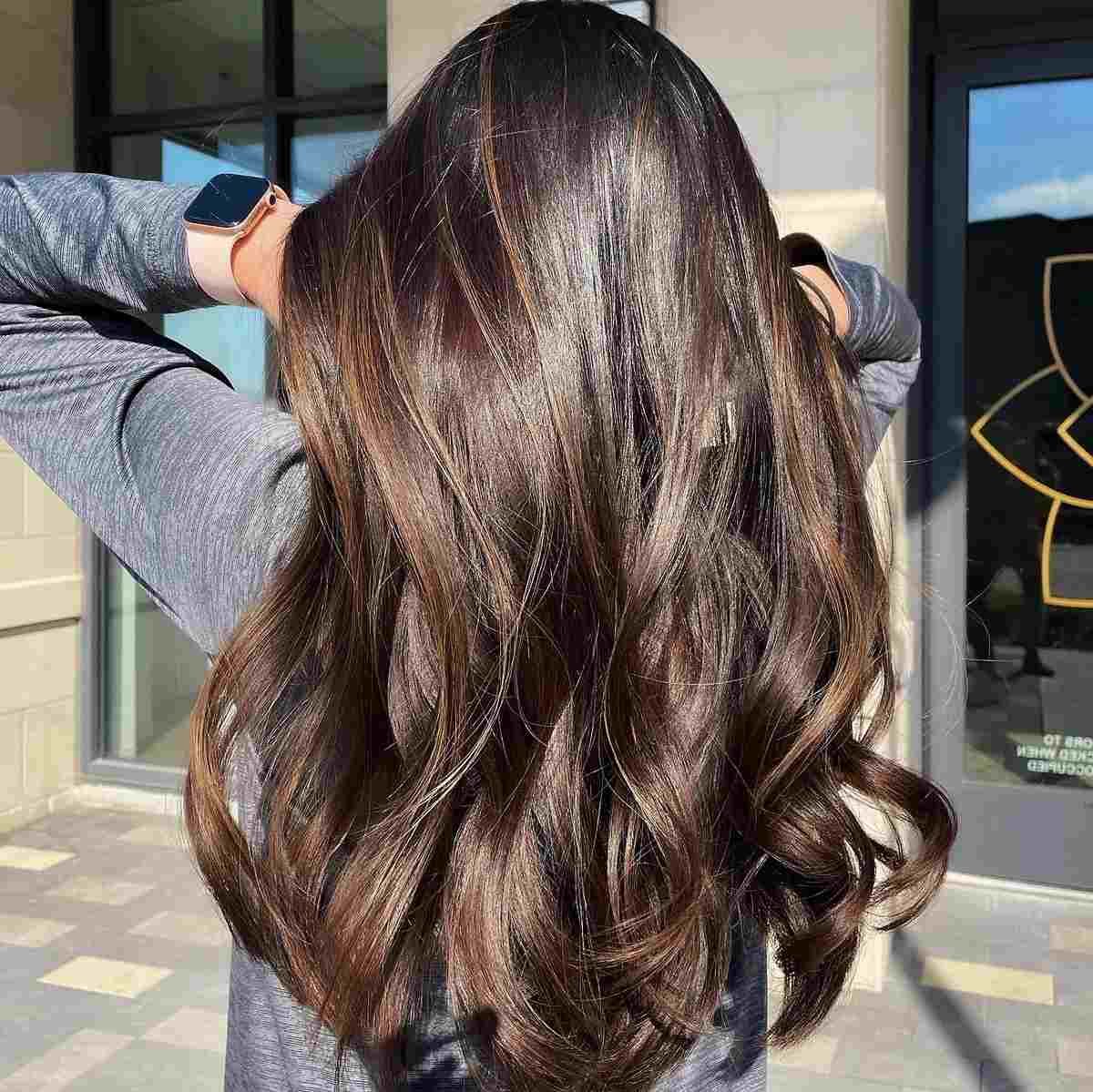
The stylist paints the lighter brown colour onto the mid-lengths and ends, leaving the dark brown base untouched at the root. That is the core of the natural-looking balayage on dark hair — the transition starts a few inches down, not at the scalp. On thick, wavy hair at mid-back length, the loose waves bend around those hand-painted sections, so the tone looks dimensional even when the hair is not styled.
No foils, no harsh lines. The colour lands softer because the stylist feathers the lightener outward instead of saturating a solid section. It reads like you spent a month at the beach, not three hours under a dryer.
Wavy And Thick Visual Idea
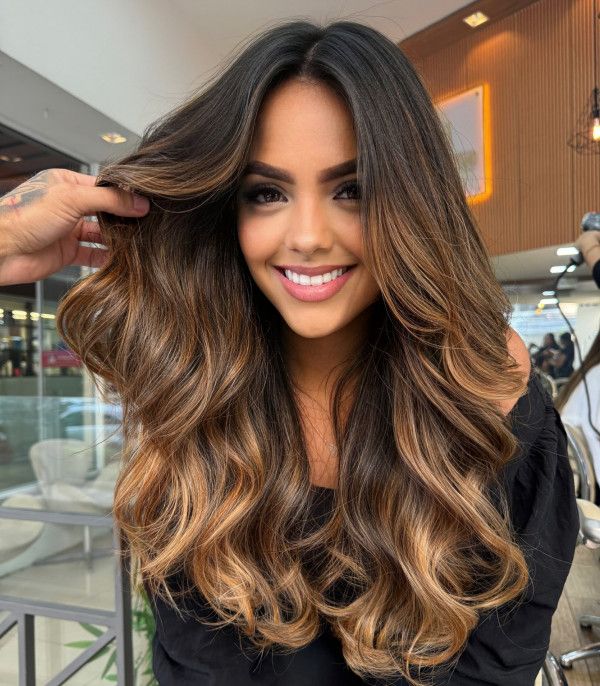
What is the point of golden balayage highlights if they disappear under a winter coat? This one is built for summer — or at least for occasions where the light hits your hair directly. The dark brown base keeps the depth, and the golden tone lands on the mid-lengths and ends of these long layers, so the colour moves when the thick, wavy texture does. A middle part and loose waves complete the open, sun-facing shape.
Festival season, outdoor dinners, a weekend trip where you actually have time to style it. That is when this colour earns its keep. In low winter light, the gold reads more yellow than warm. Save it for the months when the sun does the work.
Wavy Medium Density Visual Idea
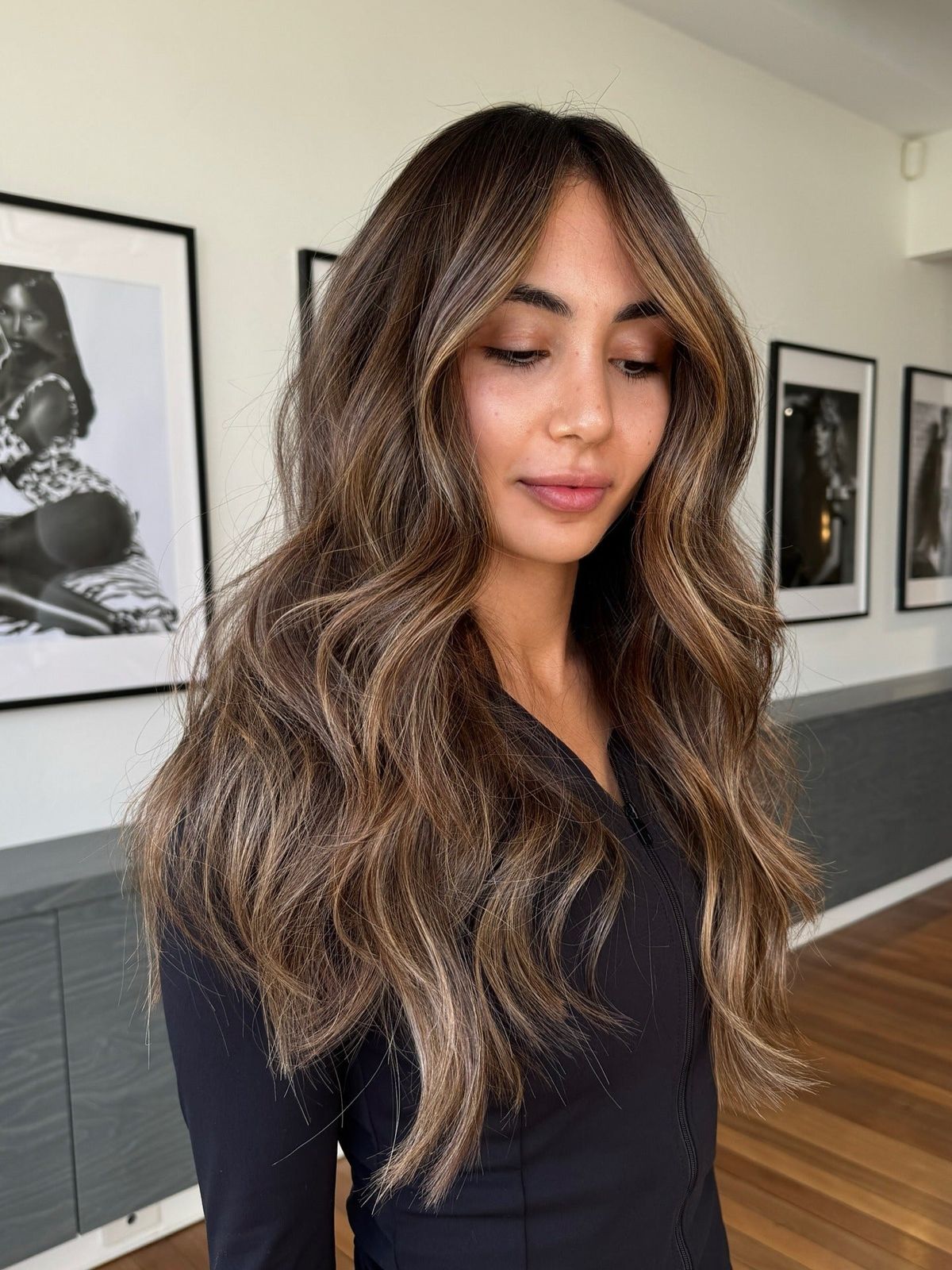
I will confess: I tried warm brown balayage at home once. It turned orange. This is not that. The salon version starts with a dark brown base, hand-painted sections, and a warm brown tone that lands on the right side of golden. My hair is medium density and wavy, so the loose waves held shape without product. The mid-back length gave the colour room to breathe. If you want this at home, book the consultation first. The technique matters more than the shade.
Seamless Colour Transition Visual Idea
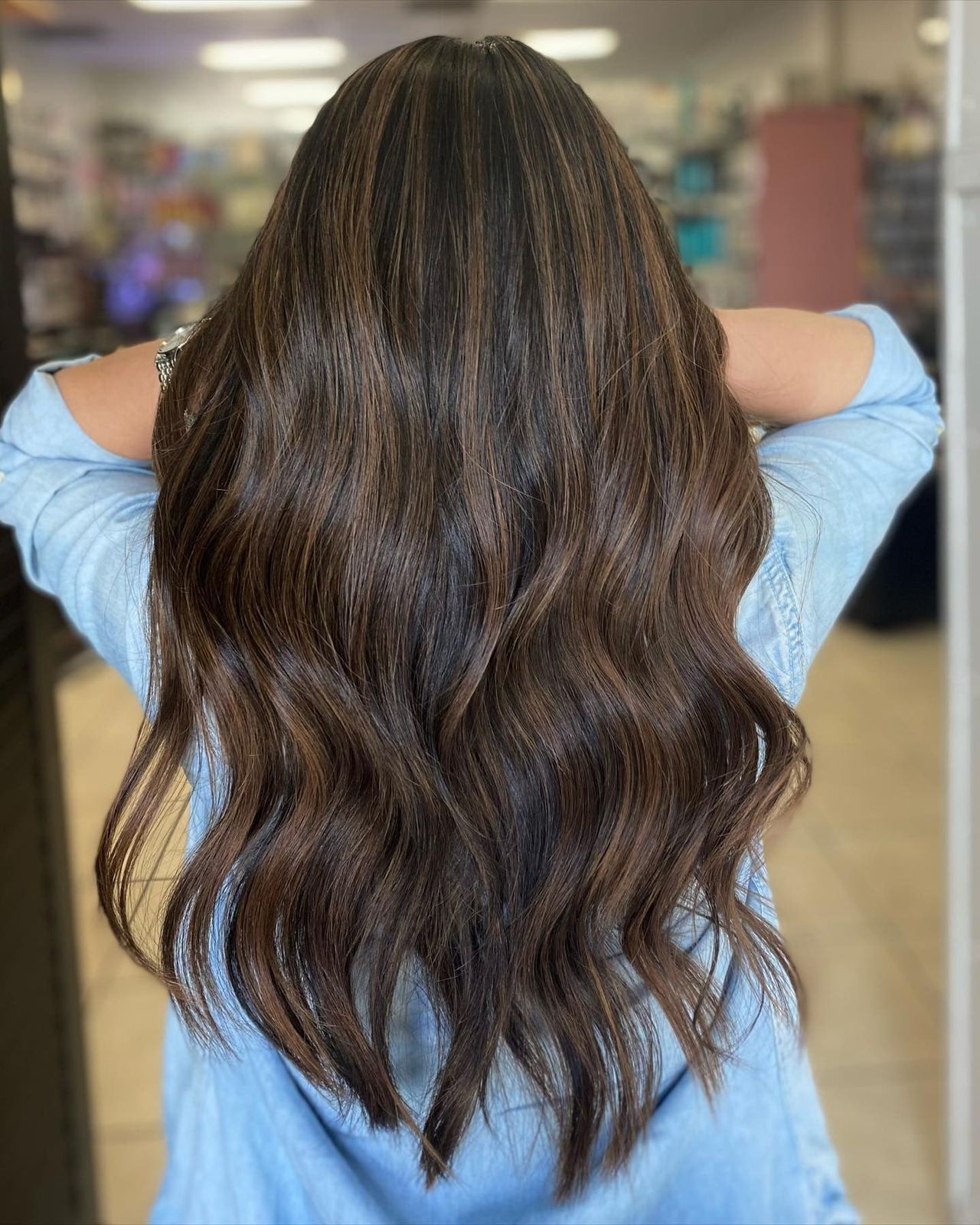
The first time I saw a seamless colour transition in person, I asked the stylist how she did it. She said patience. The base is dark brown, the balayage technique starts low, and the warm brown tone fades up so gradually that you cannot find the line. My hair is thick and wavy, so the loose waves showed off the gradient. The mid-back length helped the colour spread. Wear it down, wear it in a low ponytail, wear it however. The transition does the work. Upkeep is a gloss every six weeks and a trim every ten. That is it.
Salon Visual Idea
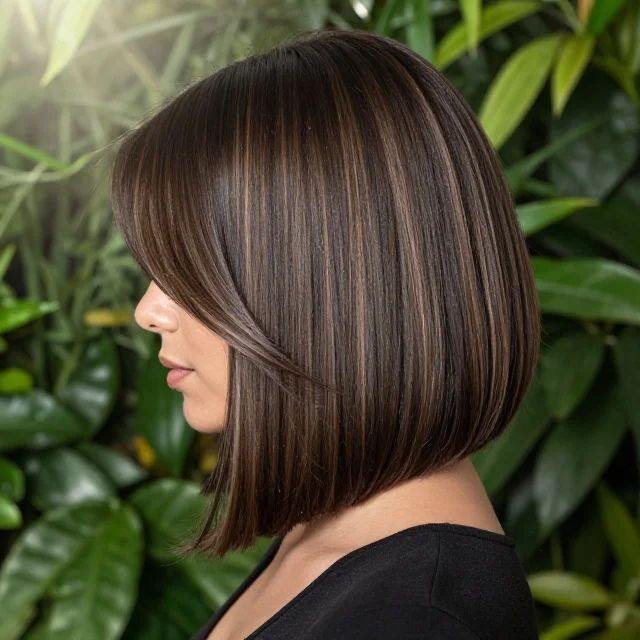
What sets this apart from other multi-tonal balayage is the warmth. Blonde and caramel tones sit against a dark brown base, and the balayage technique places them so they catch the light in layers. My hair is thick and wavy, so the loose waves showed every shade shift. The mid-back length gave the colour room to spread. It is not subtle, and it is not meant to be. If you want a single tone, pick something else. This one asks to be seen.
Warm Caramel Tones Visual Idea
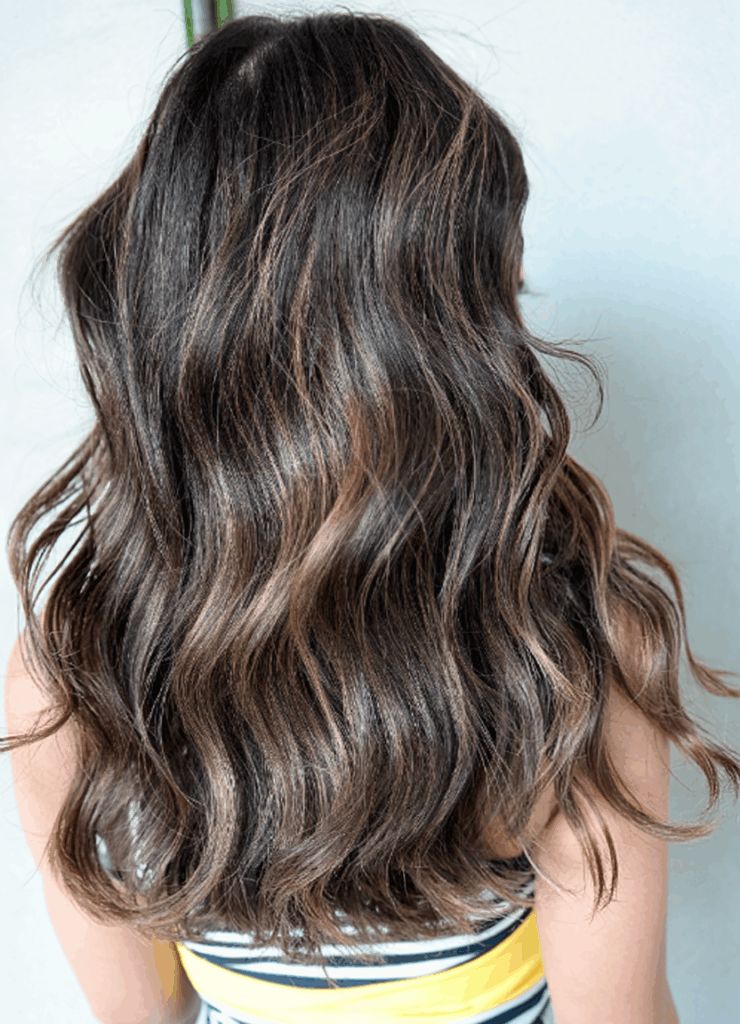
Warm caramel tones suit anyone who wants their dark brown base to look richer, not lighter. The balayage technique keeps the root intact, and the tone lands somewhere between honey and amber. My hair is medium density and wavy, so the loose waves caught the caramel without effort. The mid-back length gave the colour room to fall. If your skin reads cool, ask for a cooler caramel. If it reads warm, this is your shade. Straightforward.
Final Thoughts
After writing all of these, I noticed one thing: the best balayage does not fight your natural base. It works with it. The warm caramel tones that looked good on everyone in the salon chair? They also looked good on me. I am booking the warm blonde with curtain bangs next. My roots showed at week five last time. That root shadow will buy me six.
- Tone at week six, not week ten
- Trim the baseline every eight weeks
- Purple shampoo once a week only
- Root shadow every second appointment