I’ve watched balayage shift from a trend to a default. By 2027, it’s not about how light you go, it’s about where the light lands. My fine hair taught me that the hard way: a heavy highlight at the crown just flattens by noon.
These 32 takes on Blonde Balayage 2027 cover the full spectrum, from a root shadow that buys you six weeks to a platinum wave that needs a Friday appointment. Short bobs, long layers, curly textures, ash bases, honey ends. If your hair goes flat by 4pm or your grow-out line shows at week five, there’s a version here that works.
Mid-Back Warm Honey Balayage Waves
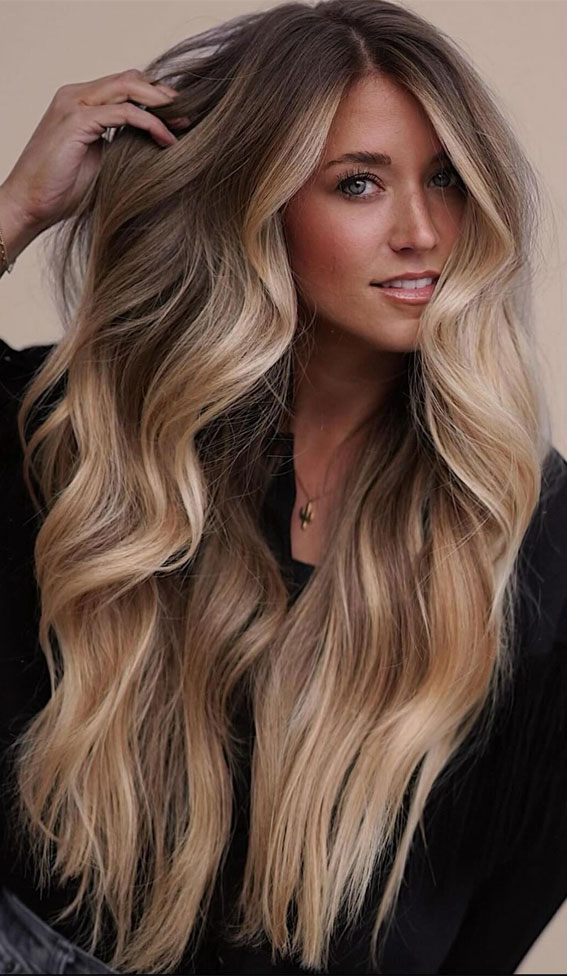
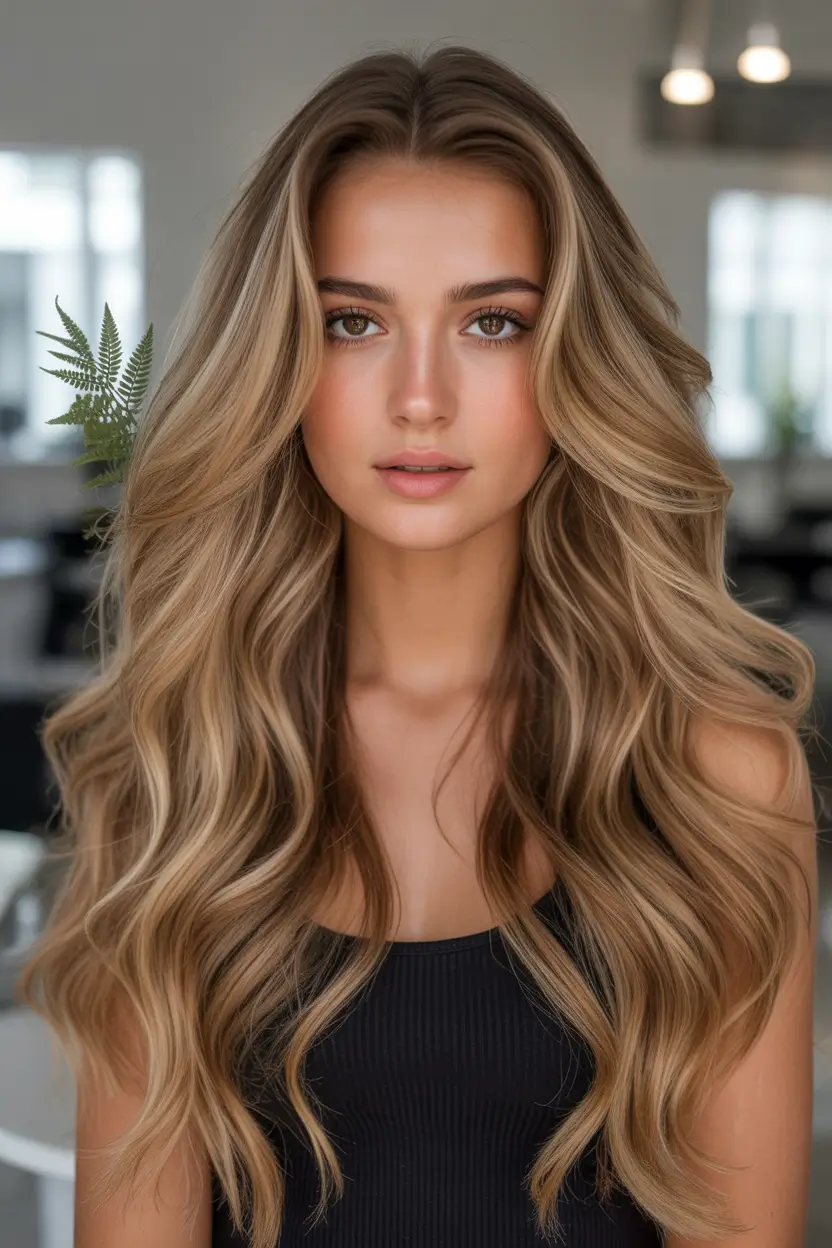
The warmth in this balayage is the first thing I notice. A dark blonde with honey balayage base, the warm honey blonde tones sit right where light naturally hits. The technique is soft and blended, no hard lines. On mid-back length, thick wavy texture, the colour reads rich and dimensional. This suits medium to warm undertones best, the honey picks up gold without turning brassy. Styling takes about 15 minutes with a large barrel iron. Upkeep means a toner refresh every eight weeks if the warmth starts to fade. The grow-out is gentle because the base is already dark blonde, so roots don’t scream for attention.
Collarbone Wavy Blonde Balayage Blowout
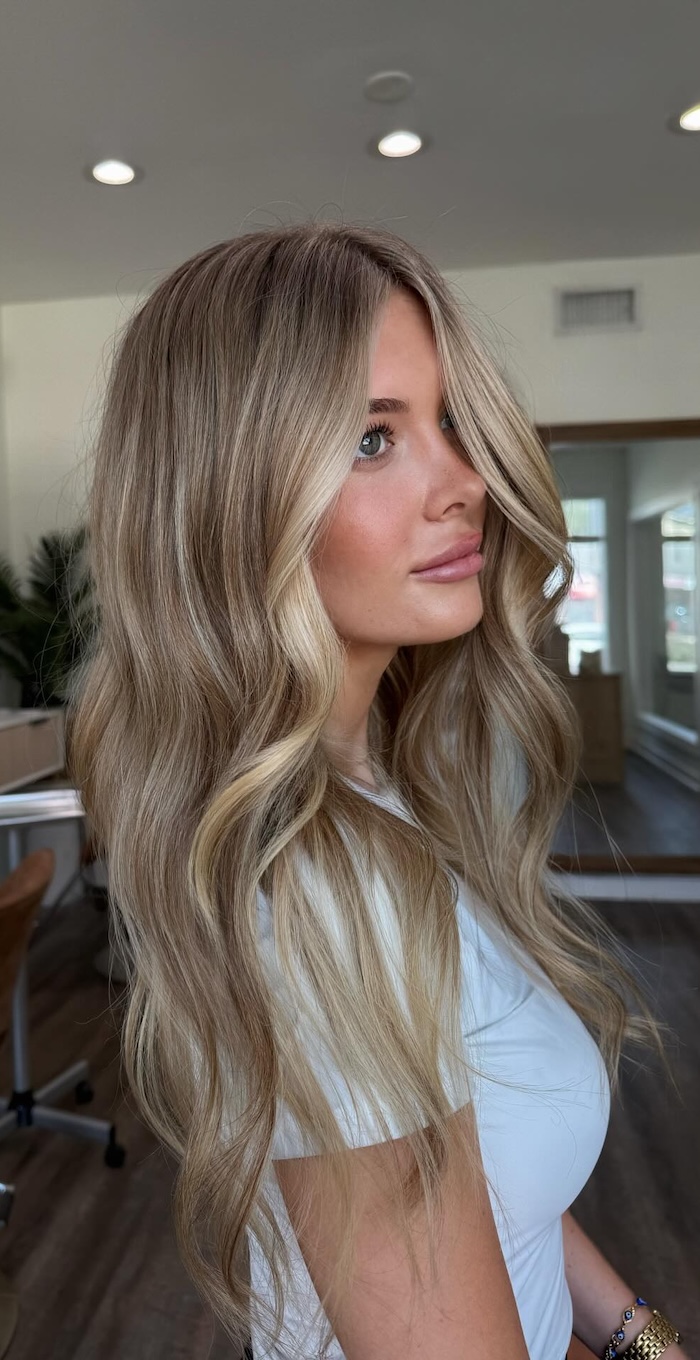
Ever wonder how a balayage gets that sun-kissed effect? The technique here starts with a dirty blonde balayage base, then lighter blonde pieces are painted freehand onto the surface. No foils, no sections, just the stylist’s eye for where light would naturally fall. On collarbone length with thick wavy texture, the result is a soft, graduated lift. The tone stays warm but not brassy, the dirty blonde base keeps it grounded. This is a salon job, not a bathroom-mirror thing. The painterly application is what makes it look like you spent a month at the beach.
Mid-Back Platinum Creamy Blonde Balayage
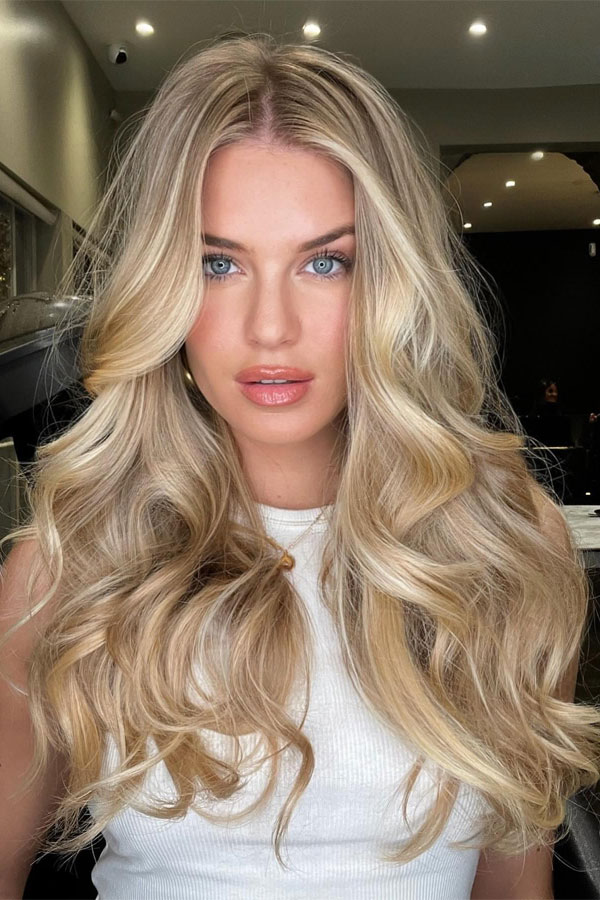
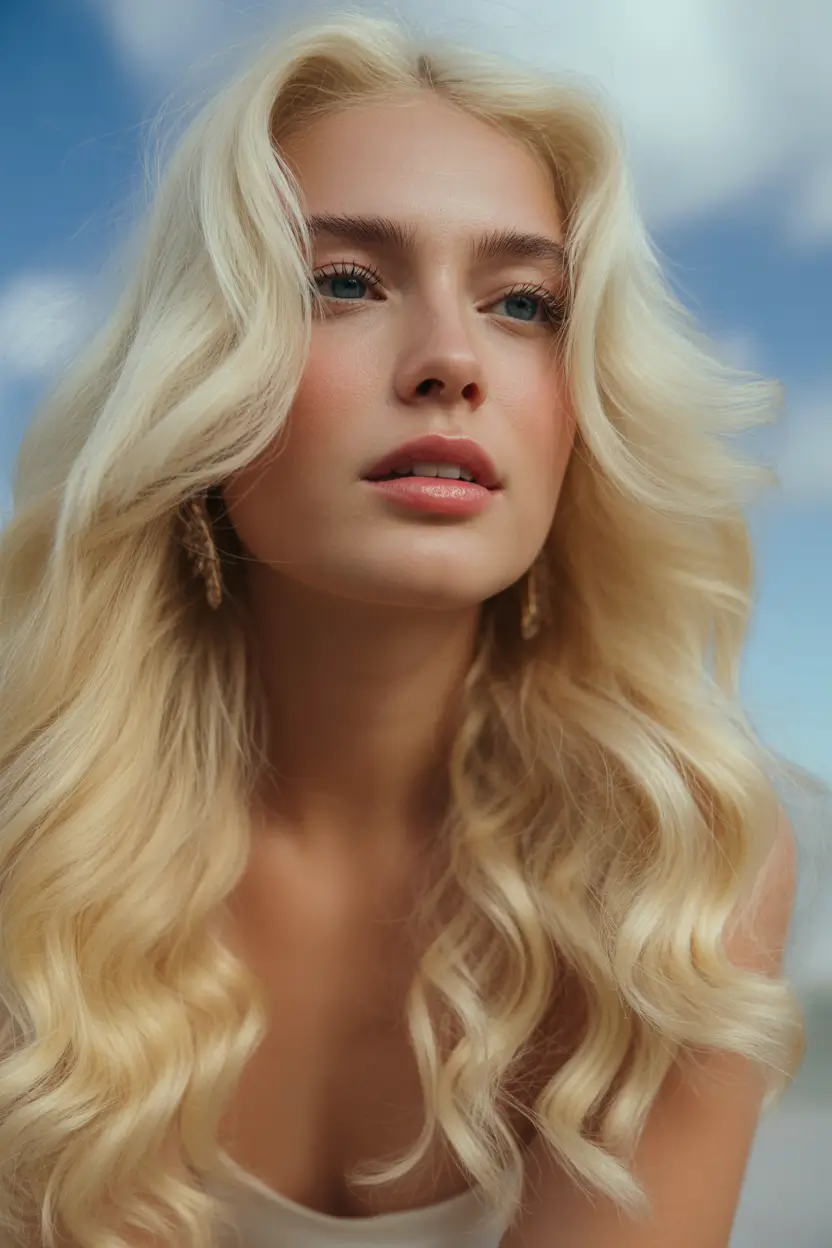
This is not a soft blonde. This is a commitment. The platinum blonde balayage sits on a bright base with creamy blonde highlights painted through the mid-lengths and ends. On mid-back length with thick wavy texture, the colour reads almost white in bright light. Compared to a honey or dirty blonde, this one demands more. A honey balayage fades gracefully; this one turns brassy in two weeks without a purple shampoo.
The honest downside: upkeep is relentless. Toning every four weeks, trims every six. The roots show fast because the base is so light. If you travel or have a busy schedule, this one might test your patience. But the payoff is a colour that stops people mid-sentence. It’s not for everyone, and that’s fine. If you want low maintenance, pick a darker base. If you want a statement, this is it.
Chin-Length Wavy Dark Blonde Balayage
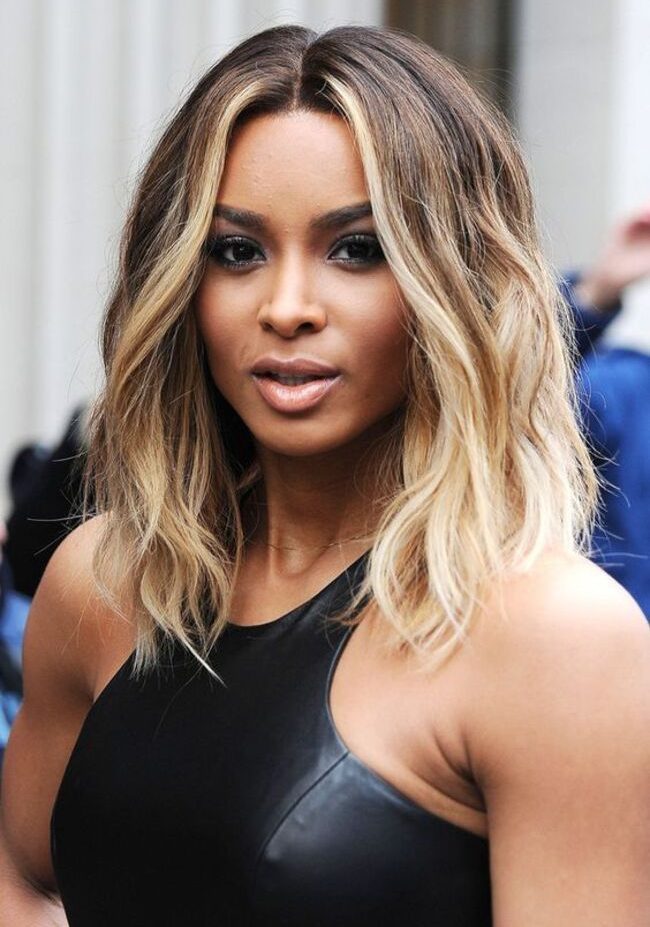
I’ll admit, I was skeptical about balayage on a chin-length cut. But the dark blonde balayage lob here uses lighter blonde highlights that start below the ears, so the transition is soft and doesn’t chop the line. Ask your stylist for a side part to add asymmetry and keep the balayage concentrated on the surface layers. The tone stays neutral, not too warm or cool. On wavy medium density, the colour moves with the texture.
Mid-Back Curly Dark Brown With Blonde Balayage
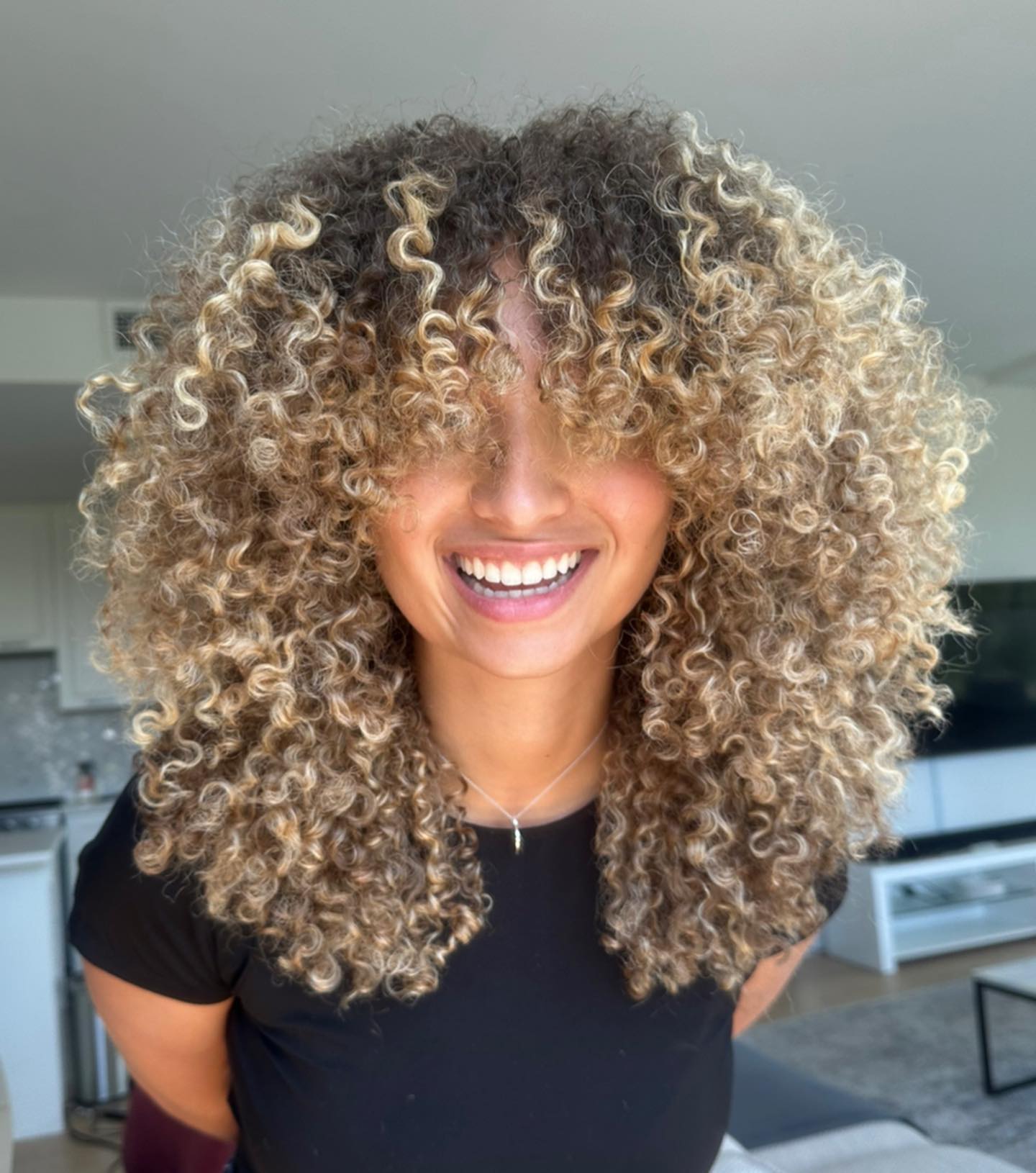
The contrast here is the whole point. A dark brown with blonde balayage base, the blonde pieces are painted onto the surface of thick curly texture, mid-back length. The striking contrast between the deep base and the light curls creates dimension that straight hair can’t match. This suits medium to deep skin tones best, the warmth of the blonde lifts the face without washing out.
Who should pass? If your curls are fine or low density, the contrast might look sparse. The balayage works best when there’s enough hair to carry the light pieces. Also, if you prefer a blended, subtle look, this is not it. This is a statement. The grow-out is forgiving because the base is dark, but the blonde will need a toner every 10 to 12 weeks to stay bright.
Collarbone Honey Balayage With Face-Framing
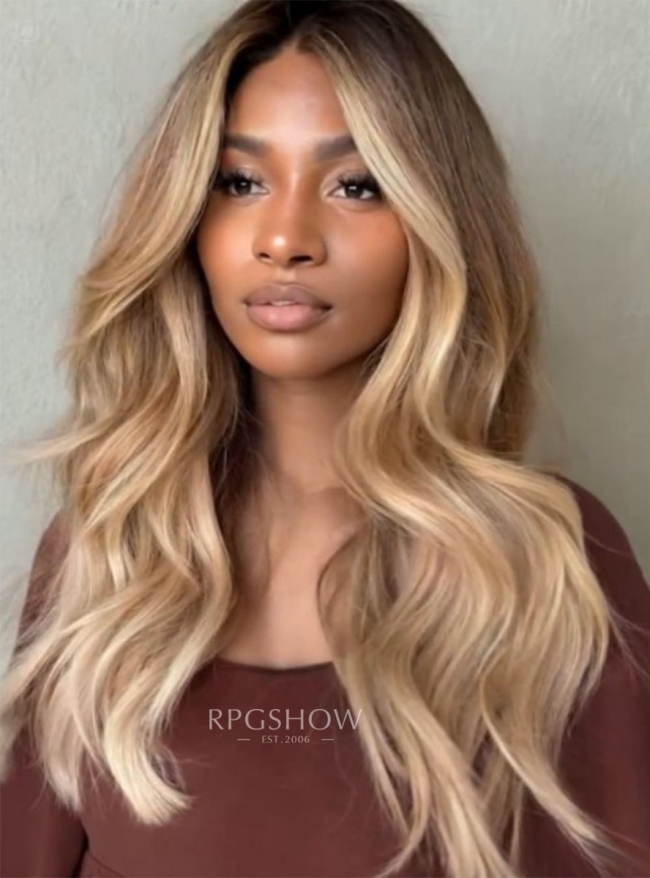
The first warm day hits and suddenly every blonde I see reads too cool. This collarbone honey blonde balayage face framing lands exactly where spring wants it: a golden tone that catches the late afternoon light without turning brassy. The technique is a hand-painted balayage, so the lighter blonde highlights stay concentrated around the face and taper into the mid-lengths. On thick, wavy hair the loose waves hold the dimension for hours. The curtain bangs need a quick blow-dry every morning, but the colour itself grows out soft — no harsh line at eight weeks.
Long Layers Mid-Back Dark Brown With Honey Balayage
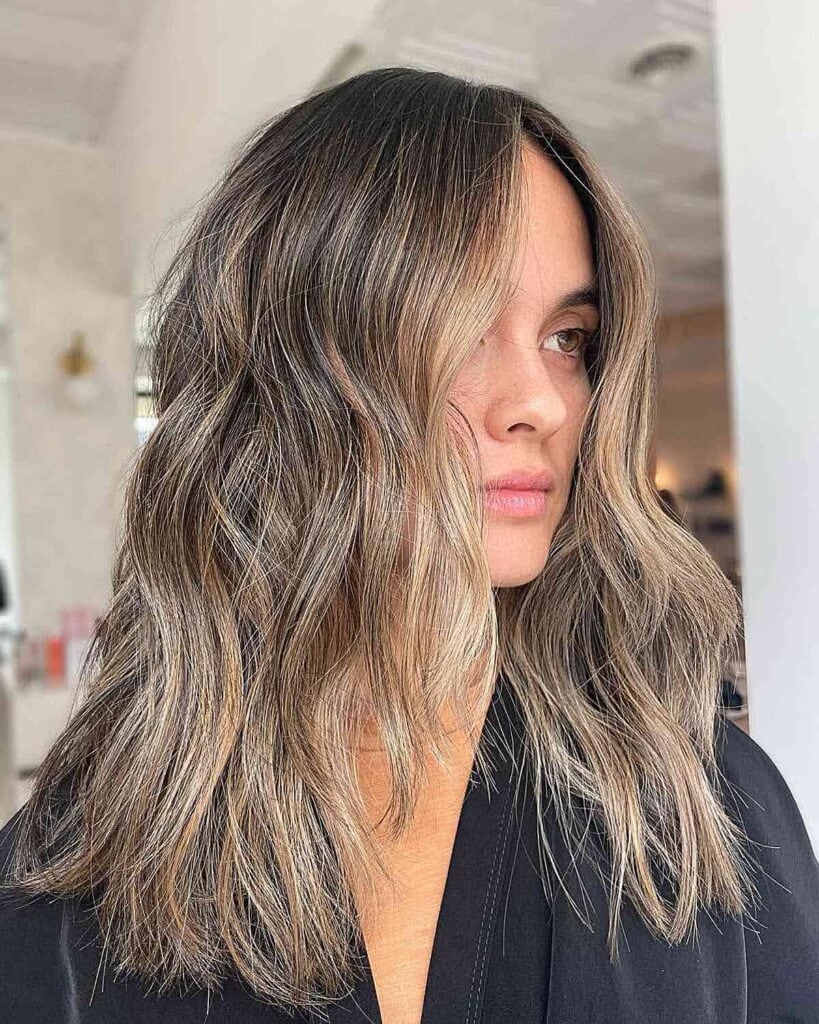
This is the colour that makes you wonder why you ever went lighter. The dark brown honey balayage starts rich and deep at the roots, then melts into a warm blonde that reads like sunlight through a window. The technique is a soft, graduated balayage that skips the root entirely — no demarcation line, just a seamless fade. On mid-back length with thick, wavy texture, the long layers give the colour room to breathe.
Styling is straightforward: a blow dryer and a round brush, twenty minutes. The waves are set with a quick pass of a wand on the ends. The sun-kissed look stays fresh because the base is dark enough to hide grow-out. Trims every ten weeks keep the ends healthy.
Layers Collarbone Ash Blonde Balayage Blowout
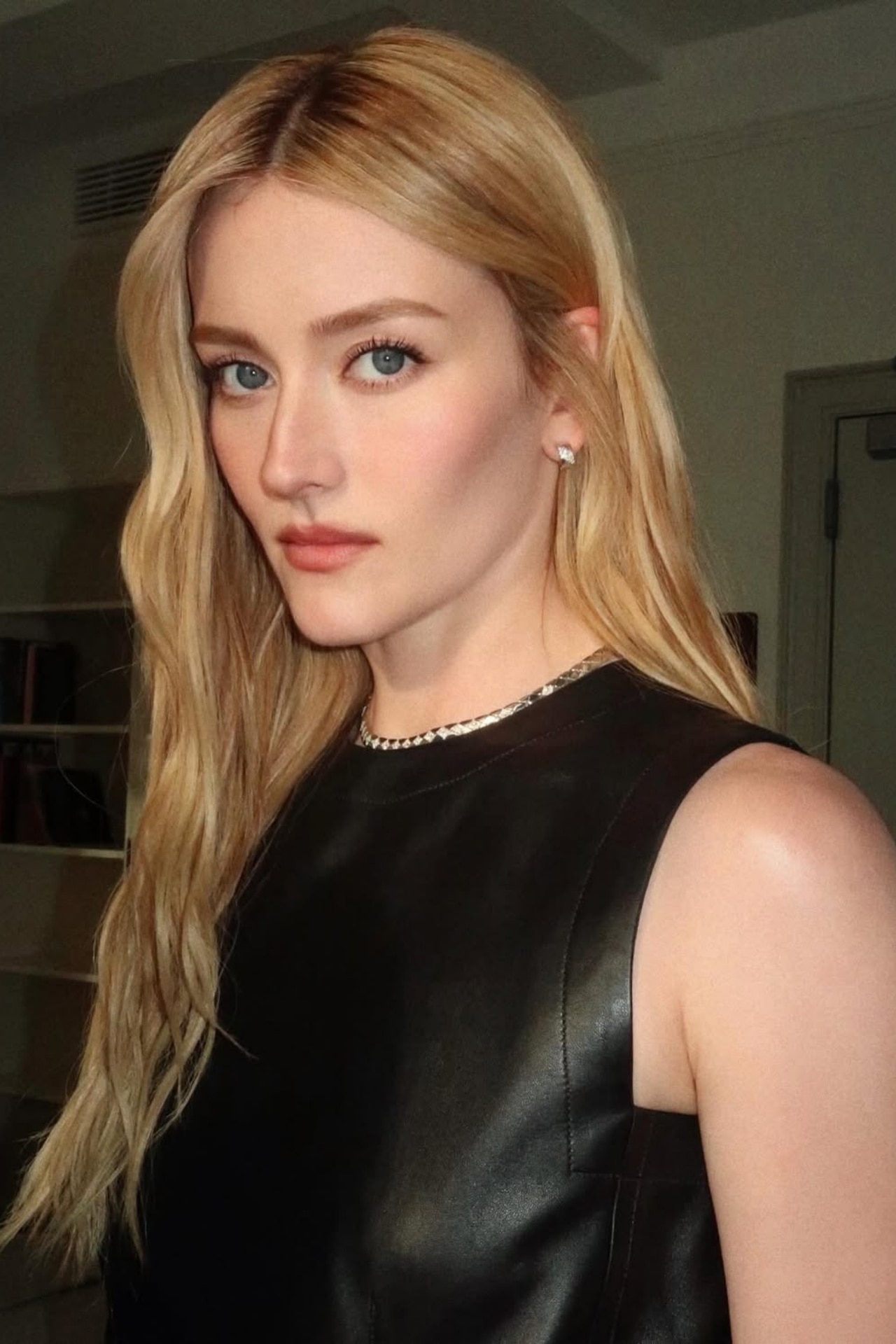
Does your blonde turn yellow before the third week? This ash blonde balayage collarbone length is the answer. The tone is cool, almost silvery, with a technique that paints the lightener in fine, vertical strokes so the dimension throughout waves reads natural, not striped. On medium-density wavy hair, the layers add movement without losing weight. The blowout takes twenty minutes with a round brush, but the real work is the toner: every six weeks, or the ash shifts to a muddy green. No bangs means no daily fuss, just a middle part and a wave that holds till evening.
Collarbone Dark Brown To Blonde Balayage
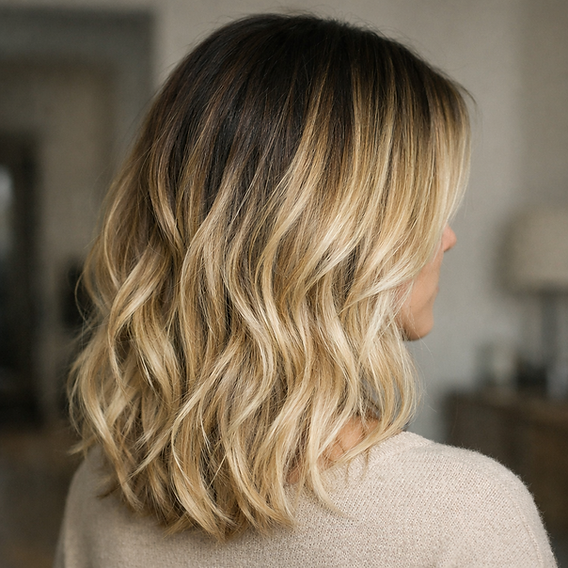
The contrast here is the whole point: dark brown roots, blonde ends, no soft blur. This dark brown to blonde balayage works best on medium-density wavy hair because the texture catches the light and softens the line. The tone is neutral — not warm, not ash — so it reads natural sun-kissed effect on a wide range of skin tones. Fair skin? The contrast can feel stark. Olive or tan skin? It glows. The side bangs need a quick blow-dry, but the colour grows out with a deliberate shadow that buys you eight weeks between appointments. The technique is a high-contrast balayage, painted in thick sections, not feathered.
No Bangs Mid-Back Dark Blonde With Bright Balayage
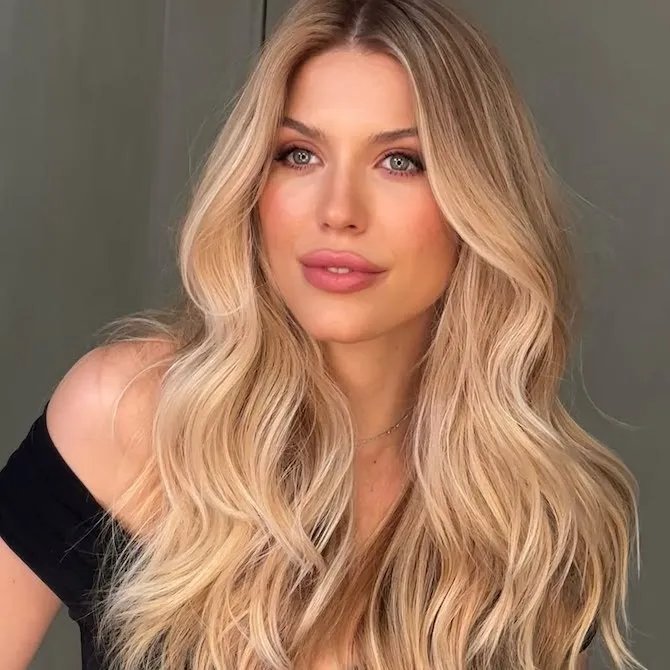
I wanted to hate this. High-contrast balayage usually feels like a 2018 Instagram flashback. But this dark blonde bright blonde balayage is different. The base is a deep, muted dark blonde — not brown, not light — and the bright pieces are painted in wide, deliberate sections that start mid-length and hit the ends hard. The striking contrast is the whole point. On thick, wavy mid-back hair, the loose waves separate the tones so they don’t blend into a muddy middle.
Compared to a soft, blended balayage, this one demands more commitment. The bright blonde needs toning every four weeks or it goes brassy. No bangs, no curtain fringe, just a middle part and a wand curl that takes fifteen minutes. The grow-out is visible at week six, but if you like a deliberate root, that’s a feature, not a flaw.
Mid-Back Dark Brown With Honey Balayage — The Texture Is Wavy And Thick
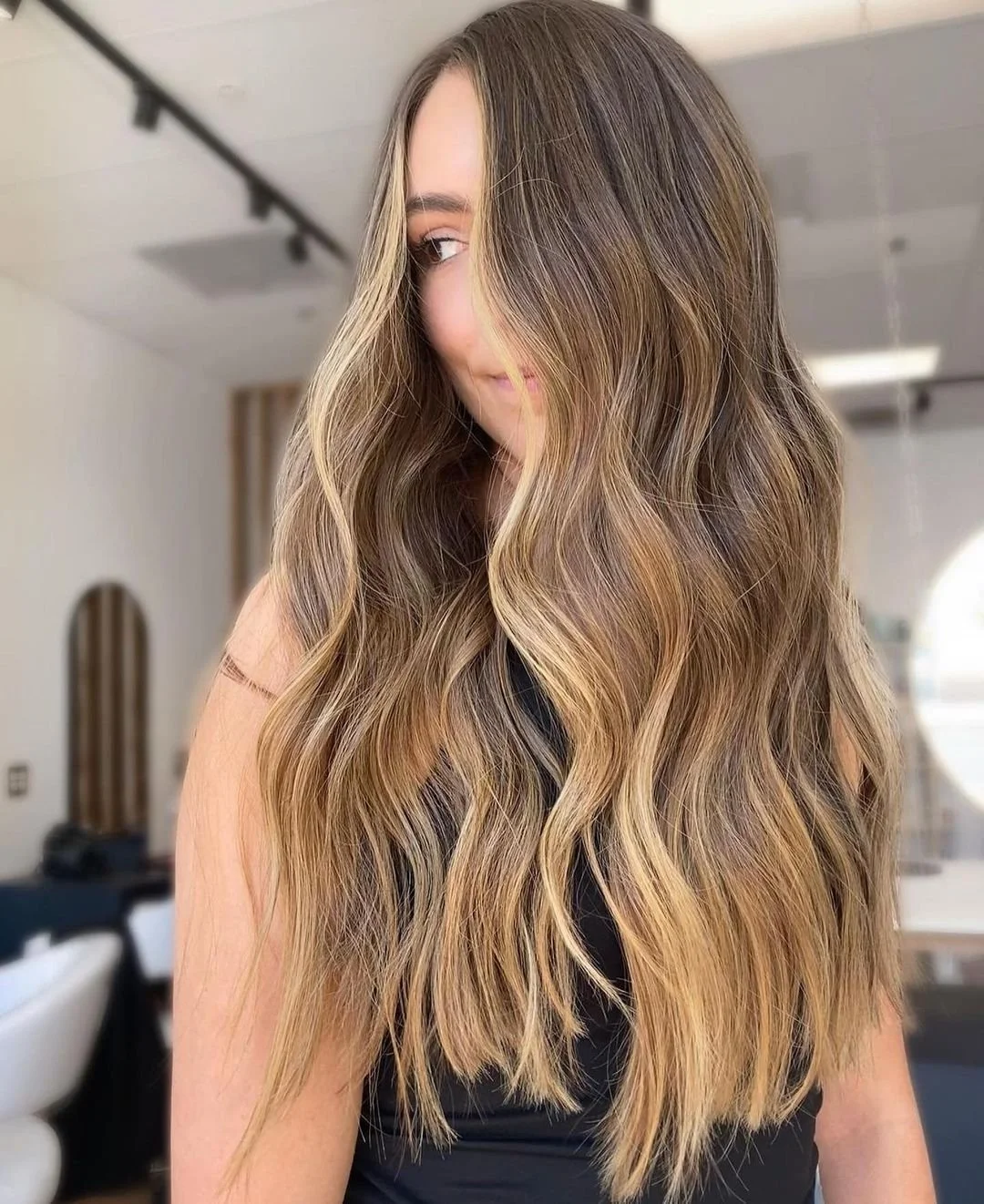
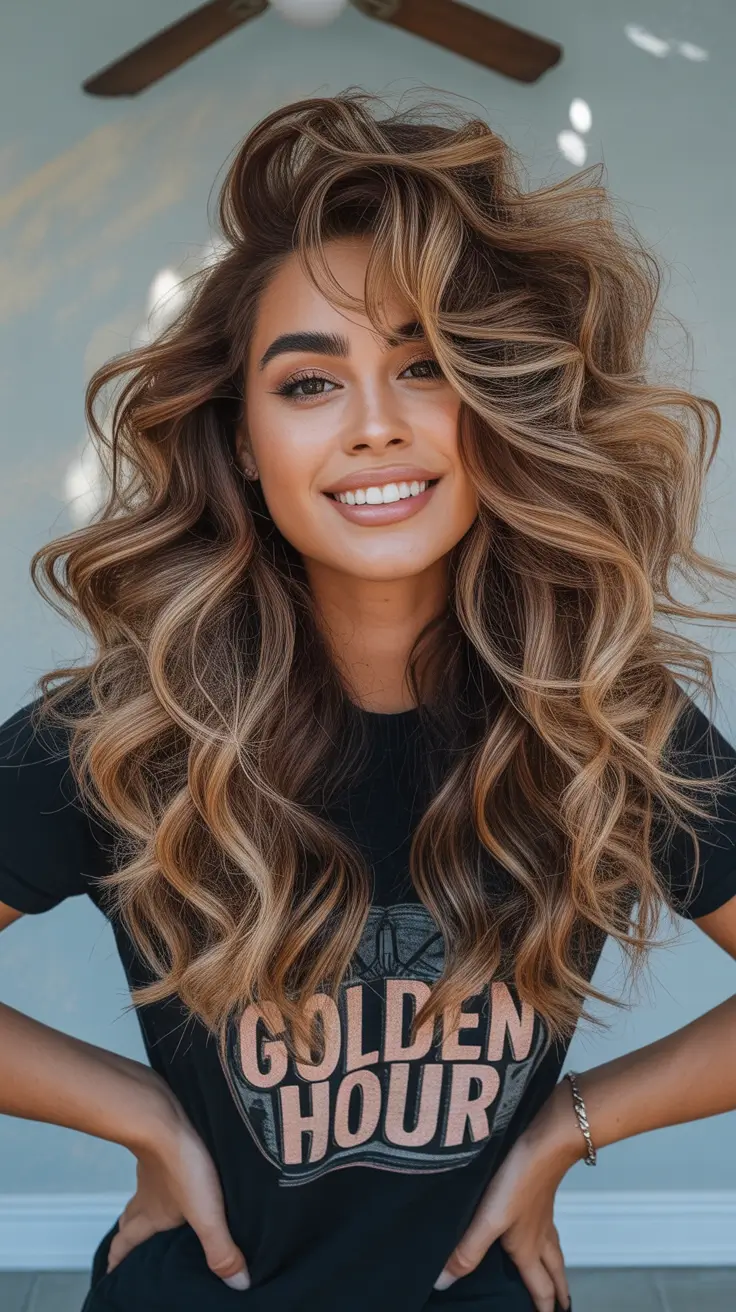
I’ll confess: I didn’t think a dark brown honey blonde balayage would hold my attention past the first wash. The contrast between the deep base and the warm honey sections is what got me. Mid-back length, wavy and thick, the colour lands somewhere between sunkissed and deliberate. The dark base means grow-out is forgiving — no harsh line, just a soft fade into your natural. Curtain bangs soften the front without demanding daily round-brush work. The waves hold their shape through a workday, which is more than I can say for most balayage on thick hair.
Upkeep is where this earns its keep. The balayage technique keeps the honey blonde highlights concentrated on the mid-lengths and ends, so roots stay dark and low-maintenance for about ten weeks. A trim every ten weeks keeps the waves from tangling at the ends. The tone stays warm without turning brassy if you use a purple shampoo once a week. It’s not a set-it-and-forget-it colour, but it’s close. The thick texture means you can skip heat styling on day two — just refresh with water and a bit of mousse.
Side View Mid-Back Dark Brown Seamless Blonde Balayage
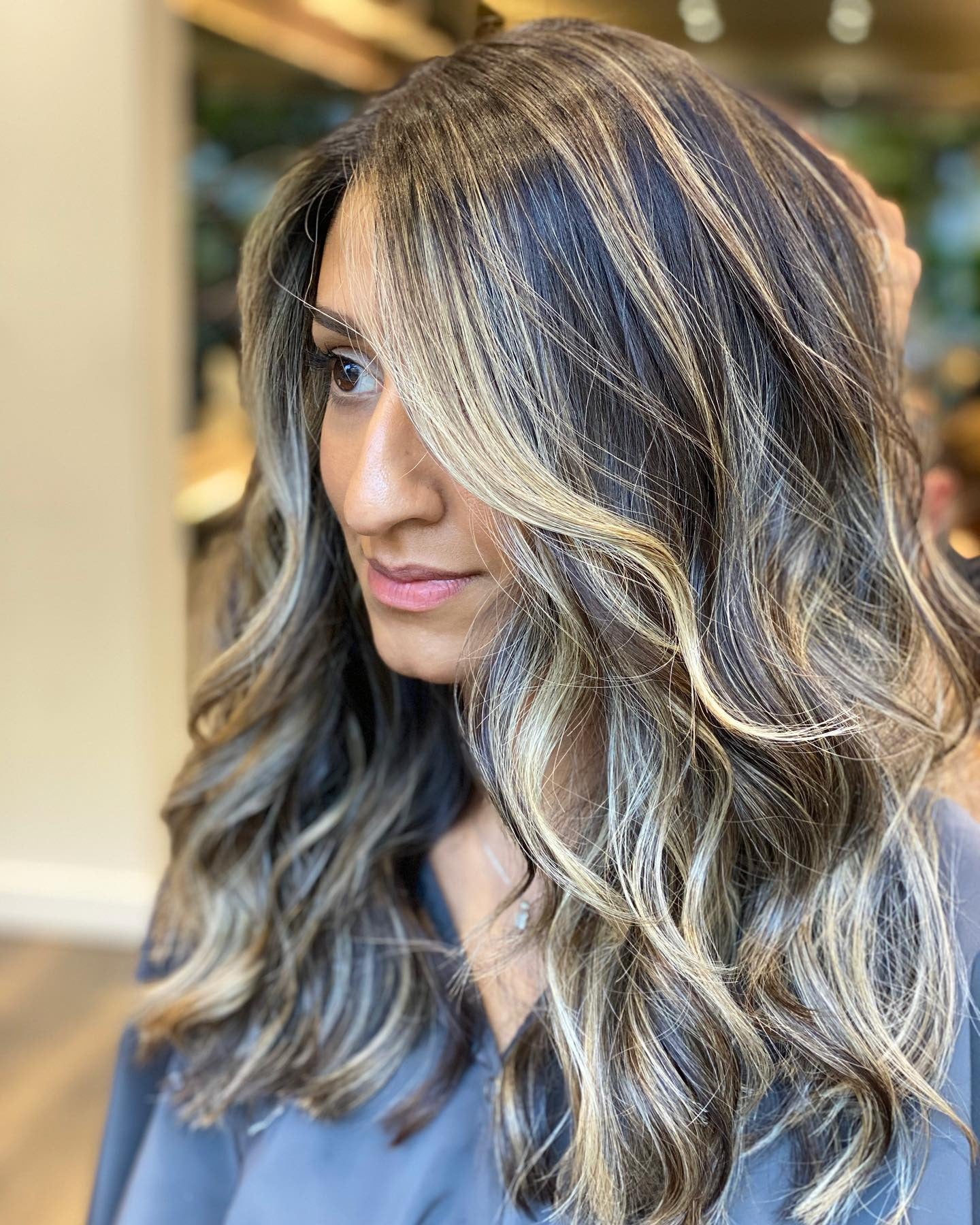
The precise observation: a seamless blonde balayage hides its starting point. The colour lifts from dark brown into blonde without a visible line, and the side view shows exactly how the stylist painted the sections. Mid-back length, wavy and thick, the blend works because the balayage technique places lighter pieces only where the hair naturally lightens. The result is a sun-kissed effect that reads as grown-in, not painted on. No bangs, just a middle part that lets the colour breathe.
Mid-Back Extreme Platinum Beach Waves
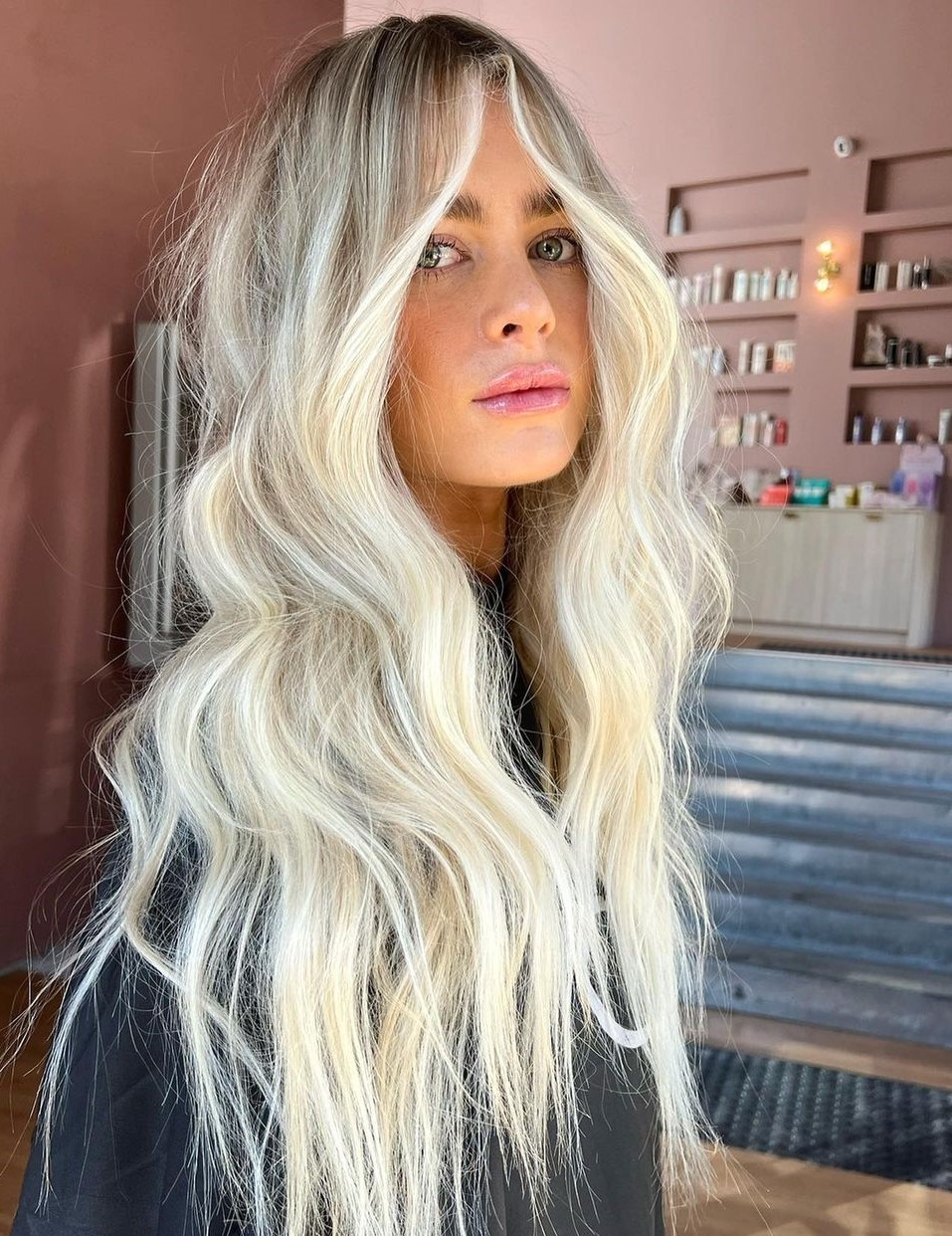
Can fine hair really hold extreme platinum blonde balayage? Yes, but only if the stylist keeps the base intact. The extreme platinum blonde balayage lifts the ends to nearly white while leaving the roots a very light blonde. Mid-back length, wavy and fine, the beach waves add volume that fine hair needs. The long layers keep the ends from looking stringy. This works best if your hair is naturally resilient — if it’s already damaged, skip it.
The honest downside: this is not a low-maintenance colour. The very light blonde highlights need toning every three to four weeks to stay cool. Trims every six weeks prevent split ends from traveling up the shaft. A bond-building treatment is non-negotiable between salon visits. And heat styling? Minimize it. The payoff is bright, but the work is real.
Dark Brown Bob With Subtle Blonde Balayage
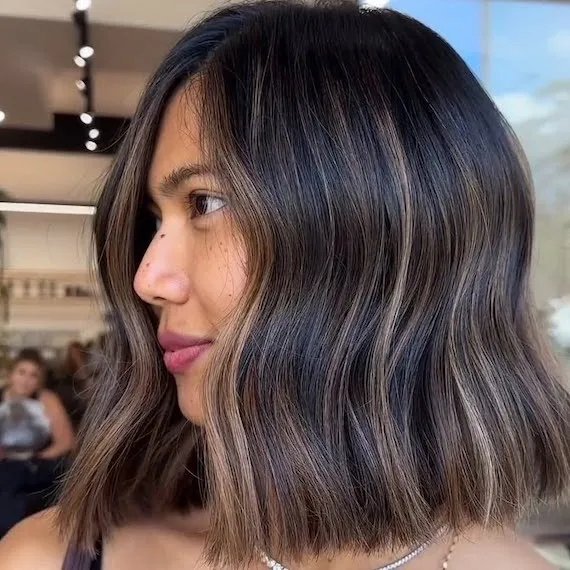
The biggest mistake with a dark brown bob blonde balayage is trying to do it yourself. The bob cut is blunt and short, so any uneven colour placement is instantly visible. The subtle blonde highlights need to be painted precisely to avoid a stripey look. Chin-length, wavy and medium density, this is a salon-only job. A professional will place the balayage to hit the ends and the face-framing sections, leaving the roots dark for a soft grow-out. Side part adds asymmetry that hides the line.
Wavy Medium Density Collarbone Ash Blonde Balayage Blowout
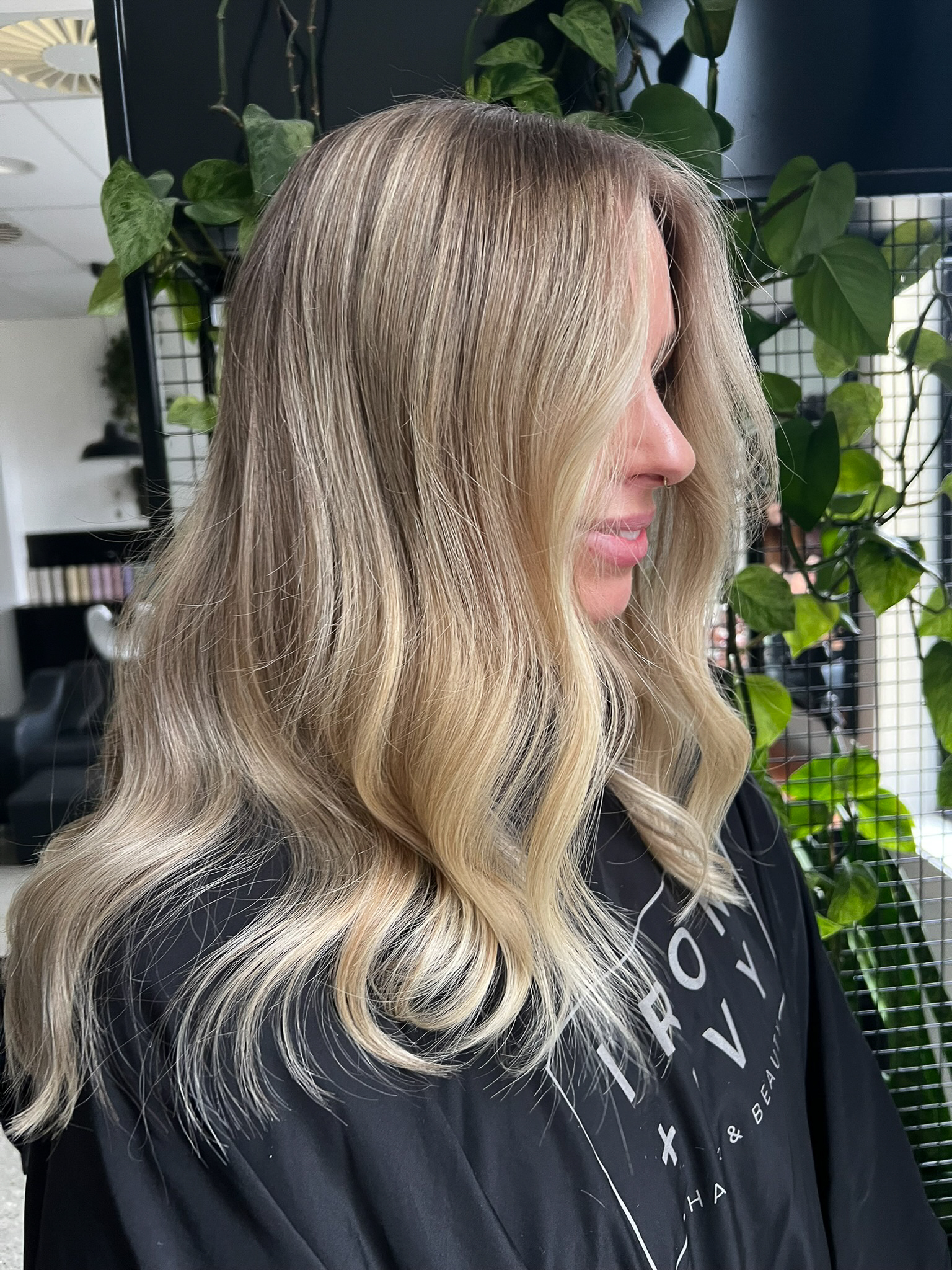
Monday morning, the ash blonde balayage medium density looks cool and fresh. By Thursday, the ash tones start to warm up if you skipped the purple shampoo. Collarbone length, wavy and medium density, the subtle transitions between the ash base and the lighter ends keep the grow-out soft. The blowout holds for two days if you use a heat protectant. A toner every six to eight weeks keeps the ash from turning brassy. The layers add movement without losing density. It’s a reliable colour for a work week, as long as you remember the shampoo.
Shoulder Ash Base With Platinum Balayage
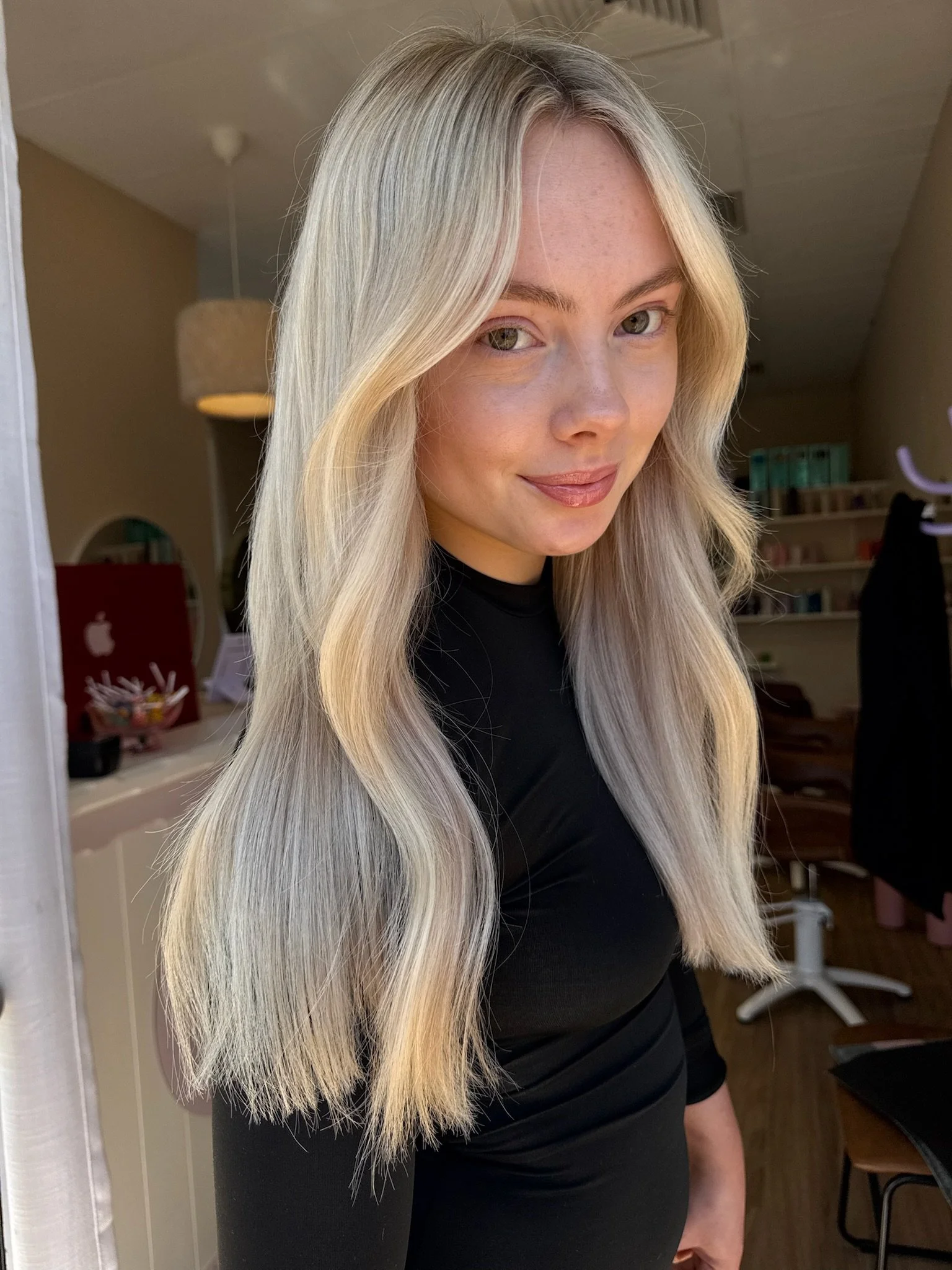
There is something about ash blonde platinum balayage that reads like a winter coat for your hair. The cool ash blonde base keeps things crisp, while the platinum highlights catch the low December light without turning brassy. Curtain bangs soften the collarbone length, and the wavy blowout gives medium density hair enough movement to look intentional. The balayage technique places the lighter blonde tones sparingly — just enough to glow, not enough to scream highlight. This is a cold-weather colour through and through. It lands best when the leaves are gone and you want your hair to match the sky. Book it for late autumn and wear it through February.
Collarbone Neutral Blonde Soft Balayage
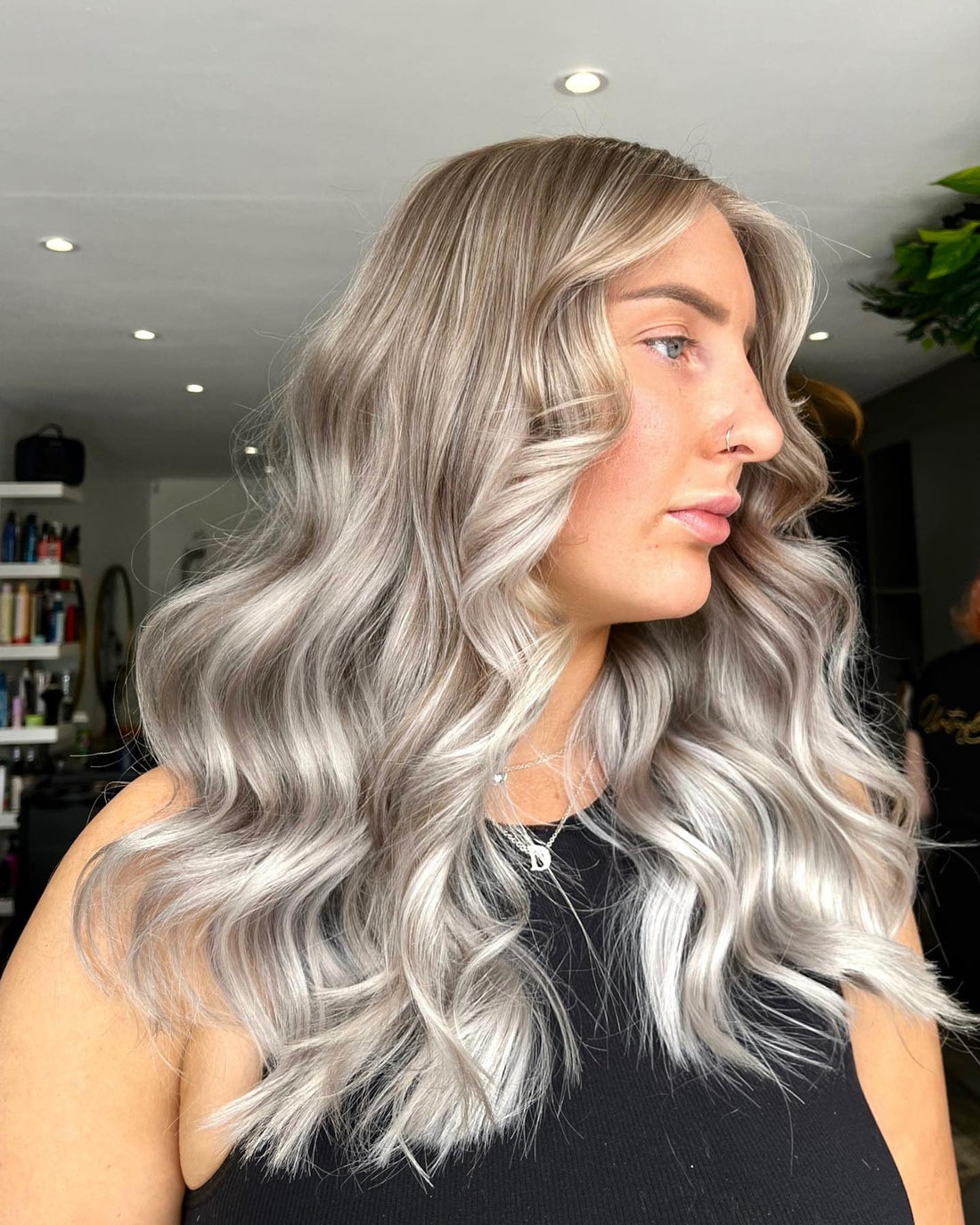
Is neutral blonde balayage collarbone length actually flattering on everyone? Not quite. The natural-looking blend works best on medium density wavy hair — the soft waves catch the neutral tones and keep them from looking flat. On fine, straight hair, the blend can disappear by noon. The technique places the colour in ribbons, not chunks, so the transition is barely there. That subtlety is what makes it work on the right texture and fail on the wrong one.
This shade reads warm without being golden, so it suits people with peachy or olive undertones. If your skin runs very pink, the neutral base might wash you out. The collarbone cut hits right at the clavicle, which balances a longer face. A side part softens a round face. Skip if your hair is very thick and coarse — the neutral tones can get lost in the density. The neutral tone is the hardest to get right: too warm and it’s golden, too cool and it’s ashy. A good stylist balances it on the edge. Medium density wavy hair is the sweet spot: the wave pattern holds the colour where it belongs.
Layers Collarbone Dark Blonde Soft Balayage
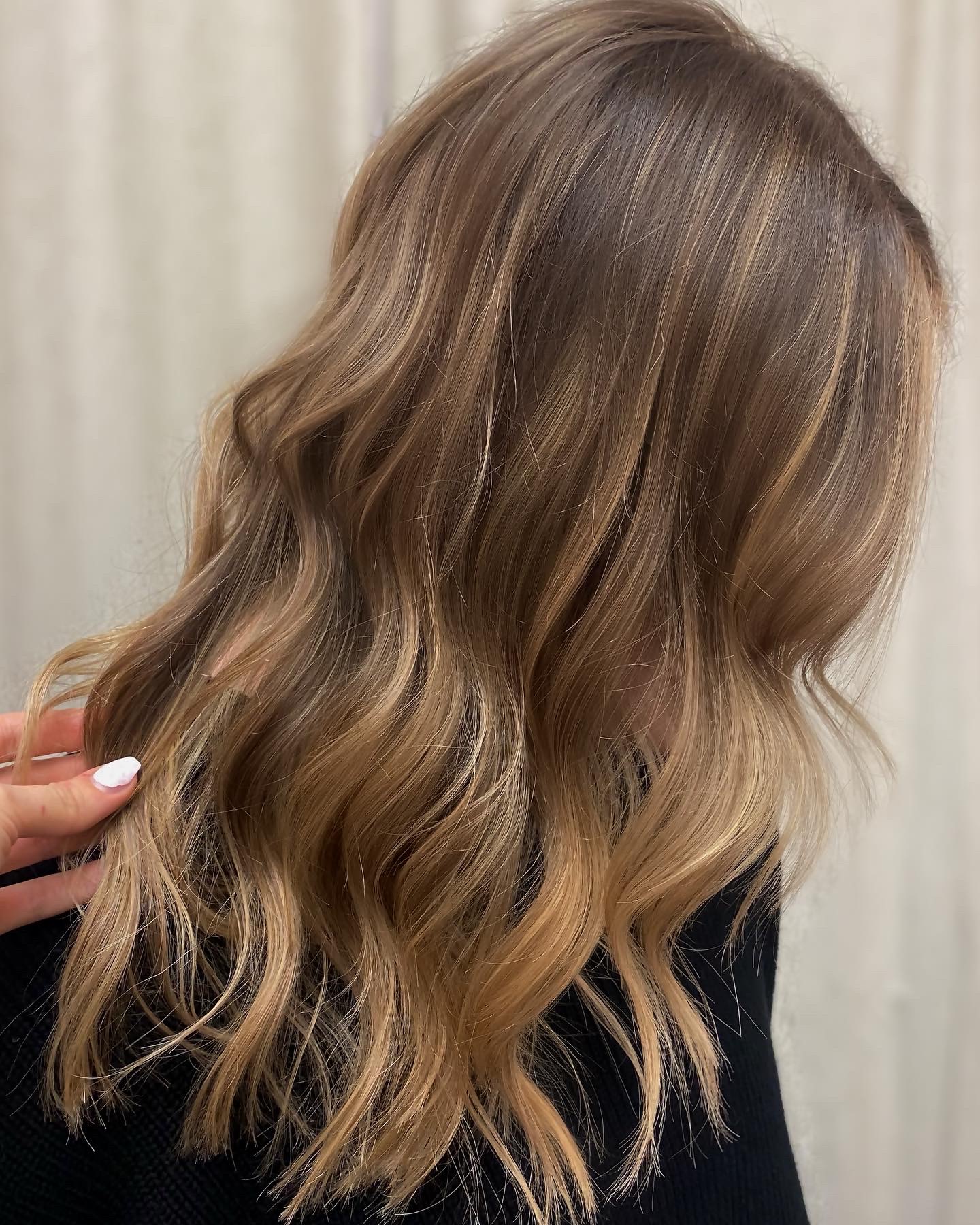
This is the balayage that teaches you what soft means. The dark blonde soft balayage starts with a deeper base and paints lighter blonde tones in a way that blurs every line. The result is a color transition that looks like you spent a month at the beach, not four hours in a chair. To get this, tell your stylist: keep the base dark at the roots, place the balayage mid-shaft to ends, and use a low-lift toner to avoid brassiness. The collarbone layers keep the movement visible, and the wavy blowout shows off the blend. Medium density hair holds the ribbon effect without swallowing it.
Chin Ash Blonde Balayage Blend
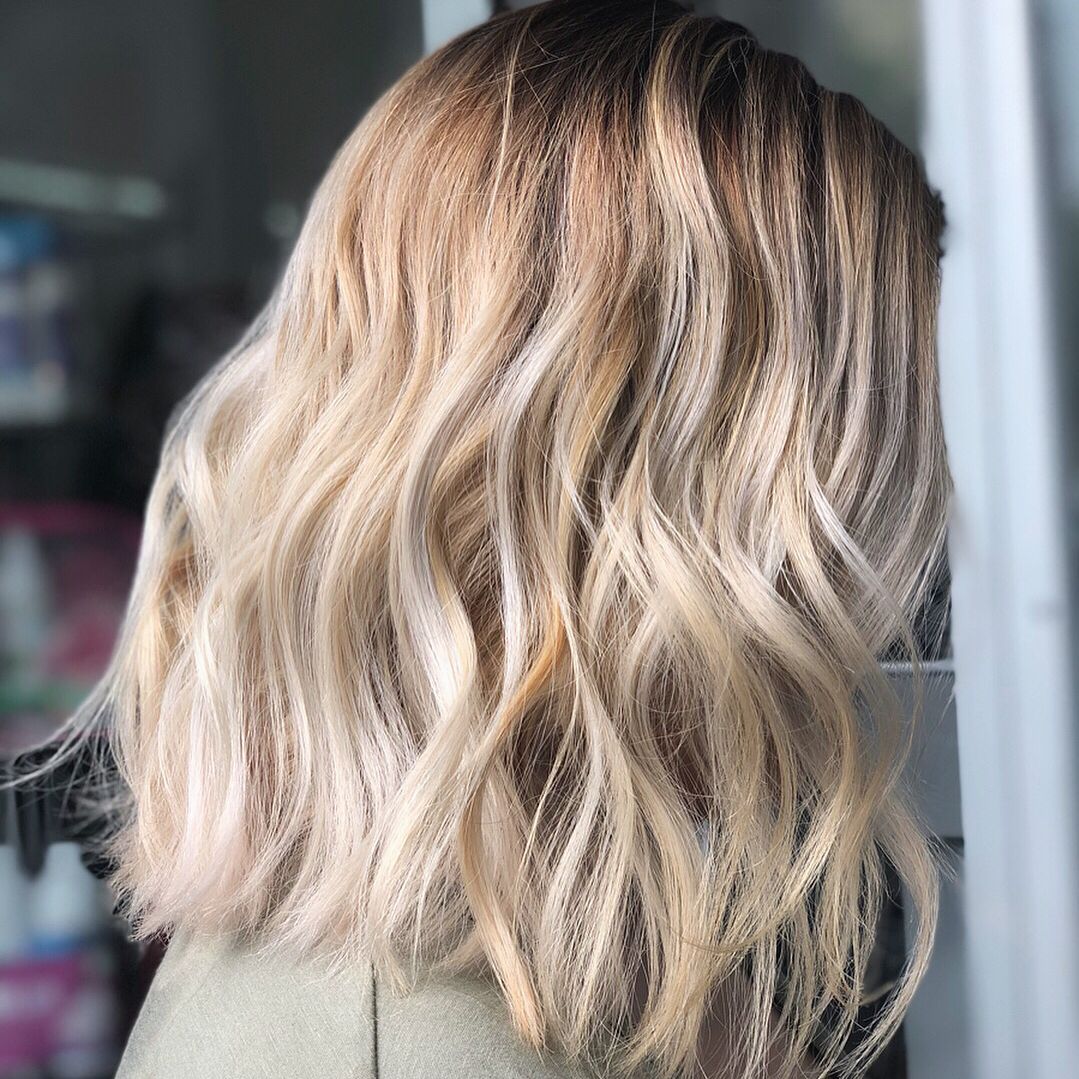
I’ll admit it: I thought chin-length ash blonde would be easy. The ash blonde balayage chin length looks cool in the chair, but the cool-toned colour blend shows warmth at the roots by week three. Toning every six weeks is non-negotiable. The shorter length means every new inch is visible. Trims every eight weeks keep the choppy layers from looking ragged. Medium density wavy hair holds the shape, but the fade is still there.
No Bangs Collarbone Neutral Blonde Balayage
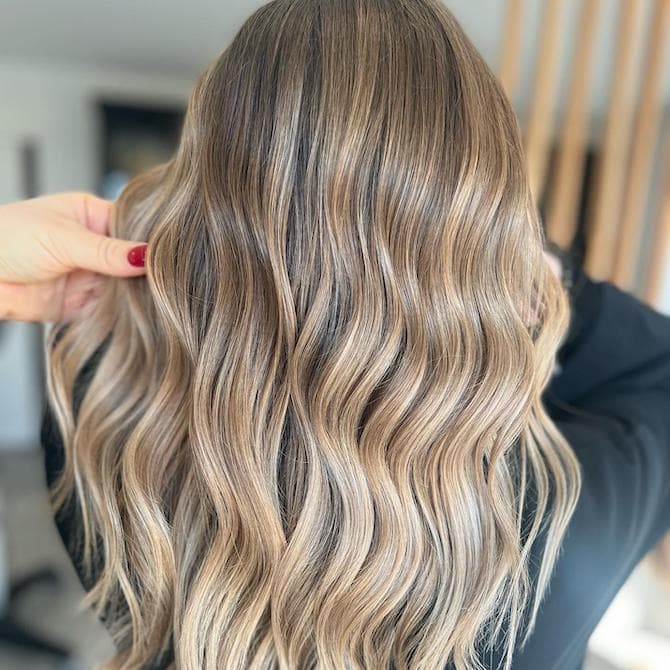
A Tuesday in April, your hair doing exactly what you asked it to. That is neutral blonde balayage thick hair at its best. The harmonious blend of neutral tones means it works in every season — no brassiness in summer, no flatness in winter. The collarbone length with loose waves shows off the depth without trying. Thick hair holds the wave pattern for hours, and the neutral base means the colour stays put. The balayage technique places the lighter pieces in ribbons, so the root line stays soft. This is the shade you forget you have because it never fights you. It transitions from spring to fall without a second thought.
Mid-Back Dark Blonde Voluminous Curls
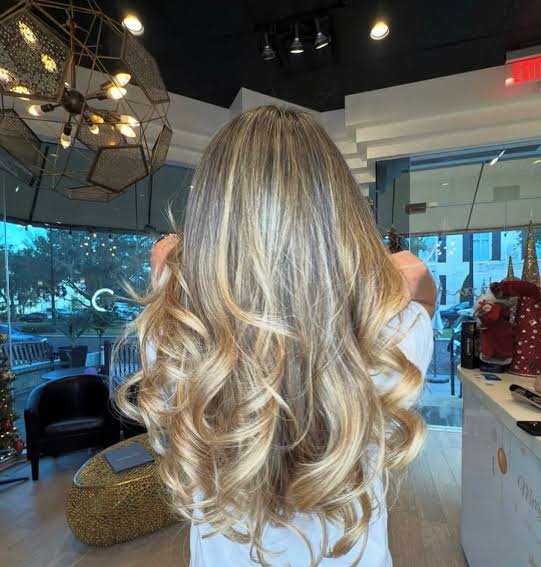
Honestly, I’m a sucker for a balayage that actually reads as dimensional, and this one delivers. The dark blonde base keeps it grounded while the blonde balayage highlights sweep through the mid-back length in thick, wavy curls. The layered cut gives the volume somewhere to live, and the middle part lets the colour fall evenly. The tone leans warm, which keeps the blonde from going ashy.
Set this against a flat-ironed blonde balayage and the difference is night and day. Where those styles go limp by noon, these dark blonde balayage voluminous curls hold their shape through a full day. The thickness of the texture does the heavy lifting, but the balayage technique—painted closer to the root on some sections—adds depth that keeps the eye moving. It’s not a subtle look, and it doesn’t try to be. If your hair goes flat by 4 pm like mine, this is the counterargument.
Shoulder Medium Brown Golden Blonde Balayage
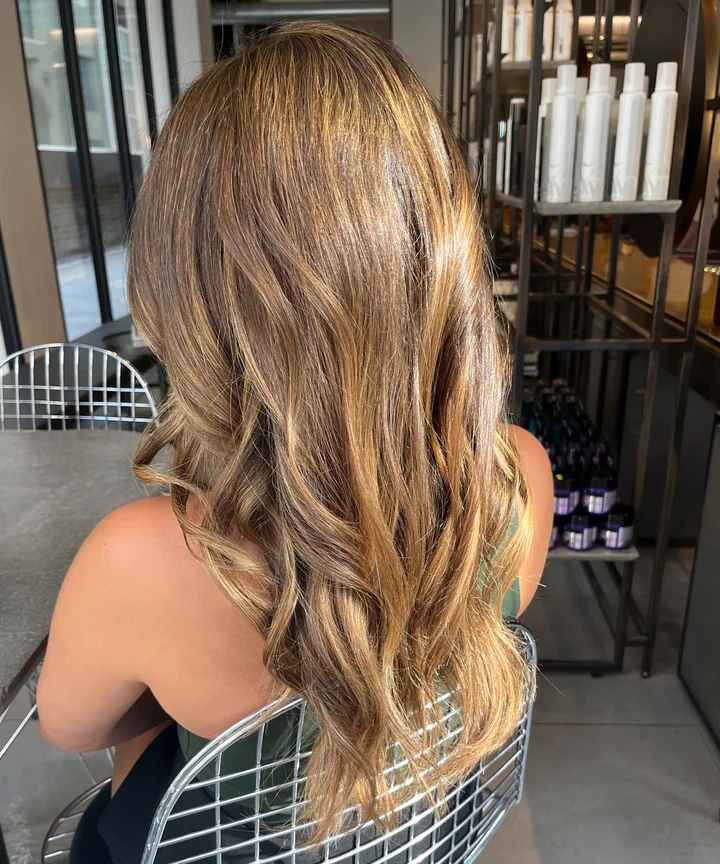
The golden tones here work best on medium to warm skin undertones—they pick up the warmth and reflect it back. On cooler skin, the golden blonde highlights can read brassy, so skip if you run pink or olive. The medium brown base adds contrast without going harsh, and the shoulder length keeps the colour from overwhelming a smaller frame. The honest downside: the golden tone fades faster than ash, so expect a toner visit around week 12 if you want to keep the glow. Still, for the right skin tone, this medium brown golden blonde balayage is a low-commitment way to go lighter without the full bleach.
Chin Textured Bob With Blonde Balayage
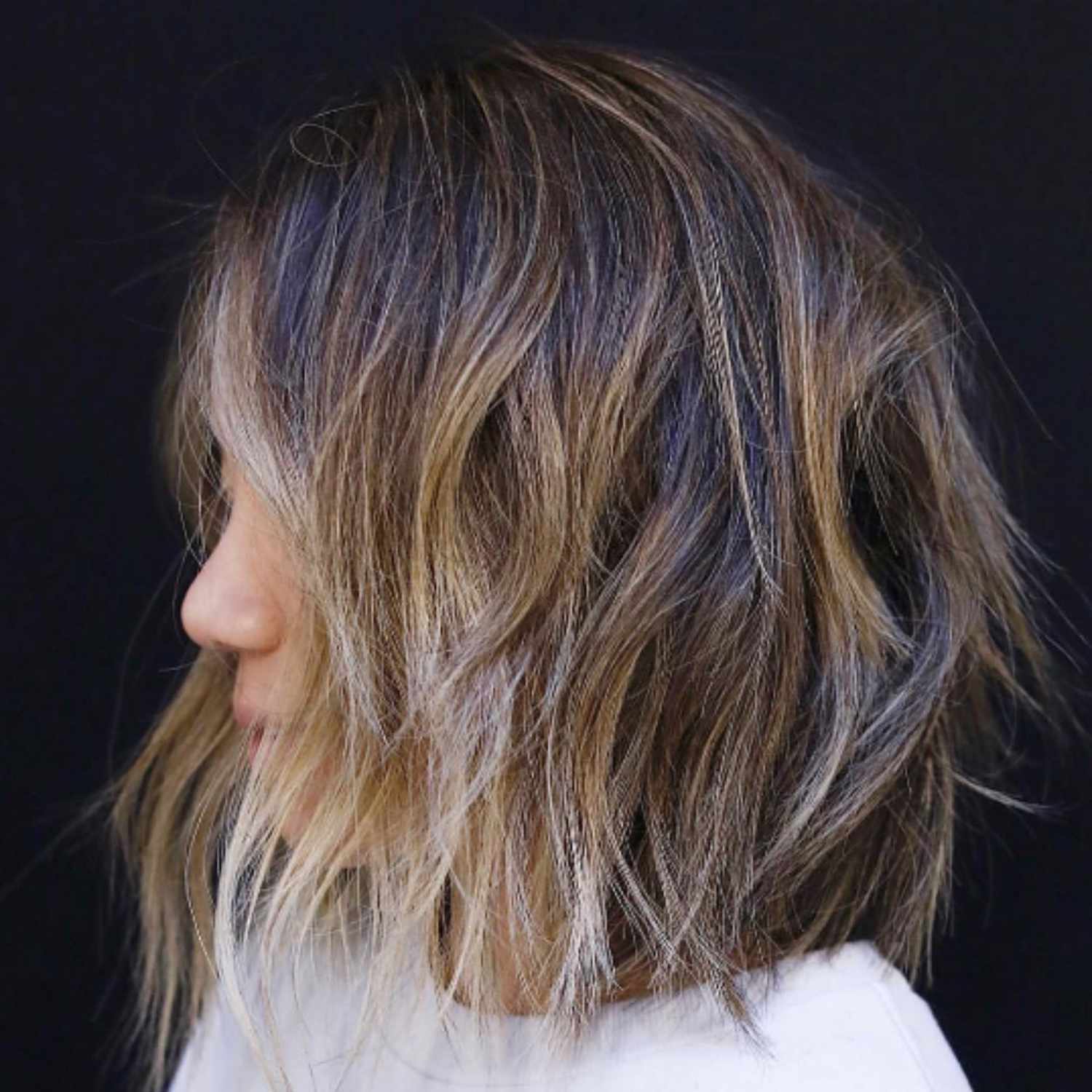
How does a bob this short still show off balayage? The answer is in the choppy layers. The stylist cuts the bob with internal texture, then paints the lighter blonde balayage onto the pieces that fall forward. Styling takes 10 minutes: spray a texturizer into damp hair, scrunch, and let air-dry. The side part lets the colour sweep across the chin. The textured bob blonde balayage relies on those choppy layers to catch the light—without them, the colour would sit flat.
Mid-Back Medium Blonde Subtle Highlights
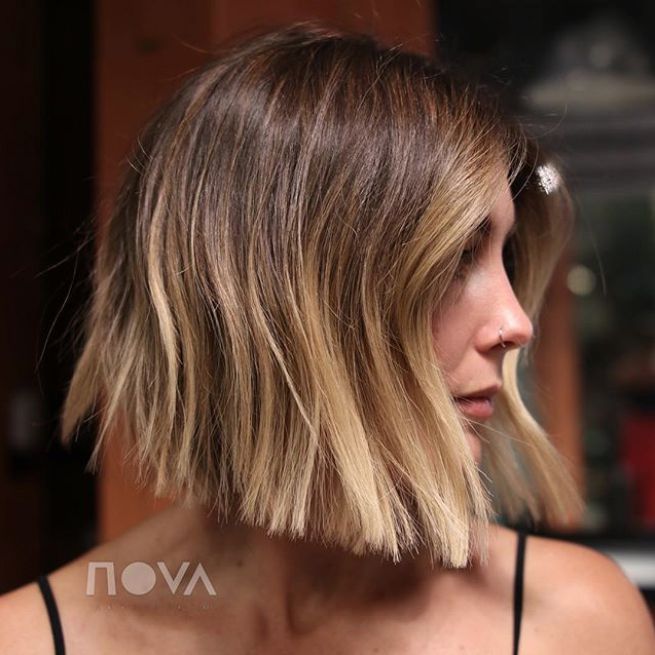
I’ll admit it: I used to think subtle highlights were boring. Then I lived with them for a season and changed my mind. These medium blonde lighter blonde highlights are painted sparingly—just enough to catch the light without screaming ‘I sat in a chair for six hours.’ The base is a medium blonde, so the grow-out is nearly invisible. By week 12, you still look sun-kissed, not skunky.
The wear reality is simple: you can skip trims for 12 weeks and the shape holds because the layers are long. The highlights fade gradually, so no urgent toner appointment. If you want a natural sun-kissed look that doesn’t demand a schedule, this is it. Just avoid heat without protection, because the lighter pieces can dry out faster than the base.
Loose Waves Mid-Back Dark Brown Seamless Blonde
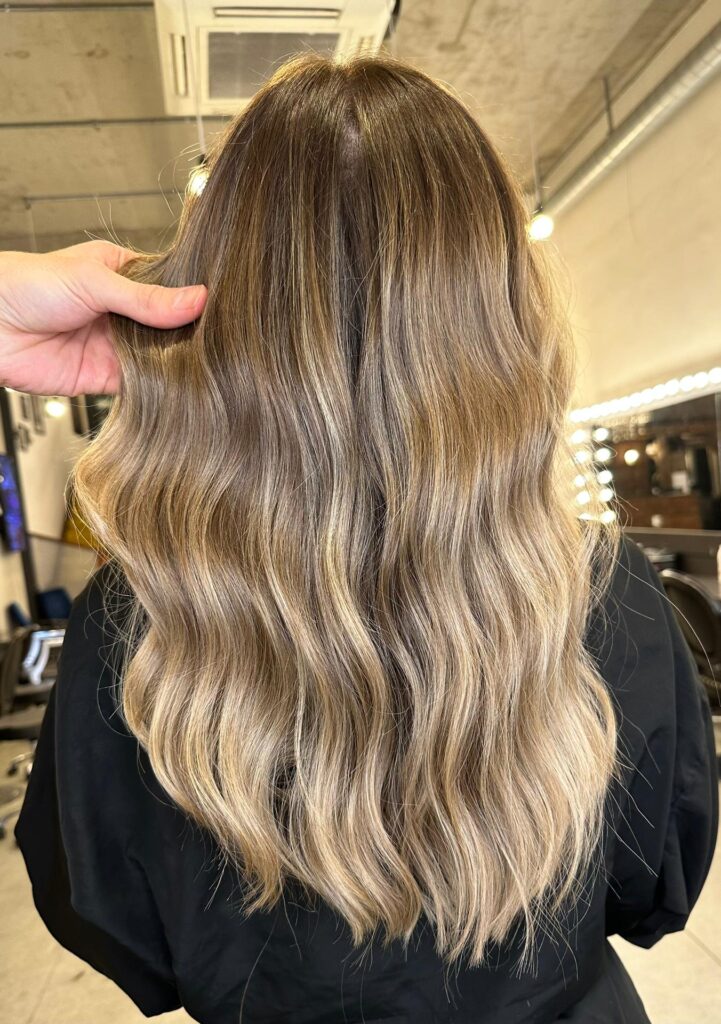
The biggest mistake people make with this look is trying to do it at home. A dark brown seamless blonde balayage requires a stylist who understands how to blend the lightener through the mid-lengths without a harsh line. The result is dimensional and blended look that grows out gracefully—no demarcation line at week six.
The seamless blend works because the balayage is painted in soft, sweeping strokes from mid-shaft to ends. The dark brown base stays untouched near the root, so the grow-out is a slow fade, not a stripe. This is a salon-only job: the technique demands a trained eye for placement and timing. Book it, and you’ll get 12 weeks of low-maintenance waves. Try it in your bathroom mirror, and you’ll get regret.
Shoulder Golden Blonde Balayage
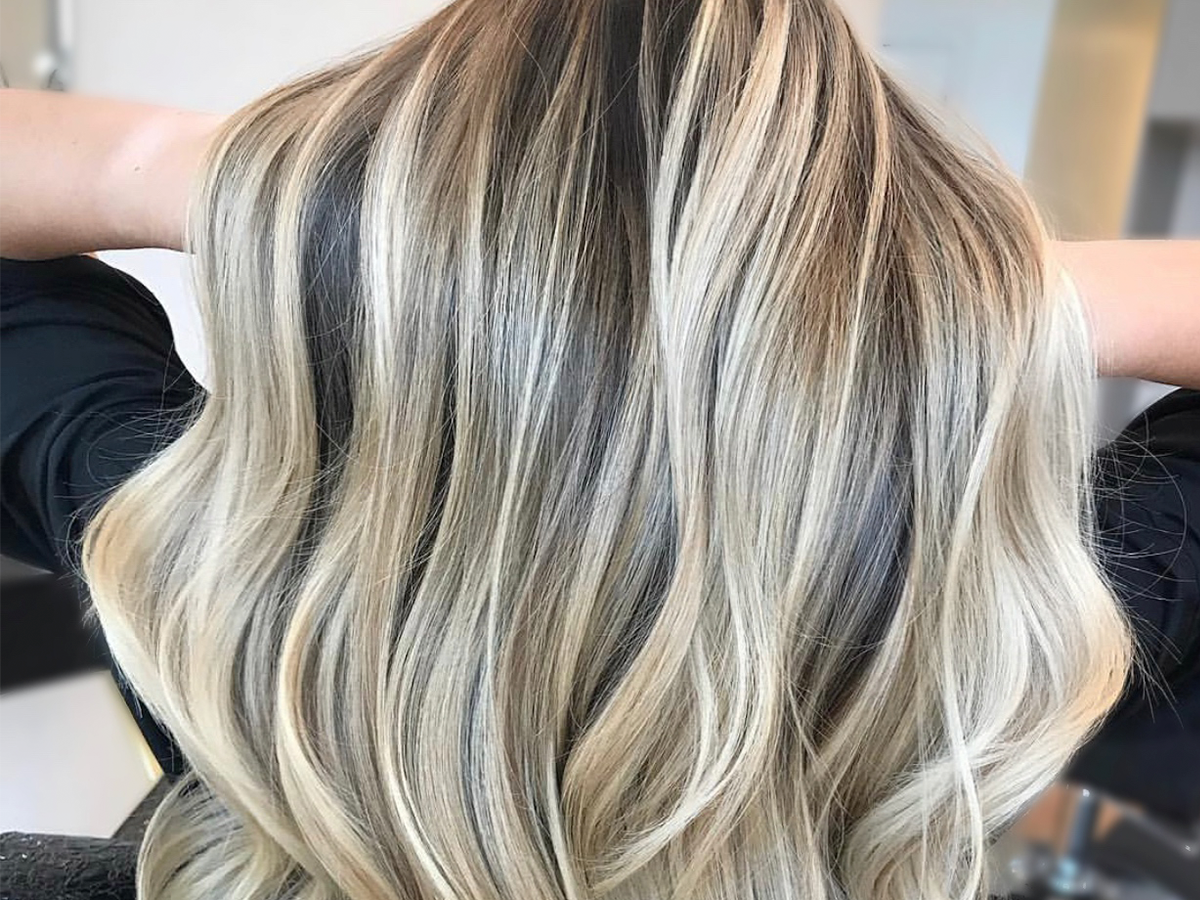
Summer demands a colour that doesn’t fight the sun. This golden blonde balayage shoulder length does the work for you. The base is a warm golden blonde, hand-painted into lighter ribbons that catch light like a beach afternoon. The technique is balayage, so the grow-out is soft. No harsh line at week four. The shoulder length keeps it from tangling in humidity, and the medium-density wavy texture holds a soft wave without a curling iron. The tone is dimensional golden blonde tones, not flat. It reads as sun, not salon. On a summer trip, it fades gracefully. That’s the point.
Mid-Back Ash Base With Platinum Balayage
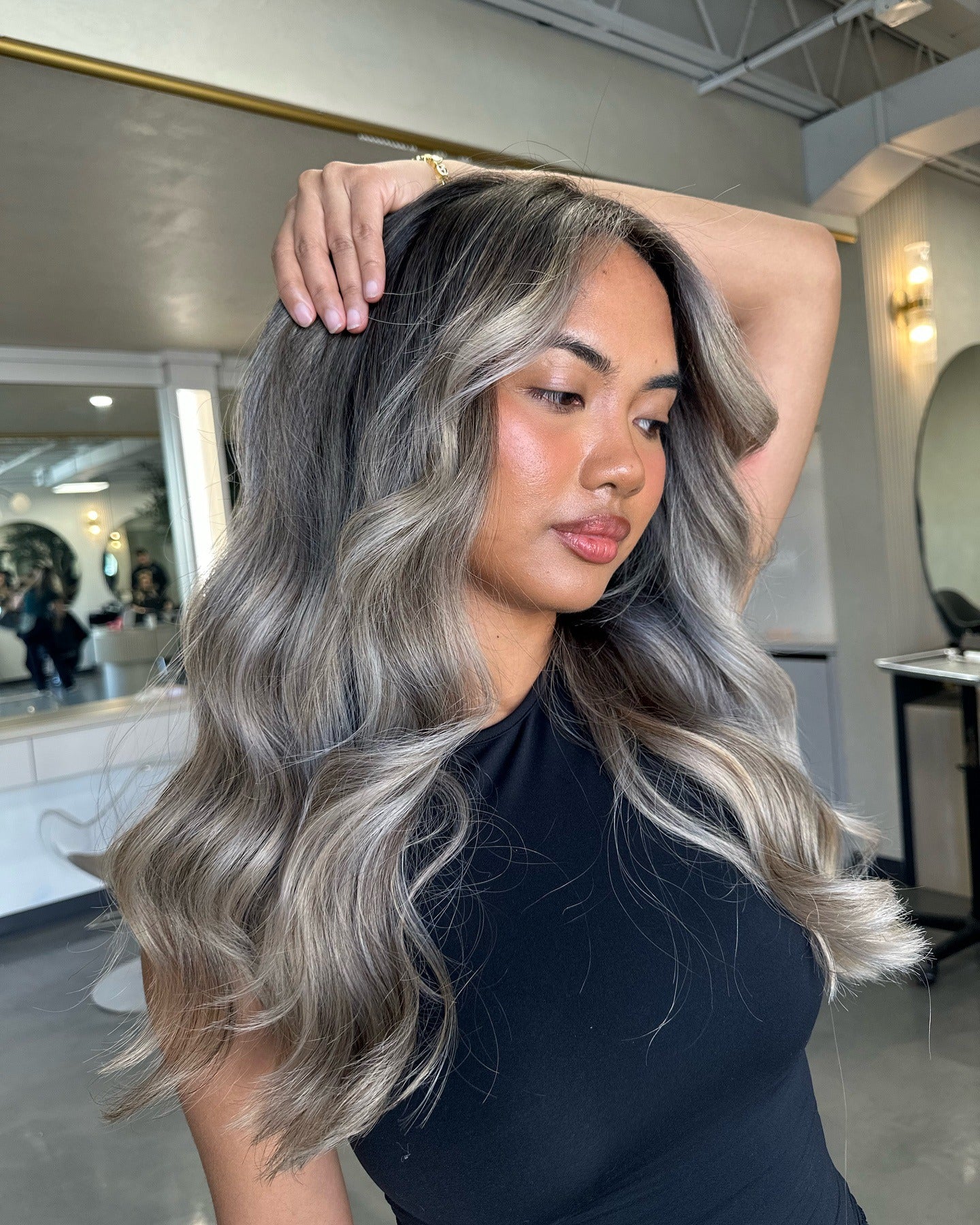
Can you pull off cool tones? That depends on your natural base and your tolerance for maintenance. This ash blonde platinum balayage mid-back uses an ash blonde base with platinum pieces painted through the mid-lengths. The technique is balayage, so the line is soft. The tone is cool, almost icy. The mid-back length and thick wavy texture give it body, and the face-framing bangs curtain the forehead.
But cool blonde is a demanding friend. Brassiness shows fast. You need a toner every three to four weeks. The curtain bangs separate by noon without a quick restyle. If your skin has warm undertones, this can look ashy against you. It suits cool or neutral skin best. For warm skin, a golden blonde balayage might be a better match.
Collarbone Platinum Golden Blonde Blowout
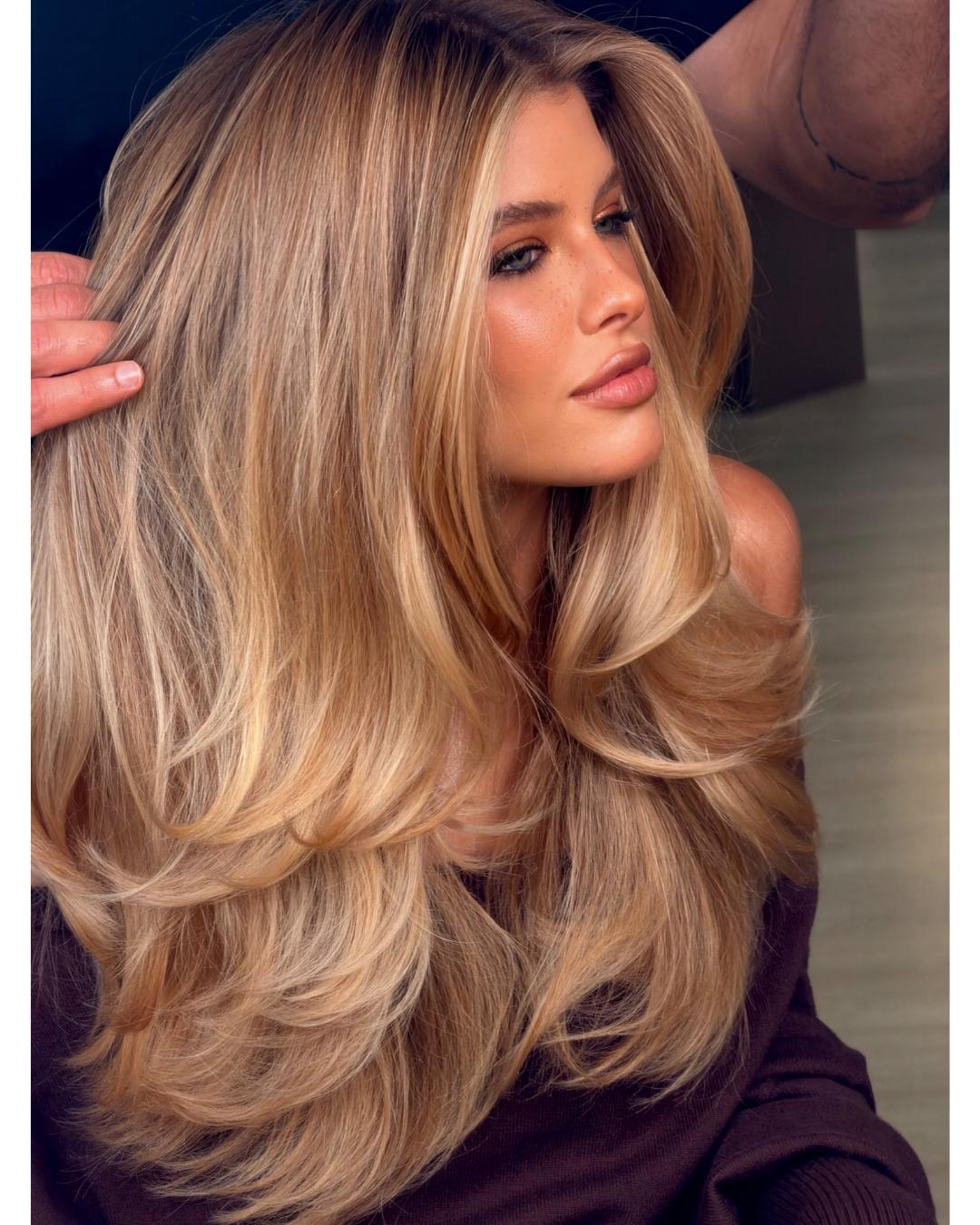
I saw this and thought: that is a lot of work. And it is. The platinum golden blonde balayage starts with a platinum base, then golden blonde ribbons are painted through the mid-lengths and ends. The technique is balayage, but the stylist also uses a root shadow to blend the grow-out. The result is a multi-dimensional effect: platinum at the roots, golden through the middle, lighter at the ends. The collarbone length and thick wavy texture hold a voluminous blowout well. The side part adds asymmetry. This is a salon colour, no question. The application takes hours because each section is painted by hand. The tone is bright and dimensional, not flat.
Front View Mid-Back Dark Brown Warm Balayage
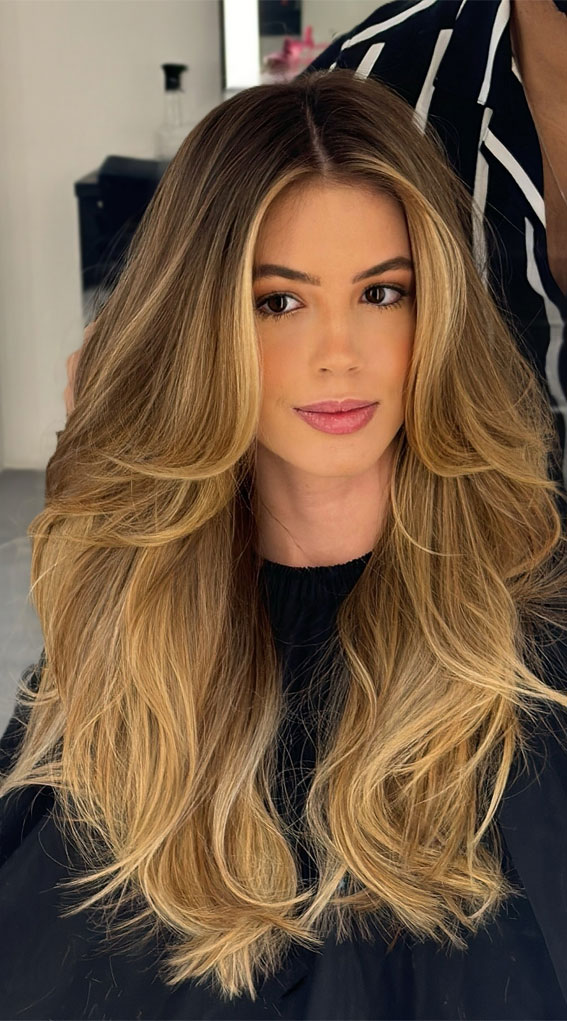
Monday morning, you wash it and let it air dry. By Friday, it still looks like you tried. That’s the reality of this dark brown caramel blonde balayage. The base is dark brown, with caramel and butter blonde balayage painted through the mid-lengths and ends. The technique is balayage, so the transition is soft. The tone is warm, a warm sun-kissed effect that reads natural. The mid-back length and thick wavy texture give it movement. The long layers keep it from feeling heavy.
The darker base means grow-out is invisible for weeks. No harsh line. You can go ten weeks between trims. Toner might be needed around twelve weeks if the warmth fades. But for a busy week, this is the colour that works, and you don’t have to style it every day because the waves hold from a previous day’s curl.
Mid-Back Honey Blonde Balayage Contrast
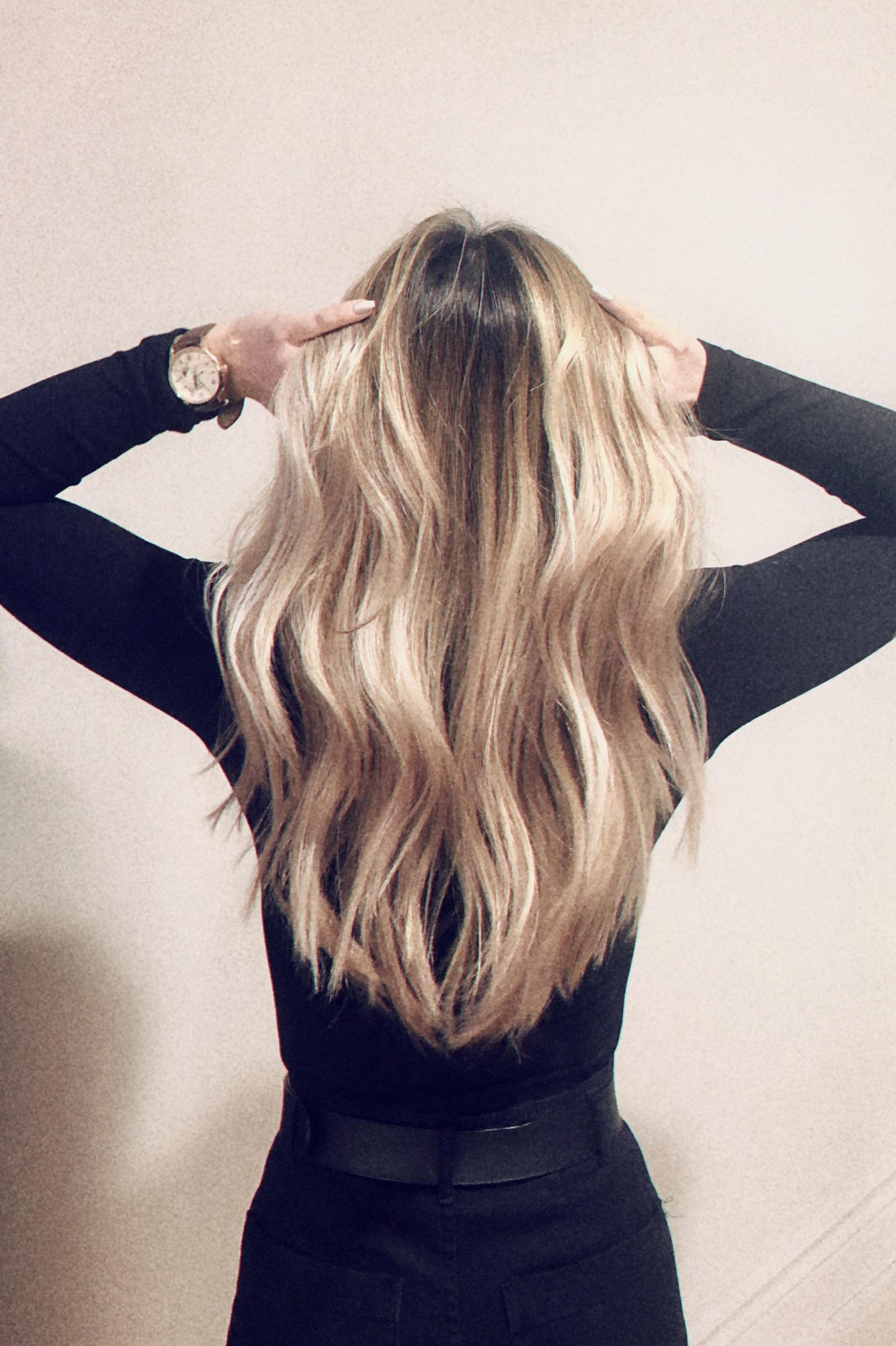
If you want contrast, this is it. The honey blonde balayage dark base starts with dark hair, then honey blonde is painted from the mid-lengths to the ends. The technique is balayage, but the contrast is deliberate. The tone is warm honey, not ashy. The mid-back length and thick wavy texture show off the two-tone effect.
Compare this to a more subtle balayage where the difference is barely there. This one announces itself. The lighter blonde tones pop against the dark base. It’s not for someone who wants a natural grow-out. It’s for someone who wants the blonde to be the point. The back view shows the contrast best. This is a salon colour, and it takes time to get the placement right. But the result is a clear line between dark and light.
Mid-Back Natural Ash Blonde Balayage
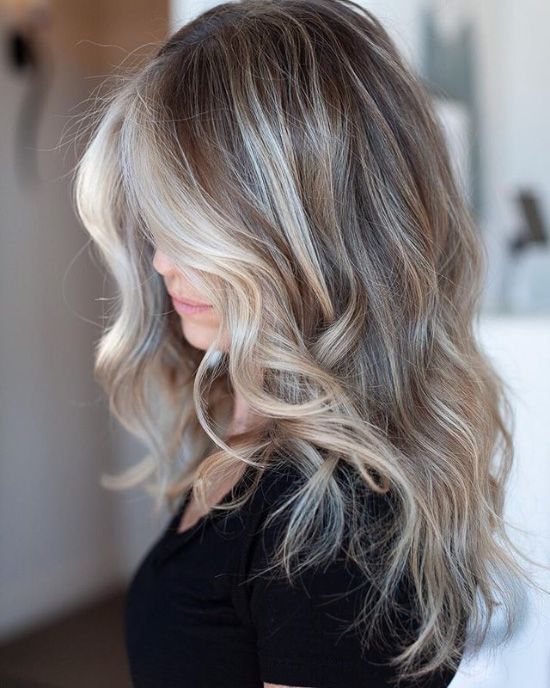
The ash tones in this balayage don’t just sit on the surface; they sink into the wave pattern, which is exactly what medium density wavy hair does best. A natural ash blonde balayage relies on a cool base and soft, hand-painted highlights that stay close to the root for subtle dimension. The mid-back length lets the colour breathe, and the loose waves catch the light without washing out the tone. The honest downside: ash can read flat if the base isn’t lifted enough, so this is a salon job, not a box dye experiment.
Collarbone Ash Base Lighter Balayage
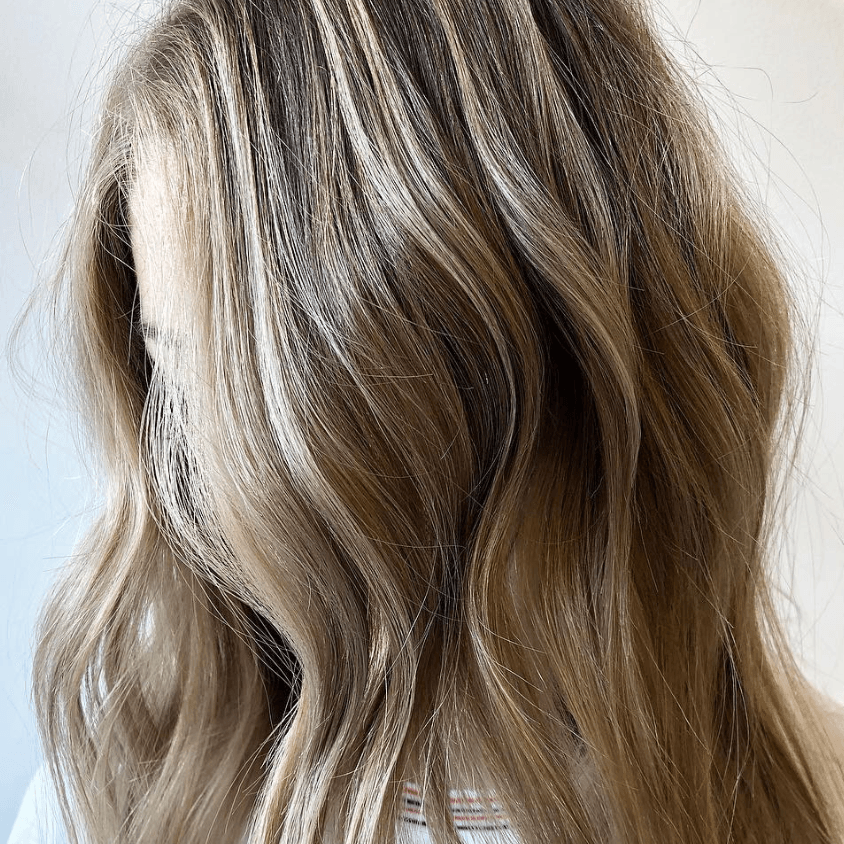
Ever wonder how a dark base gets to this cool ash without turning brassy? The technique behind this ash blonde lighter blonde balayage starts with lifting the hair to a pale yellow, then applying an ash toner that neutralises every hint of warmth. The ash blonde base stays deep and cool, while the lighter balayage pieces are painted slightly thicker around the face and ends for contrast. The collarbone length keeps the colour from feeling heavy, and the wavy blowout shows off the tonal shift from root to tip.
Final Thoughts
After writing all of these, I noticed something. The balayage that lasts isn’t the one with the most contrast. It’s the one that starts close to your natural base. I’m booking the collarbone ash base with lighter ends for next week. That one finally makes sense to me.