I kept seeing sky blue in my feed, then on the subway, then next to me in the salon chair. Not a full head, usually. A streak, a shadow, a fringe that caught the light. By 2027, it is not a trend anymore. It is a category.
This roundup has 45 ways to wear Sky Blue Hair 2027, from a five-minute pixie to a lob that needs a round brush. Fine hair, thick hair, round faces, sharp jaws — there is a version that works. I have sat through enough bad bleach jobs to know which ones hold and which ones fade by week three. These hold.
Choppy Pixie in Electric Blue

An electric blue pixie cut works best on fine, straight hair. The choppy layers add volume where there isn’t any naturally, and the short bangs keep the whole thing from looking like a helmet. A side part softens the forehead, which matters when the cut sits at ear length. I have fine hair, and this is one of the few cuts that doesn’t go flat by 4 pm. The texture holds because the layers are doing the work, not product. If your hair is thick or wavy, skip it. The choppy shape turns into a mushroom.
Blunt Bob With Blunt Bangs in Light Blue
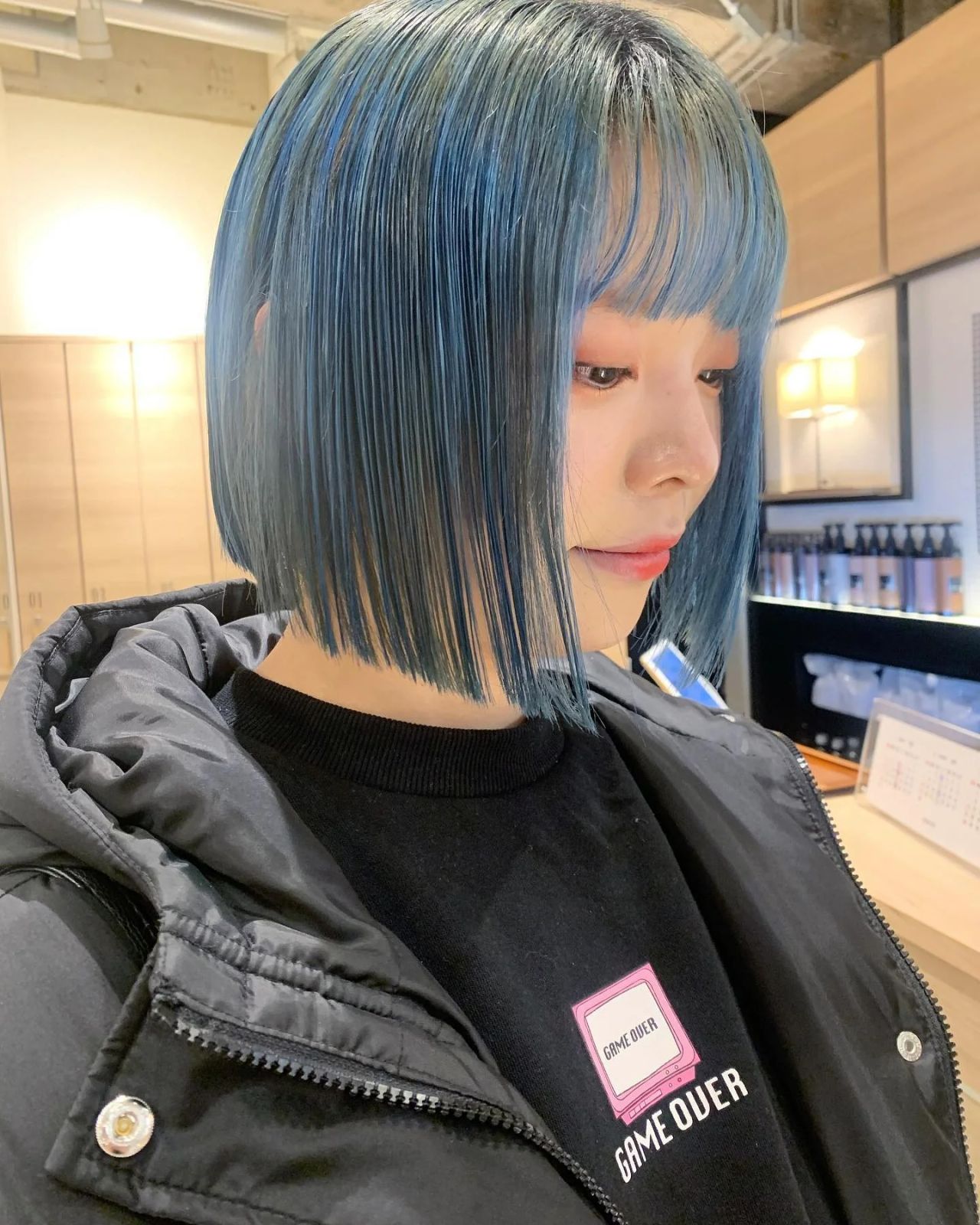
A blunt bob with blunt bangs is the sharpest thing you can do with light blue hair. It is not the soft, lived-in bob everyone wore last year. This one sits at the chin with a middle part and a straight line across the forehead. The blunt bangs demand a trim every three weeks, no exceptions. The bob itself needs reshaping every six weeks to keep that single clean line. If you want something that grows out gracefully, pick a different cut. This one is a commitment, and it looks best when you keep it.
Chin Bob With Side Swept Bangs in Bright Blue
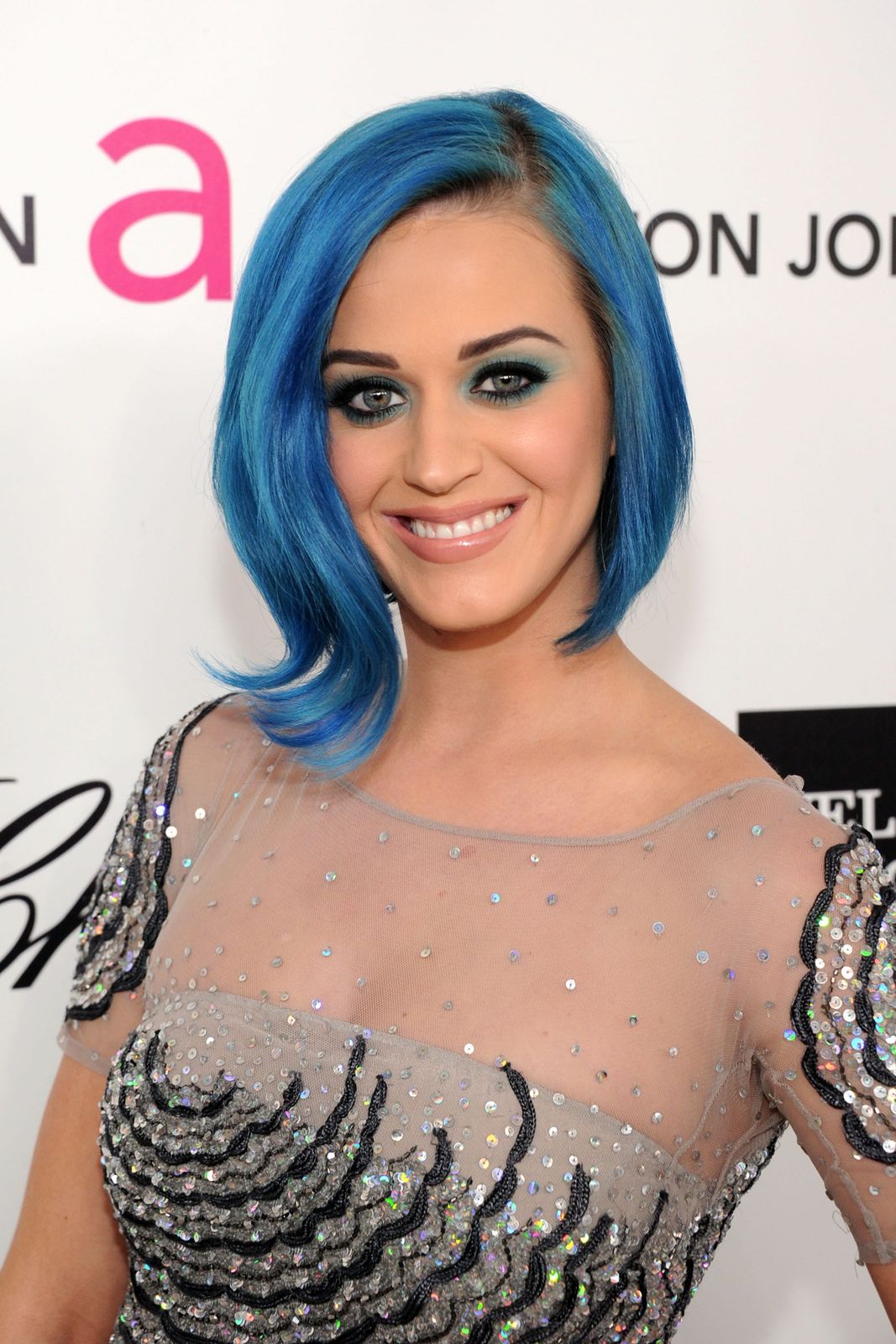
Does a bright blue bob with bangs look good on day one? Yes. Does it look good on day four? That depends on your blow-dryer. This chin-length bob with side-swept bangs needs a round brush and patience every morning. The ends curl under slightly, which means any humidity undoes the shape. I have fine hair, and by noon the side-swept bangs have migrated back to the middle. The bright blue colour is worth the effort, but the effort is real. Plan for 15 minutes of styling daily.
Blunt Bob in Sky Blue, Styled Straight
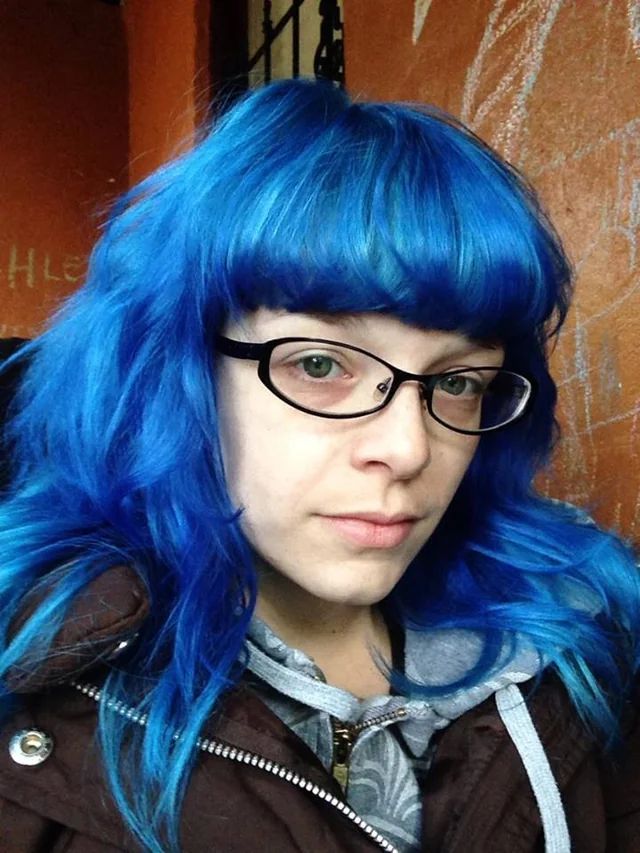
A sky blue blunt bob is a single shape, no forgiveness. The cut is one straight line from the middle part to the chin, no layers, no graduation. The colour is uniform, which means every imperfection in the cut shows. That is the point.
Tell your stylist: keep one blunt baseline, no texturizing, no point-cutting. The bangs hit just above the brow, straight across. The texture is straight, fine, and must be flat-ironed every day. A single wave breaks the line. This is not a cut for wavy hair or anyone who likes air-drying. It is a cut for people who enjoy precision.
Textured Bob with Wispy Bangs in Pastel Sky Blue
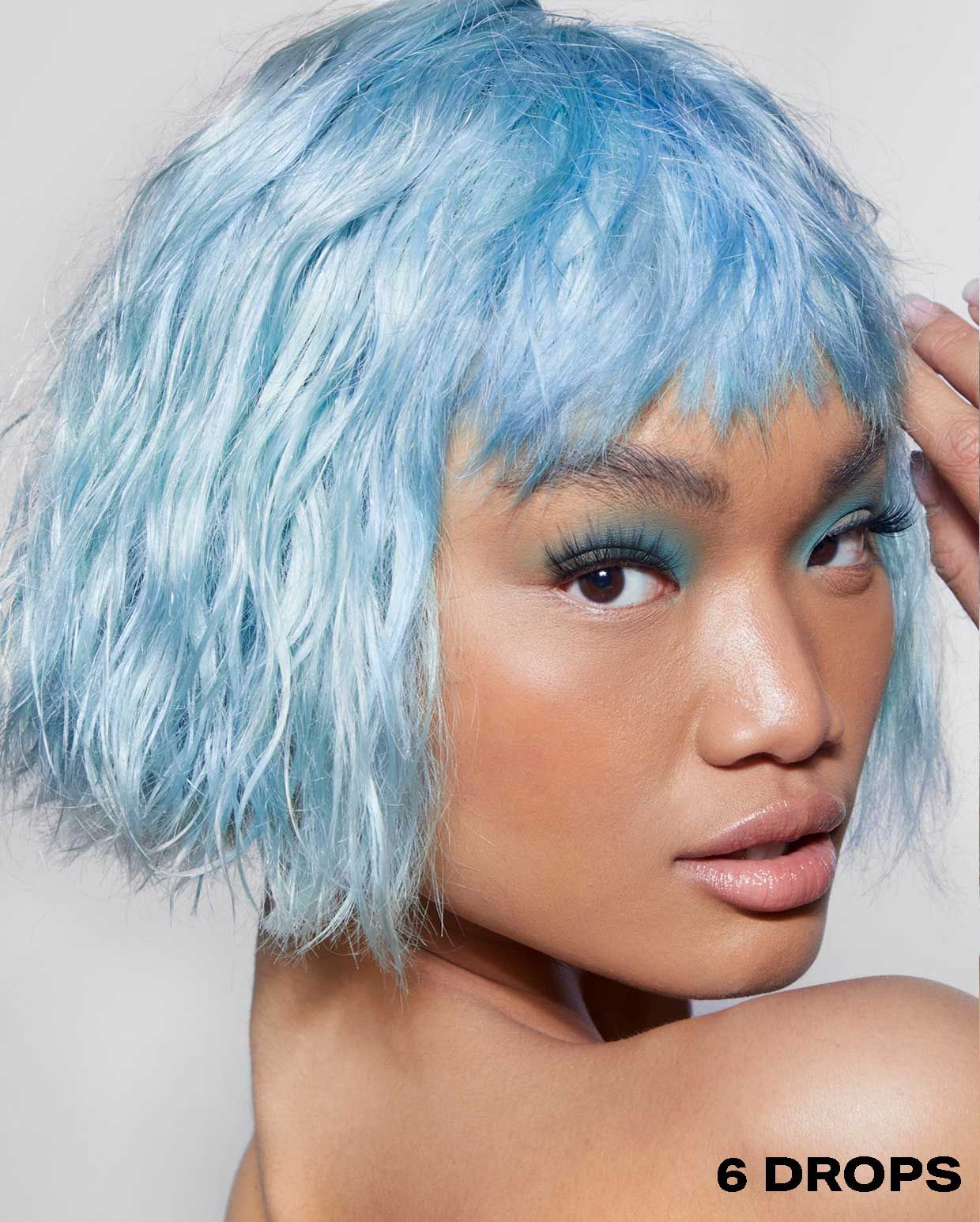
I was not planning to recommend a pastel sky blue bob with wispy bangs. Then I saw how it sits on fine, wavy hair. The short, wispy bangs do not weigh down the forehead, and the textured bob gives volume where fine hair usually goes flat. The pastel shade is soft enough that it does not compete with the cut. This is the bob for people who want colour and shape without a daily flat iron. It air-dries into something that looks intentional.
Angled Bob with Icy Blue Tones
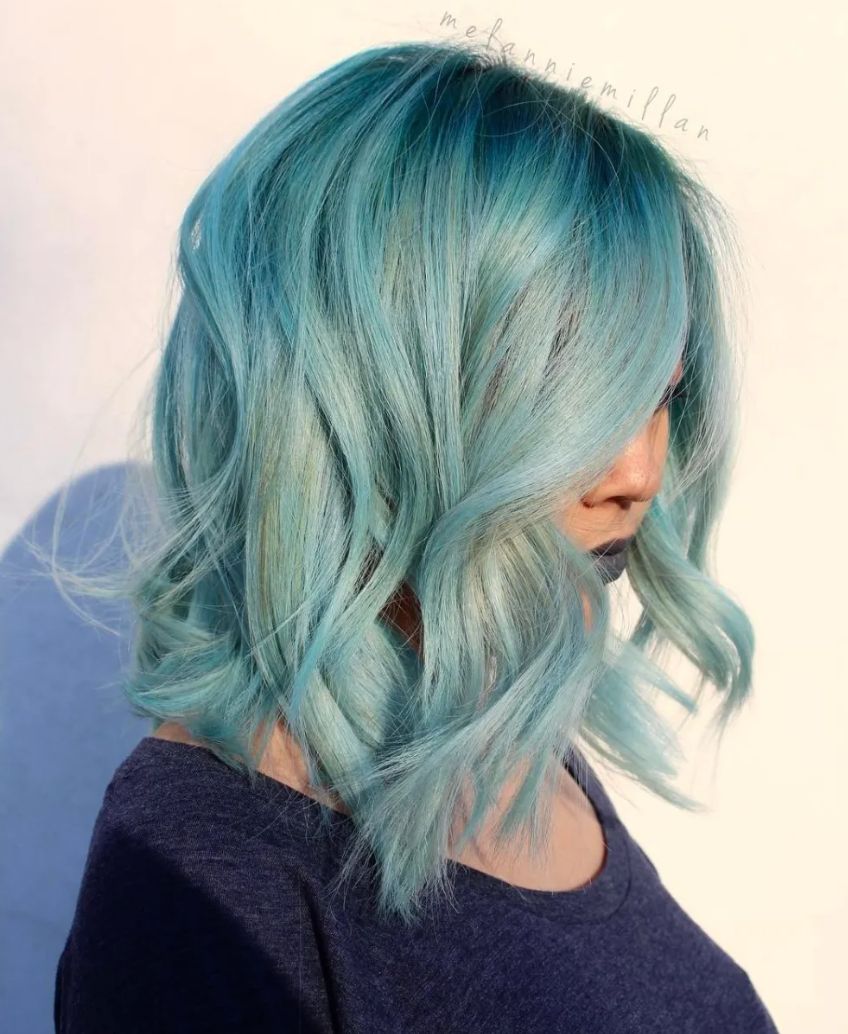
That minty undertone caught me off guard. The icy light blue bob sits at chin length with a steep angle toward the front, loose waves that land somewhere between beach and salon. Side-swept bangs soften the sharp line, and the medium density keeps it from looking thin. This is a spring cut, the kind that makes sense when the light shifts and you want something cool without going full silver. The wavy texture gives the angle movement instead of a hard edge.
Collarbone Lob with Sky Blue Face-Framing Highlights
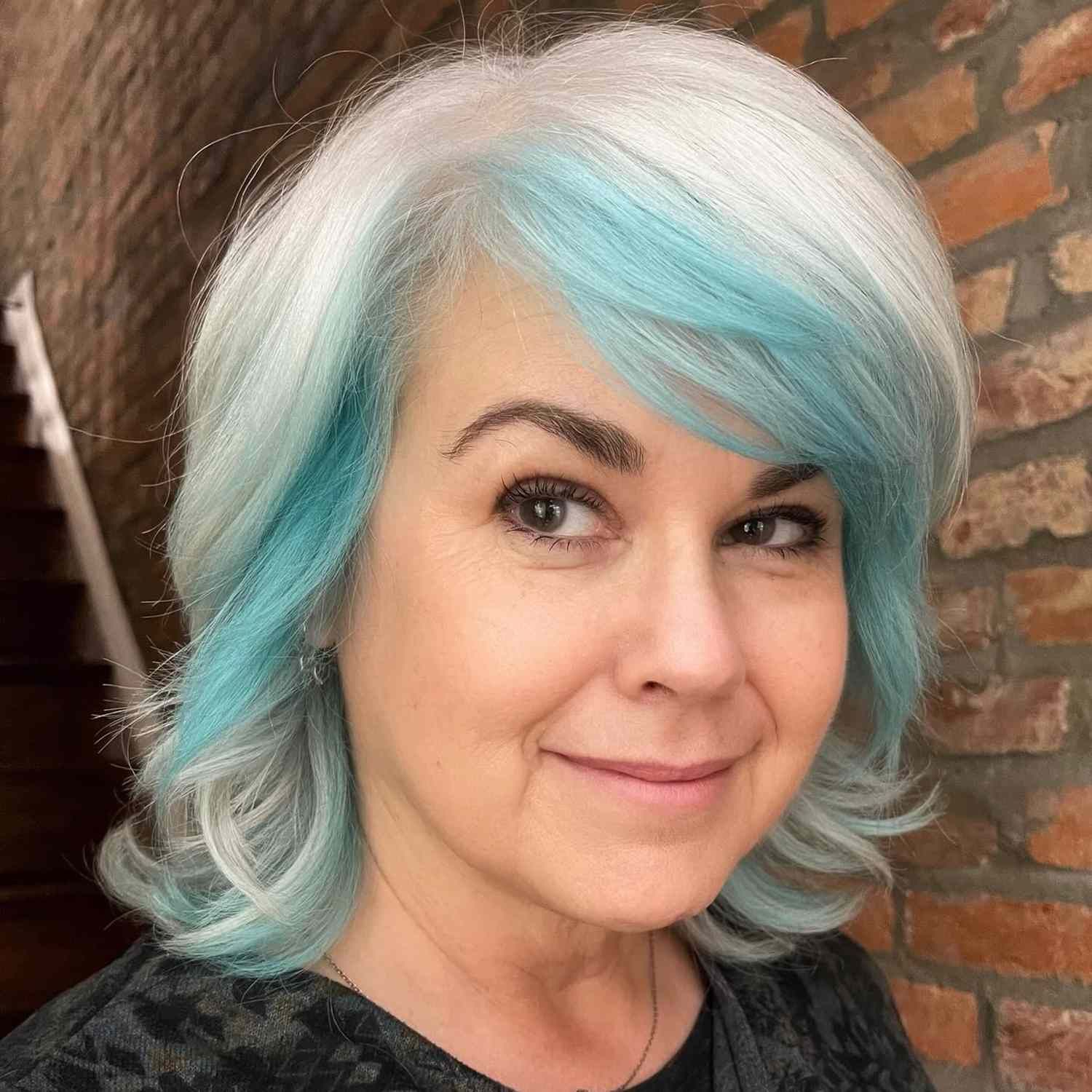
The white base is the real commitment here. A sky blue highlights lob starts with a full lightening to a clean white, then sky blue streaks are painted through the front sections, wrapping around the collarbone length. Side-swept bangs catch the brightest pieces. The wavy blowout gives it volume, but the upkeep is the story. That white base needs a purple shampoo every wash, and the highlights will fade toward green by week four if you skip toning. A trim every eight weeks keeps the lob from turning shapeless. The brassiness will find you.
Sleek Sky Blue Blunt Bob
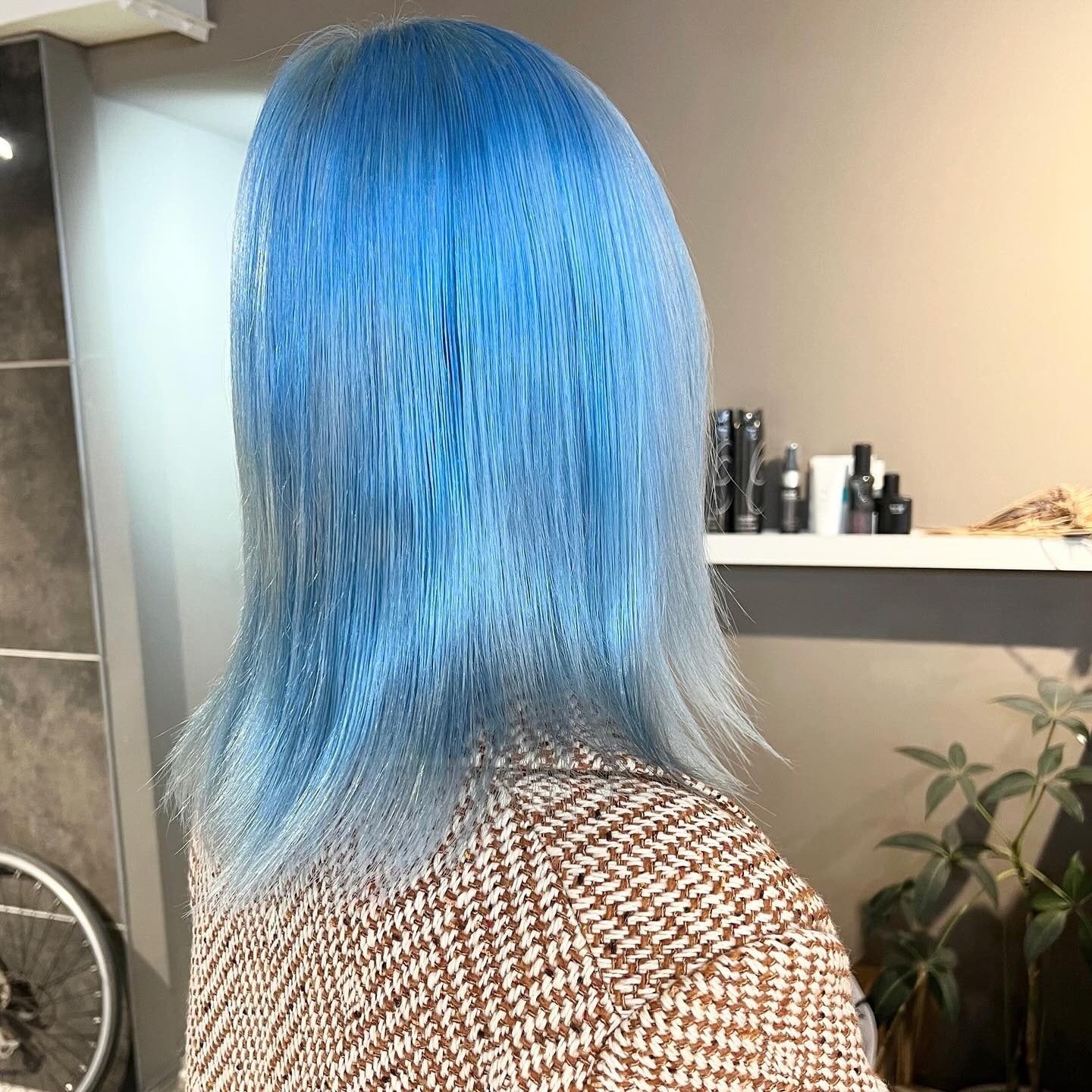
Flat iron, section by section, no shortcuts. The sky blue blunt bob back view shows a collarbone length with a straight, unbroken line and no bangs, just a middle parting that drops the colour evenly on both sides. The fine texture works in its favour here — it lays flat without puffing. But this is not a bathroom-mirror job. Getting that sky blue even from root to tip requires a double process, and the blunt baseline needs a stylist who cuts dry, section by section. One uneven snip and the whole line wobbles.
Wavy Lob with Sky Blue and Side Swept Bangs
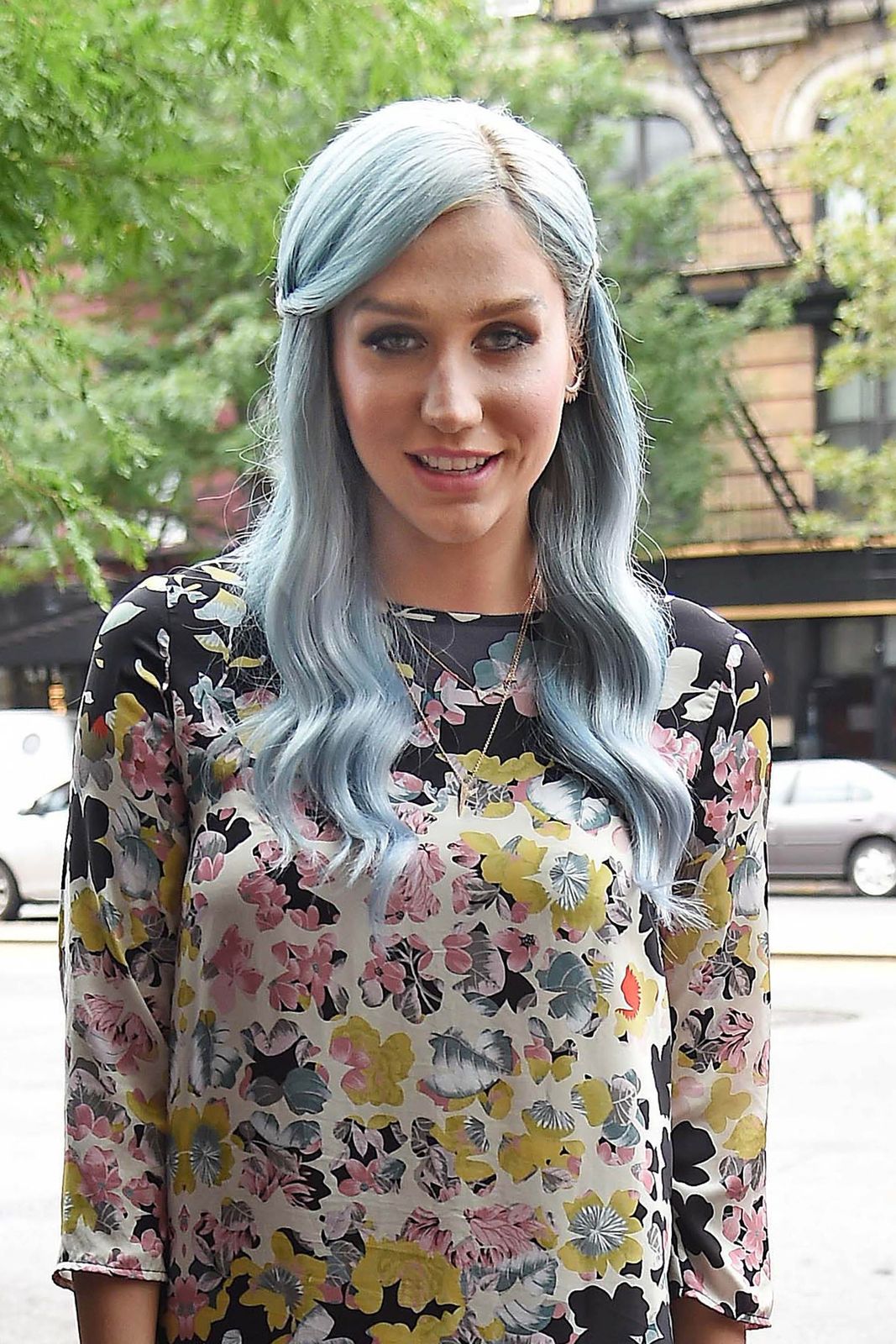
Does your hair wave on its own or do you make it wave? The sky blue lob with bangs is a layered collarbone cut with side-swept bangs and a middle parting. The thick, wavy texture means it holds shape without product, but the layers need to be cut into dry hair to land right. If your hair is naturally wavy, this lob air-dries into something presentable. If it is straight, you are diffusing every wash. The side-swept bangs are the variable — they fall well on oval and heart shapes, but on a round face they shorten the forehead too much.
Front View Wavy Lob with Sky Blue and Curtain Bangs
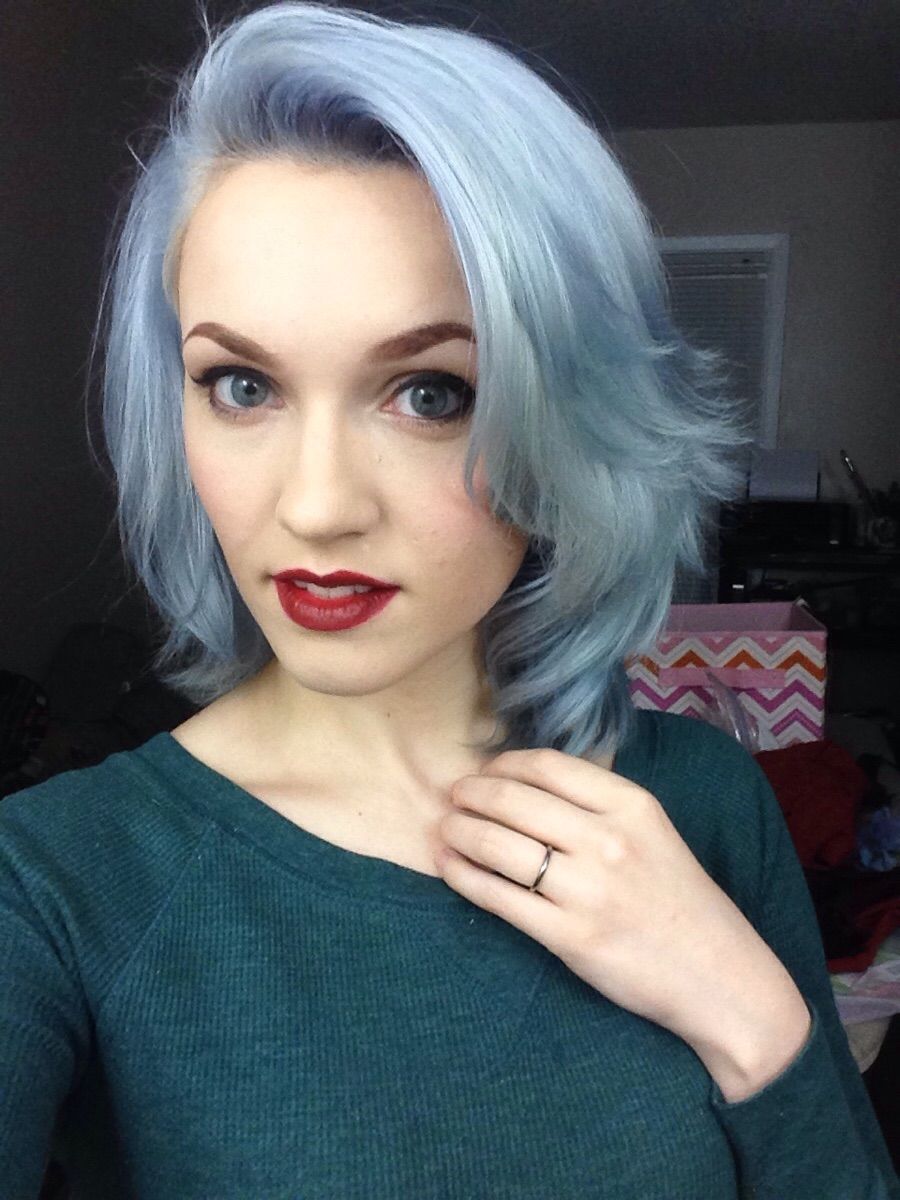
The curtain bangs make the difference here. A sky blue lob with curtain bangs hits collarbone length with soft layers throughout, the front view showing a middle parting that lets the bangs frame both sides of the face. The wavy blowout adds volume at the roots, which helps if your face is longer — the width at cheekbone level balances the length. Medium density is the sweet spot; fine hair loses the wave by lunch, thick hair poufs. The curtain bangs need a round brush and ten minutes every morning. They sit well on square and oval faces, less so on round.
Lob with Ash Blue Highlights on Grey Base
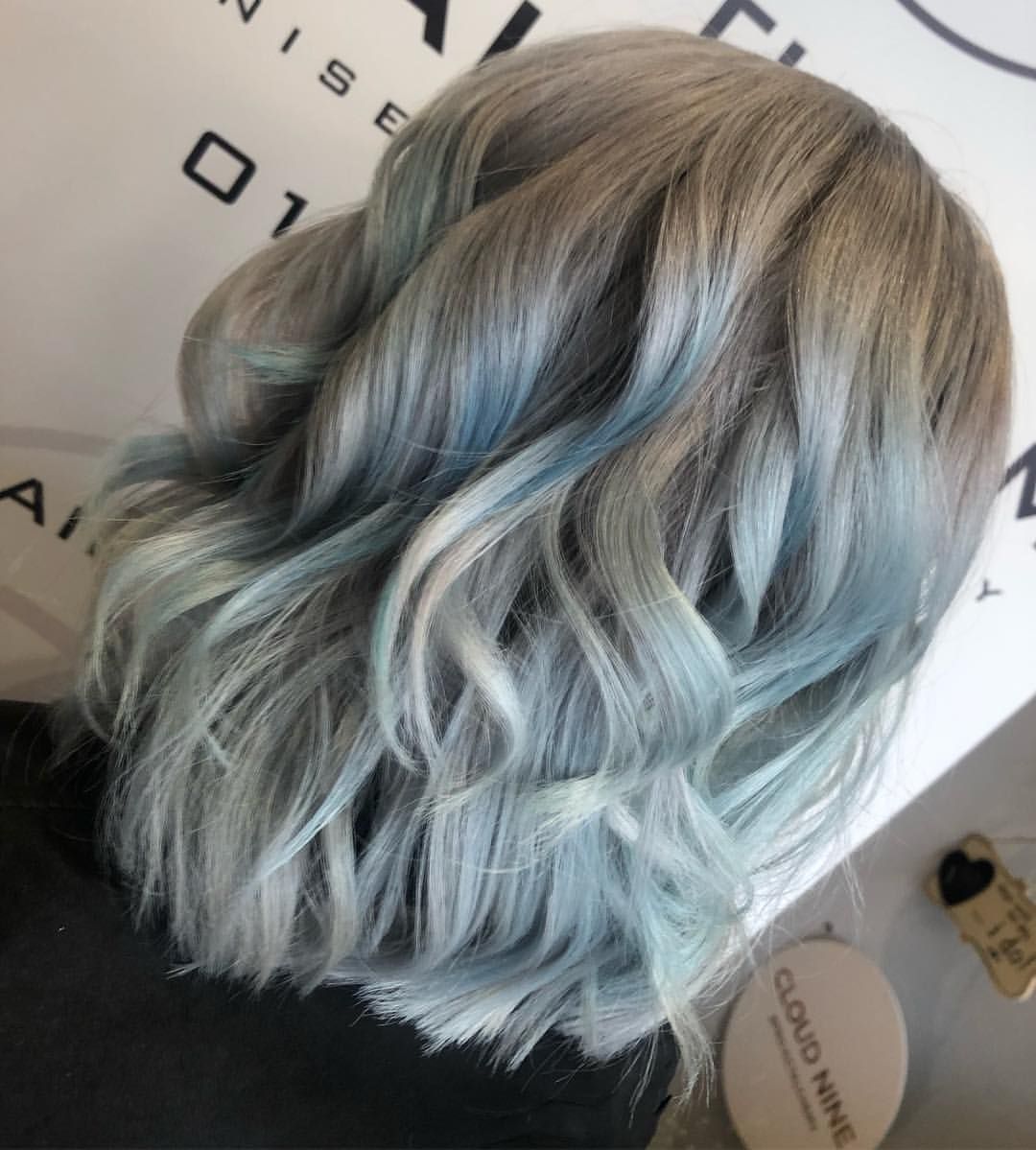
I will admit I tried to skip the base step once. Grey base first, then ash blue highlights lob layered on top — that is the order, and skipping the pre-lighten is how you end up with muddy green. The lob hits collarbone, no bangs, a middle part that lets the wavy texture show. You need the grey underneath to keep the ash from pulling warm. A toner every fourth wash keeps it cool, and a trim every eight weeks stops the shape from turning into a sad triangle.
Shoulder Length Blue with Dimension

Best bright blue shoulder length hair I have seen this season. The trick is lighter blue highlights painted into the layers, not slapped on top. Side part, no bangs, loose waves that fall just past the collarbone. Fine texture works here because the layers create movement without weight.
Styling steps are short. Damp hair, wave-enhancing product, diffuse on low heat. Air drying works too but expect a softer wave. The layers do the work, you just point the dryer upward at the roots. Eight weeks between trims keeps the shape honest.
Layered Shag with Wispy Bangs in Sky Blue
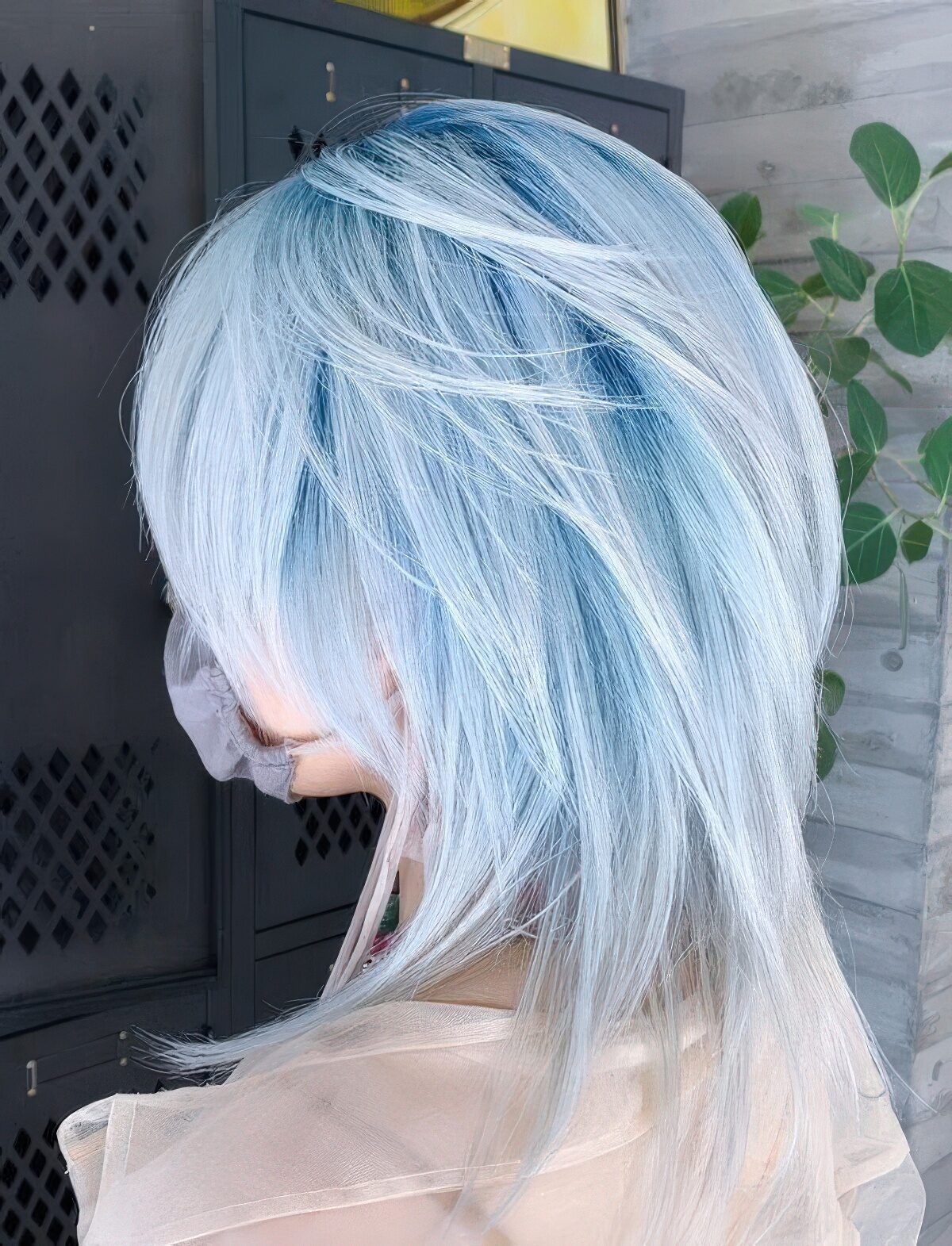
Have you ever had a shag that looked like a helmet by noon? That is the risk with a sky blue shag haircut on fine, wavy hair. The layered shag needs texture to land right, and fine hair can go flat fast. Wispy bangs help, they break up the weight across the forehead. Side part, shoulder length, sky blue with lighter blue highlights threaded through the layers.
Here is the honest downside. Without a texturizing spray, the layers collapse. I have stood in a bathroom with a limp shag and regretted not shaking the can first. Fine hair needs that grit to hold the shape. The cut itself is forgiving and grows out well, but the daily styling is non-negotiable. Trims every ten weeks, a sea salt spray, and you are fine.
Vibrant Blue Layered Shag with Curtain Bangs
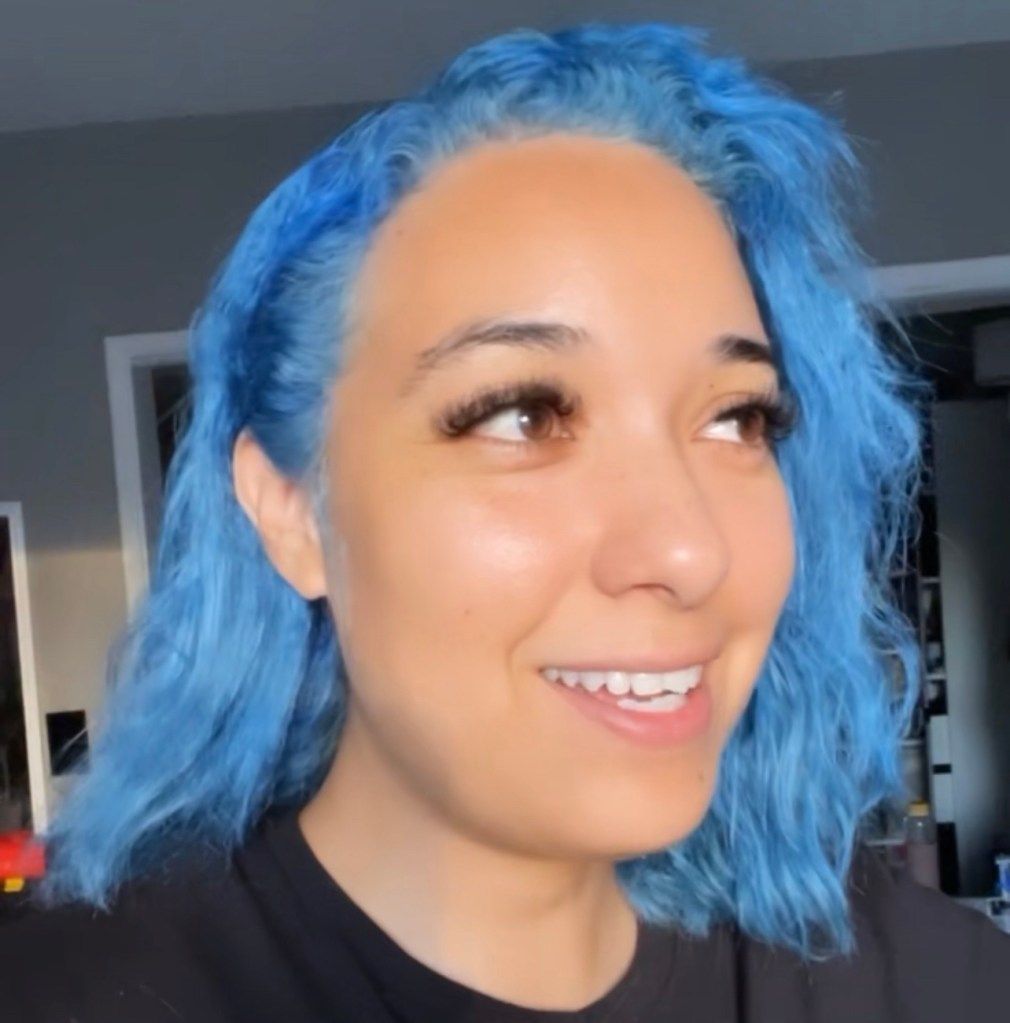
Monday morning, day three after the salon. The vibrant blue shag with curtain bangs still holds its shape, which is more than I can say for most layered cuts by midweek. Middle part, shoulder length, wavy medium-density texture that does not go flat by lunch. The curtain bangs sweep outward and stay there, no re-wetting needed. A texturizing spray worked through the layers keeps the piece-y effect alive. Ten to twelve weeks between trims, and the colour fades gracefully to a softer blue rather than a sad green.
Mid-Back Layers in Sky Blue with Highlights
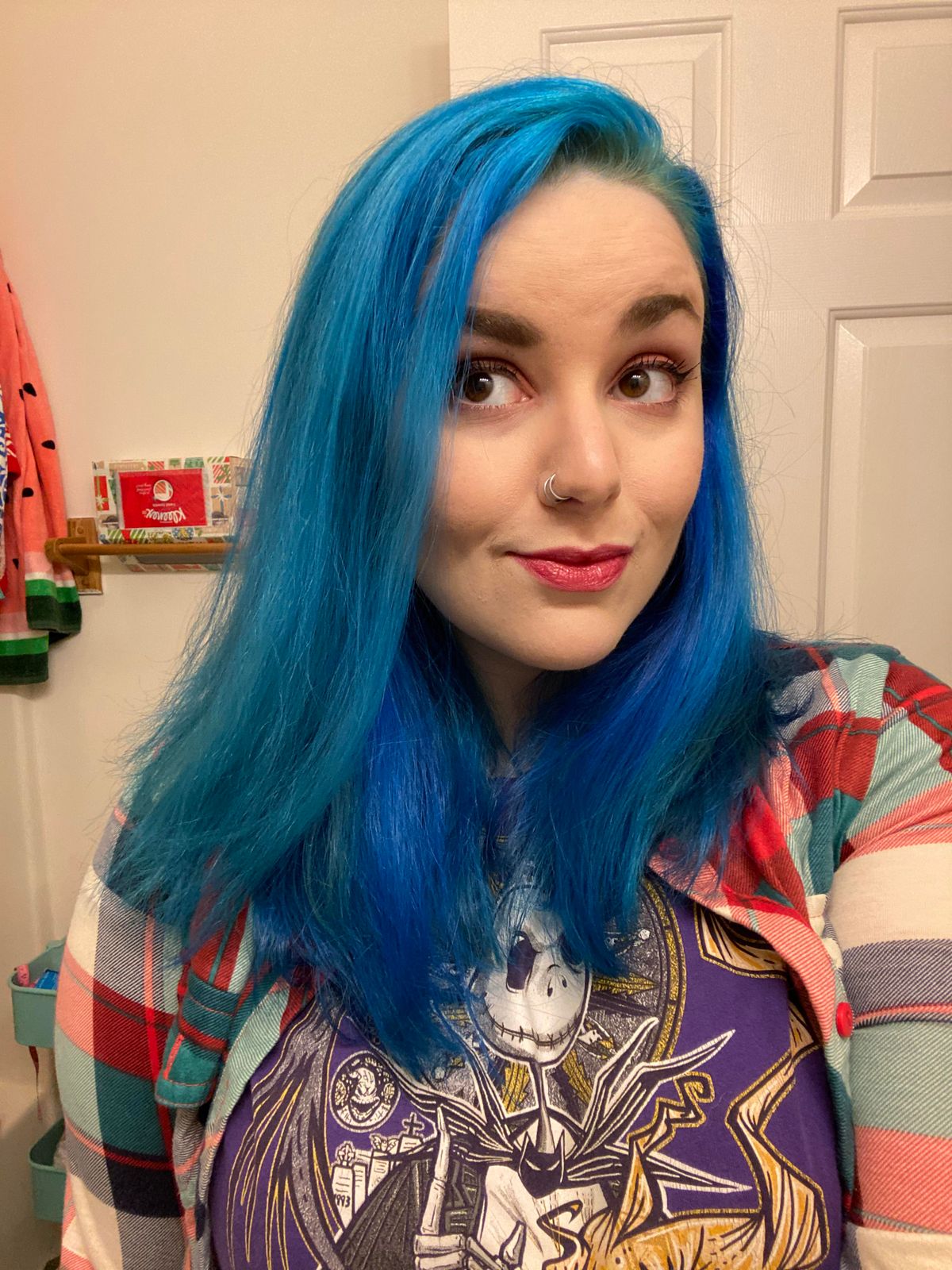
Picture someone with thick, wavy hair and a face that can handle volume at the jawline. That is who this sky blue layered hair with lighter blue highlights is for. Mid-back length, long layers, no bangs, a middle part that lets the waves fall forward. The layers start below the shoulders so they do not widen the face. Fine hair will struggle here, the length pulls the volume out. Thicker textures hold the wave and the colour shows more dimension. Toning every six weeks, trims every ten, and this grows out without that awkward mushroom phase.
Mid-Back Straight Hair in Pastel Blue
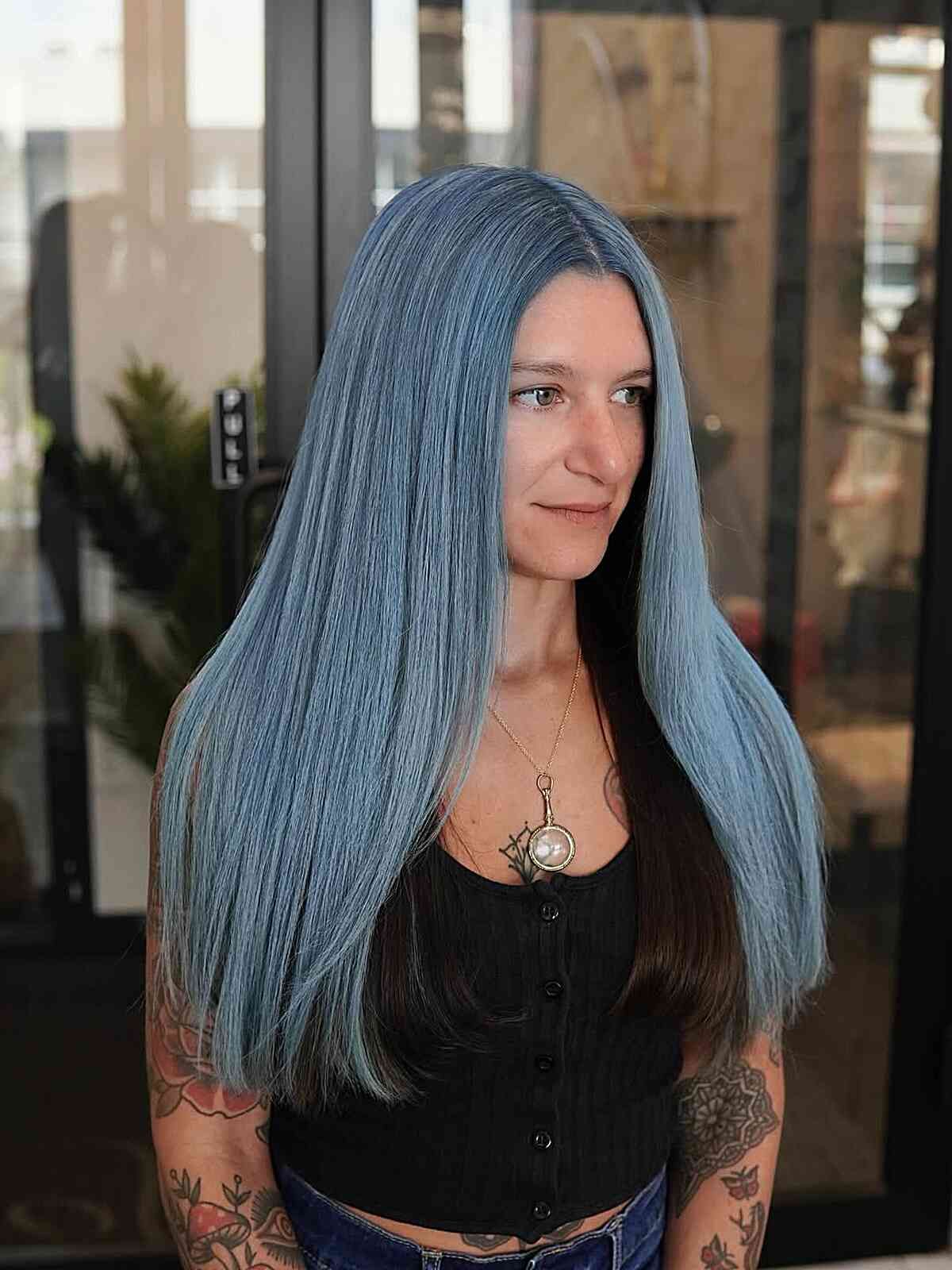
Pastel blue straight hair is the low-commitment liar of the sky blue family, and I mean that as a compliment. The colour sits somewhere between a cloud and a secret, and on a mid-back length with long layers, it reads softer than the vibrant stuff. The straight blowout is the real work here, not the dye. Pastel blue straight hair needs a flat iron or a serious round brush session to look this polished, and it will fall flat by 4 pm if you skip the prep. The long layers keep the weight moving, so the colour doesn’t pool at the ends. No bangs means the face-framing pieces do the heavy lifting, and they will separate by noon if your texture is even slightly wavy. Thick, wavy hair can carry this, but it will not stay straight without effort. The upkeep is a trim every ten to twelve weeks to keep the ends from looking see-through.
Mid-Back Wavy Hair in Uniform Light Blue
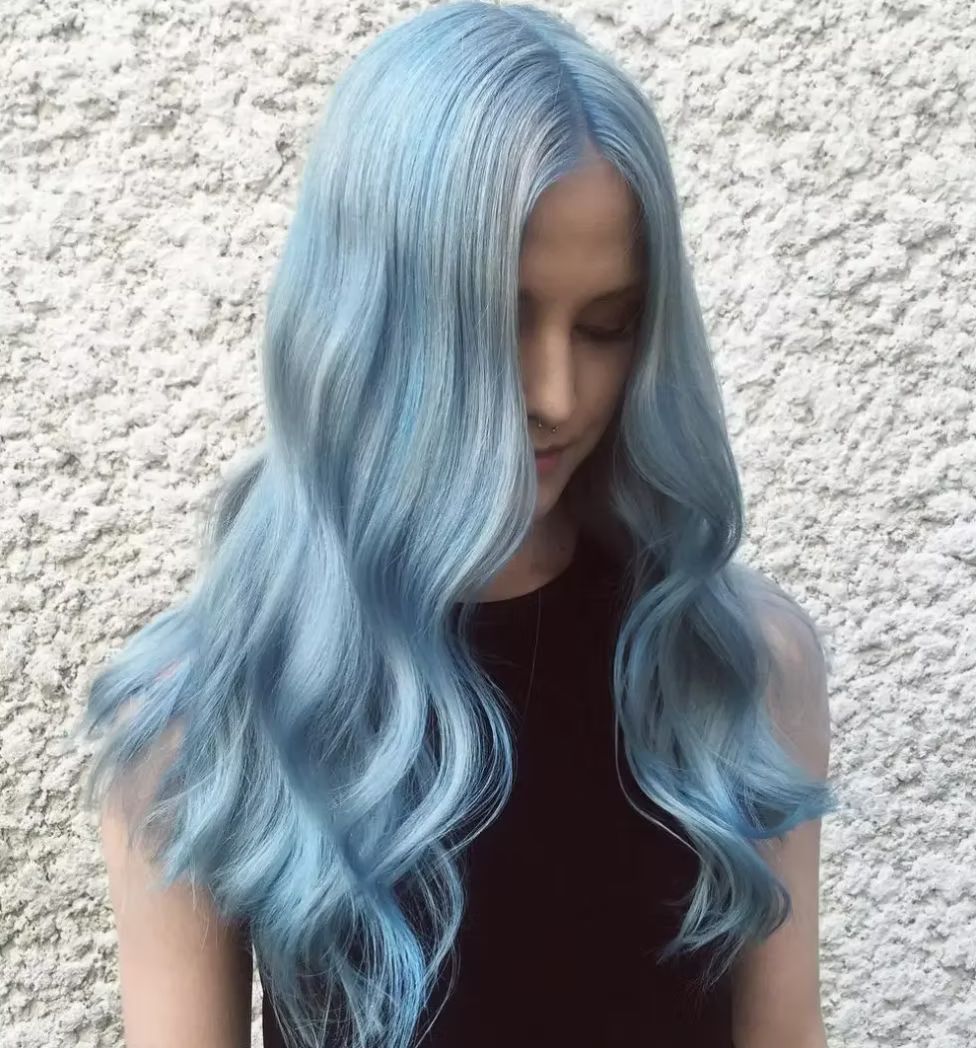
Uniform light blue on thick, wavy hair is the most forgiving sky blue you will ever meet, and it still manages to look deliberate. The colour is even from root to tip, no obvious highlights, no shadow root, just one flat, confident statement. The mid-back length gives the waves room to bounce without shrinking into a triangle, and the layers are cut to move with the wave pattern, not against it. No bangs here, which is smart, because a fringe on wavy hair is a daily negotiation you do not need. The texture is thick and wavy, so the colour grabs evenly and holds its vibrancy longer than it would on fine strands. A middle part widens a round face and lets the waves frame the jaw. The colour is vibrant bright blue hair, but uniform, so it fades as one block rather than patchy. That is the real win.
Long Wavy Hair in Vibrant Bright Blue
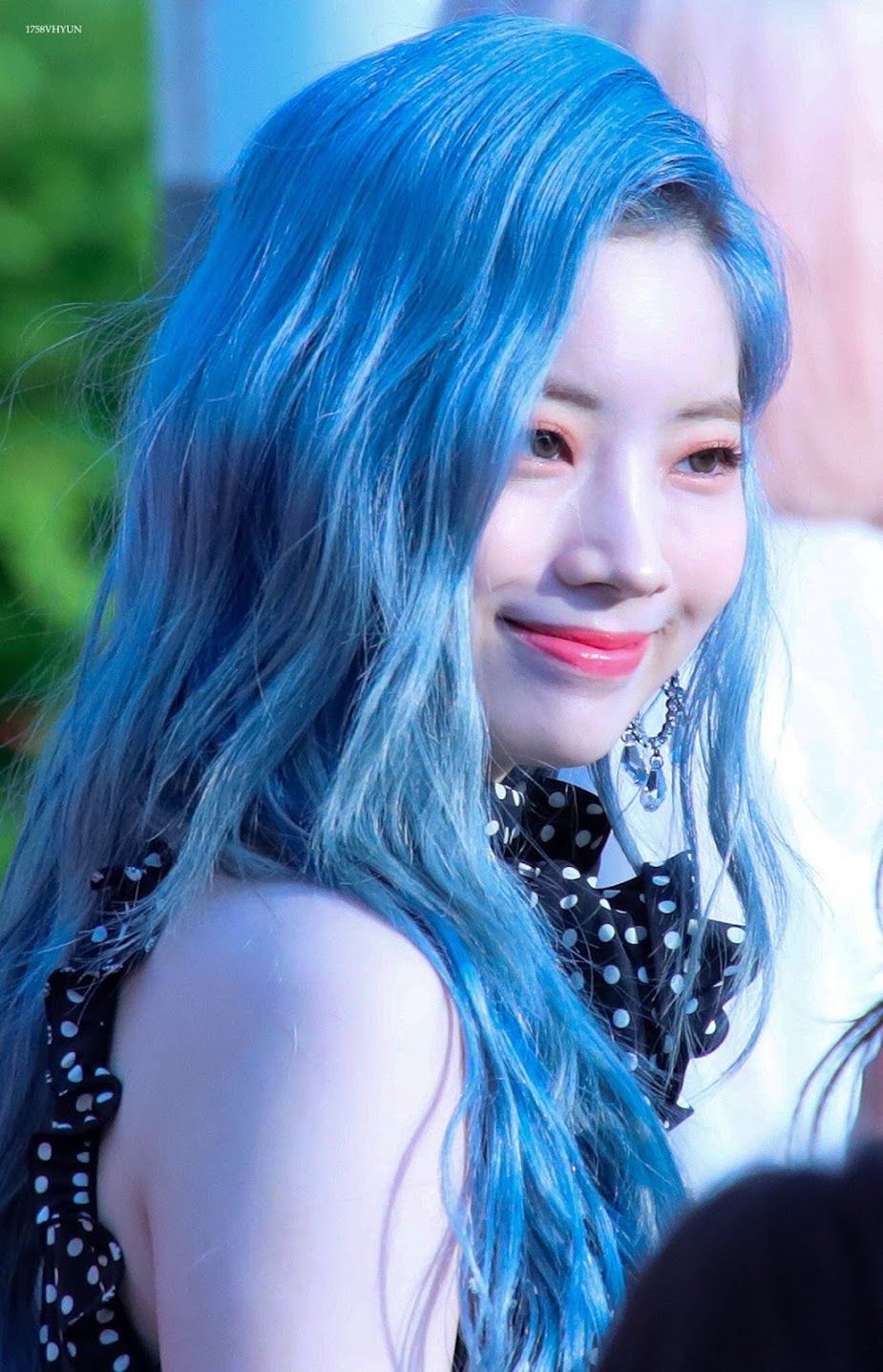
Vibrant bright blue hair at mid-back length is not a colour you wear to blend in, and the wavy texture makes it look intentional rather than costume. The layers start around the chin and melt into the length, so the waves stack with volume instead of lying flat. No bangs, which is the right call, because the face-framing pieces already do the work of softening the jaw. The colour is loud and saturated, the kind of blue that reads electric in low light and almost neon in the sun. Thick, wavy hair holds this shade well because the cuticle is robust enough to keep the pigment locked in longer. A middle part suits an oval face and lets the waves fall symmetrically. The texture is wavy, thick, and needs a diffuser to keep the wave pattern from dropping into a sad bend by lunch. The length is mid-back, so the weight pulls the waves straighter at the top, which is a good thing.
Visual Idea
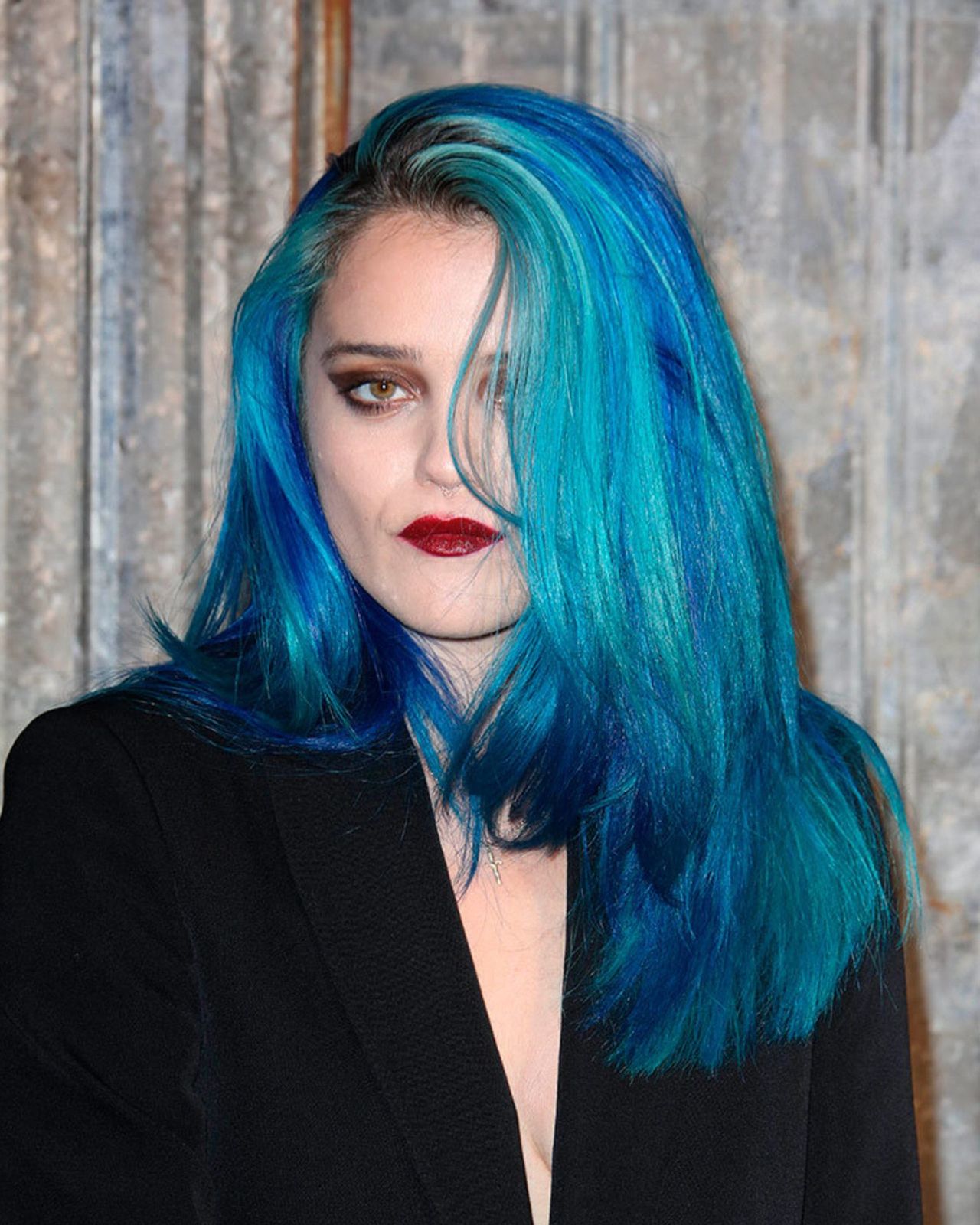
Thick, long hair in a mix of vivid blue and teal shades is a commitment I respect, and the loose waves make it look like you woke up that way, which is a lie, but a good one. The colour is multi-dimensional, with brighter blue sections and deeper teal tones creating a vibrant effect that shifts as you move. The middle parting and face-framing pieces partially obscure the face, which is flattering for round or square shapes because it softens the angles. The length falls around the shoulders, so the waves have room to move without losing their shape. The texture is wavy and thick, which means the colour grabs evenly and holds its vibrancy. The layers are cut to add volume at the crown, so the hair doesn’t fall flat. The bright blue and teal mix is the standout, and it works best on hair that is already healthy enough to handle the lightening.
Mid-Back Visual Idea
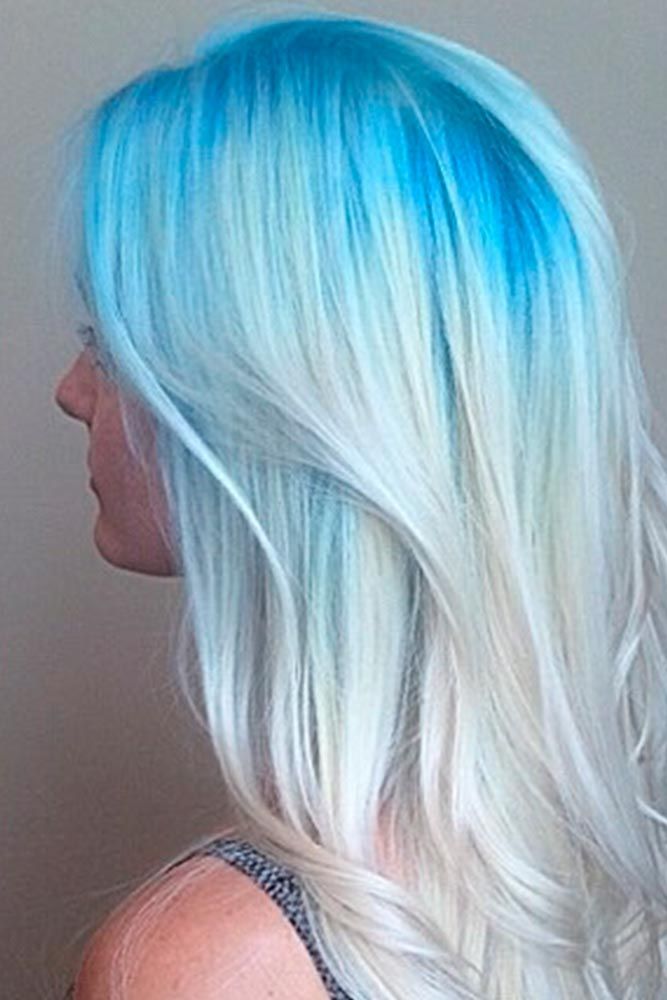
Mid-back layers in bright blue with lighter blue highlights is the visual idea that keeps on giving, and the wavy texture makes it look like a mermaid had a very good day. The layers start around the chin and melt into the length, so the waves stack with volume instead of lying flat. No bangs, which is the right call, because the face-framing pieces already do the work of softening the jaw. The colour is loud and saturated, the kind of blue that reads electric in low light and almost neon in the sun. Thick, wavy hair holds this shade well because the cuticle is robust enough to keep the pigment locked in longer. A middle part suits an oval face and lets the waves fall symmetrically. The texture is wavy, thick, and needs a diffuser to keep the wave pattern from dropping into a sad bend by lunch. The length is mid-back, so the weight pulls the waves straighter at the top, which is a good thing.
Visual Idea — A Very Short
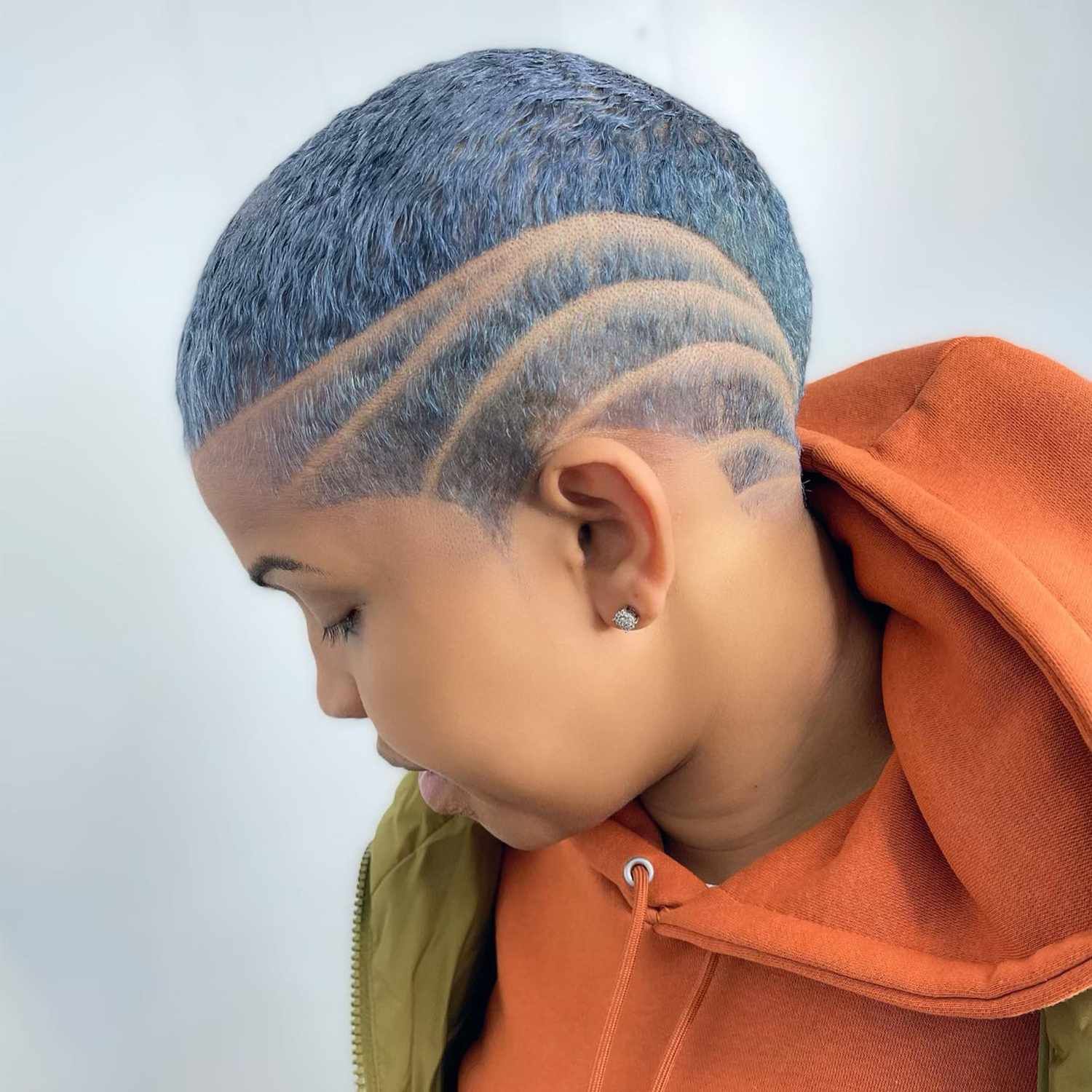
I’ll admit it: I tried this at home with a buzzer once. Don’t. A very short, textured cut with a geometric undercut needs a stylist who understands how grey undertones interact with muted sky blue. The top section has to be long enough to style upward, or the texture flattens into nothing. My mistake was thinking any clipper could handle the undercut line. It can’t. The clean lines are the whole point, and a bathroom mirror won’t give you that precision.
Visual Idea — The Hair Is A Uniform Sky Blue Color
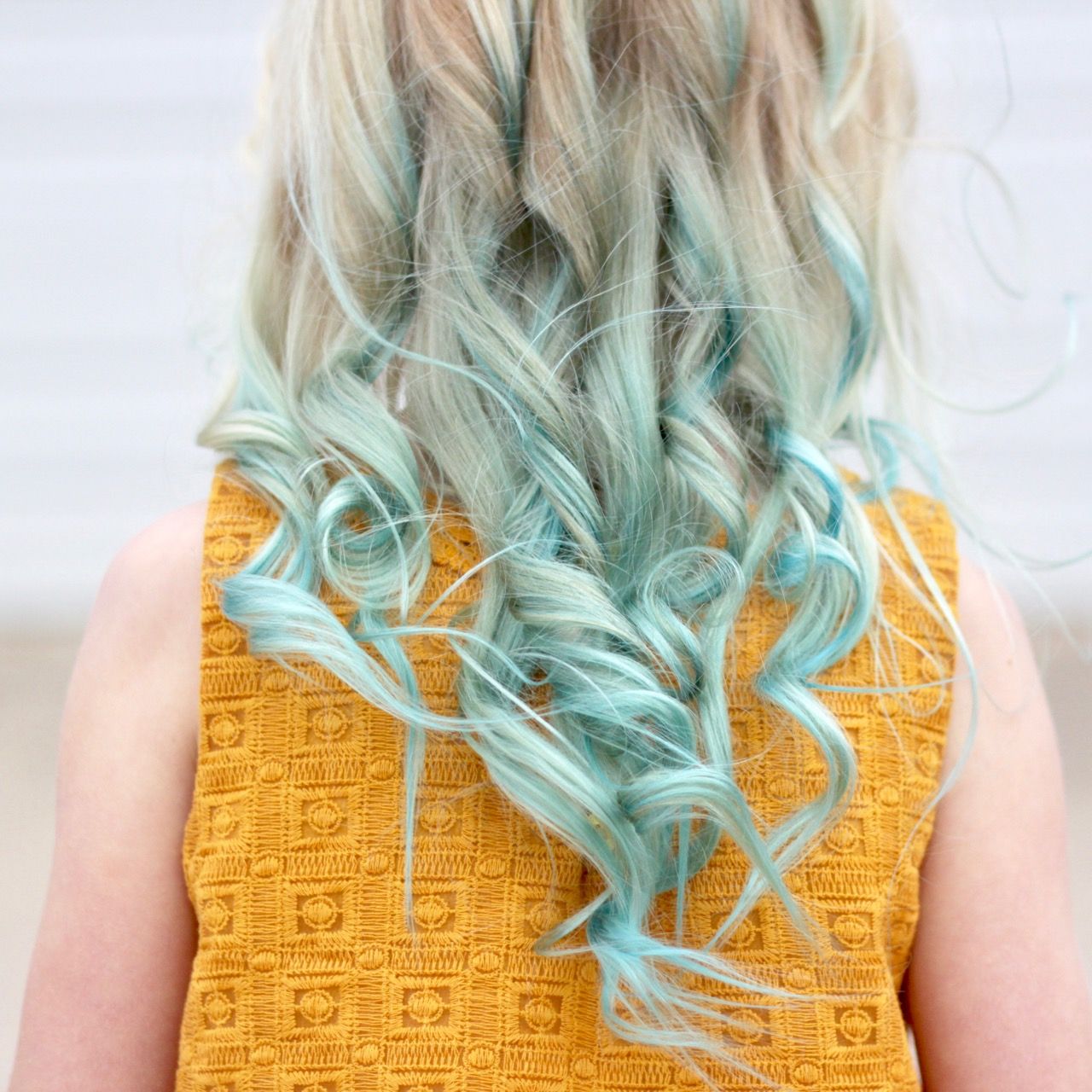
Look at the back view first. That middle parting at the crown, the loose waves falling to the collarbone, the uniform sky blue — it reads like one solid block of color. On fine, wavy hair, that evenness is the goal. No streaks, no patchiness, just a single shade from root to tip.
Maintaining it takes a few things. A color-depositing conditioner used weekly keeps the tone from washing out. Cool water every rinse, because hot water strips pigment fast. A heat protectant before any styling, since fine waves lose shape quickly when damaged. And a trim every six weeks to keep the ends from looking frayed against that solid color.
Chin Visual Idea
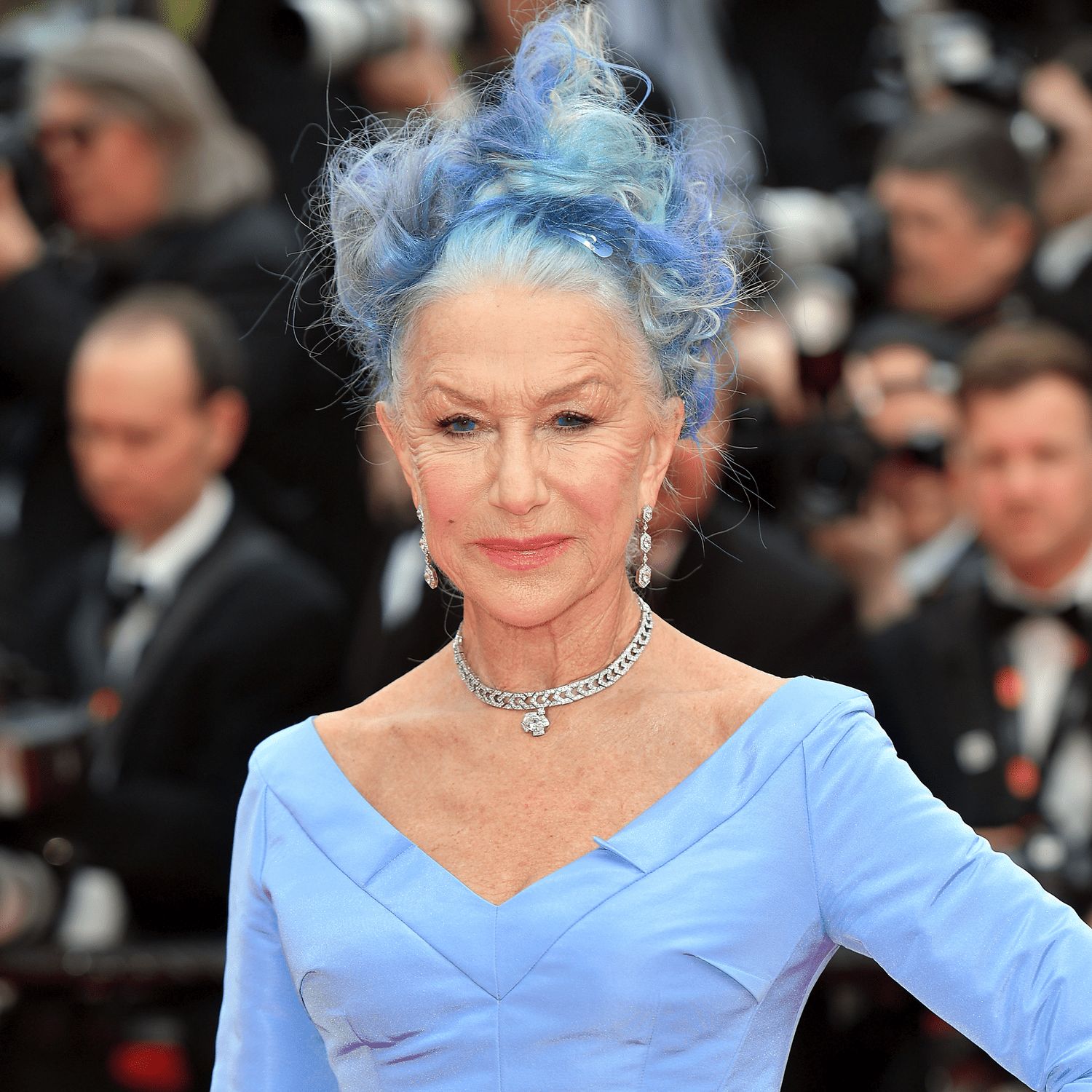
Can you air-dry a light blue bob at home? Yes, if you start with the right cut. This chin-length bob has a middle part and straight texture, which means it dries without waves or kinks if you comb it flat after washing. No diffuser, no round brush, just patience. The color is vibrant sky blue, so the salon did the heavy lifting there — bleaching, toning, the full process. But the styling? That part is yours. Towel dry, comb, walk away. It works because the cut is precise enough to hold its shape wet.
Visual Idea — A Collarbone-Length Lob With Blunt Bangs
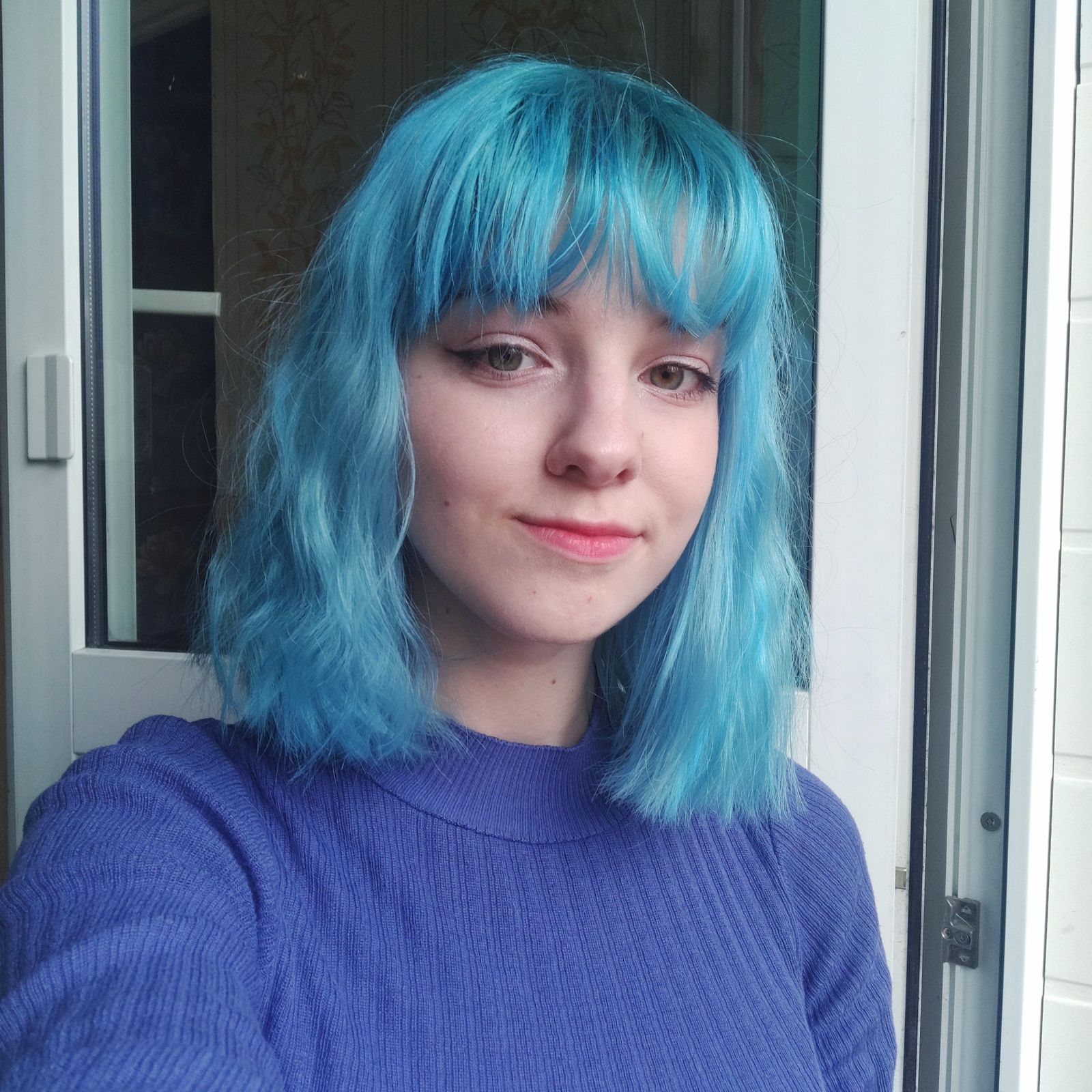
I love a blunt bang. I also know it will be in my eyes by day three. This collarbone-length lob with blunt bangs and a bright, saturated blue is a commitment. The wavy texture helps — waves soften the blunt edge so it doesn’t look like you cut it with scissors in the car. But the bangs need a trim every two weeks, maybe three if you’re lazy. And that saturated blue? It fades fast. A purple shampoo won’t fix it; you need a blue depositing conditioner or a salon gloss every four weeks.
The honest downside is the grow-out. Blunt bangs don’t blend into waves gracefully. They just get longer and flop into your face until you cut them again. And the blue will fade unevenly if you use hot tools without protection. I still think it’s worth it for the first week. After that, you’re maintaining.
Visual Idea — A Front View Of Long
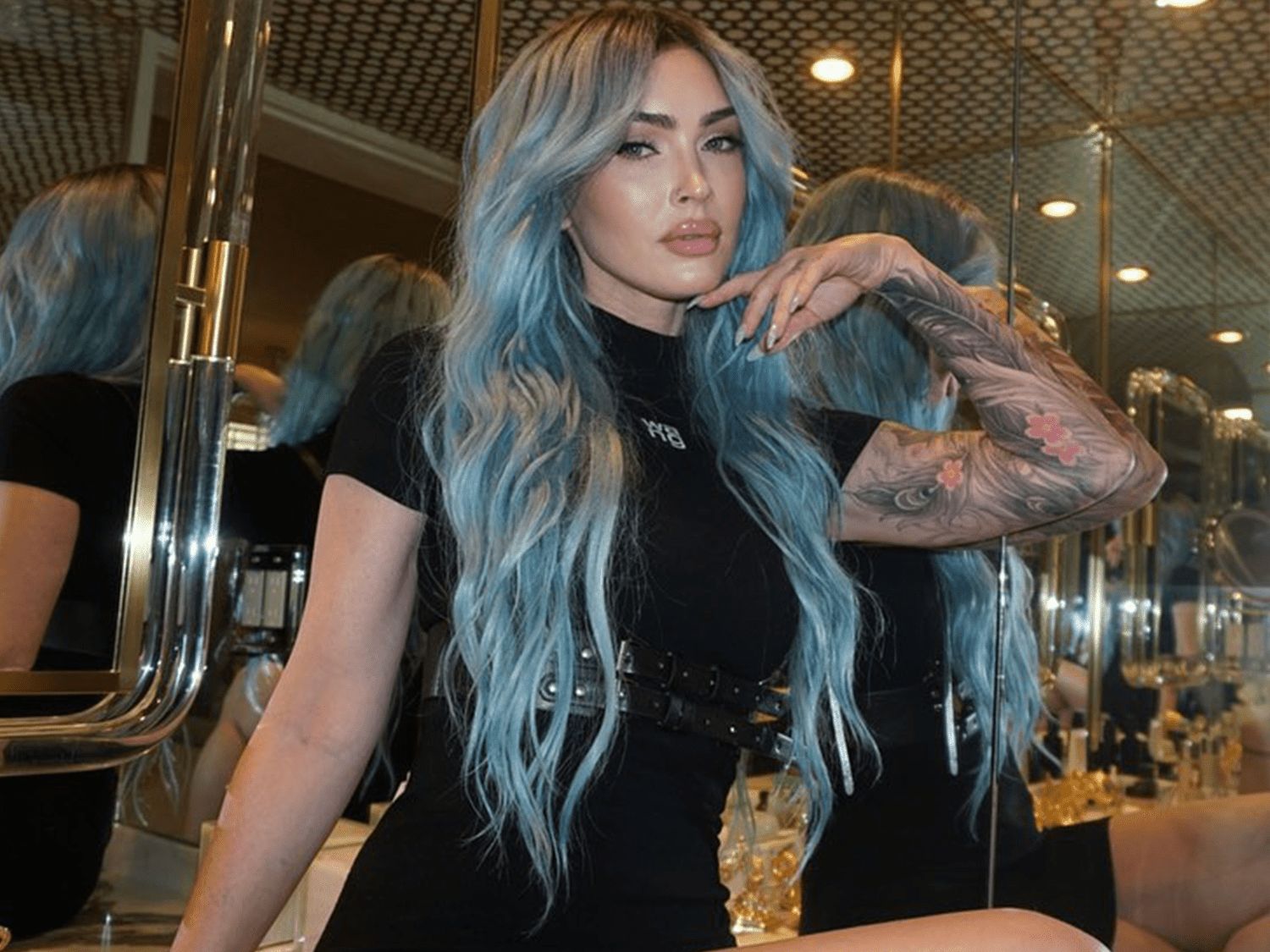
Monday morning, you have twenty minutes. That’s the reality of long, layered hair styled in loose waves, reaching mid-back. The vivid blue with lighter blue and white highlights looks incredible in soft lighting, but it demands daily styling. The waves have to be set with a curling wand or braids overnight, or they fall straight by lunch. The layers mean you can’t just brush and go — they’ll tangle if you skip a detangling spray.
The middle parting helps. It keeps the weight centered so the waves don’t pull to one side. And the thick texture holds a wave better than fine hair would. But every wash is a project: detangling, applying a heat protectant, sectioning, curling. The highlights add dimension, but they also mean more ends to check for damage. It’s a look for mornings when you have time to enjoy the process, not when you’re running out the door.
Visual Idea — Thick
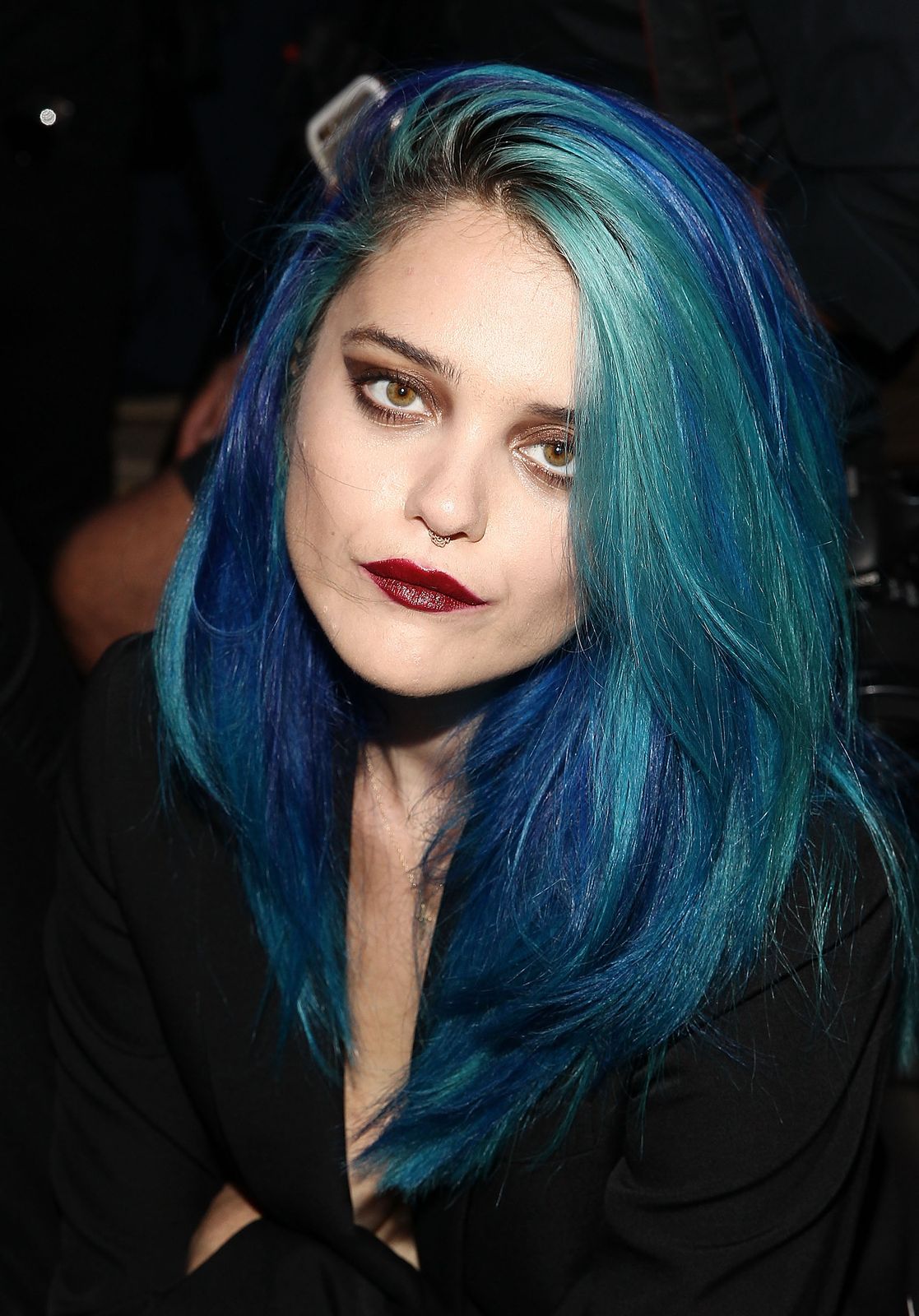
I am a little jealous of whoever has this hair, and I mean that as a compliment. The thick, long hair with a middle part and loose waves is the kind of volume that fine-haired people like me can only approximate with a barrel brush and a prayer. The cut itself is long layers, no bangs, which is the smart move here — you do not want to chop into this density, you want to let it fall. The vivid blue and teal shades are what make it, though. That multi-dimensional colour with brighter blue sections and deeper teal tones creates a depth that a single flat shade would never have. If your hair is medium to thick density and you want a colour that actually reads as dimensional rather than just bright, this is your photo. If your hair is fine, skip it. The weight will not be there to carry the waves.
Visual Idea — Long
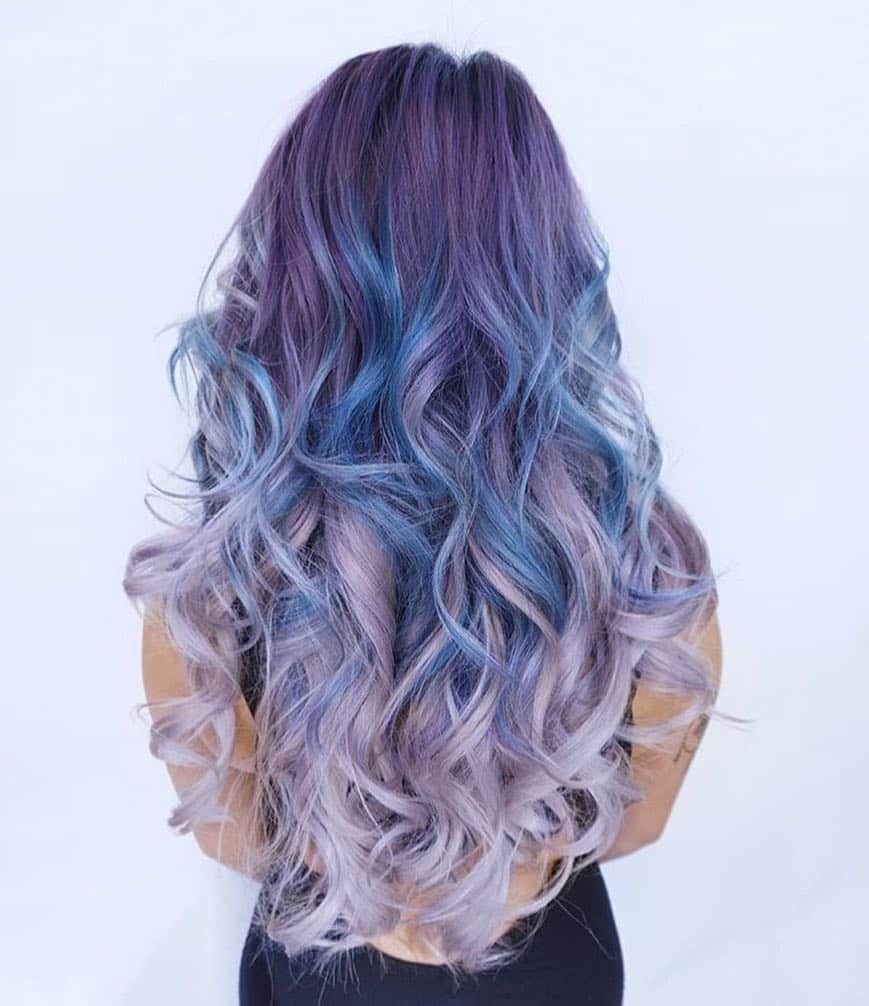
I have seen a lot of gradient colours, and most of them look like the colourist ran out of product halfway down. This one does not. The deep blue at the top transitions into pastel purple at the ends, and the line between them is soft, not a hard stripe. That takes a colourist who knows how to hand-paint and a base that is light enough to take the pastel at the bottom without turning muddy.
The upkeep is the catch. A uniform blue fades evenly, so you can stretch the next appointment to eight or nine weeks. A gradient like this needs a refresh every six weeks minimum, because the pastel ends fade faster than the deep root, and the contrast starts to look accidental. The loose, flowing waves and middle part with no bangs keep it from feeling costumey. It is a lot of maintenance, but if you want a colour that actually looks like it was planned rather than just applied, this is the one.
Visual Idea — Paired With Blunt Bangs
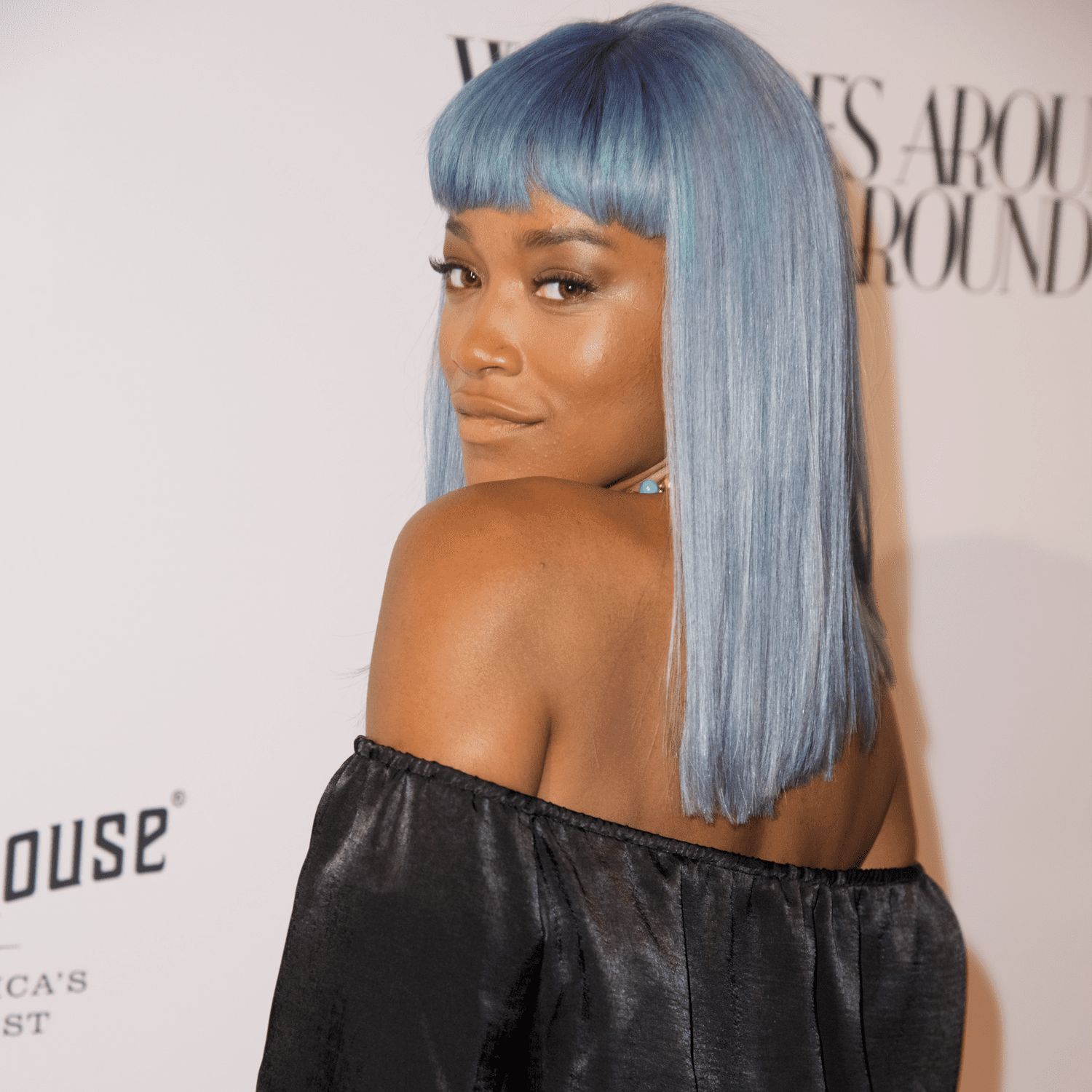
This is the haircut you book when you want people to assume you have your life together. The blunt bob ending at the jawline with blunt bangs and a middle part is sharp, and the light blue with subtle grey undertones keeps it from reading as cartoonish. The straight, fine texture is essential here — any wave or bend and the blunt line turns into a jagged edge. What to ask the stylist: “I want one clean, unbroken line from the nape to the jaw, and the bangs should hit exactly at the brow bone, no texturizing.” That is the whole conversation. The cut does the work.
Visual Idea — A Sleek
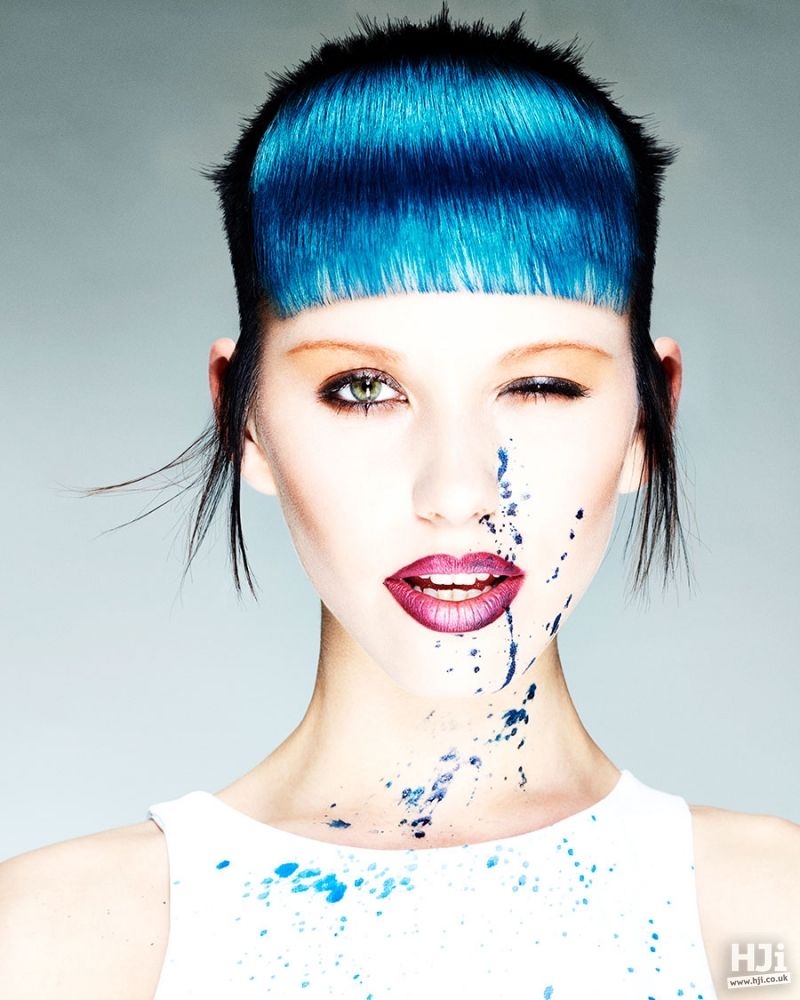
You sit down in the chair, you show the photo, the colourist says “oh, that is a two-session job,” and you nod because you already knew. The striking bright blue on top with a black undercut and a side part is not a quick afternoon. The downside: that undercut grows out fast. Within three weeks, the black roots at the shaved section start to peek through, and the contrast between the bright blue and the new growth is not subtle. The sleek, chin-length bob with blunt bangs and straight styling means every line is visible, every regrowth is exposed. It looks incredible for about two weeks. Then you are either booking again or learning to live with a root line that does not blend.
Pastel Sky Blue Visual Idea
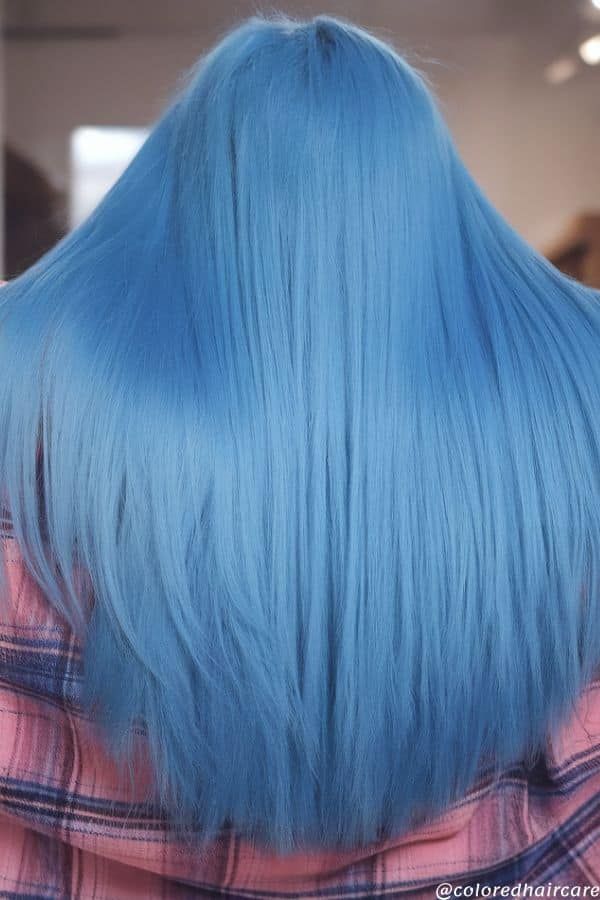
I will confess: I air-dried my hair this morning, and it looked like a damp dishrag for three hours. So when I see a pastel sky blue colour on straight, fine hair that is air-dried and actually looks polished, I pay attention. The long layers and middle part with no bangs help — the layers give the fine texture some movement, and the uniform pastel blue colour reads as intentional rather than faded.
The reality: air-drying fine hair to this level of polish requires a cut that is doing the work. The long layers here are cut so that the hair falls forward slightly, creating the illusion of density. If the layers were shorter or more aggressive, the ends would flip and the pastel would look messy. The back view shows that the colour is even from root to tip, which on fine, straight hair means the colourist lifted the base to a very pale yellow before applying the pastel. That is the part you cannot shortcut. The cut and the colour are a package deal.
Long Layers Visual Idea
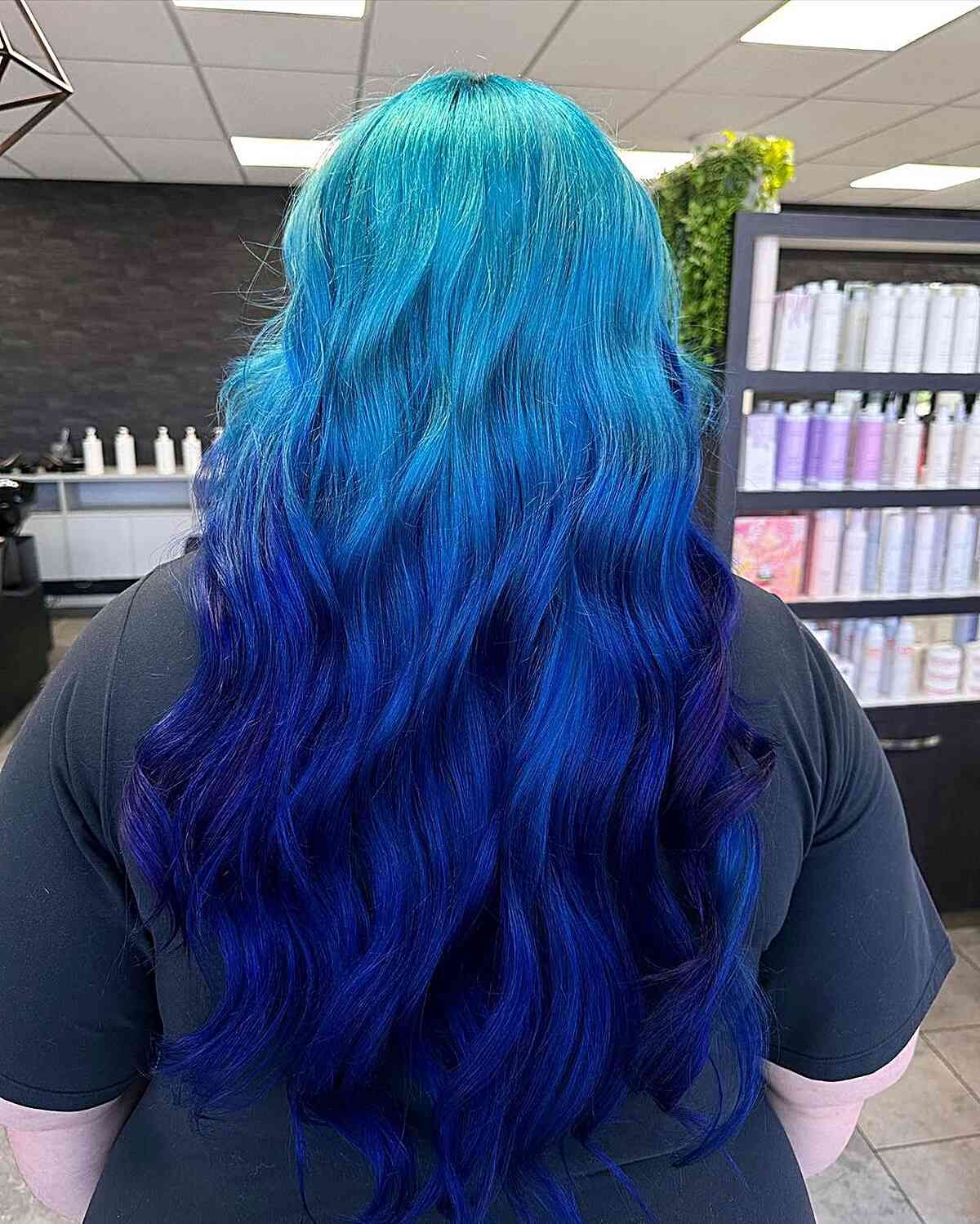
That gradient is doing two jobs at once. The lighter blue at the top catches light first, then your eye travels down into the deep blue at the ends. On thick, wavy hair this kind of blue balayage reads dimensional instead of flat, which is rare for any single-color family. The long layers keep the weight distributed so the wave pattern doesn’t get cut off mid-curve, and no bangs means you can wear it middle-parted or swept without a fringe fighting the texture. It suits anyone with medium to thick density — fine hair would swallow the gradient because there isn’t enough mass to show the transition.
Maintenance is the real conversation here. The lighter blue at the roots will show grow-out at week four, and the deep blue ends fade to a greenish tint around week six if you aren’t using a color-depositing conditioner. A trim every ten weeks keeps the layers from turning stringy. I would not try this at home. The balayage placement needs a stylist who understands how to paint on a curve, not a straight line.
Visual Idea — The Framing Is A Tight Crop
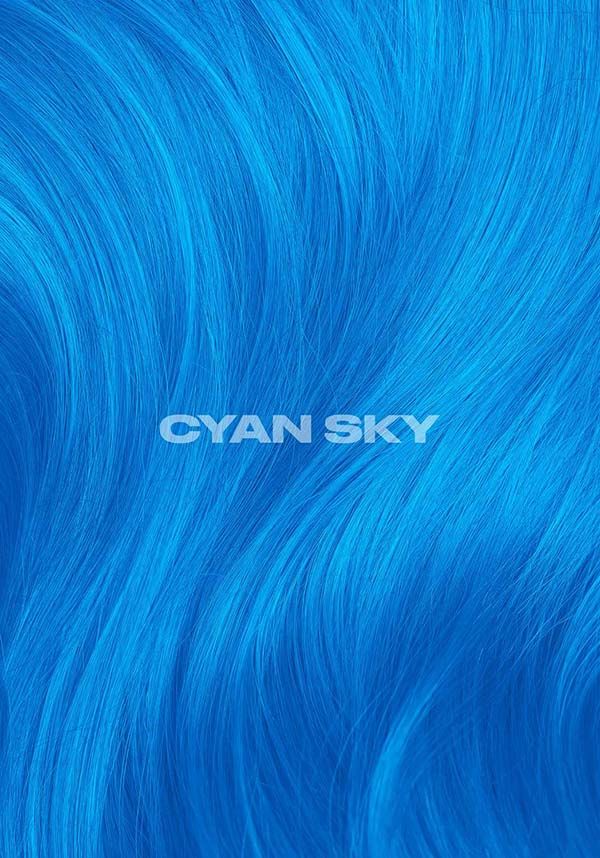
You see a vibrant sky blue and think one all-over application will do it. On fine, straight hair, that is how you get a solid block of color with zero depth. The subtle variations in tone in this crop come from a stylist applying the dye in sections and leaving some strands in for less time. The mistake is treating fine hair like it can hold a single shade evenly — it cannot. The texture is too smooth, too reflective. You need those deliberate tonal shifts or it looks like a marker job.
Sky Blue With Lighter Blue Highlights Visual Idea
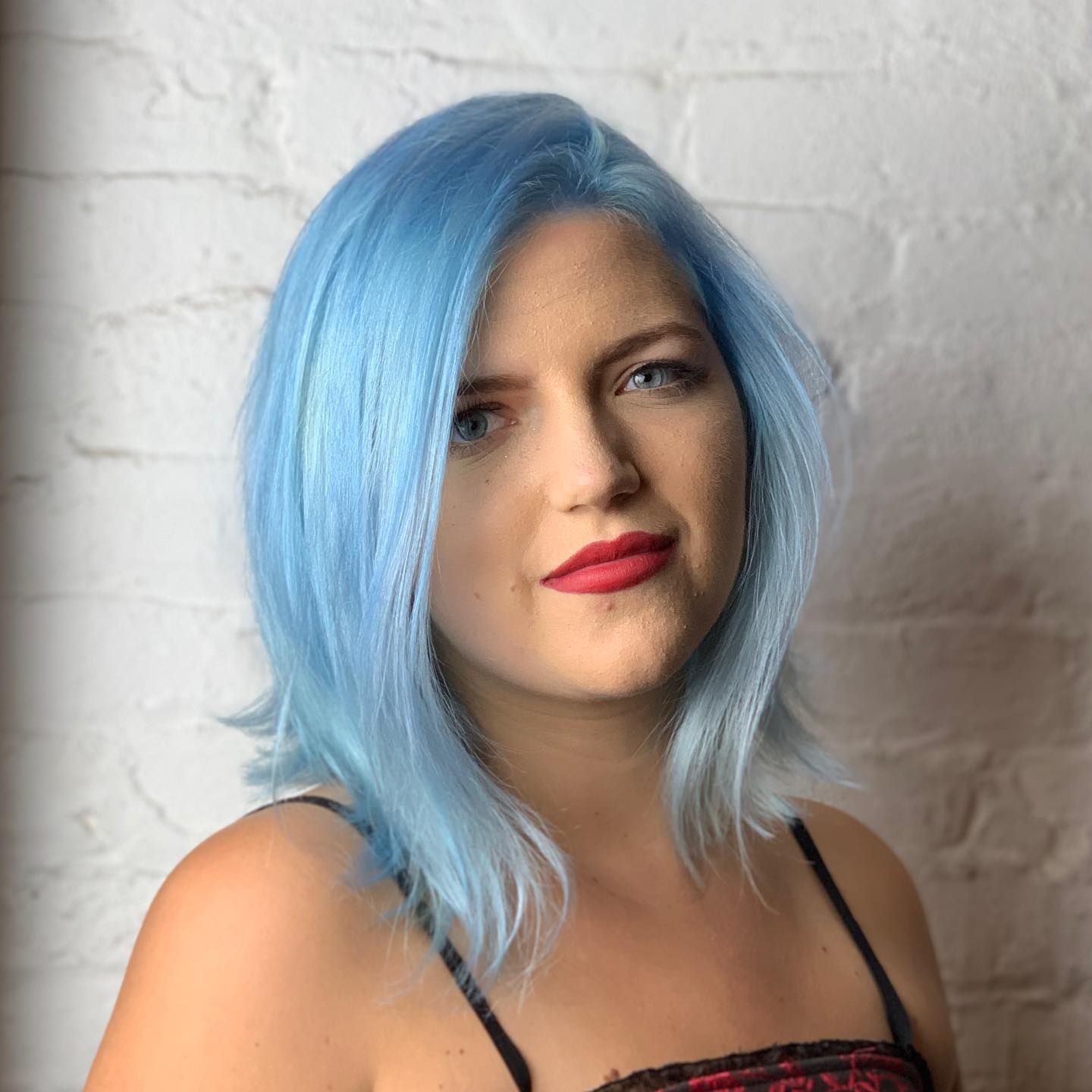
This is a spring cut, no question. The sky blue base reads like a clear March sky, and the lighter blue highlights catch the same light that makes early April mornings look washed out and hopeful. The curtain bangs frame the face without committing to a full fringe, which matters when you are wearing a pastel-adjacent color — the lighter tones near the face can wash out a warm complexion if they sit too close. On wavy, thick hair, the curtain bangs land softly instead of sitting stiffly.
What works here is the contrast between the two blues. The highlights are not a separate color family; they are the same blue lifted a few levels higher. That keeps the look cohesive. A middle part lets the curtain bangs fall evenly on both sides, and the long layers keep the wave pattern from collapsing under its own weight. I would wear this from March through June, then tone it cooler for summer.
Visual Idea — Ending At The Collarbone
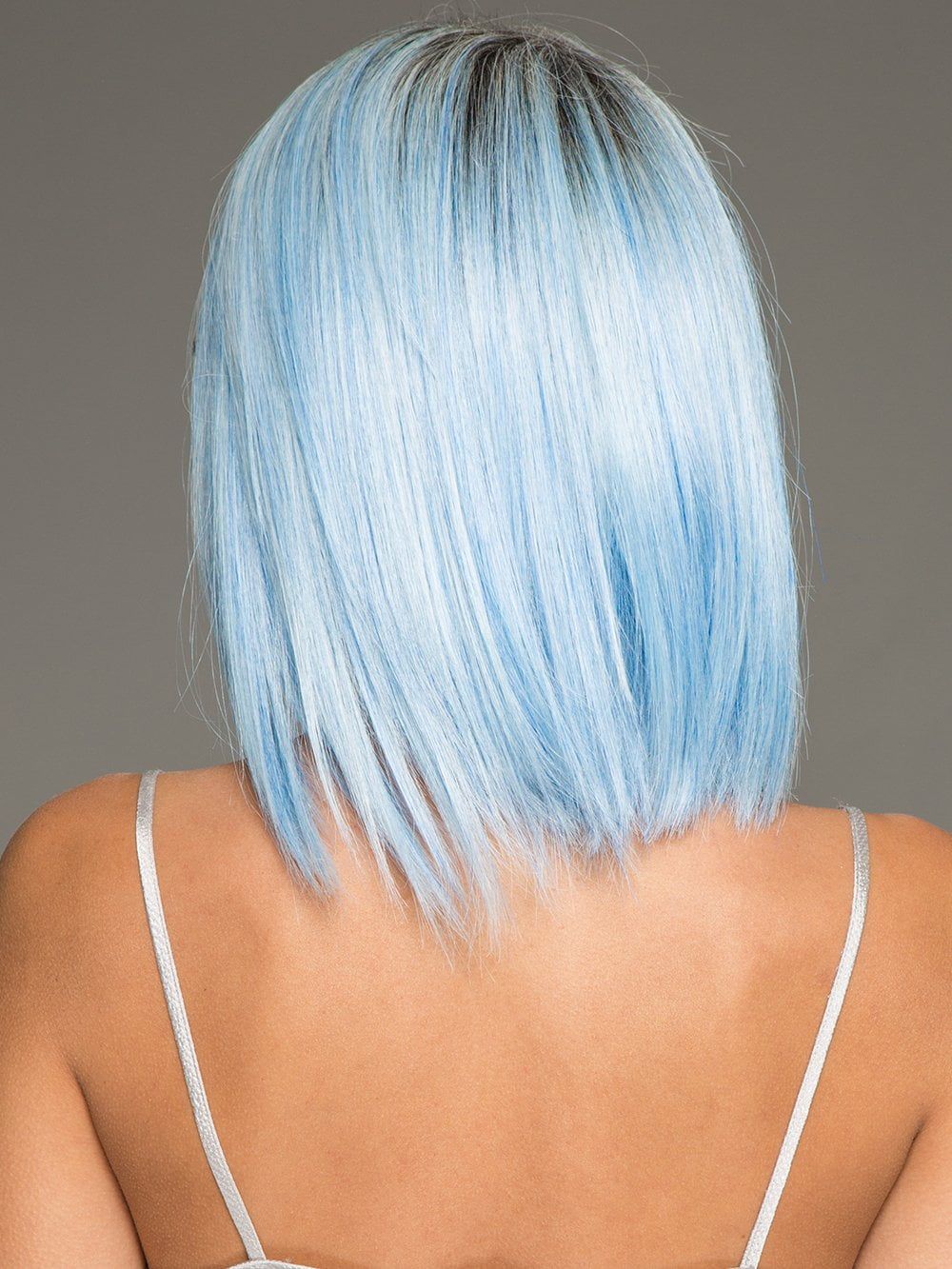
The blunt bob ends at the collarbone, which is exactly where a bob should land if you want it to sit cleanly against your shoulders without flipping up. The vibrant sky blue color is uniform, no gradient, no highlights, which means every strand reflects the same light. That works because the blunt cut gives the color a single clean edge to read against. The sleek styling is a round brush and a blow-dryer, not a flat iron — the hair is fine and straight by nature, so a flat iron would press it too flat and kill the natural movement at the ends. You cannot do this at home. A uniform sky blue on pre-lightened hair requires a bowl, a brush and a timer, and the blunt cut needs shears and a steady hand. Book the appointment.
Sky Blue With Blonde Roots Visual Idea
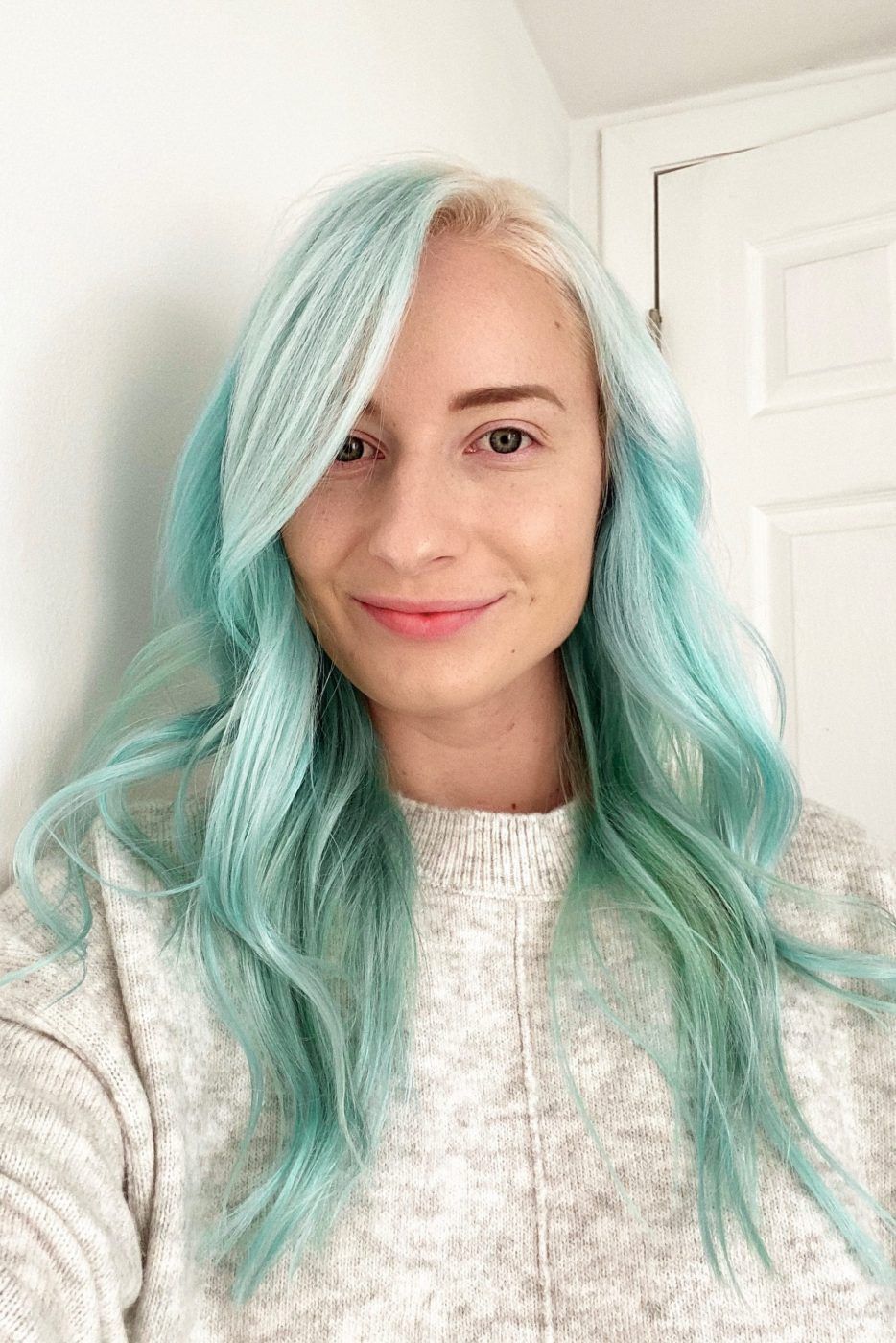
Best grow-out in this roundup.
The blonde roots are the whole point. Instead of fighting the grow-out line every three weeks, you start with it. The sky blue fades into the blonde at the root in a soft transition, so when your natural color shows up at week four, it blends instead of screams. The side-swept bangs help here — they sweep across the forehead and cover the root line on one side, so you get an extra week before the roots are visible on both sides. On wavy, medium-density hair, the side-swept bangs sit with a slight bend that softens the color transition even further.
Upkeep is easier than you think. The blonde roots need a purple shampoo once a week to stay cool, not brassy. The sky blue needs a color-depositing conditioner every third wash to keep it from fading to a muddy green. A trim every eight weeks keeps the long layers from splitting, because the ends are the most faded part and split ends travel fast on color-treated hair. I would not do the blonde roots myself — the bleach lift needs to stop at pale yellow, not white, or the blue will grab unevenly.
Visual Idea — The Hair Is Styled In Loose Waves
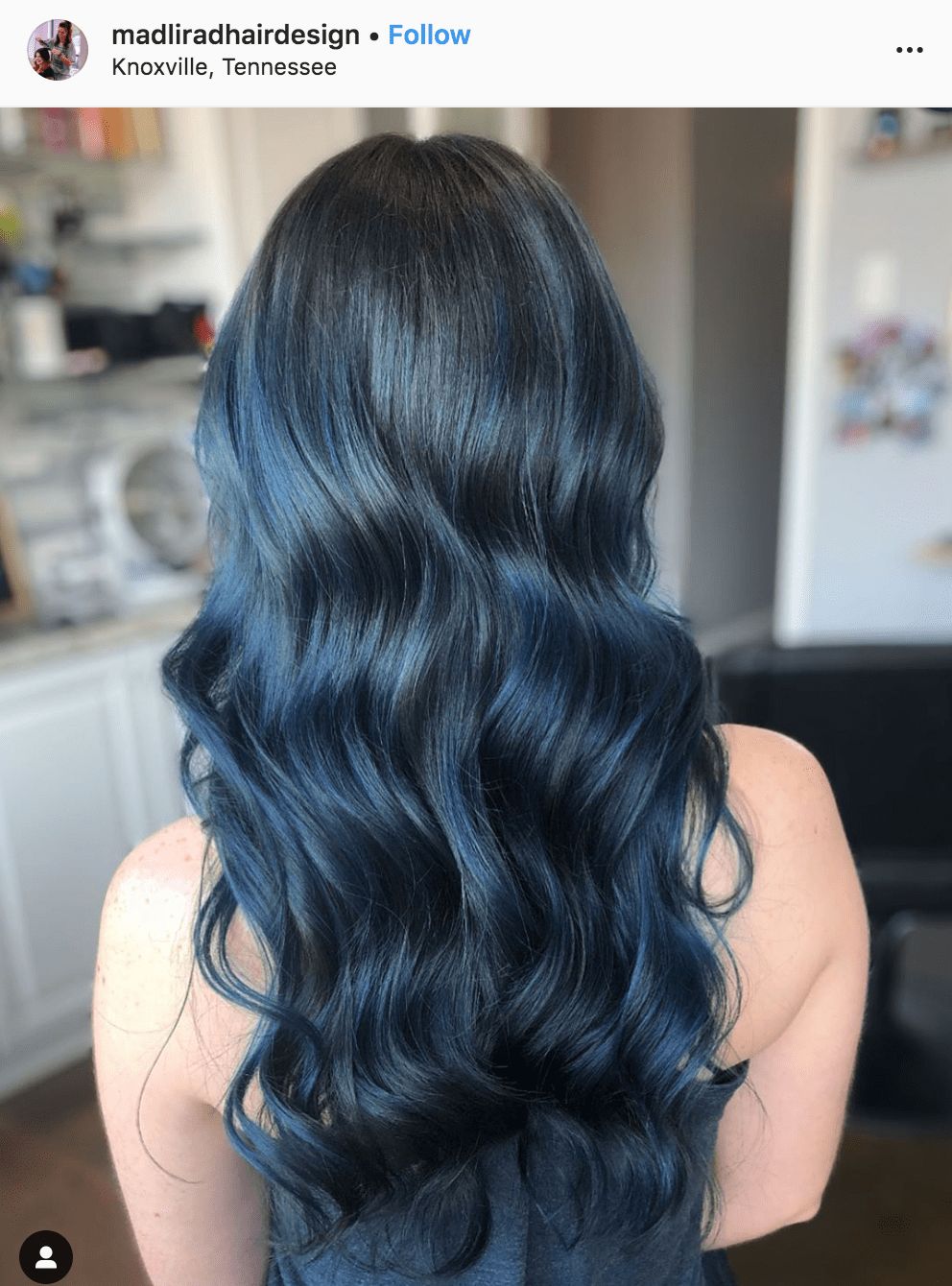
Dark base, vibrant blue highlights, a middle part, and loose waves that fall away from the face. That contrast is the whole point here, a deep brown ground with bright sky blue streaks that catch light in a way a uniform shade cannot. The cut is long layers, mid-back length, no bangs, so the colour does the work and the shape stays simple. This flatters medium to thick hair best, the kind that holds a wave without fighting it. Fine hair can do it, but the highlights need to be placed deeper into the section, not just on the surface, or they read as sparse. The blowout matters, the waves need to be set and cooled completely, or the separation between base and highlight blurs into a muddy middle. Who suits this? Anyone with a warm skin undertone who wants blue without washing out. The dark root keeps it wearable, the highlights keep it interesting.
I would tell the stylist: keep the base dark and rich, weave the sky blue highlights through the mid-lengths and ends only, and cut long layers that stack subtly. The grow-out is gentle because the root is already dark, a trim every ten weeks keeps the ends from tangling. This is not a bathroom-mirror job, book the consultation first.
No Bangs Visual Idea
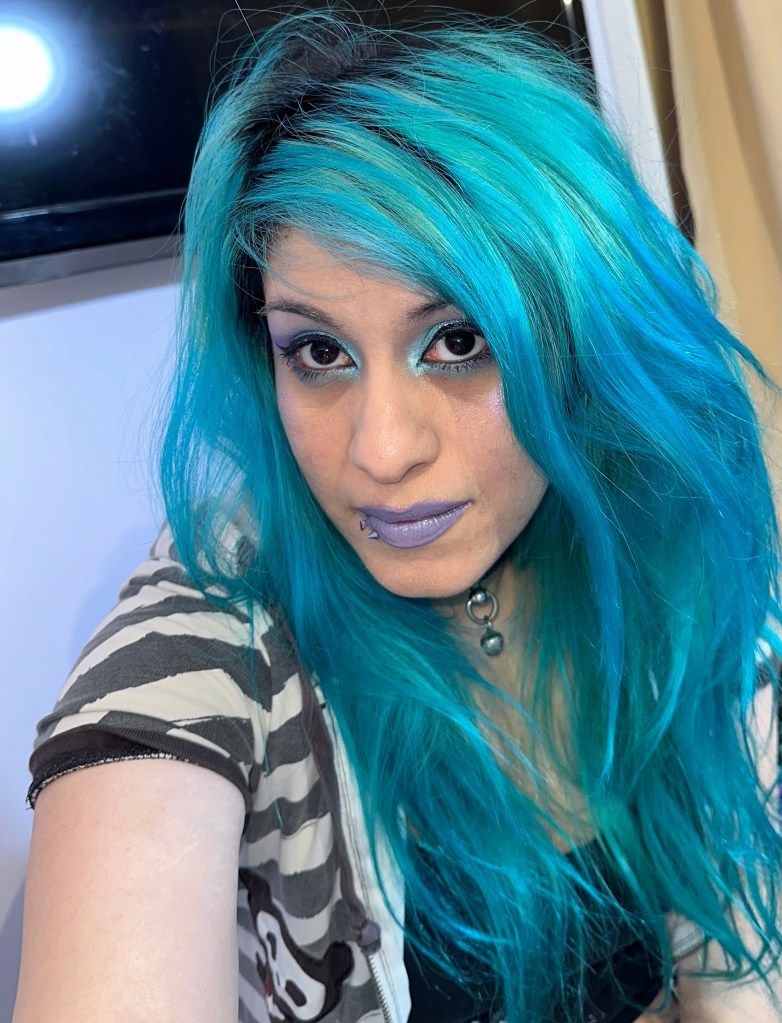
I will admit I was skeptical of cyan blue, it reads neon in the bottle and I expected a cartoon result. But on a thick, wavy, mid-back length with long layers and no bangs, it lands somewhere between jewel and denim. The lighter blue highlights keep it from flattening into one flat tone, they add a dimension that a single-process cyan cannot achieve. Compared to a pastel sky blue, this fades slower, cyan holds its saturation through about eight washes before it starts to soften. Compared to a navy base, it is brighter and more demanding, you cannot skip the purple shampoo or the brassiness shows at week three. The no-bangs choice is smart here, the volume at the crown and the middle part carry the weight of the colour. Bangs would compete with the vibrancy, a clean face frame lets the blue sit front and center.
Icy Blue Visual Idea
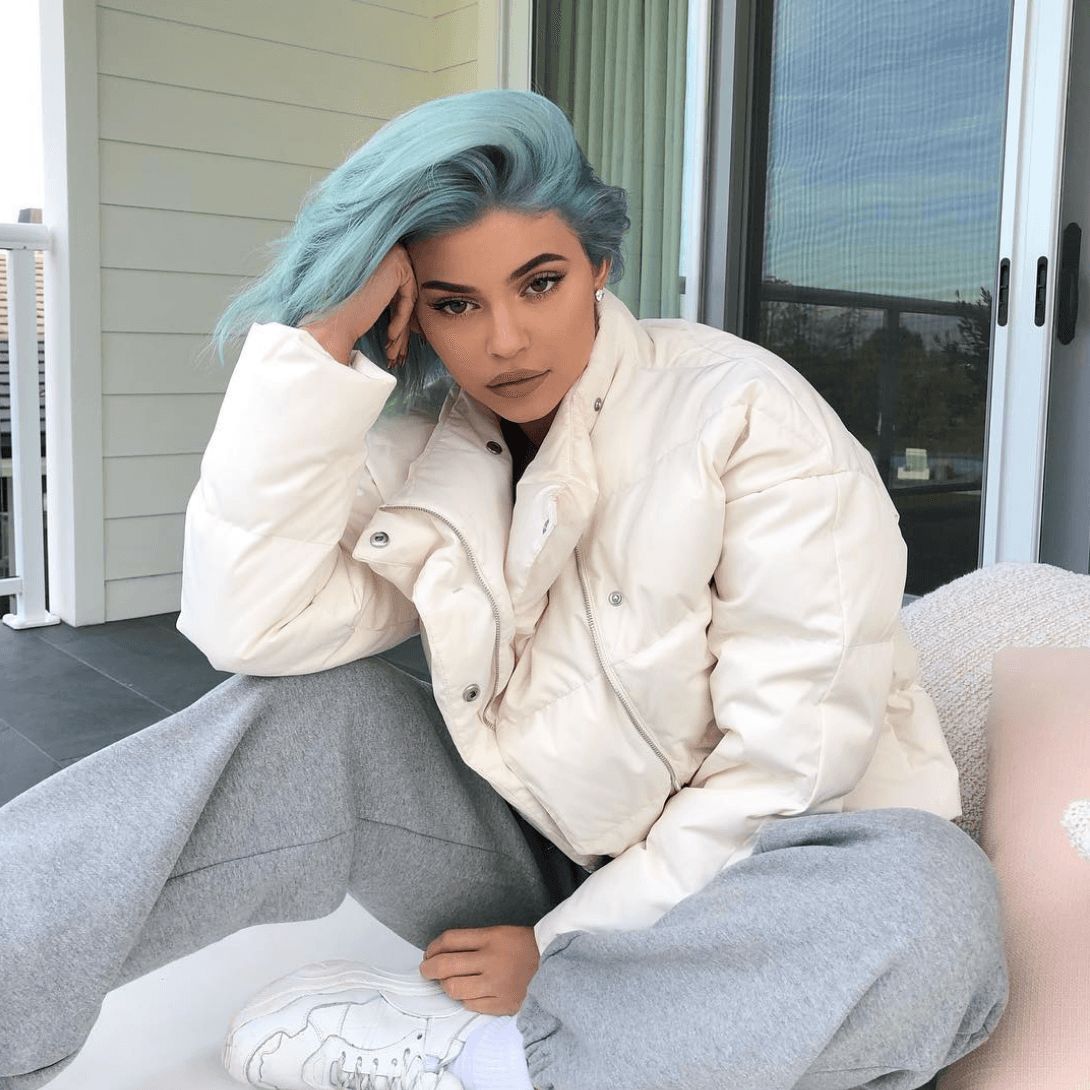
The bob is chin-length, no bangs, middle part, and the colour is icy blue, which is essentially a pale, cool toned pastel that reads almost silver in low light. On fine, wavy hair, the technique for the loose waves is deliberate: air-dry to 80 percent dry, then twist small sections around a finger and let them set. No heat, no product, just the natural wave pattern encouraged into place. The cut itself is a blunt baseline with minimal internal layers, so the ends do not fray and the icy blue sits on a clean edge. Fine hair needs that bluntness, it gives the colour a solid surface to reflect against. The middle part widens a round face, but on an oval or heart shape, it balances the proportions. This is a low-styling, high-visibility cut, the kind that looks intentional without an hour of work.
Dark Brown Base With Sky Blue Highlights Visual Idea
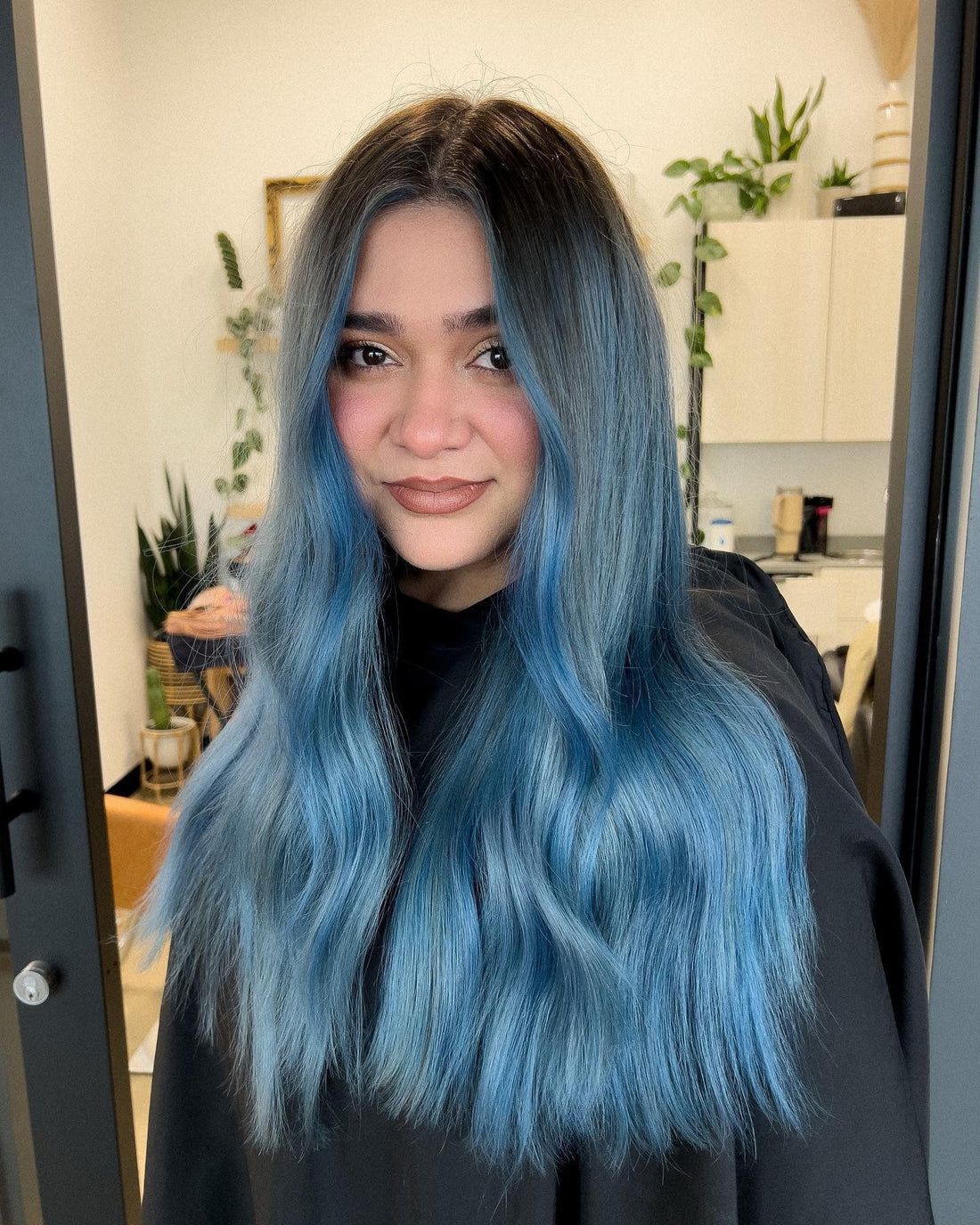
How does sky blue hold up on a dark brown, thick, wavy base? The honest answer is: it fades. Not fast, but visibly, the blue shifts toward green by week five if you wash warm or use the wrong shampoo. The cut here is mid-back length with long layers, no bangs, a middle part, and the waves are natural, not set. The highlights are woven through the mid-lengths and ends, so the root stays dark and the grow-out is gentle, but the ends take the most damage and the blue clings to porous hair better than healthy hair. Thick, wavy hair is porous by nature, which means the colour grabs fast and releases fast. The downside is the toning rhythm, you need a cool-water rinse and a blue-depositing conditioner every third wash, or the sky blue turns into a muddy teal. The upside is the dimension, the dark base gives the blue a depth that a light base cannot. This is not a set-and-forget colour, it asks for maintenance, but the payoff is a contrast that shifts in every light.
I would tell the stylist: weave the sky blue highlights in a face-framing pattern, keep them off the root by two inches, and use a demi-permanent formula that fades gradually rather than a permanent that leaves a hard line. A trim every eight weeks keeps the ends from splitting and the colour from looking tired.
Back View Visual Idea
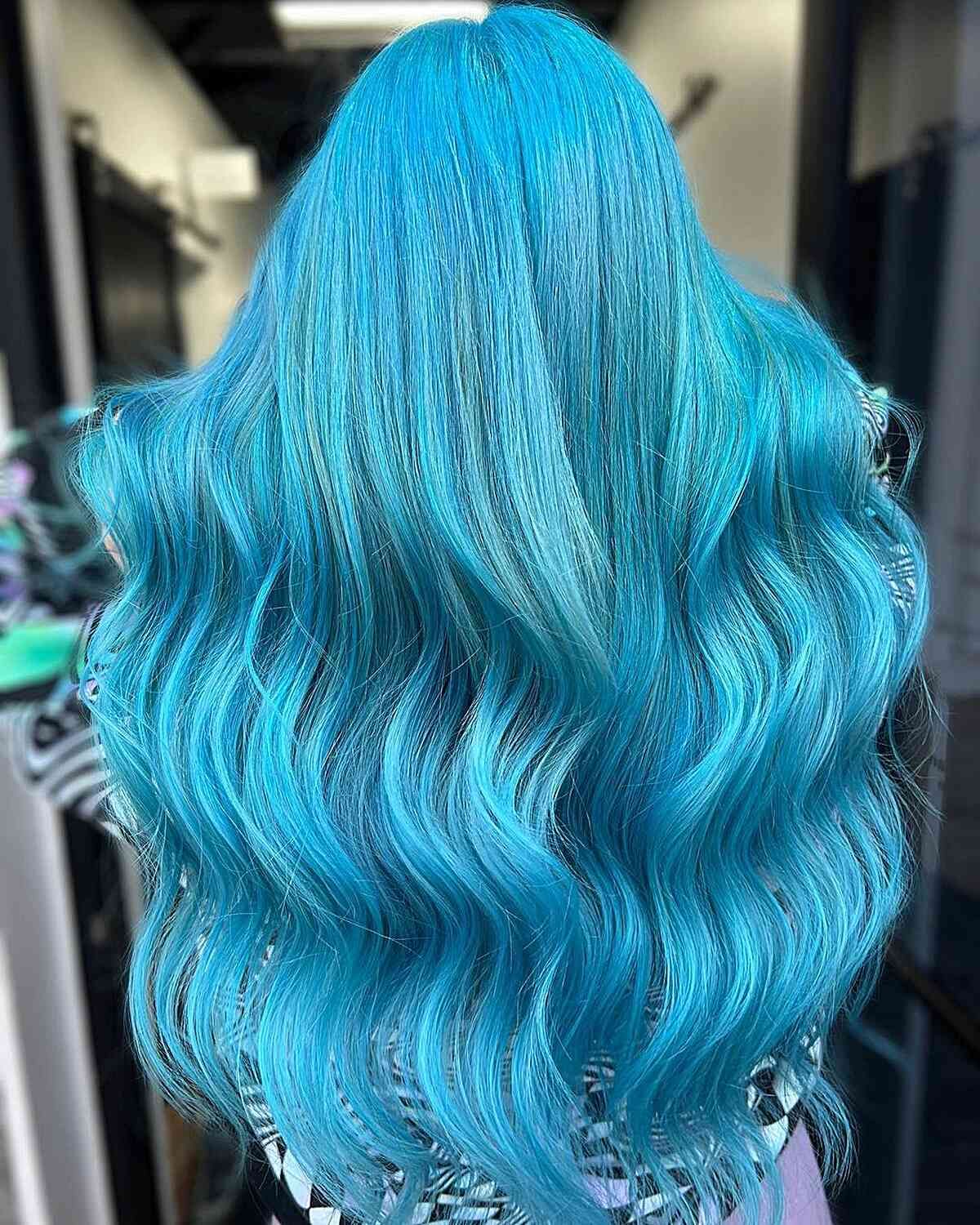
I would tell the stylist: keep the vivid blue as the dominant shade, weave the lighter highlights in a diagonal pattern through the mid-lengths, and cut the layers so they stack from the collarbone down. A trim every ten weeks keeps the ends from tangling and the colour from looking heavy.
Visual Idea — A Front View Of A Short Bob With Layers
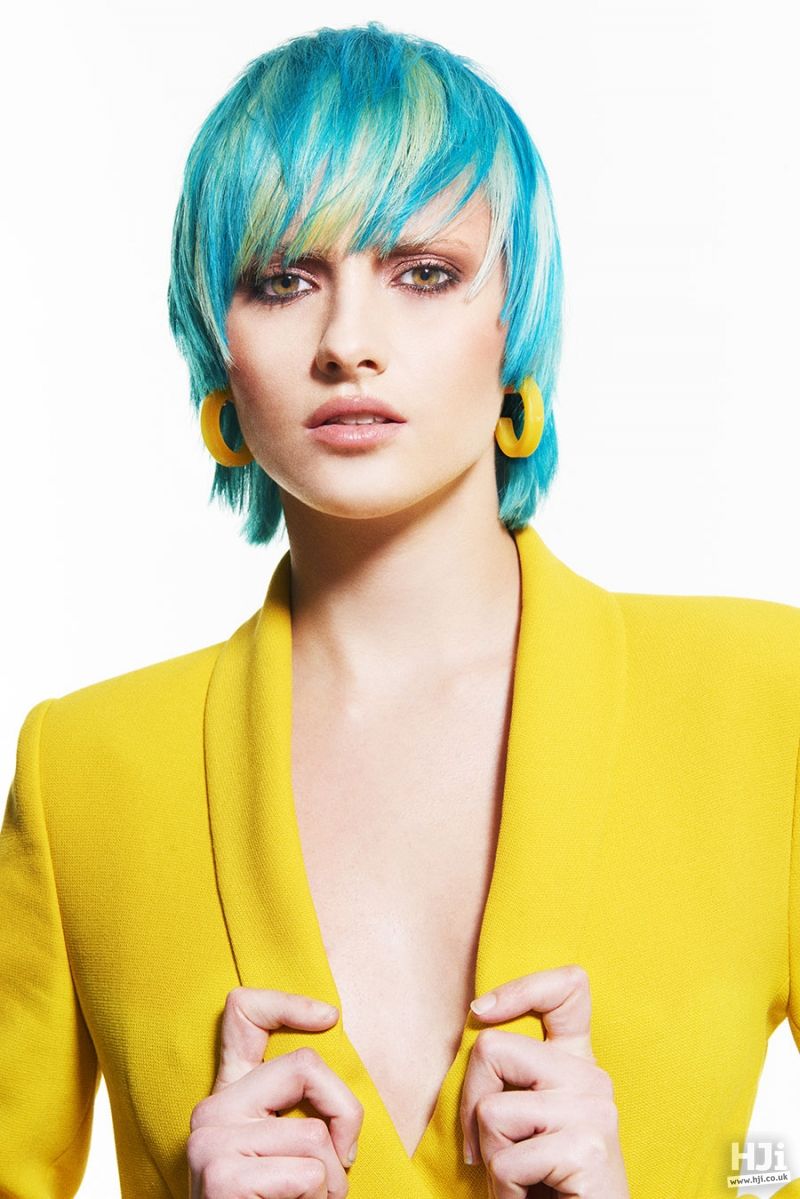
This short bob with layers is the rare cut that flatters fine, straight hair without falling flat by noon. The ear-length shape with a sweeping fringe and side parting gives movement to hair that usually lies limp, and the green and light blue peekaboo panels add a hidden pop of color that shows when you tuck or turn. It suits anyone who wants a low-maintenance length that still looks styled, and the texture stays piecey without product. The layers do the work, so you skip the round brush. Skip this if your hair is thick and coarse, the panels will hide and the shape will sit heavy.
Ear Visual Idea
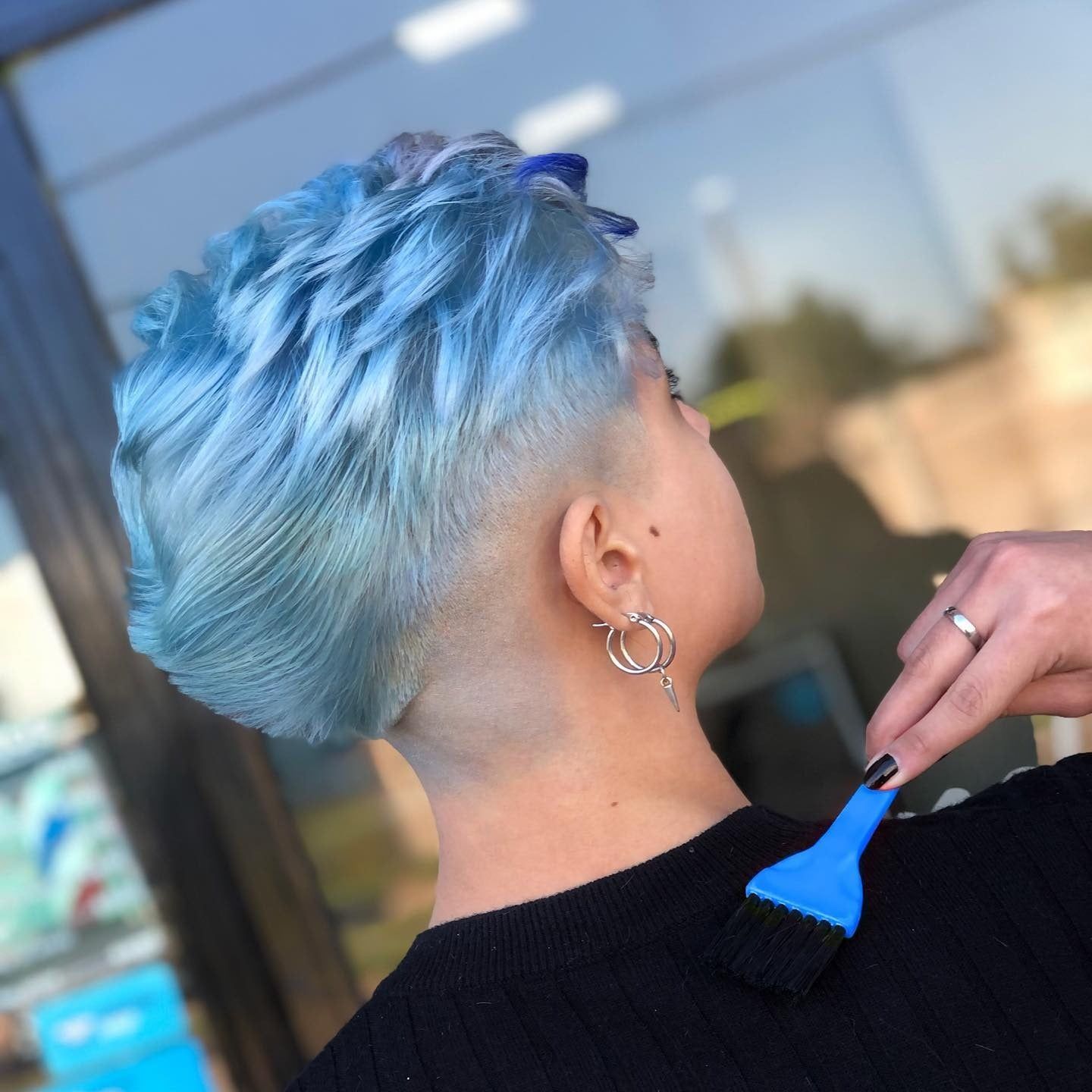
I keep seeing pastel sky blue on a short textured cut go wrong because people skip the toner. The ear-length crop with short choppy bangs and a side parting needs a pale base, and if the bleach lifts uneven, the blue turns minty at the ends and muddy at the roots. The wavy, fine texture here actually helps, it breaks up any patchiness. Ask your stylist for a toner with a hint of violet to keep the pastel clean. That is the whole trick.
Visual Idea — A Wavy Bob Haircut Ends At The Chin
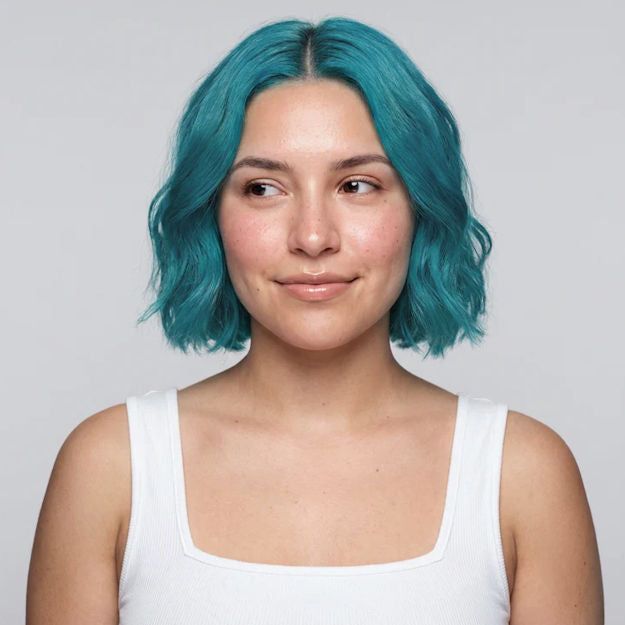
This vibrant teal color is made for late spring, when the light turns sharp and the sky gets that electric edge. The wavy bob haircut ends at the chin, so it catches the sun on every wave, and the loose waves with a middle parting give it a breezy, just-rolled-out-of-the-sea feel. Medium density is the sweet spot here, thick hair gets too heavy and fine hair loses the wave by afternoon. Wear it to a summer wedding or a beach weekend, it holds up in humidity better than any pastel. The color is the statement, the cut just carries it.
Deep Blue Visual Idea
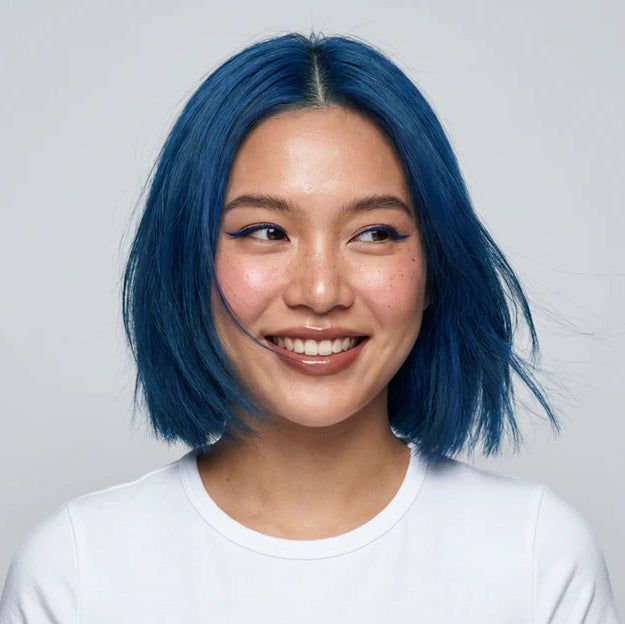
Can you air dry this deep blue bob at home? Yes, but only if you start with the right cut. The chin-length bob with no bangs and a middle parting needs a blunt baseline, so the air dried wavy texture falls into shape instead of flipping outward. Medium density helps, it holds the wave without frizzing. The color is a salon job, deep blue needs a lifted base and a gloss to keep it from fading green. Book the color, skip the blowout.
Visual Idea — A Woman With Shoulder-Length
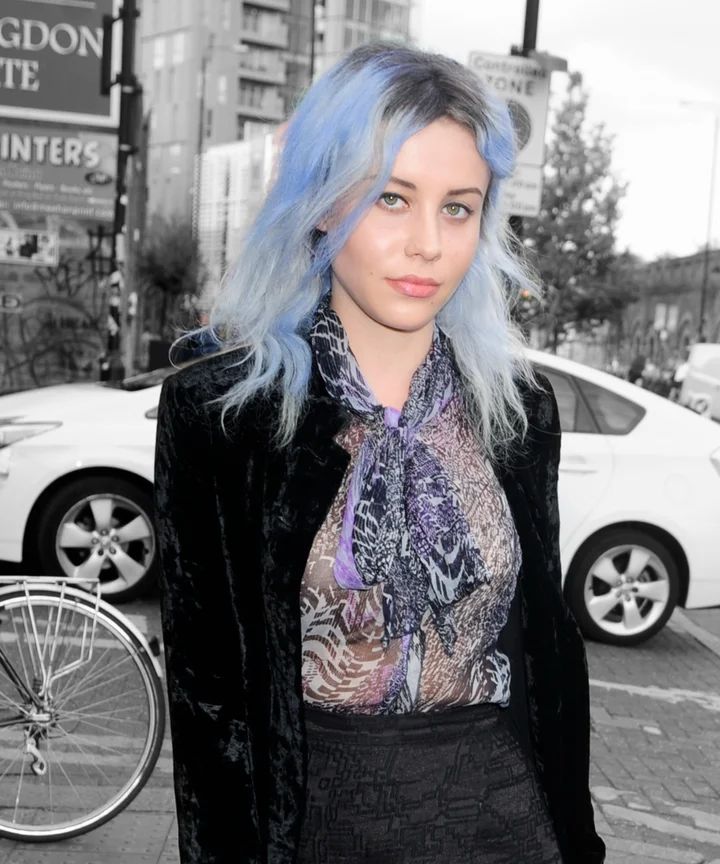
I stood in the bathroom at 7 am, round brush in one hand, flat iron in the other, and asked myself why I agreed to wispy bangs on fine, wavy hair. The shoulder-length cut with a side parting and light blue with subtle purple undertones is gorgeous, but the loose waves need coaxing. Fine hair does not hold a wave past hour three, so I spray a texture spray at the roots, twist sections around my finger, and let the wispy bangs air dry while I do my skincare.
The trick is to not fight the wave. The bangs dry slightly crooked, that is the point. The loose waves fall softer than I planned, and the purple undertone shifts the blue from ice to lavender in low light. It is a cut that asks for ten minutes, not forty. I give it ten, and it looks like I meant it.
Final Thoughts
After writing all 45 of these, I stopped scrolling and started booking. The one I am trying first is the blunt bob with blunt bangs in light blue. It is short, it is sharp, and the grow-out is just a trim every six weeks.